




Victorian Revolving Stool
A victorian revolving stool offers clever height adjustment for the keyboard or dressing table, combining practical seating with mechanical ingenuity.
Victorian Revolving Stool
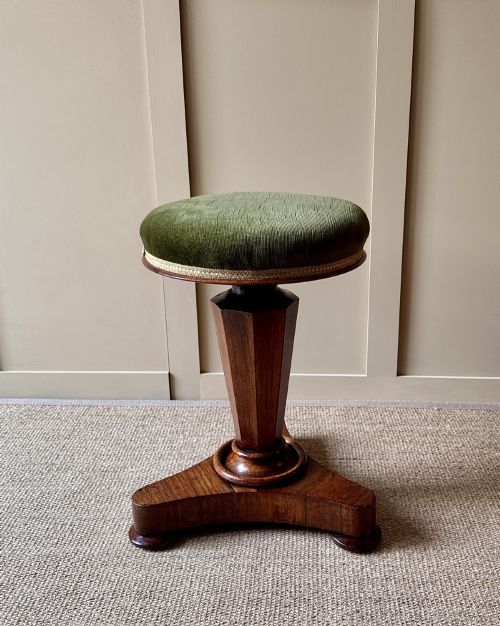
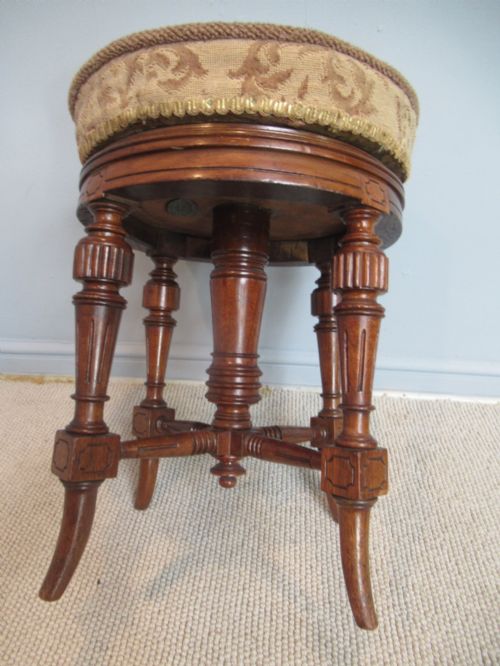
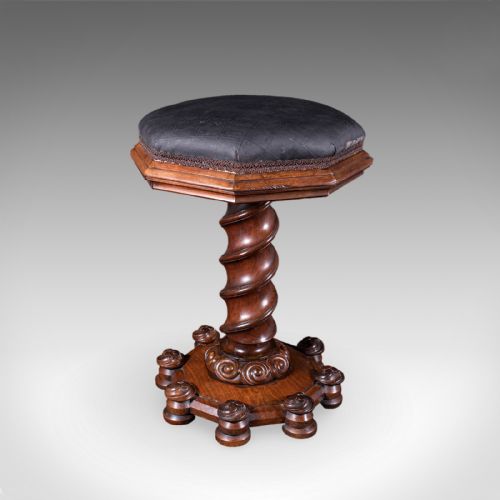
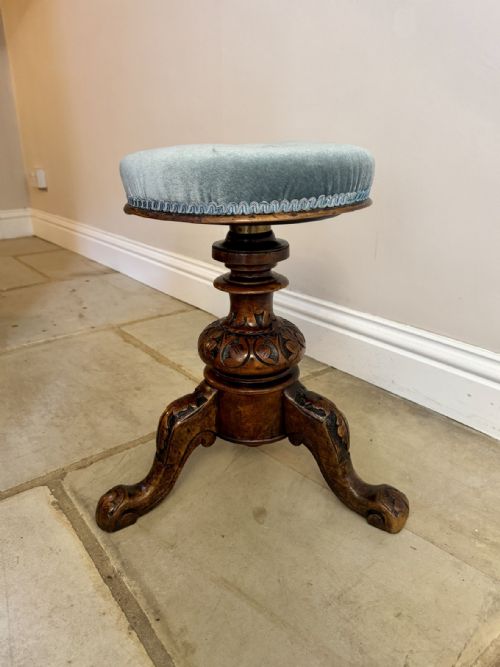
A victorian revolving stool serves multiple domestic purposes, frequently appearing as a piano stool, music chair, or dressing table seat. The most common version met on this page is the walnut or mahogany piano stool with a circular swivelling top, often mounted on carved pillar and tripod legs.
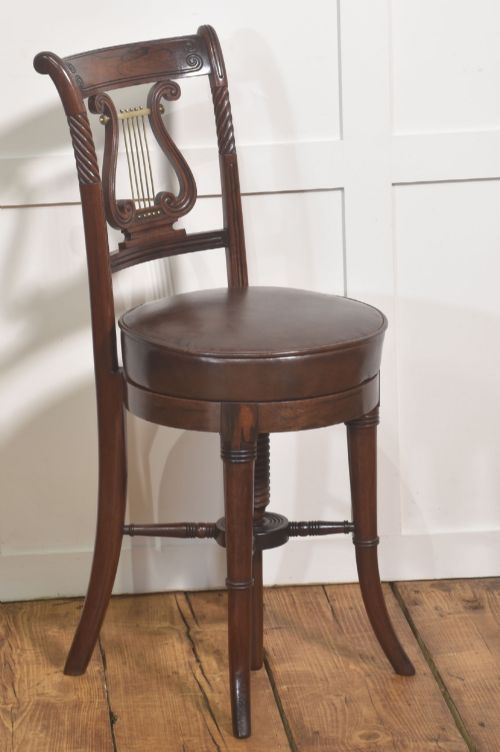
Makers adapted these adjustable seats for musicians and organists, leading to varied forms such as harpist chairs and chapel organist stools. Alongside domestic parlour pieces, utilitarian industrial cast iron and wood swivel stools emerge from the same nineteenth-century origins.
While the Victorian period dominates the selections, examples stretch across related eras from the Georgian and William IV periods through to the Edwardian years. Regional pieces span British workshops alongside occasional continental and Canadian imports.
Materials and Technique
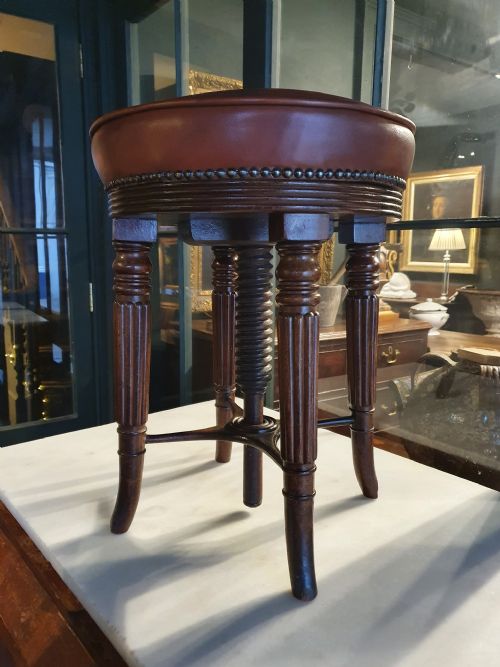
Cabinet makers relied heavily on dense timbers such as mahogany, walnut, and rosewood, occasionally utilising ebonised finishes, birch, or exotic padouk. Metal components, including cast iron mechanisms and brass fittings, provide the internal screw threads and swivel joints necessary for height adjustment.
Upholstery completed the seat tops, employing materials like original fabric, velvet, leather, and beadwork. Carved details, tripod legs, and glass ball feet demonstrate the decorative joinery applied to these functional domestic objects.
Victorian Revolving Stool Retail Price Guide 2026
Typical asking prices for victorian revolving stool among the pieces listed under this phrase on Sellingantiques today, from the lower quarter to the upper quarter. They describe what is for sale here now, not the wider market.
Judging Quality
Excellence in a revolving stool rests upon the stability of the central wooden or metal screw mechanism and the crispness of the timber carving. Superior examples maintain smooth rotation without excessive wobble in the threaded shaft, reflecting precise Victorian engineering.
The choice of timber grain and the integrity of the original upholstery platform dictate the tier of a piece. Finer specimens display deeply figured walnut or rosewood veneers, robust tripod joinery, and retained original seat coverings rather than later replacements.
Jennens & Bettridge·Gillows·James Shoolbred·Brooks Patent·H Brooks and Co
The Victorian Revolving Stool Glossary
- Rise and fall
- A mechanical system utilising a threaded wooden screw or metal spindle that raises or lowers the seat height when turned. This mechanism defines the primary function of adjustable music stools.
- Swivel top
- A rotating seat platform allowing the user to turn freely while seated. It operates independently of the height adjustment screw in certain designs.
- Tripod base
- A three-legged support structure commonly found beneath the central pillar of Victorian piano stools. It ensures steady contact on uneven nineteenth-century floors.
- Papier-mâché
- A composite material made from paper pulp or layers of paper bound with glue, pressed and lacquered. Makers used it for decorative music stool tops.
- Harpist chair
- A specialised seating form designed without arms or with a lowered back to accommodate the posture of a harp player.
Victorian Revolving Stool: Frequently Asked Questions
How do you adjust the height?
Most pieces operate via a central wooden screw or metal threaded rod hidden beneath the upholstery. Turning the seat clockwise or anti-clockwise raises or lowers the platform.
Users should support the weight of the top while turning to prevent undue strain on the internal thread.
Were these only used for pianos?
While piano playing drove the demand for adjustable seating, many served as dressing table chairs and music room seats. Organists and harpists also utilised specialised variants.
The absence of backs on standard circular models made them versatile for vanity tables and parlour corners.
How do I date a piece?
Dating relies upon timber choice, leg profiles, and the complexity of the turnings or carvings. Earlier Regency and William IV examples display heavier architectural lines, whereas later Victorian iterations favour slender cabriole legs and rosewood veneers.
Patent stamps and maker signatures provide definitive chronological markers when present on the mechanism.
Can I reupholster the seat?
Many examples retain their original leather, velvet, or fabric upholstery, which collectors often prefer to preserve. If the fabric has perished, replacement requires traditional stuffing and tacking techniques suited to the circular wooden base.
Care must be taken not to alter the underlying wooden rim during the process.