

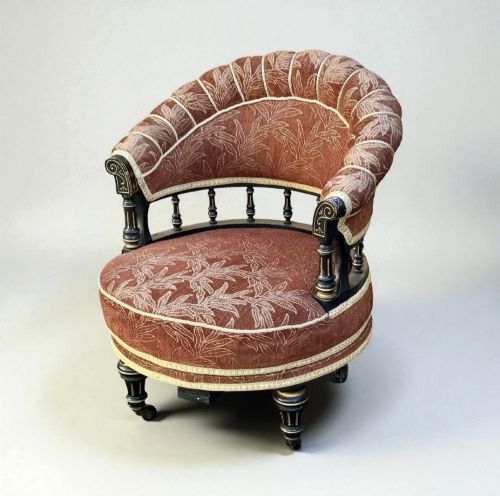
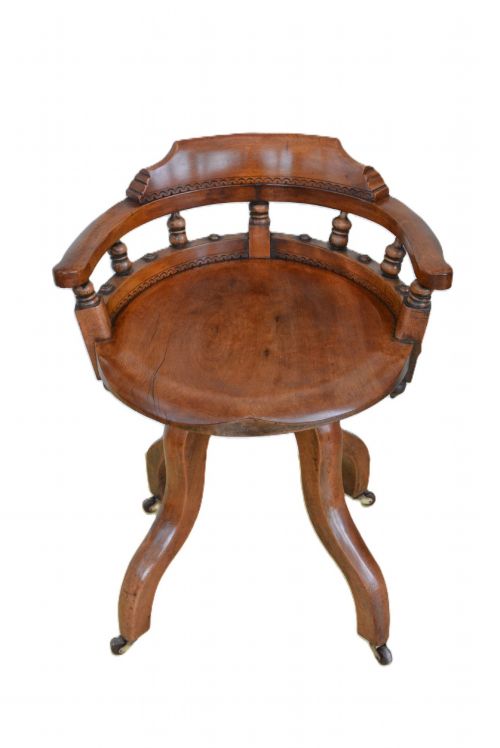
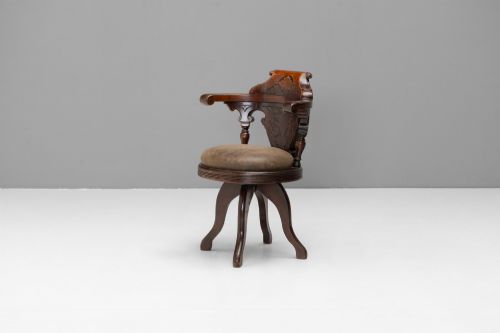
Victorian Revolving Office Chair
When choosing a victorian revolving office chair, you are selecting a sturdy seat designed for long hours at the ledger.
Victorian Revolving Office Chair
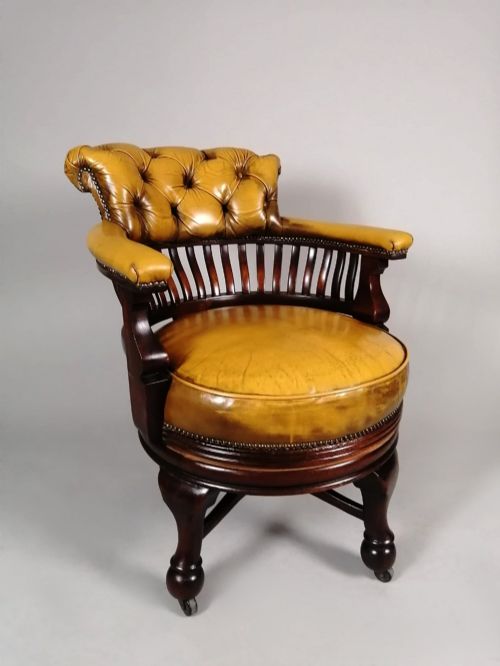
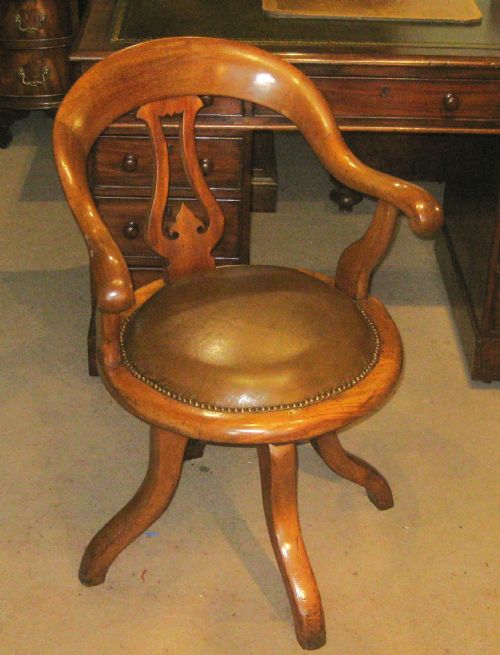
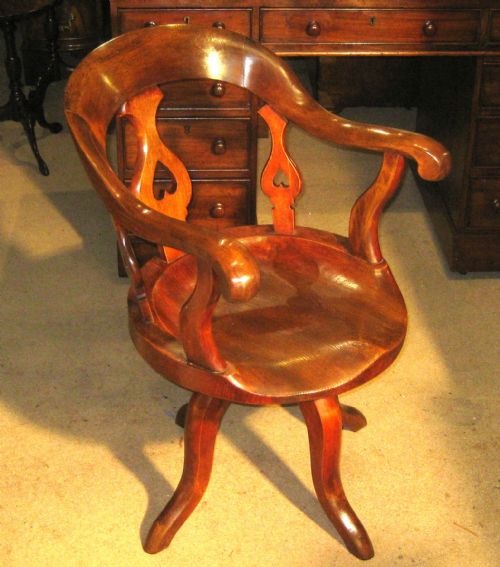
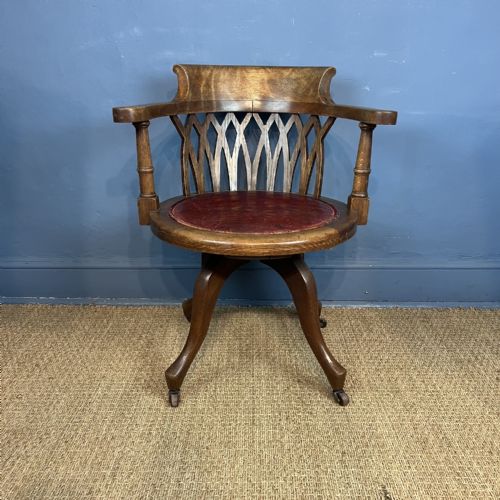
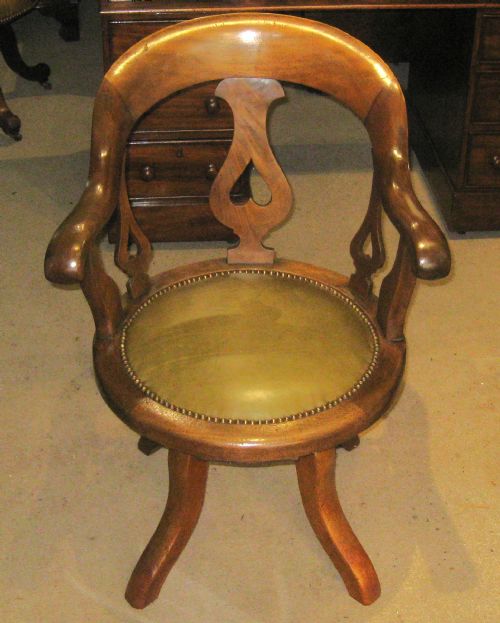
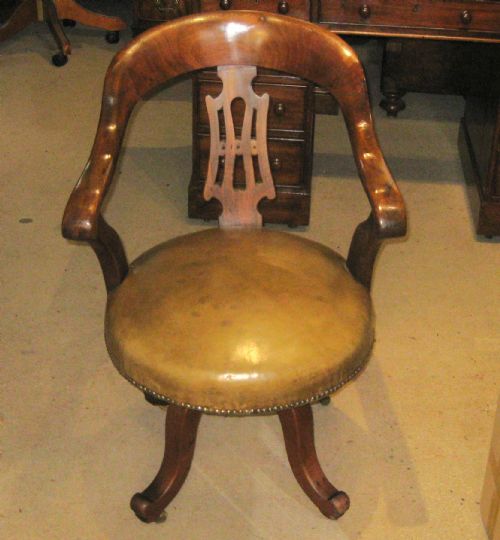
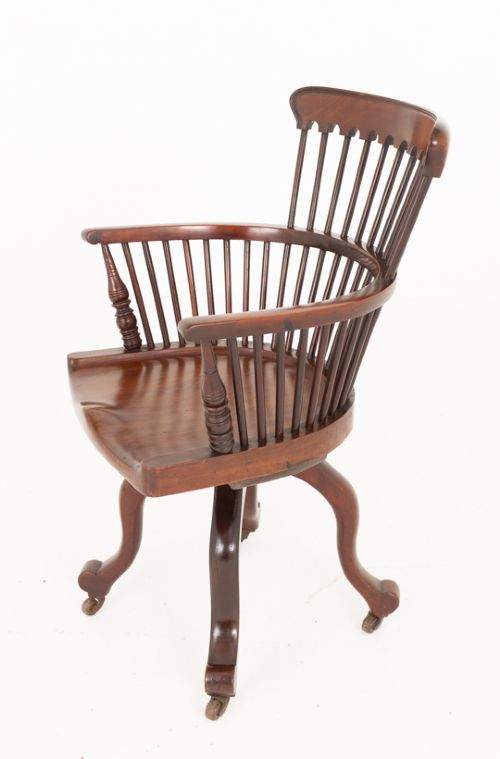
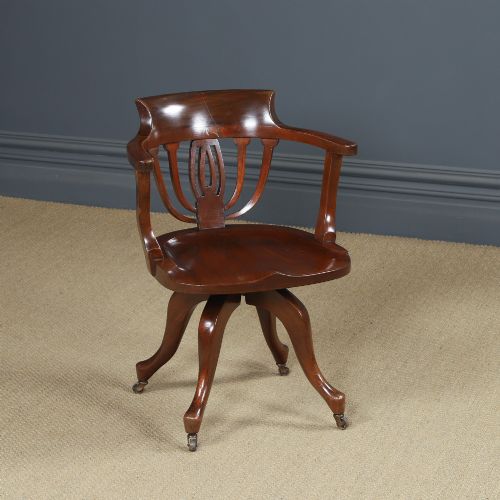
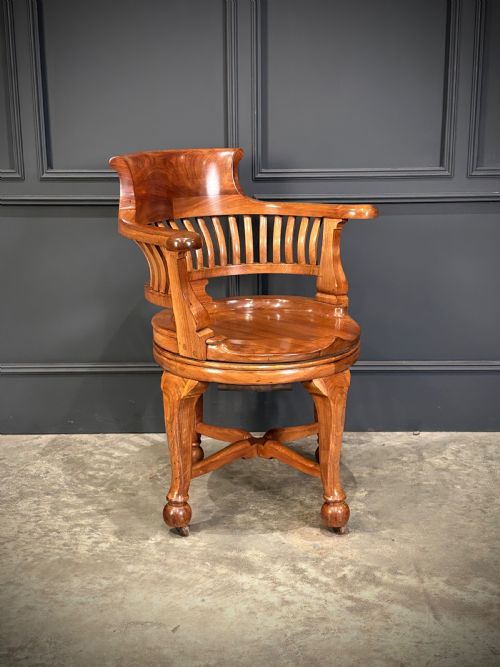
A victorian revolving office chair typically takes the form of a desk armchair or a captains chair, built to swivel and tilt for the working clerk.
The pieces on this page span the mid to late nineteenth century and the Edwardian era, predominantly featuring mahogany and oak timbers alongside walnut and ash.
Many examples incorporate leather seat pads and sturdy timber frameworks, reflecting the heavy utility required in nineteenth-century offices and ships.
Materials and Mechanism
Makers constructed these seats using solid hardwoods such as mahogany, oak and walnut, joined with pegged or glued joints to withstand constant movement.
Revolving mechanisms rely on cast iron and brass spindles, allowing the upper chair body to turn independently of the wooden or iron base.
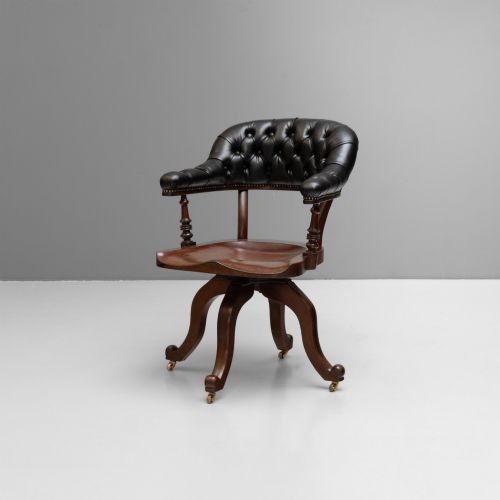
Upholstered versions use buttoned leather panels stuffed over horsehair or coil springs, secured with brass tacks along the seat edges.
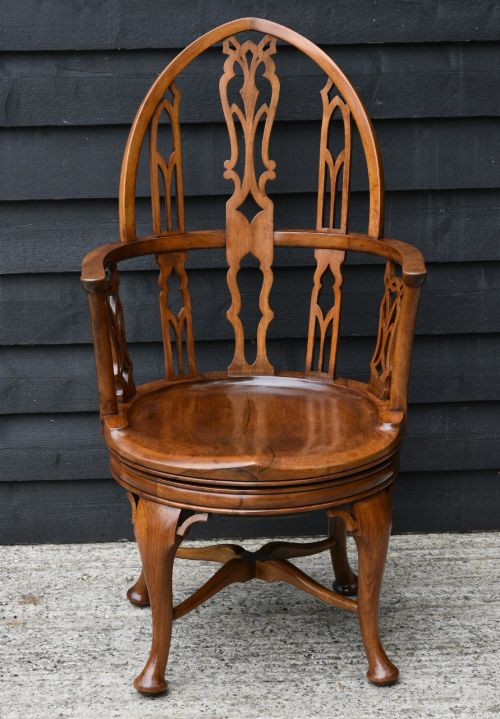
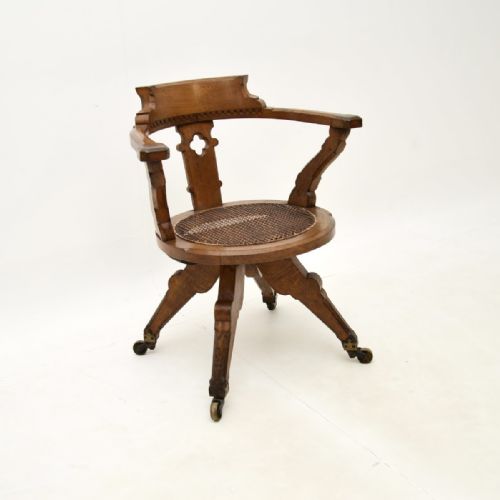
Styles range from plain utilitarian office forms to heavily carved Gothic Revival and Aesthetic Movement designs.
Construction and Finish
Quality rests upon the weight and complexity of the timber turning, from plain turned spindles to heavily carved Gothic Revival woodwork.
The robustness of the underframe and the smooth operation of the iron swivel mechanism determine the structural integrity of the piece.
Refined examples display figured mahogany or satinwood inlay, whereas simpler utility pieces utilise beech or ash with minimal decoration.
Shoolbred·Edward William Godwin·George Bartholomew and Co·CV Smith·Glenisters of High Wycombe·Hampton and Sons
The Victorian Revolving Office Chair Glossary
- Captains chair
- A low-backed wooden armchair designed for swivel movement, often utilised in offices and libraries.
- Swivel mechanism
- The iron or brass pivot assembly beneath the seat that permits full rotation.
- Gothic Revival
- A nineteenth-century design style drawing on medieval architectural motifs such as pointed arches and heavy carving.
- Aesthetic Movement
- A late Victorian style emphasising artistic design, simpler lines and ebonised or natural timber surfaces.
- Rise and fall
- An adjustable height mechanism operated by a threaded screw column beneath the seat.
Victorian Revolving Office Chair: Frequently Asked Questions
How do I adjust the height?
Many models feature a threaded central screw mechanism operated by turning the seat clockwise or anticlockwise until the desired working level is reached.
Simpler variations remain fixed in height, relying instead on the inherent spring of the timber frame and iron base.
Were these seats used on ships?
Certain designated examples served aboard passenger vessels like P and O liners, featuring heavy bolted bases to prevent sliding in rough seas.
These maritime variants often exhibit robust carving and secure floor fixings distinct from standard land-based office furniture.
How do I maintain the leather?
Apply a neutral wax or leather balsam periodically to keep the hide supple and prevent cracking across the buttoned seat pad.
Avoid harsh modern chemical cleaners that strip the original patina from the surface of nineteenth-century upholstery.
Are all swivel chairs Victorian?
While the majority date from the nineteenth century, production extended into the Edwardian period with similar timber and iron construction methods.
Design details such as ebonising or Gothic carving help distinguish mid-Victorian pieces from later Edwardian iterations.