



Victorian Revolving Music Seat
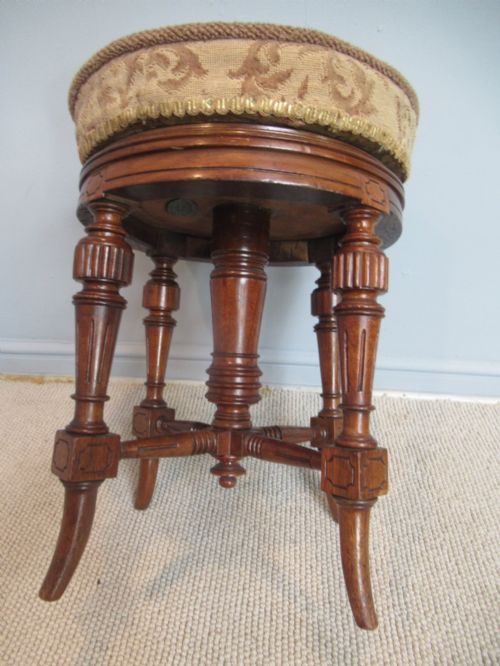
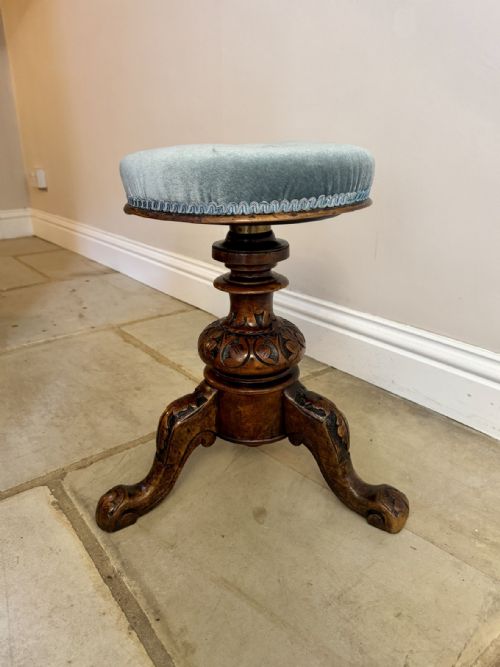
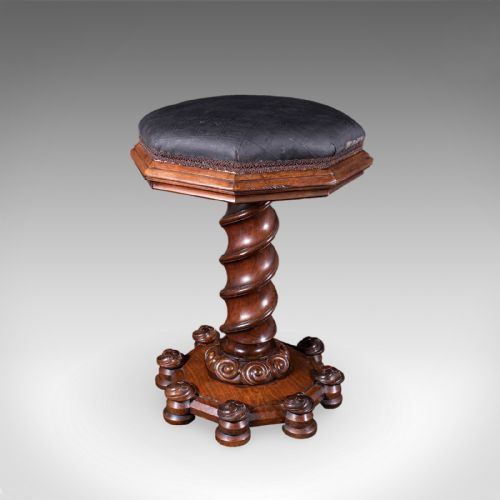
A victorian revolving music seat offers practical height adjustment and steady swivel motion, serving keyboard players and dressing tables alike.
Victorian Revolving Music Seat
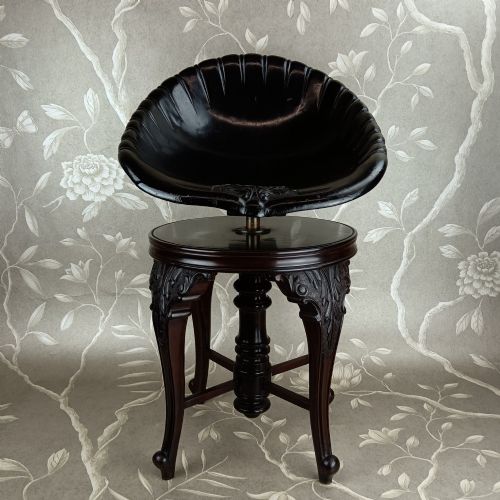
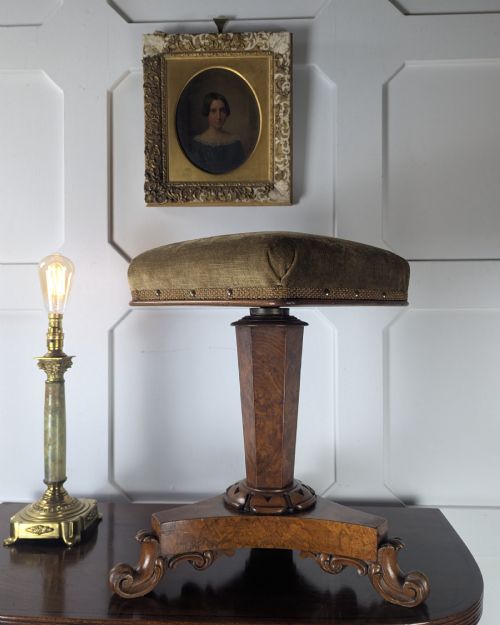
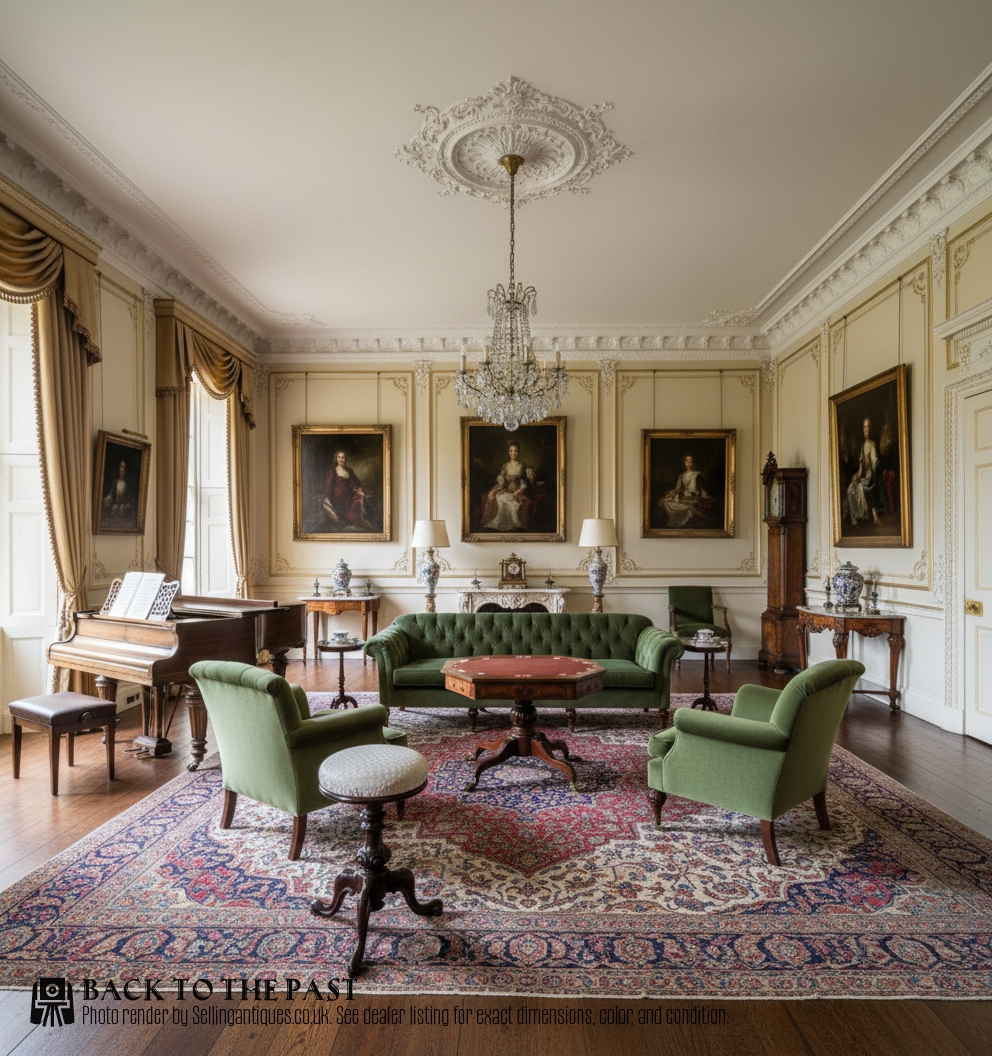
A victorian revolving music seat encompasses piano stools, dressing chairs, and harpist seats designed with swivel mechanisms and adjustable heights. These pieces surface frequently in walnut and mahogany, often featuring circular padded tops supported by central pedestals.
The selection ranges from simple turned legs on mid nineteenth century examples to carved rosewood and ebonised frames spanning into the Edwardian era. Buyers encounter variations including square tops, rise and fall actions, and backs intended for organists or harpists.
Origins stretch across British workshops as well as occasional French and colonial pieces, reflecting the domestic musical pursuits of the period.
Materials and construction
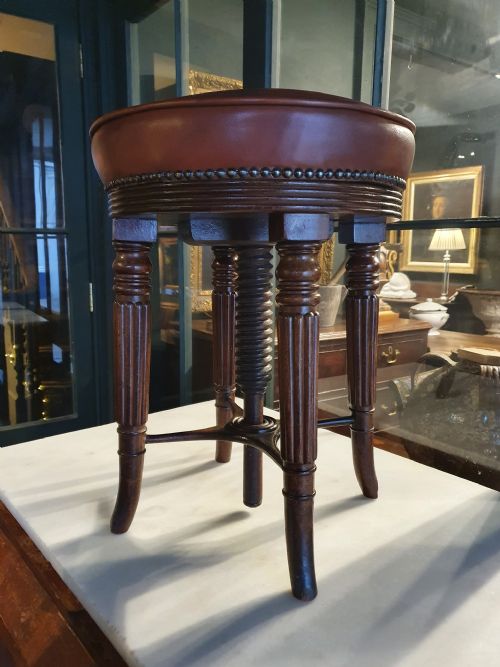
Cabinet makers utilised dense hardwoods like mahogany, walnut, and rosewood to construct the robust frames necessary to withstand constant rotation and weight shifts. Secondary framing sometimes incorporated brass mechanisms for the screw thread or rise and fall elevation columns.
Upholstery materials such as velvet, leather, and woven fabric were tacked over stuffed padding on the circular or square tops. Carved details, papier-mâché accents, and ebonised finishes applied surface decoration to distinguish higher tier workshop output.
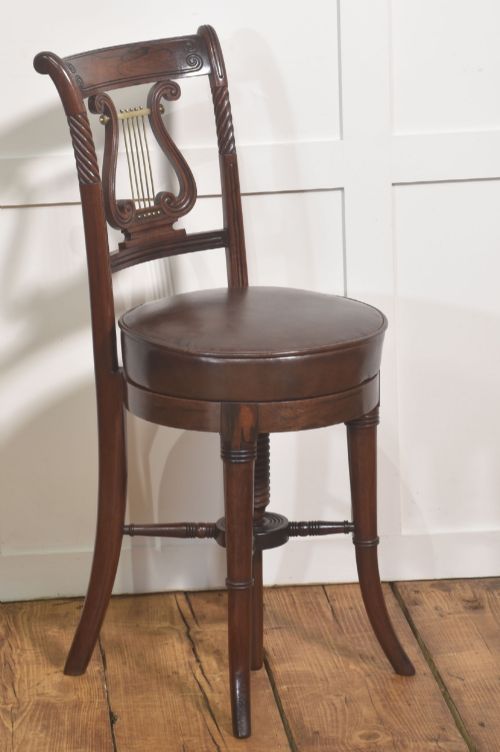
The inventory spans standard piano stools, chapel organist seats, dressing table chairs, and harpist seats with supportive backs.
Evaluating execution and finish
The smoothness of the swivel mechanism and the stability of the central screw action separate robust studio pieces from looser examples. High quality execution displays crisp carving on the pedestal base and tight joinery where the legs meet the shaft.
Selection of figured timbers and the retention of original upholstery materials add distinction to pieces originating from known cabinet makers.
Jennens & Bettridge·Gillows·James Shoolbred·Holland & Son
The Victorian Revolving Music Seat Glossary
- Swivel base
- A revolving pivot assembly allowing the seat top to turn fully in either direction. This mechanism is central to piano stools of the period.
- Rise and fall
- An adjustable height mechanism operated by turning the seat top on a threaded wooden screw or metal spindle. It permits precise positioning for the musician.
- Pedestal stool
- A seat supported by a single central pillar rising from a shaped tripod or tetrapod base. These often feature elaborate carving.
- Papier-mâché
- A moulded composite material made from paper pulp and binder, utilised for decorative panels and seat backs. It provides a smooth surface for inlaid or painted ornamentation.
- Ebonised
- Timber treated with a dark stain or finish to imitate ebony. This technique was popular for fashionable Victorian seating.
Victorian Revolving Music Seat: Frequently Asked Questions
How do these adjustable seats function?
The top rotates around a central wooden or metal screw mechanism, raising or lowering the seat as it turns. This allows the player to set a comfortable height for the keyboard.
Some variants utilise a rise and fall lever system concealed within the pedestal column for rapid adjustment.
Were these seats only used for pianos?
While primarily built for keyboard instruments, many served harpists, organists, or functioned as dressing table chairs. Harpist models often included supportive backs to accommodate posture during long performances.
Their compact footprint made them versatile additions to nineteenth century domestic parlours and drawing rooms.
How can I date a revolving music seat?
Dating relies on stylistic clues such as the transition from heavy turned mahogany frames in the early nineteenth century to carved walnut and ebonised finishes later on. Later Victorian and Edwardian examples often display Arts and Crafts or Aesthetic Movement influences.
Mechanisms also evolved from simple wooden screws to more complex metal engineering by the late decades of the century.
What timbers were commonly used?
Makers relied heavily on mahogany, walnut, and rosewood for their strength and rich grain patterns. Hardwood construction ensured the central pillar could bear the weight and rotational stress of daily use.
Secondary woods supported internal framing while exotic padouk appeared in rarer colonial imports.