


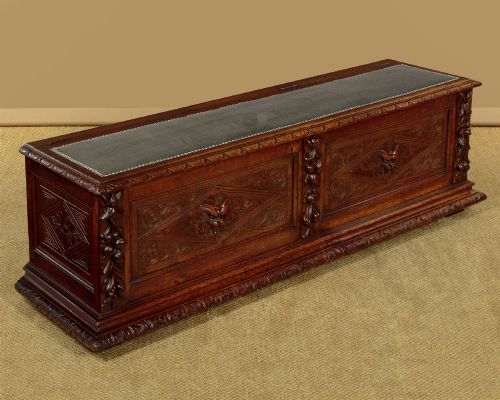
Victorian Revival Seating
Victorian revival seating brings together heavy carved timbers and revival styles from the nineteenth century to anchor a room with distinct historic character.
Victorian Revival Seating
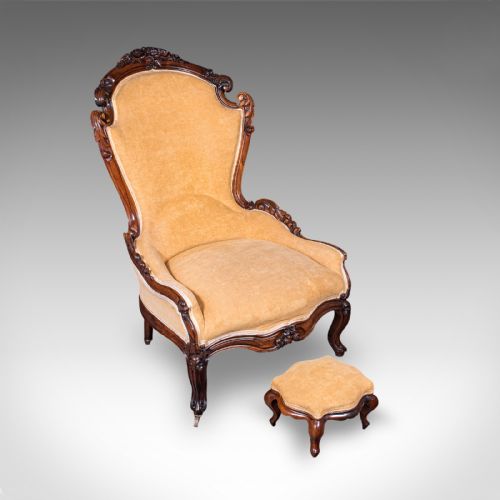
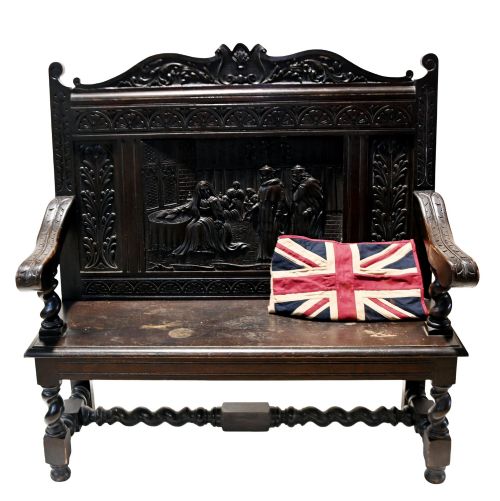
Victorian revival seating encompasses dining chairs, hall chairs, armchairs, benches, and stools produced or styled in the nineteenth century. These pieces draw heavily on earlier design movements, creating distinct sub-categories such as Gothic revival, Rococo revival, and Chippendale revival.
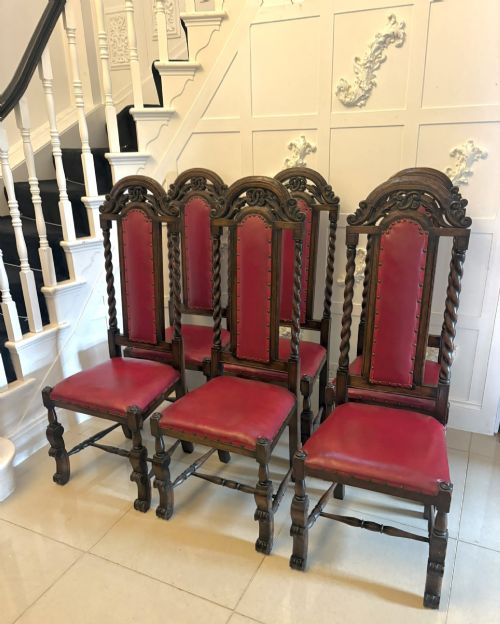
The versions most commonly met on this page are sturdy oak and walnut dining chairs, alongside architectural hall chairs and benches. Makers of the period reinterpreted historical forms to suit contemporary Victorian interiors.
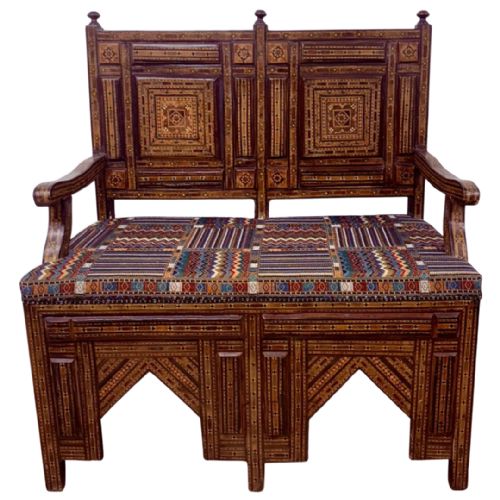
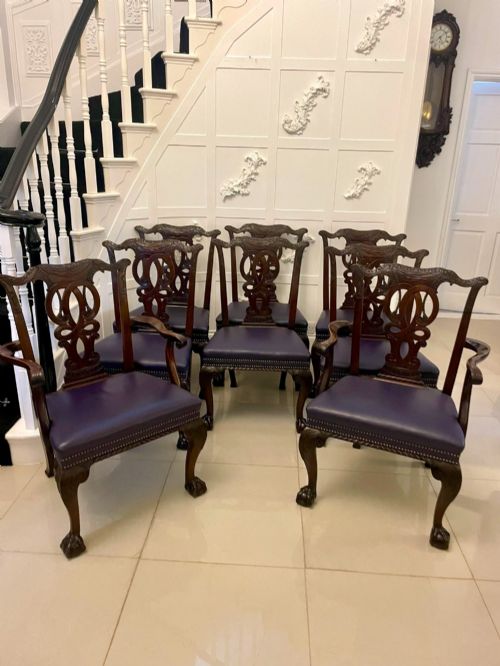
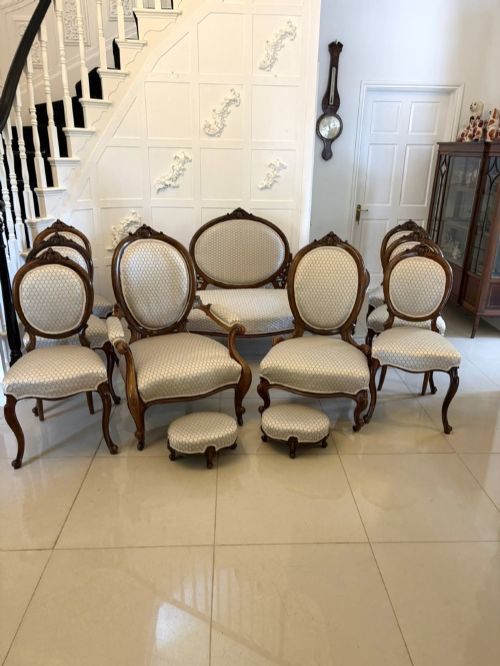
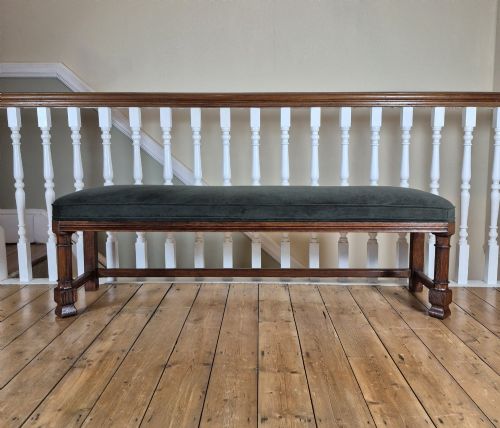
Forms range from intimate side chairs to large salon suites, ottoman box seats, and expansive sets of dining chairs. Each piece reflects the nineteenth-century appetite for historical association and solid craftsmanship.
Materials and construction
Cabinet makers relied predominantly on dense hardwoods such as oak, mahogany, walnut, and rosewood to support deep carving and structural frames. Timber selection dictated both the weight of the piece and the crispness of the applied ornament.
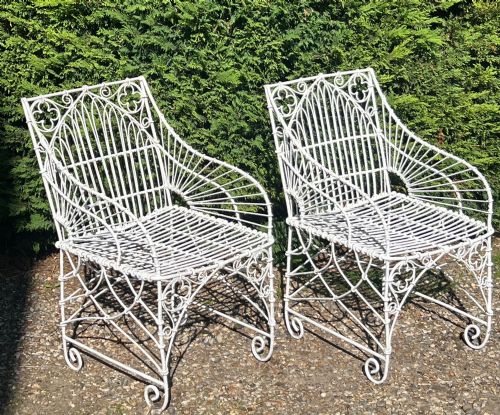
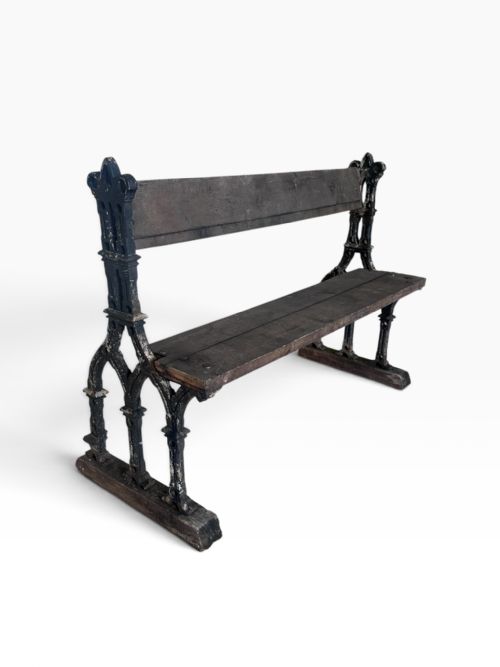
Upholstery and decorative details utilised leather, brass, tapestry, and various woven fabrics fixed to sprung or padded seats. Iron and pitch pine also appear in specific utilitarian or garden forms.
Joinery techniques combined traditional tenon and mortise framing with elaborate applied mouldings and hand-carved details. This structural integrity allowed heavy seating forms to survive heavy domestic use.
Channel Islands craftsmen occasionally signed their Gothic revival rosewood hall chairs with hidden maker labels beneath the seat.
Distinctions in quality
The upper tier of Victorian revival seating is distinguished by depth and precision of hand carving, particularly in foliate motifs, linenfold panels, and structural framework. Superior sets maintain uniformity across multiple matching chairs, whereas lower tiers show minor discrepancies in timber grain and carving depth.
Timber selection and grain matching separate standard production pieces from exceptional commissions. Walnut and mahogany examples with burr veneers or dense, well-figured grains demonstrate a higher grade of workshop output.
W.A. Willcocks·Warings·GIllows·Howard and Sons
The Victorian Revival Seating Glossary
- Gothic Revival
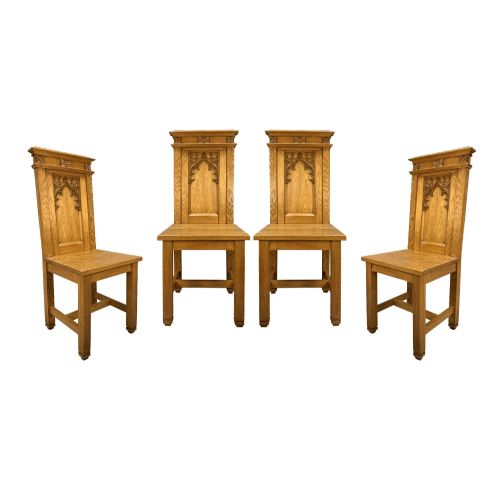
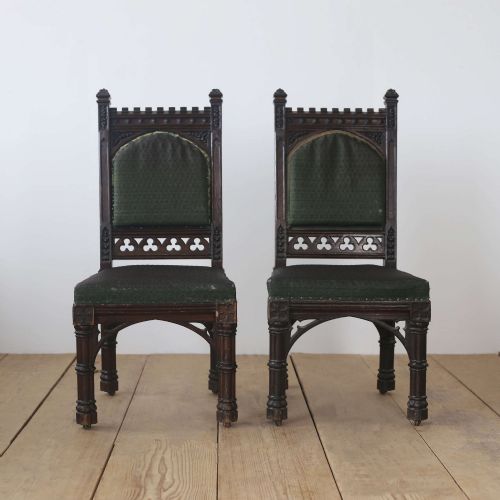
- A nineteenth-century design movement drawing inspiration from medieval architecture and ornament, characterised by pointed arches, tracery, and heavy carved oak. This style dominated many ecclesiastical and domestic furnishings of the era.
- Hall Chair
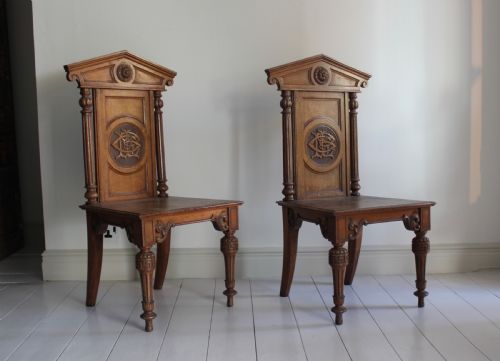
- A rigid, often unpadded wooden chair designed for placement in an entrance hall, typically featuring a solid carved back displaying heraldry or architectural motifs. These pieces prioritized durability and formal visual impact.
- Rococo Revival
- A mid-nineteenth-century style mimicking the asymmetrical curves, C-scrolls, and naturalistic flower carving of the eighteenth-century French movement. Walnut frames frequently display this flowing ornamentation.
- Chippendale Revival
- A late-nineteenth-century interpretation of mid-eighteenth-century English furniture, identifiable through ladderbacks, carved mahogany frames, and ball-and-claw feet. Makers applied these classical proportions to modern dining sets.
Victorian Revival Seating: Frequently Asked Questions
How do I identify Victorian revival seating?
Look for dense hardwoods like oak and walnut combined with historical revival motifs such as Gothic tracery or Rococo scrolls. Construction methods and nineteenth-century secondary timbers provide further confirmation of the period.
Matching the listed styles against known nineteenth-century furniture patterns helps establish the exact revival sub-genre.
Were these chairs used for daily dining?
Many sets of dining chairs were produced specifically for formal Victorian dining rooms and endured heavy daily use. Their solid timber frames and durable leather or tapestry upholstery suited active domestic environments.
Larger sets often survive intact because they belonged to substantial households with formal dining spaces.
What is a hall chair used for?
Hall chairs served as functional entranceway seating where visitors waited or residents paused to remove outerwear. Their rigid wooden construction prevented excessive wear from heavy garments.
They frequently feature high carved backs displaying crests or architectural panels suited to public areas of a home.
How should I care for antique wood seating?
Maintain stable indoor humidity levels to prevent the dense oak, walnut, or mahogany frames from drying out and cracking. Regular dusting with a soft cloth preserves the original finish without harming the timber.
Avoid placing antique seating near direct heat sources or in strong sunlight that could fade exposed wood and upholstery.