


Victorian Repousse Wall Charger
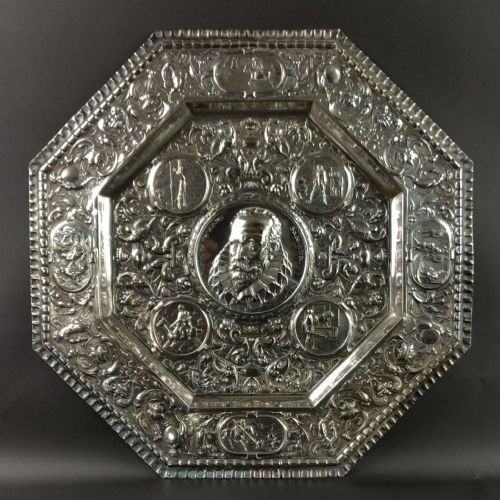
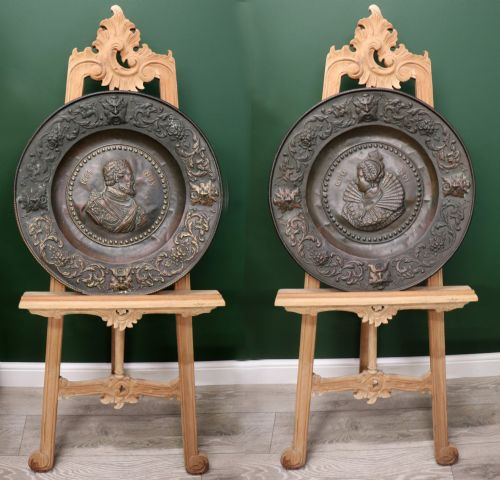
These nineteenth-century metal victorian repousse wall charger pieces bring bold sculptural relief and historical portraiture directly to your walls.
Victorian Repousse Wall Charger
A victorian repousse wall charger is a large decorative dish or plaque designed to hang on a wall, typically fashioned from metals such as copper, brass, and silver plate. The selection spans the nineteenth century, including specific dates from the 1870s to 1900, alongside Edwardian examples.
The decorative schemes frequently employ historical figures, mythological portraits, and battle scenes, drawing on Renaissance Revival, Gothic Revival, Neoclassical, and Indo-Persian styles. Common forms range from circular plates to large shields and oval plaques featuring subjects like Neptune, Diana the Huntress, and Miguel de Cervantes.
Makers and regional workshops produced diverse variations, including Anglo-Indian pierced copper trays, Grand Tour bronze pieces, and heavy silver gilt sideboard dishes. Buyers encounter both single display plaques and matched pairs decorated with animal motifs or floral patterns.
How they were made
The primary technique relies on repoussé work, where artisans hammer and push the metal from the reverse side to create raised designs on the front. This method is often combined with hand-piercing, chasing, and hammering to build intricate surface textures.
Makers utilised a variety of base metals and finishes, including solid copper, brass, bronze, silver plate, silver gilt, and electrotype metal. Electrotype reproduction allowed makers to capture fine sculptural detail, while silvered and gilded surfaces added reflective depth to figural battle scenes and portraits.
Materials range from solid silver gilt and heavy copper to electrotype metal and bronze, spanning periods from 1870 to the Edwardian era.
What varies in quality
The choice of material and finish also divides the range, moving from standard brass and silver-plated items up to heavy solid silver gilt dishes and complex electrotype reproductions. The sophistication of the surrounding decorative border and the precision of any hand-pierced detailing further separate standard production from finer workshop output.
Elkington and Co
The Victorian Repousse Wall Charger Glossary
- Repoussé
- A metalworking technique where the artisan hammers the metal from the reverse side to form a raised design in relief on the front. This method gives wall chargers their three-dimensional portraits and pictorial scenes.
- Electrotype
- A metal object produced by electroplating copper or other metals onto a mould, enabling the faithful replication of intricate sculptural details. Elkington and Co frequently utilised this process during the nineteenth century.
- Silver Gilt
- Silver or a silver-plated metal that has been covered with a thin layer of gold. This finish provides a warm, lustrous tone often seen on grand sideboard dishes and heavy display chargers.
- Grand Tour
- A cultural journey undertaken by nineteenth-century travellers who collected classical souvenirs, including bronze plates and decorative plaques reflecting classical and Renaissance styles.
- Chasing
- A metalworking technique complementary to repoussé, where the artisan refines and sinks the metal from the front side using punches and hammers. It sharpens lines and adds texture to hair, drapery, and backgrounds.
Victorian Repousse Wall Charger: Frequently Asked Questions
How do I hang a heavy metal charger safely?
Large chargers require secure wall fixings distributed evenly to support the weight of solid copper, bronze, or silver-gilt metal.
Utilise specialist plate hangers with rubber-coated grips or consult a professional framer to ensure the piece is supported firmly without straining the rim.
What is the difference between a wall charger and a tray?
While both share circular or oval formats, wall chargers are generally heavier, featuring deep relief work intended primarily for display.
Trays often incorporate handles or flat bases designed for serving, though nineteenth-century makers frequently produced versatile pieces that served both decorative and functional roles.
How should I clean nineteenth-century copper and brass?
Historic metalwork benefits from gentle dusting with a soft, dry cloth to preserve the character of the surface.
Avoid harsh chemical dips or abrasive polishes that strip away age-appropriate patination and soften the fine details of the repoussé work.
How do I identify a Grand Tour piece?
Grand Tour pieces typically feature classical decoration, mythological figures, or motifs inspired by ancient sculpture and architecture.
These items were collected across Europe during the nineteenth century and usually employ bronze or heavy cast metal with classical revival styling.