


Victorian Recliner Chair
A victorian recliner chair is a piece of nineteenth-century ingenuity, built for repose and often featuring mechanical adjustments for reading, convalescing, or resting.
Victorian Recliner Chair
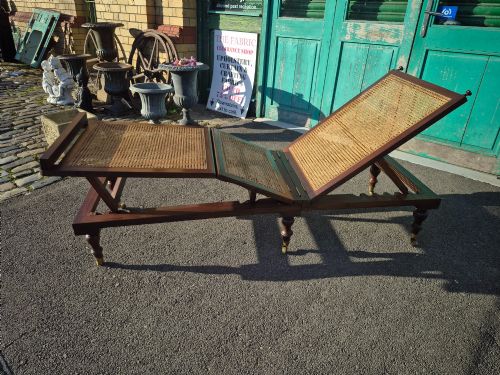
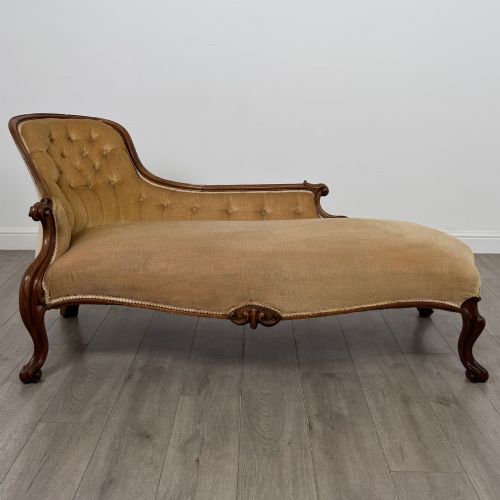
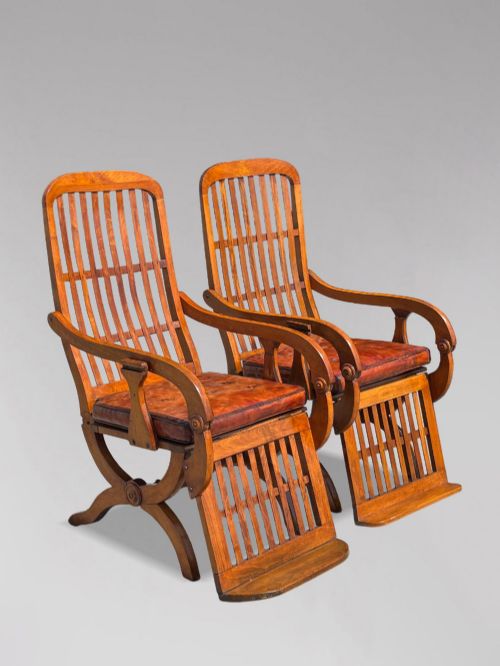
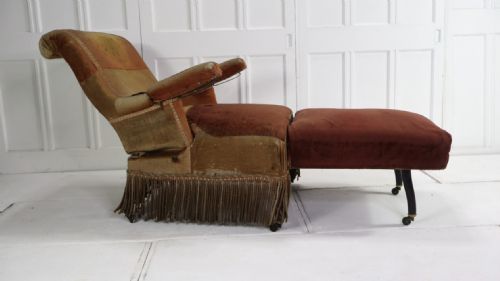
A victorian recliner chair encompasses a range of nineteenth-century seating designed for adjustable comfort, drawing on periods from Regency and William IV through to the late Victorian era. These pieces appear in forms such as library armchairs, mechanical reclining chairs, metamorphic loungers, and folding steamer chairs.
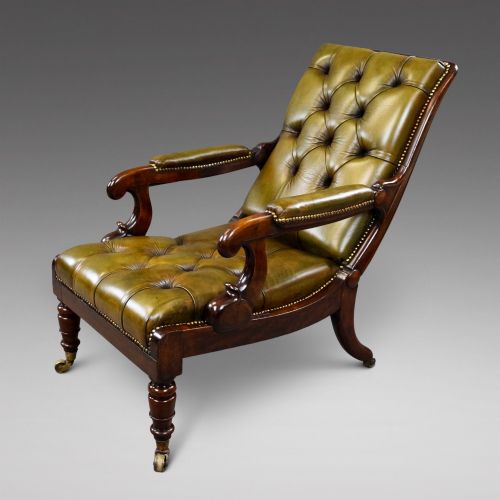
The most common versions met on this page are mahogany or walnut framed library armchairs and reclining reading chairs, frequently upholstered in buttoned brown leather. Alongside these, buyers encounter colonial campaign styles, French models, and daybeds intended for extended lounging.
Makers and manufacturers of the period applied patented mechanisms to these chairs, allowing the back and seat to shift positions. This focus on comfort reflects the domestic priorities of nineteenth-century households, combining substantial timber frames with flexible positioning.
Assessing quality and craftsmanship
Quality in a victorian recliner chair is determined by the sophistication of its mechanical parts and the integrity of the timber frame. Pieces with fully operational, original adjusting mechanisms by noted makers demonstrate superior workshop execution compared to fixed or later-adapted seating.
The choice of materials also dictates standing, with solid rosewood, figured mahogany, and high-grade hides representing the upper tier of production. Finer examples retain their original castors, functional ratchets, and balanced proportions.
Object forms span library armchairs, chaise longues, campaign daybeds, folding steamer chairs, and invalid wheel chairs.
R W Wingfield·J Herbert McNair·Minter·Jas Shoolbred·J Foot and Son·Robert Daws·John Ward
The Victorian Recliner Chair Glossary
- Bergère
- A type of upholstered armchair with a cane back and sides, often seen in library and colonial campaign seating. The woven cane provides a flexible and breathable backrest.
- Metamorphic
- A term for furniture designed to transform into another form, such as an armchair converting into a daybed or chaise longue. These pieces utilise clever mechanical linkages hidden within the wooden frame.
- Campaign style
- Portable furniture made for military officers or travellers, characterised by folding frames, brass corners, and durable timbers. They dismantle or fold flat for ease of transport.
- Buttoned leather
- Upholstery secured with deep indentations formed by tufting and buttoning, commonly executed in oxblood or brown leather on nineteenth-century library chairs. This technique keeps the internal stuffing evenly distributed.
- Chaise longue
- An upholstered sofa in the form of a chair with a long seat to support the legs, frequently appearing in Victorian drawing rooms and boudoirs. Variations include Chesterfield and French Second Empire styles.
Victorian Recliner Chair: Frequently Asked Questions
How do the reclining mechanisms work?
Many nineteenth-century examples use a rack-and-pinion system or a ratchet mechanism operated by side handles, allowing the backrest to lock at various angles.
Other designs rely on body weight shifts or extending footrests that prompt the chair to recline smoothly into a resting position.
Were these chairs used for medical recovery?
Yes, several pieces were specifically designed for invalids and convalescents, offering adjustable support for individuals recovering from illness.
Specialist makers produced invalid wheel chairs and reclining lounging seats to assist with comfort during long periods of rest.
What is the difference between a library chair and a steamer chair?
Library chairs are typically substantial, stationary upholstered armchairs framed in mahogany or walnut, designed for reading rooms and studies.
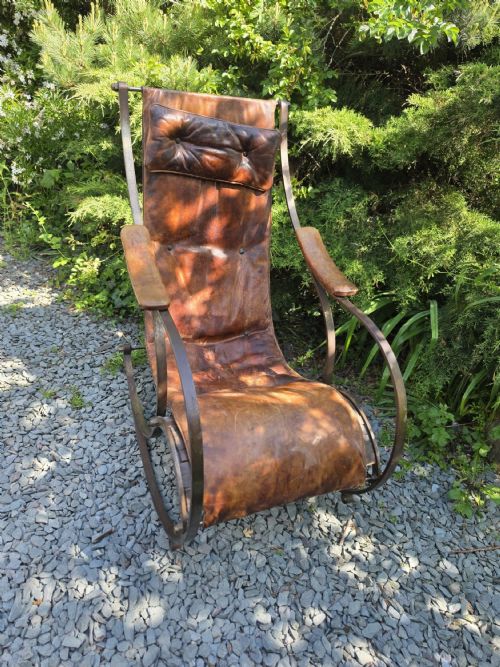
Steamer chairs are lighter, often folding or cane-backed lounge seats originally intended for travel, shipboard use, or garden lounging.
How do I identify a William IV recliner?
William IV pieces generally date from the 1830s and display robust classical proportions, often featuring carved scroll arms, turned mahogany legs, and deep buttoned leather.
They emphasise heavy timber construction combined with early mechanical adjustments for reading and relaxation.