



Victorian Pottery Jar
A victorian pottery jar brings functional nineteenth-century storage and display into a room through earthenware, stoneware, and glazed ceramics.
Victorian Pottery Jar
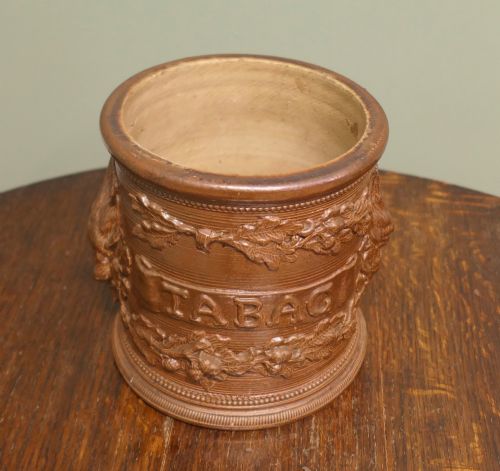
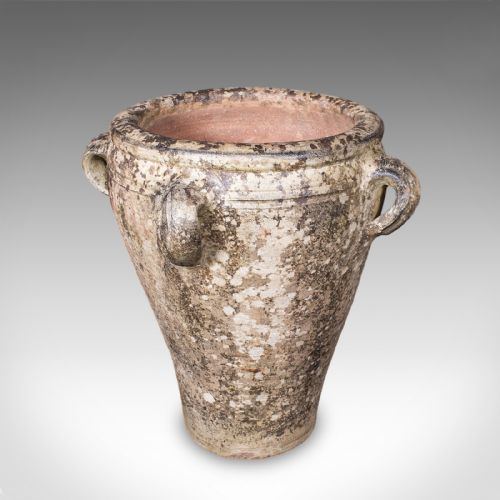
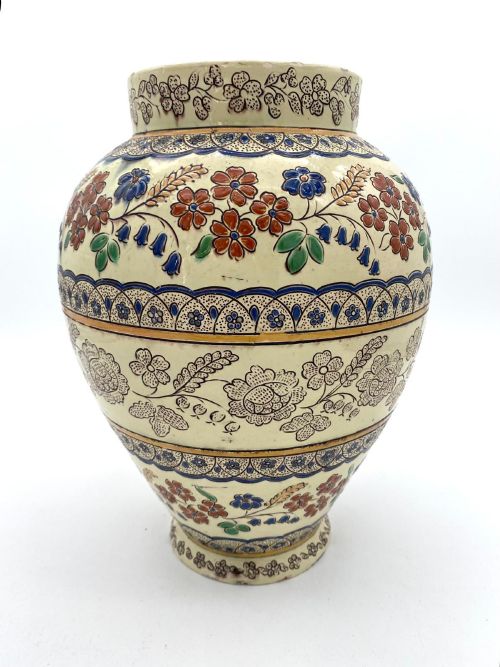
A victorian pottery jar encompasses utility and display vessels from the nineteenth century, including biscuit barrels, tobacco jars, flagons, and vases. These containers served domestic purposes in homes, taverns, and exhibitions, often fitted with covers or metal mounts.
The versions most commonly found here date from the mid-to-late nineteenth century, spanning earthenware, salt glazed stoneware, and jasperware. Makers ranged from Staffordshire potteries to major factories like Doulton Lambeth and Wedgwood, producing both utilitarian flagons and highly decorated cabinet pieces.
Styles on this page stretch from restrained Victorian country wares to elaborate revivals such as Renaissance Revival, Neoclassical, and Arts and Crafts. Form follows function closely in storage vessels, while decorative vases and majolica figures lean toward ornate nineteenth-century aesthetic tastes.
How they were made
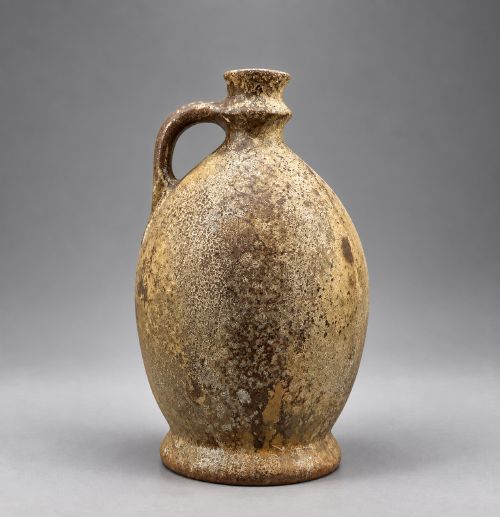
Potters shaped these vessels using earthenware, terracotta, and dense stoneware clays, often applying salt glaze finishes to achieve hard, impermeable surfaces. Stoneware flagons and salt-glazed jugs relied on high-firing techniques that imparted natural texture and varied patination.
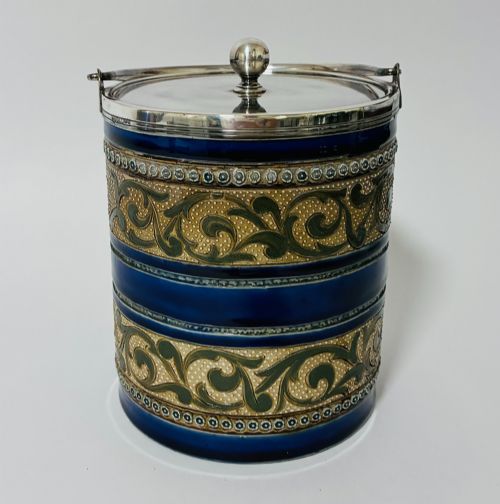
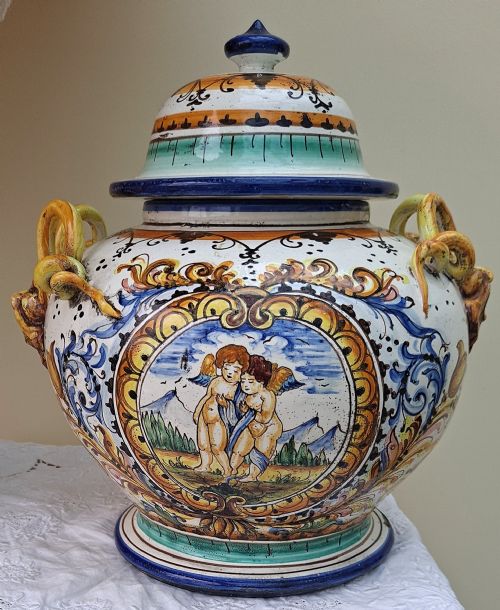
Decoration involved applied cream sprigging, intricate transfer printing, hand-painted majolica enamels, and intarsio faience techniques. Many biscuit barrels and tobacco jars incorporated silver plate mounts, adding hinged lids and swing handles to ceramic bodies.
Victorian Pottery Jar Retail Price Guide 2026
Typical asking prices for victorian pottery jar among the pieces listed under this phrase on Sellingantiques today, from the lower quarter to the upper quarter. They describe what is for sale here now, not the wider market.
Some nineteenth-century jars once held turtle soup for London tavern patrons before retiring to the mantelpiece.
What varies in quality
Quality rests upon the crispness of moulded relief work, the depth and consistency of the glaze, and the fidelity of the decorative style. Pieces from prominent workshops demonstrate superior control over firing temperatures and enamel application, yielding sharper details on figures and foliate motifs.
The integration of metal hardware also distinguishes finer biscuit barrels and covered jars, where substantial silver plate mounts complement rather than overwhelm the ceramic body. Painted works show distinction through brushwork precision and palette harmony, separating standard production items from exhibition-standard pieces.
Doulton Lambeth·Wedgwood·Carlton Ware·Minton·Port Dundass·Albert Carrier
The Victorian Pottery Jar Glossary
- Salt glaze
- A vitreous coating formed by throwing common salt into the kiln during high-temperature firing, creating an orange-peel texture on stoneware. This finish protected utilitarian flagons and storage vessels from liquid absorption.
- Jasperware
- A fine-grained, unglazed vitrified stoneware developed by Wedgwood, typically featuring white raised sprigged reliefs against a coloured ground. Blue and sage green backgrounds remain traditional for nineteenth-century examples.
- Majolica
- A colourful lead-glazed earthenware pioneered by nineteenth-century factories, known for vibrant tones and modelled plant or figural forms. Minton and Continental potteries utilised this technique for decorative vases and jars.
- Biscuit barrel
- A covered ceramic container designed for storing dry biscuits on the dining table or sideboard during the Victorian era. These vessels frequently feature silver-plated rims, covers, and swing handles.
- Intarsio faience
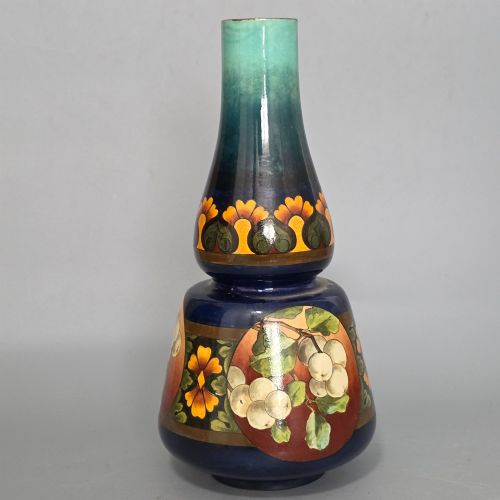
- A coloured pottery technique associated with Doulton Lambeth, producing rich matt glazes resembling inlaid wood or mosaic. Alice Euphemia Thatcher decorated notable pieces using this method.
Victorian Pottery Jar: Frequently Asked Questions
What were Victorian pottery jars used for?
These vessels served practical storage roles in nineteenth-century households and businesses, holding dry provisions, tobacco, biscuits, and liquids like whisky or turtle soup. Covered jars kept contents dry and secure on sideboards and tavern counters.
Many larger examples functioned purely as decorative ornaments, displayed as vases or amphorae in drawing rooms and international exhibitions.
How do I clean a ceramic biscuit barrel?
Wipe glazed ceramic surfaces gently with a damp cloth, avoiding harsh abrasives that might damage delicate transfer printing, painted enamels, or sprigged details. Keep unglazed or porous areas dry.
Polish silver-plated mounts separately with a suitable metal cleaner, taking care not to let cleaning pastes touch the pottery body.
Are salt glazed stoneware jugs waterproof?
Salt glazed stoneware is naturally vitrified and impermeable to liquids, making these jugs suitable for holding water, ale, or spirits. The dense clay body and chemical glaze reaction during firing seal the interior.
Historical flagons and bottles designed for transport or storage typically remain fully functional for holding liquids today.
How do I identify a Victorian tobacco jar?
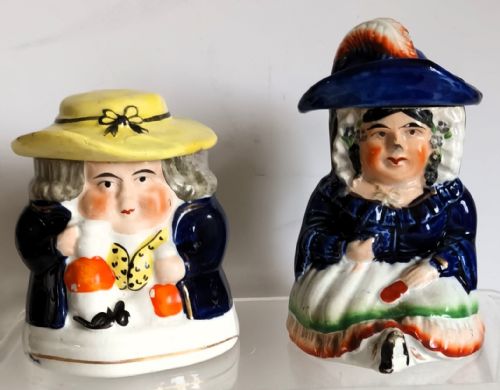
Tobacco jars from this period feature tight-fitting lids designed to keep leaf tobacco moist, often accompanied by inner lids or stoppers. Staffordshire and Gaudy Welsh examples frequently display figural, caricature, or floral hand-painted motifs.
Look for maker marks on the base, stylistic cues from the nineteenth century, and materials like earthenware or glazed ceramic.