

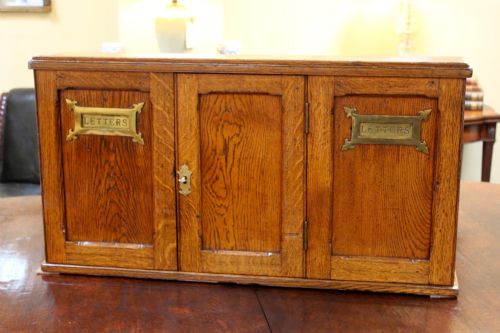


Victorian Postal Box
A Victorian postal box gathers the correspondence of the household, offering solid oak, polished brass and secure storage for letters and stamps.
Victorian Postal Box
A Victorian postal box is designed to manage the daily influx of letters and parcels in large domestic settings, functioning as a focal point for correspondence on a desk or hall table. When you search for a Victorian postal box, you encounter pieces that range from small desktop stamp cases to substantial hotel or country house letter boxes.
These items originate predominantly from the nineteenth century, spanning periods from the 1870s through the Edwardian era and 1900. They carry the practical utility of their time, serving both private homes and grand country houses with equal measure.
Materials and construction methods
Makers utilised durable hardwoods such as oak and mahogany for the main bodies of these boxes, often selecting golden oak or rich dark timbers to suit the interiors of country houses. These wooden structures provide the rigidity needed for daily domestic use and frequent handling.
Brass mountings, hinges and locks are integrated extensively across the pieces, alongside silver plate and sterling silver for smaller items like stamp cases. The combination of turned or cast brass with polished timber defines the physical presence of these postal boxes.
Victorian Postal Box Retail Price Guide 2026
Typical asking prices for victorian postal box among the pieces listed under this phrase on Sellingantiques today, from the lower quarter to the upper quarter. They describe what is for sale here now, not the wider market.
Some items include clever sliding mechanisms and dedicated compartments for parcel rates.
Distinctions in quality and finish
The standard of a Victorian postal box is visible in the precision of its joinery and the weight of its metal fittings, where substantial brass hinges and secure locks distinguish superior pieces. Finer examples display carefully selected timber grains and thoughtful proportions that elevate a utilitarian object into a decorative accessory.
Smaller items like stamp cases and dispensers vary according to the crispness of their mechanism and the quality of the silver or brass work, showing the hand of skilled metalworkers. The integration of patented designs, such as specific applicators or sliding mechanisms, also marks out pieces of higher ambition.
The Victorian Postal Box Glossary
- Letter box
- A receptacle designed to receive incoming mail securely within a domestic or commercial interior. These boxes often feature a glazed panel or a labeled brass flap.
- Stamp case
- A small container specifically partitioned to hold various denominations of postage stamps. They frequently appear in brass or silver with multiple internal sections.
- Correspondence box
- A larger desk accessory built to store writing paper, envelopes and related stationery. They share materials and aesthetic traits with postal boxes.
- Postal balance
- A scale used to weigh letters and parcels to determine the correct postage rate. They are often mounted on wooden bases alongside brass weights.
Victorian Postal Box: Frequently Asked Questions
What is a Victorian postal box?
A Victorian postal box is a container or desk accessory used to organise, store or dispatch mail in nineteenth-century households and businesses. They range from small stamp holders to large wall-mounted letter boxes.
These pieces reflect the postal habits of the era, providing a secure place for letters before collection or sorting.
How were postal boxes used?
They sat on hall tables or desks to collect outgoing letters or held stamps and postal stationery ready for daily correspondence. Large hotel and country house versions received mail for residents and guests.
Smaller items like stamp cases kept delicate paper adhesives flat and organised by value.
Where should I place one?
A desk or hallway console table provides a practical surface for a wooden letter box, allowing it to function much as it did originally. Wall-mounted variants can be hung near an entryway if secure fixings are used.
Smaller stamp cases fit well inside display cabinets or upon writing slopes.
How do I date these pieces?
Dating relies on stylistic clues, materials such as oak and brass, and any accompanying hallmarks or patent stamps found on the metalwork. Pieces often span from the 1870s through to 1900 and the Edwardian period.
Construction techniques, such as dovetailing in the timber, also help determine the age of the box.