





Victorian Porcelain Lidded Pot
These Victorian porcelain lidded pot pieces are small covered vessels crafted for dressing tables and drawing rooms, sought after for their delicate hand-painted decoration and gilding.
Victorian Porcelain Lidded Pot
A victorian porcelain lidded pot is a covered ceramic vessel created for domestic use, spanning utilitarian kitchen jars and decorative dressing table containers. Buyers searching this phrase will find a variety of forms including potpourri jars, trinket boxes, lidded pails, and biscuit barrels.
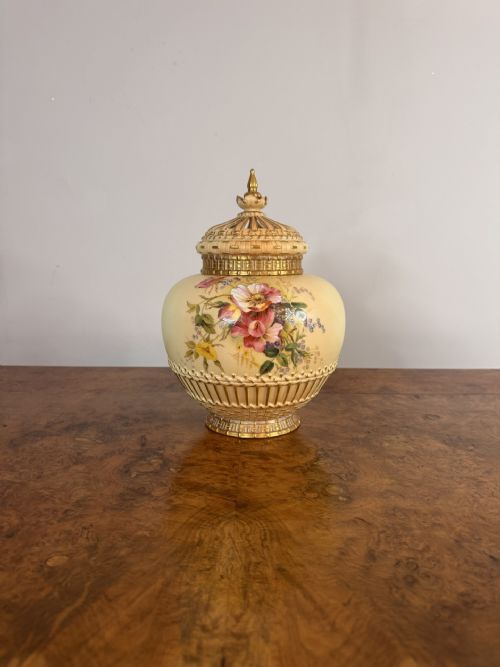
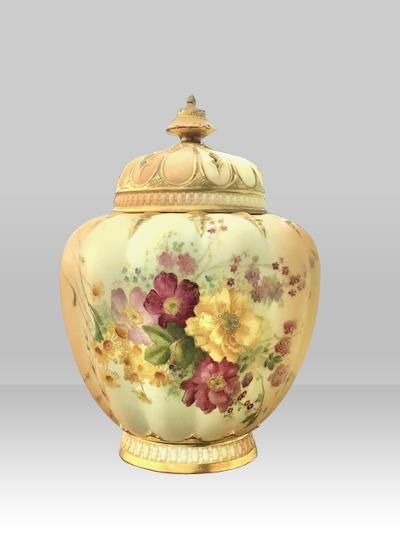
The pieces appearing on this page originate from the nineteenth century into the Edwardian period, with notable representation from English potteries and continental makers. Forms range from small round trinket boxes to pedestal vases and large lidded urns with crown covers.
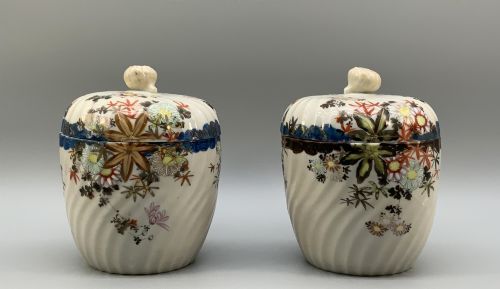
Continental workshops and English factories produced these containers in styles that reflect French Rococo Revival influences alongside Japanese decorative motifs. While some function as containers for biscuits or trinkets, others serve primarily as ornamental potpourri vessels.
How they were made
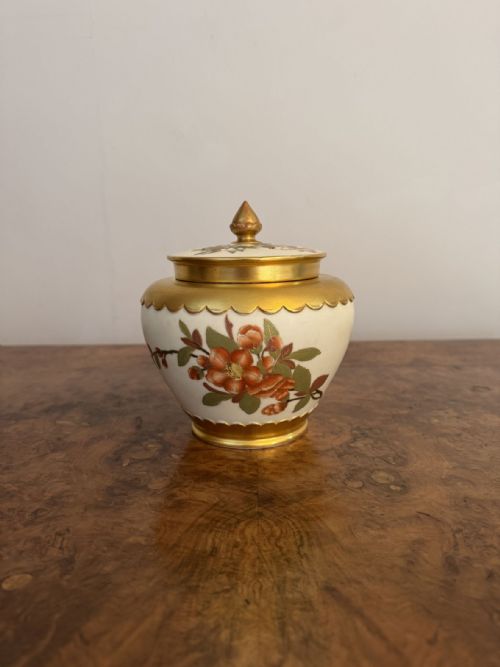
Makers utilised ceramic body materials including porcelain and earthenware, shaping them into lidded jars, boxes, and vases. These vessels received hand-painted floral and pictorial decoration applied across various coloured grounds, such as pink or blush ivory.
Gilding and gold leaf ornamentation often highlight the rims, handles, and covers of these pieces. Metal elements such as silver plate appear on specific utility forms like biscuit barrels alongside ceramic and glass components.
Victorian Porcelain Lidded Pot Retail Price Guide 2026
Typical asking prices for victorian porcelain lidded pot among the pieces listed under this phrase on Sellingantiques today, from the lower quarter to the upper quarter. They describe what is for sale here now, not the wider market.
Periods represented span from the Victorian era and the nineteenth century through to the Edwardian period.
What varies in quality
The standard of hand painting on the porcelain body sets individual pieces apart, separating mass-produced ornamentation from finely detailed brushwork. Richness in the application of gilding and gold leaf further distinguishes finer examples.
The complexity of the ceramic form, such as pedestal bases, crown covers, and intricate moulding, contributes to the overall success of the piece. Preservation of the original hand-painted details and matching covers remains a key factor in quality.
Royal Worcester·Minton
The Victorian Porcelain Lidded Pot Glossary
- Blush Ivory
- A specialised ceramic ground finish developed by English potteries during the late nineteenth century, characterised by a soft, creamy, matte tint resembling elephant tusk. It frequently forms the background for hand-painted floral motifs.
- Potpourri
- A mixture of dried plant material and spices placed inside a lidded jar or vase designed with pierced or openwork covers to release fragrance into a room. These vessels often feature decorative pedestal forms.
- Biscuit Barrel
- A covered ceramic container utilised on dining tables for storing dry biscuits, typically fitted with a metal lid and handle made from silver plate.
- Gilt
- A thin layer of gold or gold-like material applied to the surface of porcelain vessels to accent rims, handles, and painted panels.
- Trinket Box
- A small covered porcelain container used on dressing tables to hold jewellery and small personal items.
Victorian Porcelain Lidded Pot: Frequently Asked Questions
How were potpourri jars used?
These vessels held fragrant mixtures of dried flowers and spices inside drawing rooms to scent the air. The pierced covers allowed the scent to diffuse gently throughout the space.
Many examples feature decorative pedestal designs that elevated them onto mantelpieces or tables as ornamental items when not serving their primary function.
What is a biscuit barrel?
A biscuit barrel served as a lidded container placed on the dining table or sideboard for storing baked goods. Ceramic bodies paired with silver plate hardware are typical for this form.
These pieces combined practical storage with decorative ceramic presentation during Victorian dining routines.
How do I date these pieces?
Dating relies on maker marks, factory ciphers, and stylistic indicators such as blush ivory grounds or Rococo Revival moulding. References to the nineteenth century or Edwardian era provide broader chronological context.
Materials like silver plate and specific decorative palettes also assist in narrowing the period of production.