



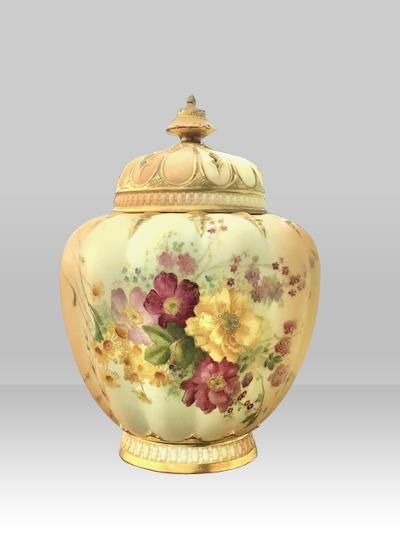


Gilded Ivory Ceramic Pot
These gilded ivory ceramic pot pieces bring Victorian and Edwardian craftsmanship into a room.
Gilded Ivory Ceramic Pot
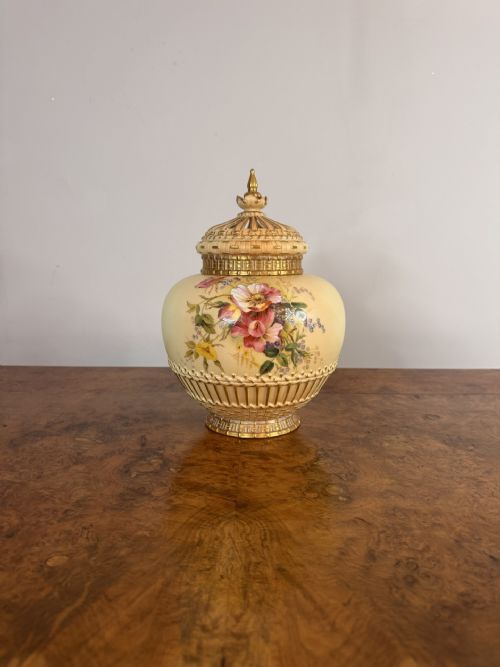
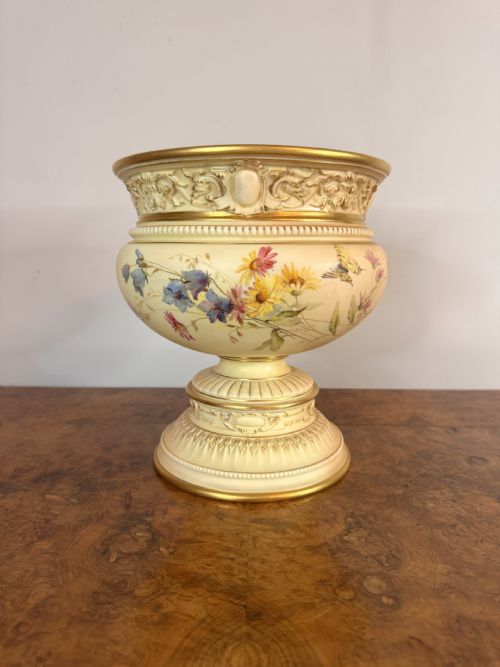
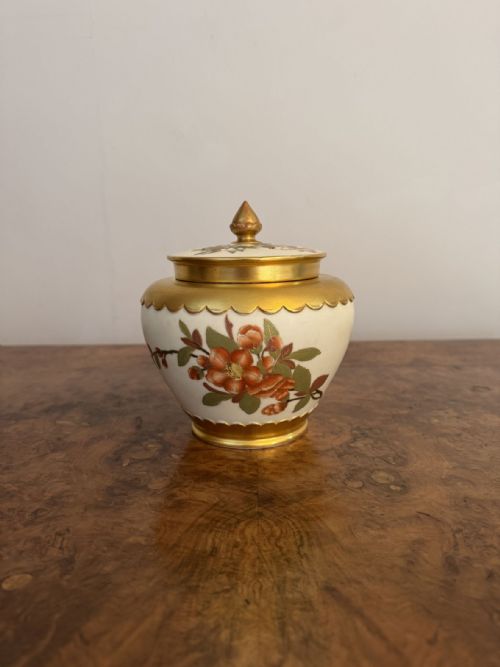
When you search for a gilded ivory ceramic pot, you are looking at nineteenth and early twentieth century porcelain and ceramic vessels, most commonly associated with Royal Worcester. The pieces range from lidded potpourri jars and vases to jardinieres and coffee pots created during the Victorian, Edwardian, and Aesthetic Movement periods.
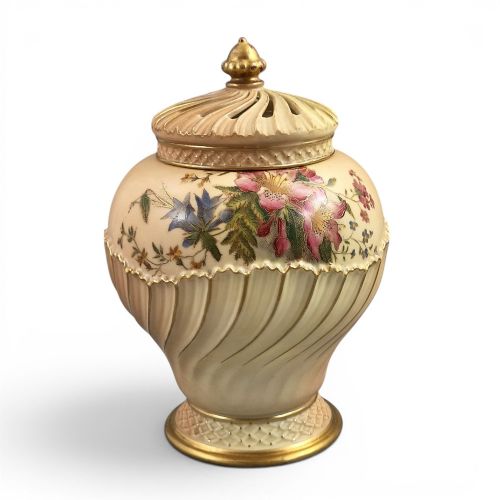
You are most likely to meet Royal Worcester blush ivory lidded jars and potpourri vases dating from around nineteen hundred to nineteen ten on this page. These items often feature crown covers, ovoid forms, and painted floral motifs framed by gold leaf or gilt highlights.
The selection reflects British ceramic production from eighteen seventy through to nineteen twenty, capturing a specific taste for soft tinted grounds combined with rich metallic gilding. Collectors encounter various forms, from small desk pieces to large floor and table urns.
How they were made
The makers utilised fine porcelain and ceramic bodies finished with a characteristic blush ivory ground tone. This pale matte surface provided a subtle canvas for hand-painted details.
Craftsmen applied enamel colours, such as floral or bird designs by artists like Jas Stinton, directly onto the body before firing. Artisans then embellished the vessels with gold leaf, gilt, and heavy gilding along the rims, handles, and covers.
Gilded Ivory Ceramic Pot Retail Price Guide 2026
Typical asking prices for gilded ivory ceramic pot among the pieces listed under this phrase on Sellingantiques today, from the lower quarter to the upper quarter. They describe what is for sale here now, not the wider market.
Listings feature items from the Victorian, Edwardian, and nineteen hundreds periods, utilising porcelain, ceramic, gilding, and enamel.
What varies in quality
The division between standard production and the finest work lies in the hand-painted artistry and the crispness of the porcelain shape. Pieces bearing specific artist signatures display superior brushwork and detailed pictorial subjects compared to factory-decorated standard patterns.
The richness and application of the gold leaf or gilt also determine the distinction of an item. Heavier, burnished gilding and complex mouldings, such as crown covers on potpourri jars, separate ordinary utility items from top-tier display pieces.
Royal Worcester
The Gilded Ivory Ceramic Pot Glossary
- Blush ivory
- A soft, creamy porcelain ground colour developed by Royal Worcester in the late nineteenth century to mimic the appearance of real ivory. This matte finish absorbs light and contrasts with bright gilding.
- Potpourri jar
- A lidded ceramic vessel pierced with holes in the inner or outer cover to release the scent of dried flower petals and spices placed inside. These often feature elaborate ovoid bodies.
- Gilding
- The application of gold leaf, gold gilt, or powdered gold onto the ceramic surface to highlight handles, rims, and decorative motifs. Burnishing gives this metallic layer its bright reflection.
- Jardiniere
- A large decorative ceramic pot or bowl designed to hold a potted plant or floral arrangement. These stand on tables or floors rather than serving as enclosed jars.
Gilded Ivory Ceramic Pot: Frequently Asked Questions
What is a gilded ivory ceramic pot?
A gilded ivory ceramic pot is a decorative porcelain vessel, typically originating from the Victorian or Edwardian eras, featuring a pale matte ground and gold leaf highlights.
These pieces often take the form of lidded jars, vases, or potpourri containers designed to hold scented botanicals or simply display intricate painting.
How were these pots used?
Victorian households used potpourri jars and lidded vessels to fragrance principal rooms by placing dried flower mixtures beneath pierced covers.
Larger vessels like jardinieres and decorative vases served as ornamental centrepieces for plants and floral displays on tables and mantelpieces.
How do I date a Royal Worcester piece?
Dating relies on factory mark systems stamped on the base, which changed shape and added dots or symbols across different decades.
Stylistic shifts, such as the introduction of blush ivory grounds in the late nineteenth century and Edwardian crown covers, also indicate the period of manufacture.
How do I care for antique porcelain?
Dust these items gently with a dry, soft cloth and avoid using harsh chemical cleaners that can damage fragile enamel paints and delicate gilding.
Keep them away from direct sunlight and areas prone to heavy moisture or temperature fluctuations to preserve the ceramic body and surface finish.