


Victorian Porcelain Covered Jars
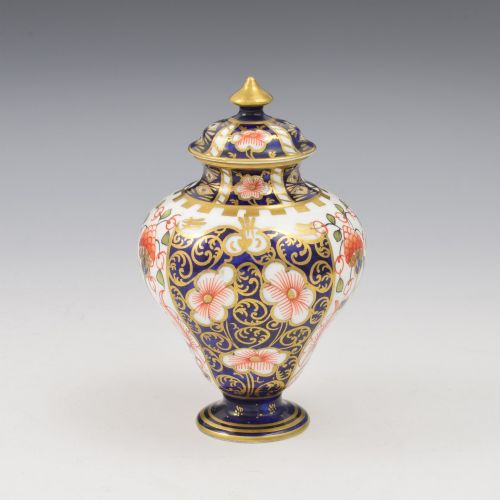
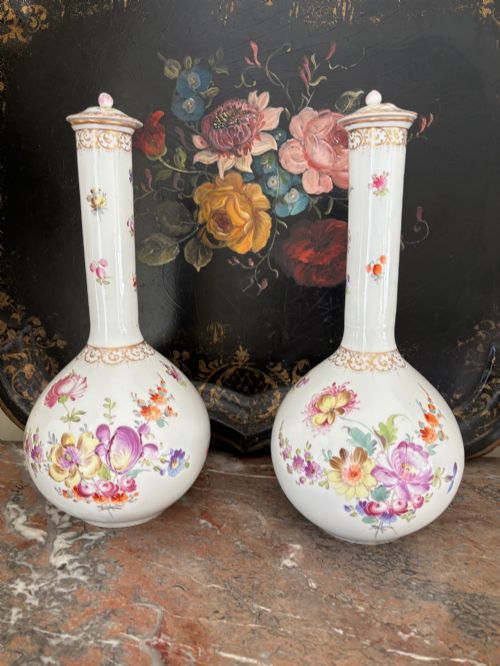
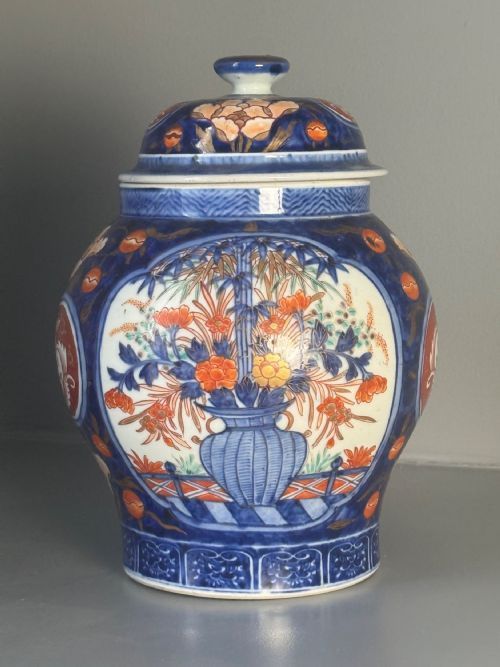
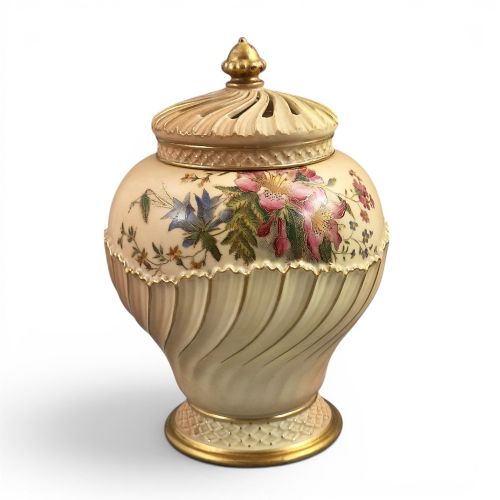
These Victorian porcelain covered jars bring hand-painted floral motifs, blush ivory grounds and Imari palettes into domestic interiors as decorative lidded vessels.
Victorian Porcelain Covered Jars
Victorian porcelain covered jars span bulbous vases, ginger jars and pot-pourri vessels fitted with removable lids. These pieces originate across the nineteenth century and extend into the Edwardian period, incorporating styles from Rococo Revival to Japanese Meiji influences.
Continental factories and English potteries shape the selection, offering everything from small miniature vessels to large urns and lidded vases. Pot-pourri jars with crown covers and hand-painted floral decoration appear frequently among the listed objects.
Materials and construction
Potters shape these vessels using porcelain, bone china and ceramic bodies, applying enamel pigments and hand-painted scenes directly onto the surface. Gilding, gold leaf and gold gilding provide metallic highlights to borders and handles.
Factories utilise specialised glazing techniques, producing blue grounds, blush ivory finishes and white surfaces suited to detailed figurative painting. Lids and covers are individually formed to fit specific vase collars and urn necks.
Object forms include pot-pourri jars with crown covers, bulbous vases, urns, and ginger jars.
Judgement of quality
Quality rests upon the execution of the hand-painted decoration, where fine brushwork in floral sprays and Watteau scenes separates standard production from superior output. The precision of the gilding and the clarity of cobalt blue grounds contribute further to the visual standard.
The sophistication of the modelling, visible in bulbous forms and pierced crown covers, defines the upper tier of these vessels. Maker attribution and the retention of factory marks provide additional indicators of workshop origin.
Royal Crown Derby·Sitzendorf·Royal Worcester·Samuel Alcock·Helena Wolfsohn·Augustas Rex
The Victorian Porcelain Covered Jars Glossary
- Pot-pourri jar
- A lidded vessel designed to hold dried scented plant material, often featuring a pierced cover to release fragrance. These jars appear frequently in blush ivory porcelain.
- Imari
- A decorative style characterised by underglaze blue, iron red and gold colouring, influenced by Japanese export wares. Victorian potteries adapted this palette for various vase forms.
- Blush ivory
- A soft, matte cream-coloured porcelain ground developed by English manufactories during the late nineteenth century. It frequently serves as a backdrop for hand-painted floral decoration.
- Ginger jar
- A ceramic vessel with a broad body and domed cover, originating for storage and later adopted as a decorative display piece. Continental and English makers produce versions in porcelain.
- Gilding
- The application of gold leaf or gold paint to ceramic surfaces to accentuate rims, handles and panels. This technique highlights moulded details on nineteenth-century urns.
Victorian Porcelain Covered Jars: Frequently Asked Questions
What were Victorian porcelain covered jars used for?
These lidded vessels served primarily as ornamental chimney-piece ornaments and display pieces in period drawing rooms. Specific forms such as pot-pourri jars held dried rose petals and spices to scent the air.
Larger urns and lidded vases functioned as architectural focal points on console tables and sideboards. Their decorative presence overshadowed any practical storage use.
How do I identify Royal Worcester blush ivory?
Royal Worcester blush ivory pieces feature a distinctive warm, semi-matte cream-toned glaze that mimics the appearance of ivory. This surface often carries delicate hand-painted floral motifs and raised gilding.
Factory stamps and date ciphers underneath the base confirm the period of production, commonly spanning the late nineteenth and early twentieth centuries.
What is the difference between Imari and regular floral jars?
Imari decorated jars utilise a distinct palette combining cobalt blue, iron red and gold gilding in traditional Japanese-inspired panels. Regular floral jars rely on naturalistic hand-painted botanical studies without the characteristic Imari geometry.
English and continental interpretations of Imari often incorporate European vessel shapes while retaining the Asian-derived colour scheme.
How should I clean porcelain covered jars?
Dust these vessels gently with a soft dry cloth to remove surface particles without disturbing delicate enamel or gilding. Avoid immersion in water, particularly on pieces with hand-painted surfaces or gold leaf.
Handle lids and covers separately to prevent chipping along the rims where the ceramic sits flush against the body.
Are all these jars from the Victorian period?
While the core of the selection originates in the nineteenth century, the pieces extend into Edwardian production and later dates around nineteen twenty. Stylistic revivals such as Rococo Revival and Meissen-style painting continued across these decades.
Makers often drew upon earlier continental aesthetics, resulting in mixed chronological influences across individual items.