



Victorian Pollard Oak
Victorian pollard oak brings distinctive clustered growth patterns into grand interior furniture.
Victorian Pollard Oak
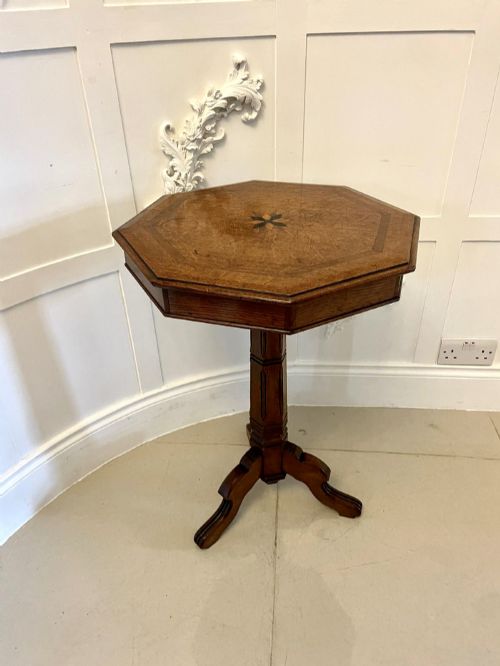
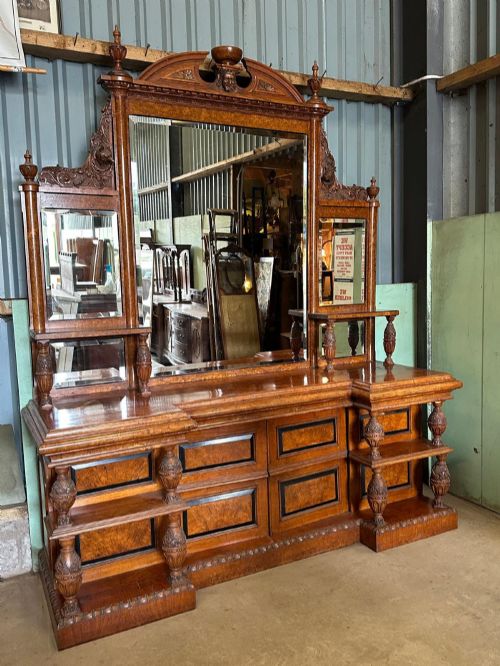
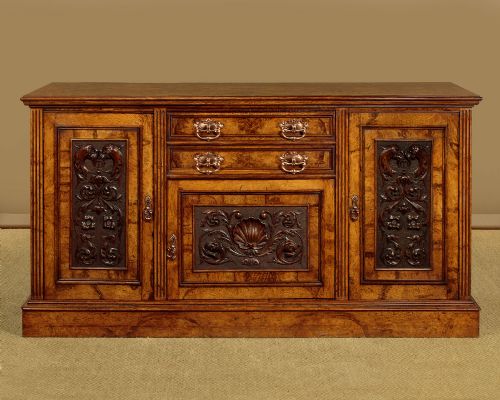
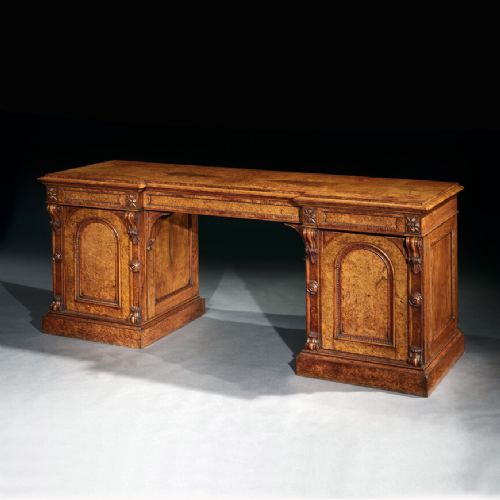
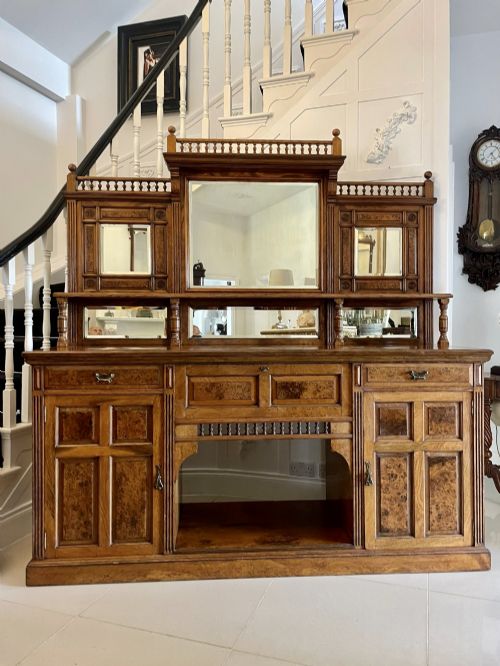
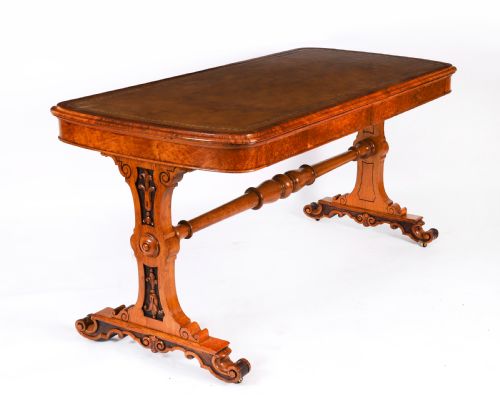
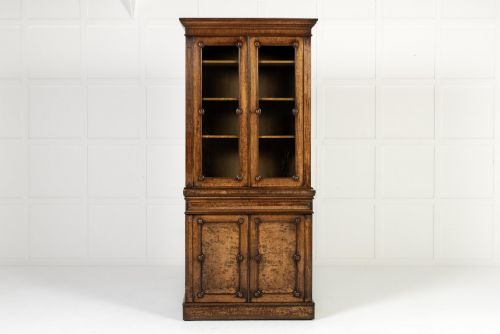
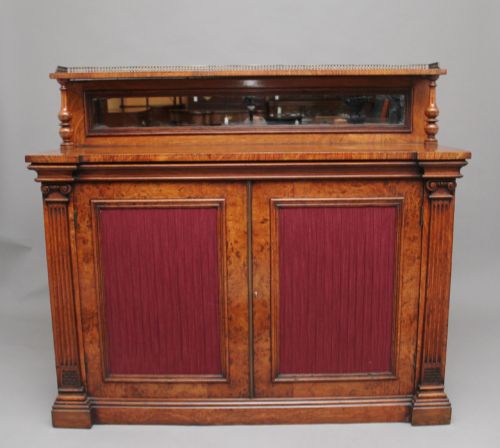
When you search for Victorian pollard oak, you encounter dense nineteenth-century timber figured with dark knots and swirling rings. Sideboards, bookcases, and writing desks dominate the selection, shaped into substantial formats for formal libraries and dining rooms.
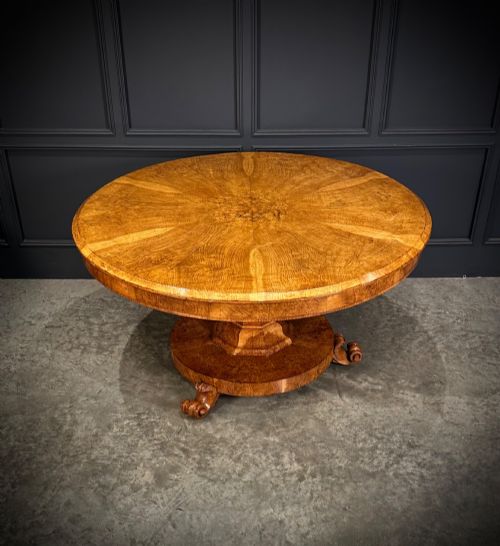
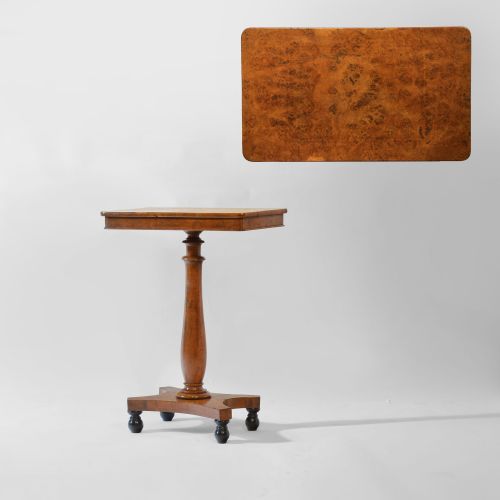
Dining tables and smaller centre tables also appear frequently, showcasing the timber across expansive circular or extending surfaces. Cabinetmakers utilised the decorative grain primarily for drawer fronts, panels, and borders.
The aesthetic bridges domestic utility with display, appearing on everything from massive mirror-backed credenzas down to tabletop ink stands and stationary boxes.
Materials and Construction
Makers constructed these pieces using solid oak frames paired with veneers sliced from pollarded trees, where regular pruning stimulated dense clusters of knotwood. This decorative timber was laid over supportive secondary woods such as plain oak and pine.
Brass hardware, leather inserts, and cut crystal components frequently accompany the woodwork on desks, tantalus sets, and campaign pieces. Structural joinery relies on traditional methods suited to heavy Victorian cabinetry, accommodating the movement of heavily figured wood.
Even the dry bar needs a lock when the crystal decanters are secured inside a Victorian tantalus.
Judging Pollard Oak
Quality rests upon the density and placement of the figuring across the timber face. Uniform, tightly clustered knot patterns command greater appreciation than sparse or irregular grain distribution.
The crispness of carved elements and the integration of secondary timbers also signal standard of manufacture. Well-executed pieces maintain stability across large surfaces without severe splitting in the veneer.
Gillows·James Winter and Sons·Boothroyd Sons and Rimmer·Williams and Gibton·Thomas Turner·A Blain and Son·Edwards and Roberts·Maple and Co
The Victorian Pollard Oak Glossary
- Pollard oak
- Timber harvested from trees that were cut back close to the trunk to encourage dense, knotty regrowth. This process creates the characteristic swirling patterns prized by nineteenth-century cabinetmakers.
- Credenza
- A low-profile storage cabinet designed for dining rooms or parlours. These often feature mirrored backs and glazed doors in this timber.
- Wellington chest
- A tall, narrow set of drawers secured by a locking side flap hinged to the vertical stile. They typically contain multiple shallow drawers.
- Teapoy
- A small pedestal table fitted with internal compartments for storing dry tea leaves. They reflect the domestic habits of the period.
- Tantalus
- A locking wooden frame holding decanters visible yet secured from unauthorized pouring. They are frequently lined with velvet and fitted with brass handles.
Victorian Pollard Oak: Frequently Asked Questions
What is pollard oak?
Pollard oak comes from trees pruned repeatedly at height, which forces dense clusters of small branches to form. This eccentric growth creates a heavily figured wood grain filled with dark pins and swirls.
Cabinetmakers sliced this timber into decorative veneers for prominent surfaces on nineteenth-century furniture.
How do I care for pollard oak furniture?
Keep these items away from direct sunlight and steady heat sources to protect the historic veneer from drying and lifting. Regular dusting with a dry cloth preserves the polished surface.
Avoid applying modern silicone polishes, relying instead on traditional wax finishes when maintenance is required.
Where were these pieces used?
Large sideboards, credenzas, and extending dining tables belonged in formal dining rooms and entertaining spaces. Desks, bookcases, and Davenport cabinets furnished private libraries and studies.
Smaller items like ink stands and capstan salts sat upon writing desks and dining tables.
How do I identify a Victorian piece?
Examine the secondary timbers inside drawers and behind panels, noting the presence of pine or standard oak alongside structural hand-cut joinery. Stylistic indicators include Gothic revival motifs, heavy brass fittings, and mirror backs.
Construction methods reflect industrial-era improvements combined with skilled hand finishing.