






Victorian Pocket Flask
These victorian pocket flask pieces are pocket companions for spirits and scents, prized for their sturdy metalwork and glass bodies.
Victorian Pocket Flask
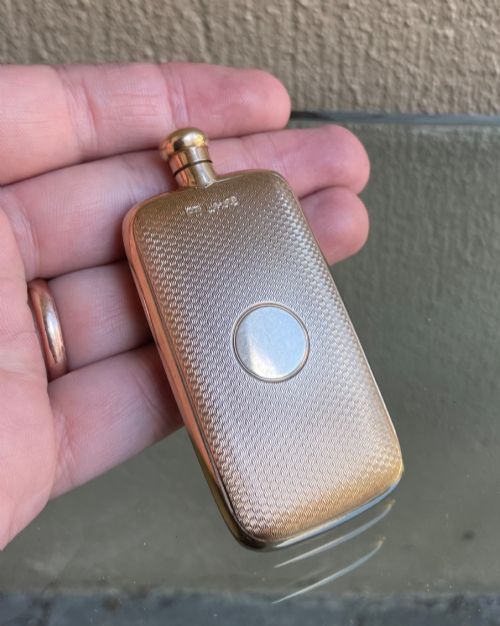
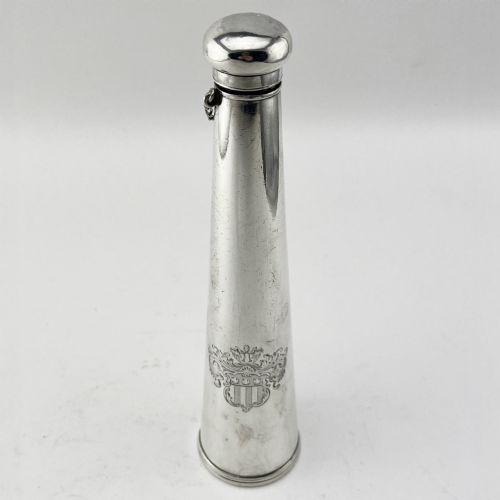
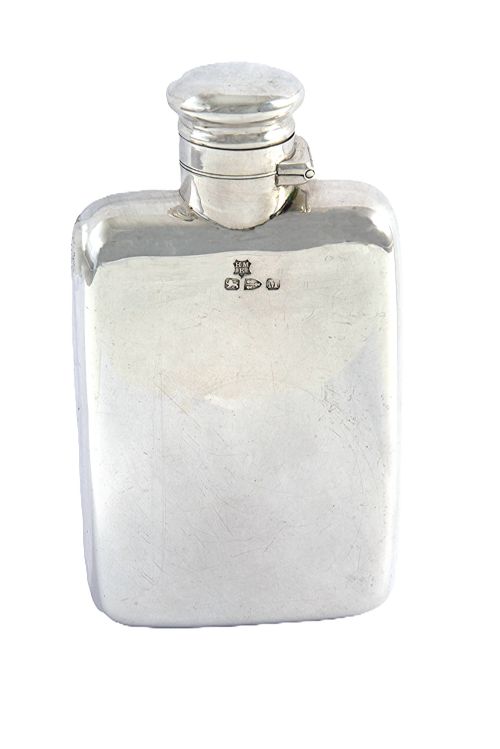
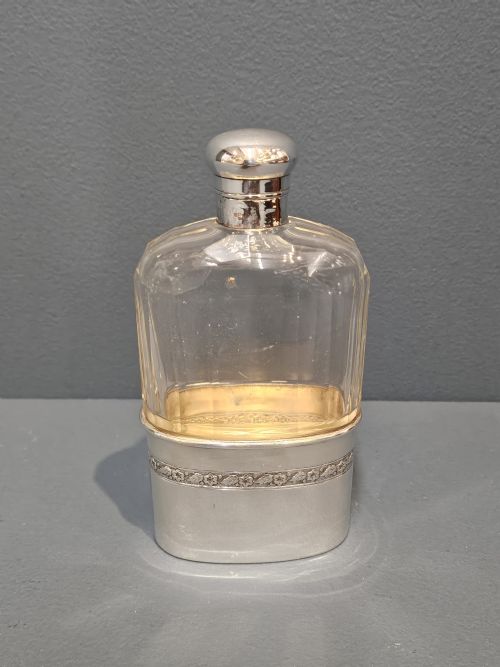
A victorian pocket flask typically takes the form of a curved hip flask or a small scent bottle designed to fit neatly into a pocket or hunting bag. The selection spans straightforward silver containers and combination glass vessels fitted with removable drinking cups.
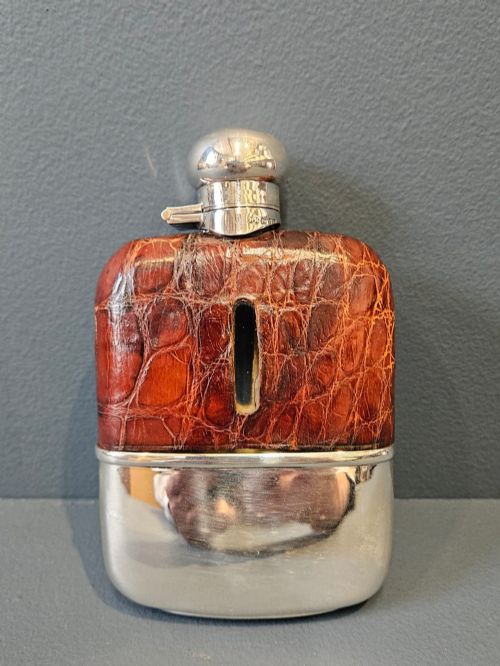
Most examples originate from the Victorian era, alongside related pieces stretching from the mid eighteenth century into the twentieth century. Forms range from plain sterling silver and silver plate to versions wrapped in crocodile leather or blue opaline glass.
Materials and construction
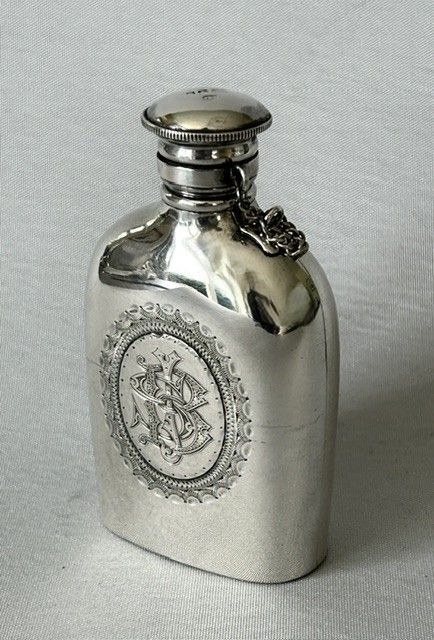
Makers shaped sterling silver, silver plate, and occasionally nine-carat gold into sturdy bodies, sometimes applying a hammered finish or floral pattern engraving. Glass and cut glass bodies provide the lower portion of combination flasks, protected by fitted metal mounts.
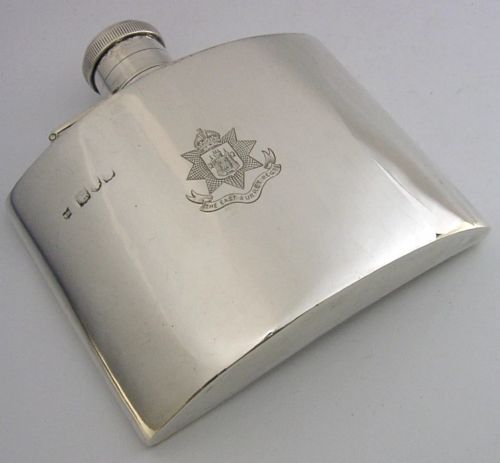
Leather elements such as crocodile leather wrap sections of the metal or glass, while internal collars and captive screw caps secure the contents. Hallmarks stamped into the metal indicate assay offices in locations such as London, Birmingham, Chester, and Glasgow.
Some military flasks trace back to specific units like the East Surrey Regiment during the Boer War era.
Judging quality in pocket flasks
Quality rests on the weight of the metal and the precision of the fit between removable cups and the main body. Heavier gauge sterling silver and crisp hallmarks denote higher tier production.
The integration of materials also sets pieces apart, such as flawless cut glass paired with tightly stitched leather or gilt interiors that resist corrosion from spirits.
Hukin and Heath·Asprey London·J Dixon·George Betjemann and Sons
The Victorian Pocket Flask Glossary
- Sterling silver
- A silver alloy containing 92.5 percent pure silver by mass, widely used for durable Victorian metalware. It provides the primary material for the better class of pocket flasks.
- Removable cup
- A small drinking vessel fitted to the base of a combination glass and metal flask. This slides off to serve spirits in the field.
- Hallmark
- A series of official marks stamped on precious metals indicating the standard of purity, assay office, and year of manufacture. These stamps help date and attribute Victorian silver.
- Silver plate
- A layer of silver applied to a base metal core, offering the appearance of solid silver at a lower cost. Large spirit flasks frequently utilise this durable technique.
Victorian Pocket Flask: Frequently Asked Questions
How do I use a pocket flask?
These flasks are designed to carry spirits or scents securely in a pocket during travel or outdoor pursuits. The captive cap prevents leaks while allowing quick access to the contents.
For combination flasks, the removable bottom cup slides off to function as a small drinking vessel. Care should be taken to clean the interior thoroughly after carrying strong spirits.
How do I date a silver flask?
Dating relies heavily on the hallmarks stamped into the metal by official assay offices. A specific date letter or town mark usually reveals the exact year and location of manufacture.
Stylistic clues such as floral engraving, hammered finishes, or the presence of crocodile leather also point toward specific decades like the late Victorian era.
Are glass flasks fragile?
Glass and cut glass portions are generally thick and robust, intended for active outdoor use rather than mere display. Metal mounts and leather wraps provide an extra layer of structural defence.
Nevertheless, care is required to avoid dropping them on hard surfaces, as the glass body remains susceptible to severe impacts.