
Victorian Plinth Base Chest
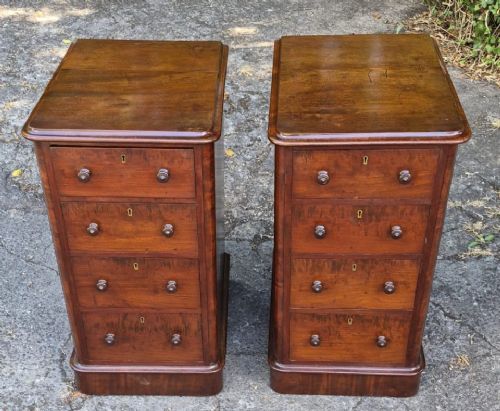
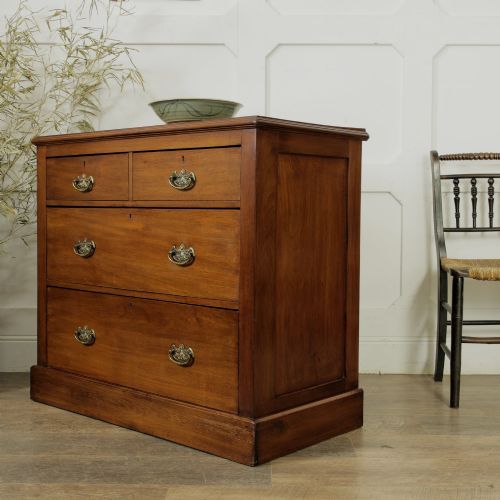
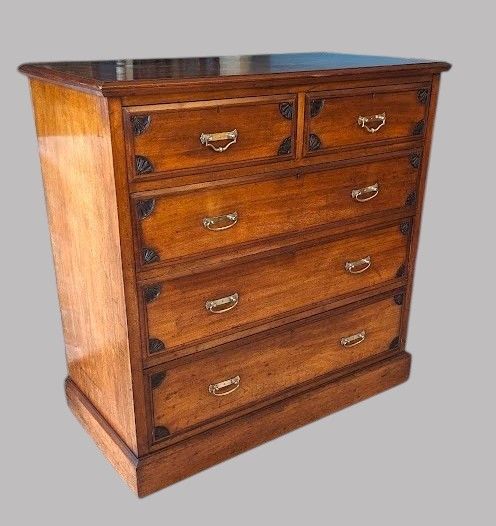
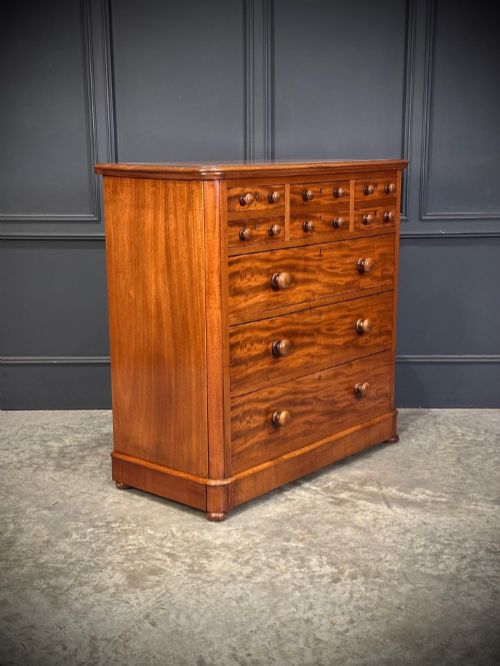
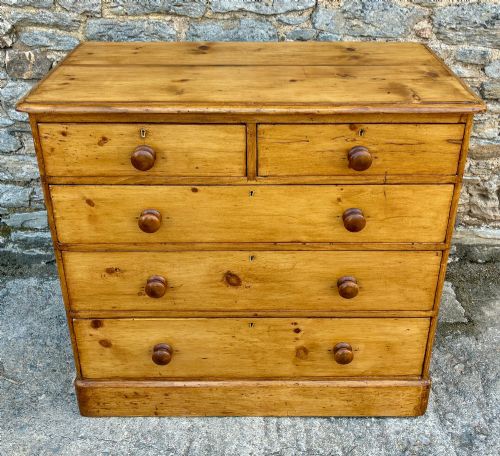
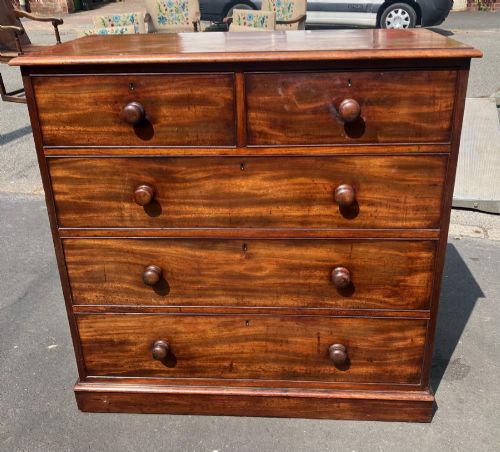
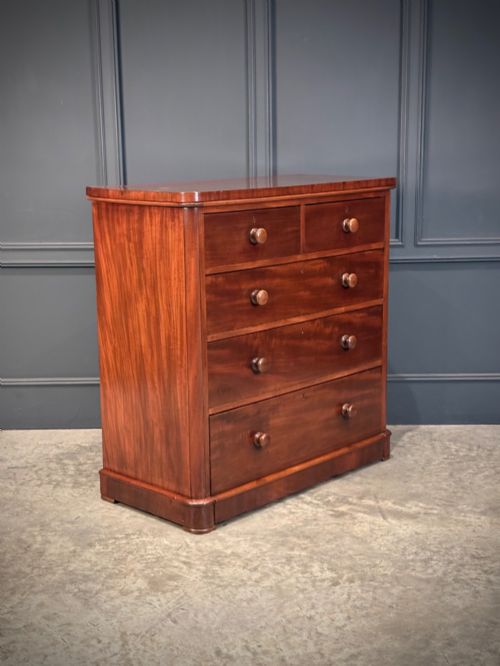
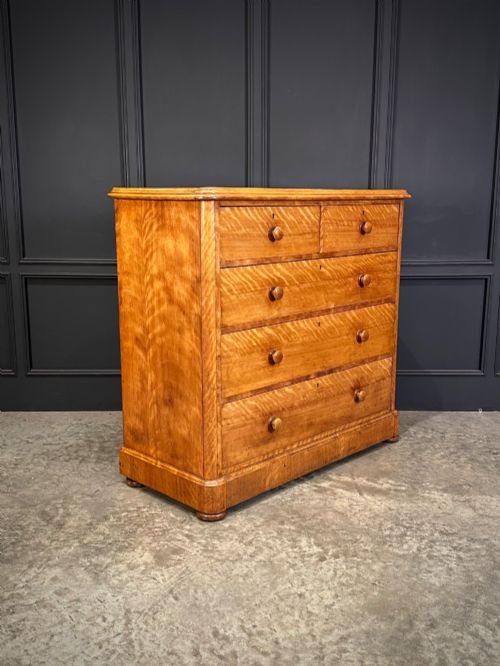
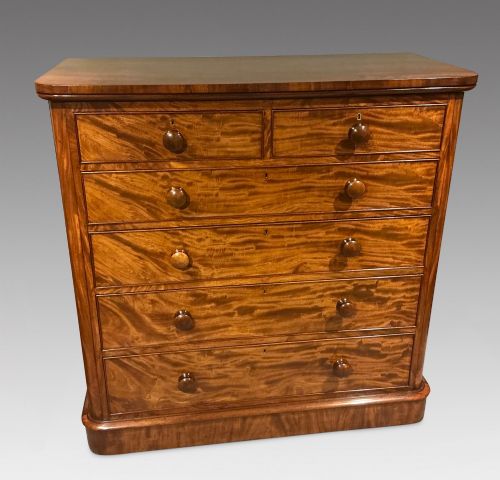
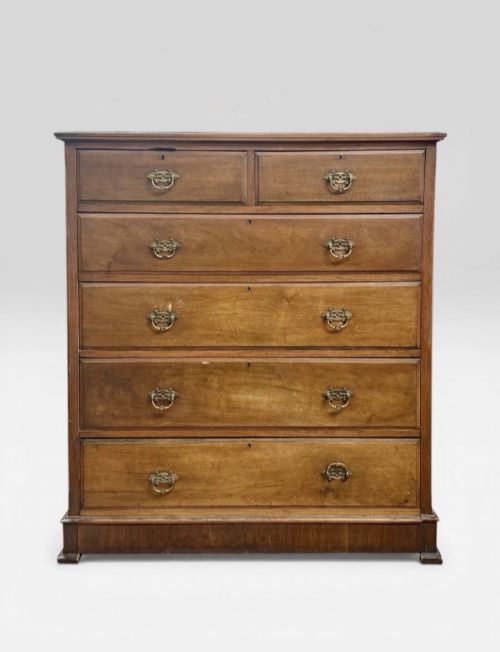
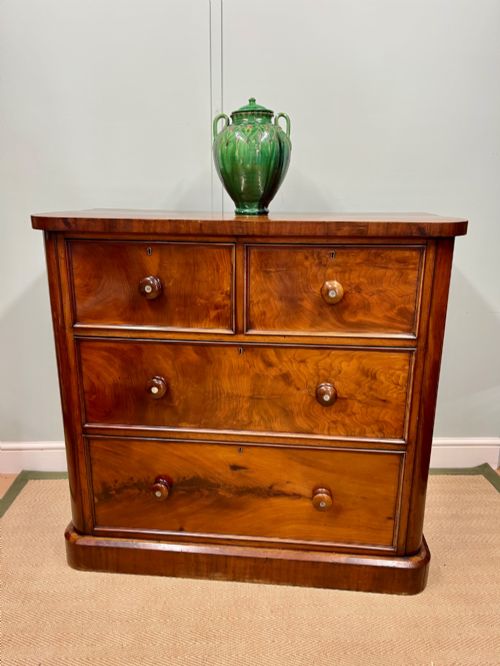
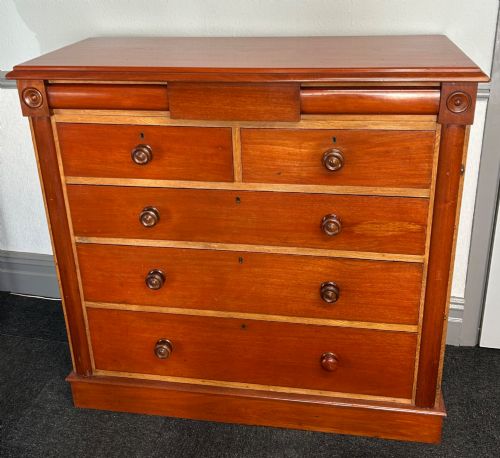
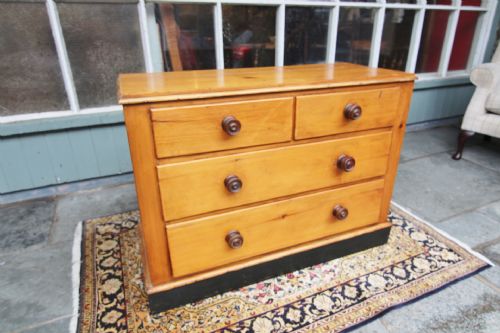
A victorian plinth base chest is a sturdy storage piece defined by its solid foundation rather than traditional bracket feet.
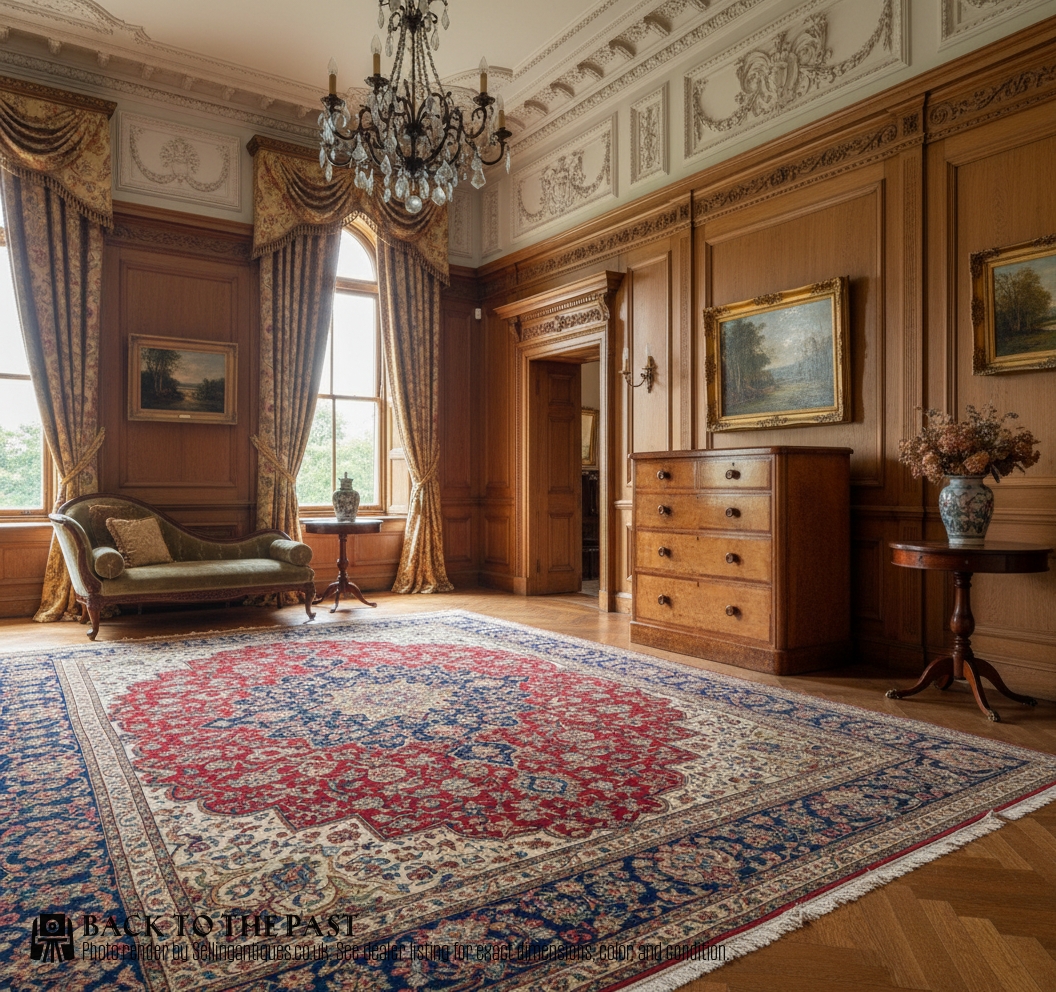
Victorian Plinth Base Chest
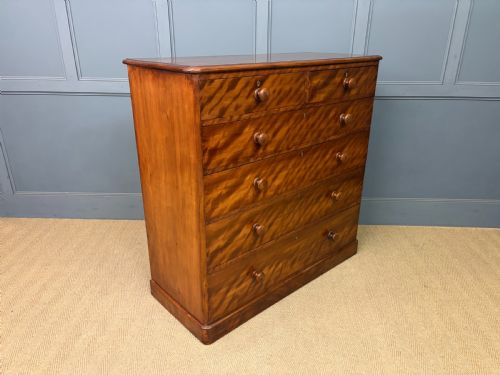
A victorian plinth base chest brings grounded solidity to a room, trading traditional bracket feet for a clean timber foundation. Most examples found here date across the nineteenth century, ranging from mid-Victorian pieces to later nineteenth-century work.
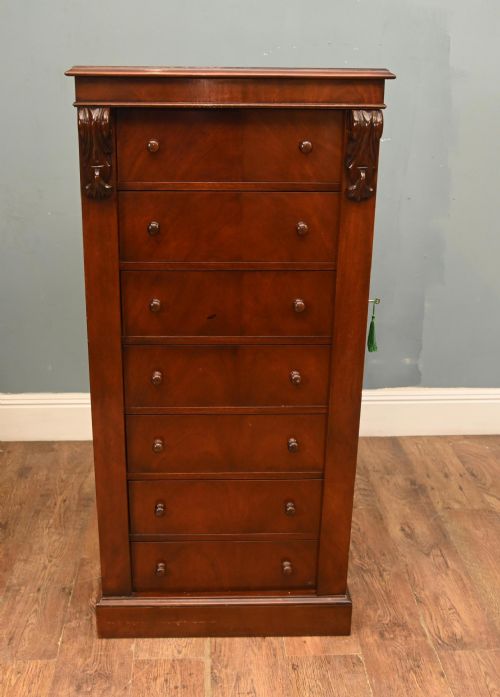
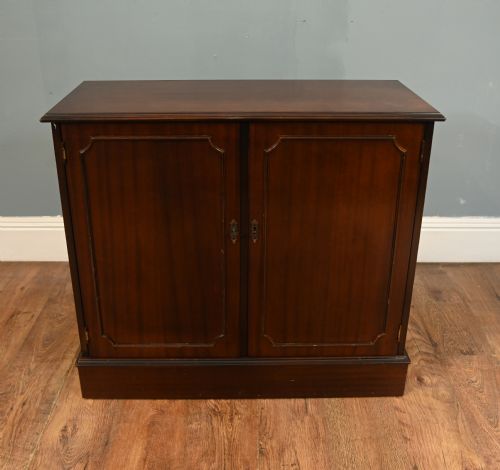
The standard form is a chest of drawers, though variants such as Wellington chests, bedside chests, and side cabinets also appear. Mahogany remains the dominant timber, accompanied by pine, satinwood, burr walnut, and ash.
These pieces serve as practical storage units while anchoring a room with substantial nineteenth-century proportions. They reflect the shift towards heavier, grounded cabinetry favoured by Victorian makers.
Materials and construction methods
Cabinet makers relied heavily on solid timber and veneers, using mahogany, flame mahogany veneer, pine, satinwood, and oak across the pieces. Secondary woods like cedar frequently lined the interior drawers.
Construction involved secure joinery designed to support deep drawers and heavy carcases resting directly upon a wooden plinth base. Surfaces were often enhanced with brass hardware, wooden knobs, or subtle inlay work.
Victorian Plinth Base Chest Retail Price Guide 2026
Typical asking prices for victorian plinth base chest among the pieces listed under this phrase on Sellingantiques today, from the lower quarter to the upper quarter. They describe what is for sale here now, not the wider market.
Some nineteenth-century chests double as shoe box cabinets or wine storage units, proving Victorians hid all sorts in plain sight.
Assessing quality in a plinth base chest
Quality rests upon the selection of timber, such as highly figured flame mahogany or satinwood veneers, contrasted with simpler utility pieces made from pine or oak. The crispness of the plinth construction and the neatness of internal drawer linings indicate the maker's hand.
Refined pieces display careful proportioning across drawer configurations, such as deep two-over-two arrangements or specialised locking mechanisms on Wellington chests. The integration of brass fittings and subtle decorative embellishments further separates standard utility furniture from finer workshop output.
Heal & Son·Mawer & Stephenson·Harris Lebus
The Victorian Plinth Base Chest Glossary
- Plinth base
- A flat, solid wooden platform supporting the base of a cabinet or chest instead of traditional legs or feet.
- Wellington chest
- A tall, narrow chest of drawers secured by a single hinged locking side pilaster.
- Flame mahogany
- A decorative wood veneer cut from the fork of a mahogany tree to produce a distinctive flickering flame pattern.
- Cedar lined
- Drawer interiors constructed using cedar wood, chosen historically for its aromatic qualities and stability.
Victorian Plinth Base Chest: Frequently Asked Questions
What is a plinth base?
A plinth base is a solid wooden platform that sits directly on the floor, replacing the traditional feet or brackets found on earlier chests.
This construction gives the furniture a heavier, more grounded appearance and a sturdy foundation.
How do I date a Victorian chest?
Dating relies on timber choices, construction techniques, and handle styles recorded across the nineteenth century. Mid-Victorian pieces often use flame mahogany, while later examples incorporate pine or ash.
Drawer linings and the presence of maker stamps also help narrow down the decade of production.
Are these chests suitable for modern bedrooms?
These chests offer deep drawers and substantial surface space, making them practical for modern clothing and general bedroom storage.
Their solid proportions allow them to function well as standalone statement furniture.
What is a Wellington chest?
A Wellington chest is a tall, narrow configuration featuring multiple shallow drawers secured by a locking side pilaster.
This specific design originated to keep contents secure and was widely produced in mahogany during the nineteenth century.