
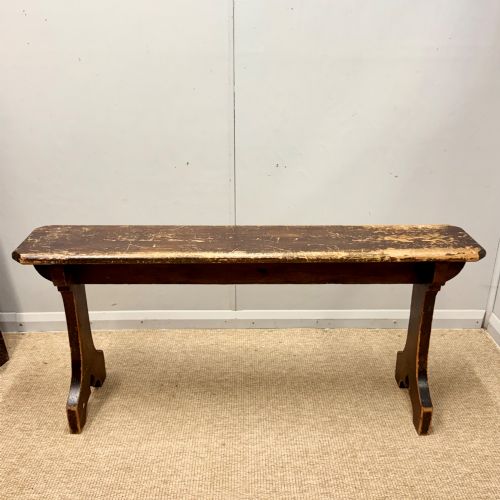
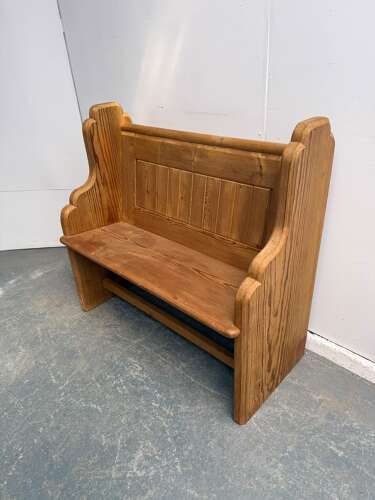
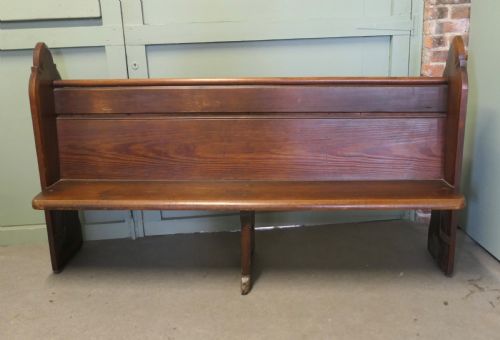
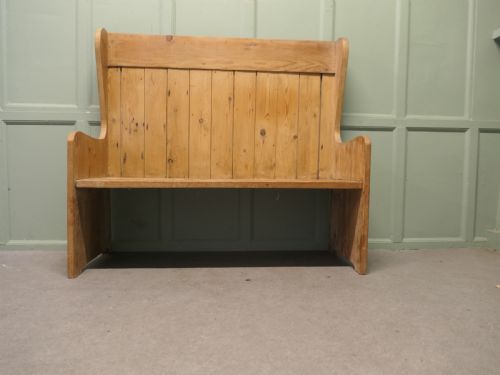

Victorian Pine Hallway Bench
A victorian pine hallway bench offers robust utility and character, bringing period timber into an entrance space.
Victorian Pine Hallway Bench
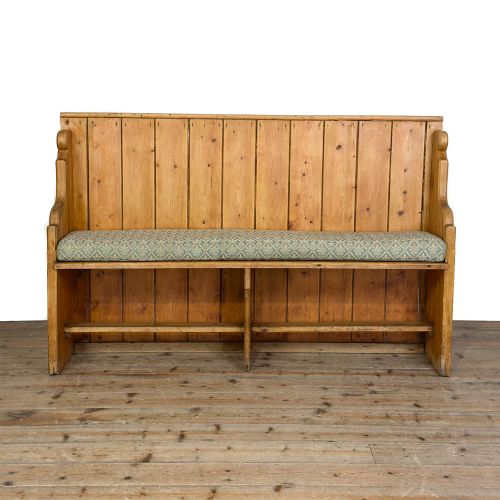
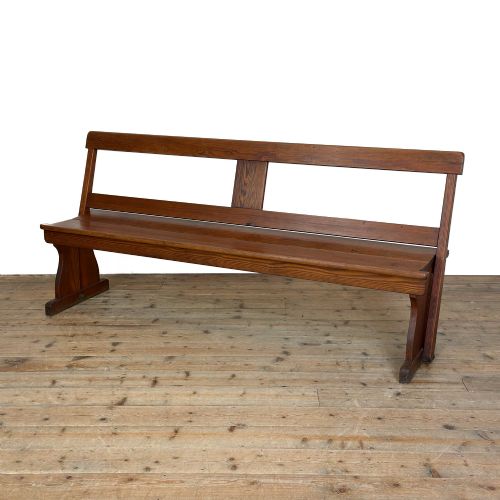
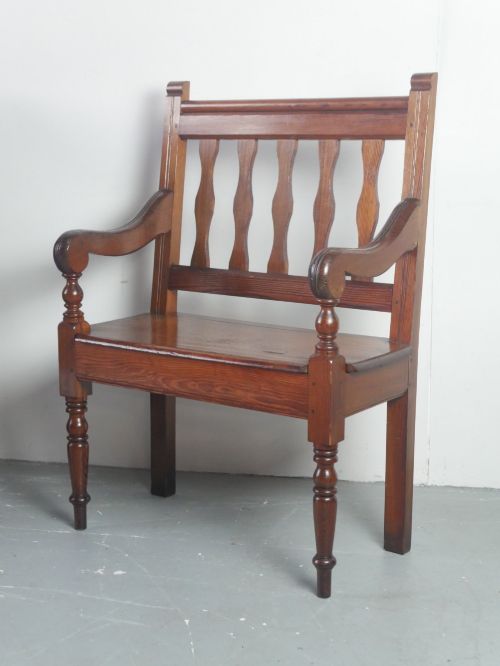
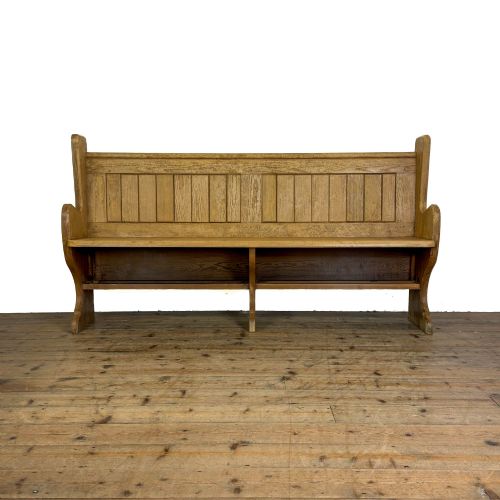
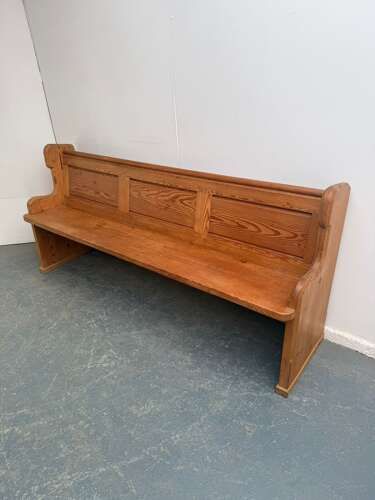
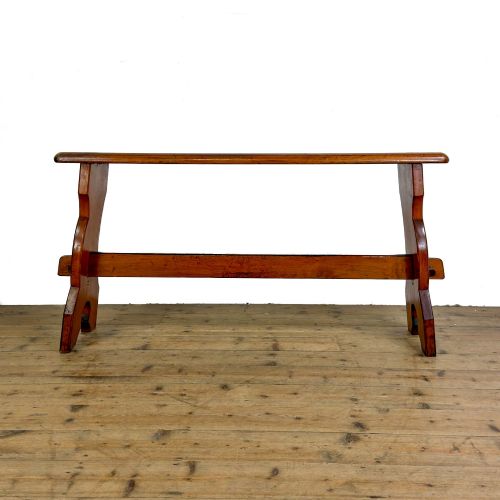
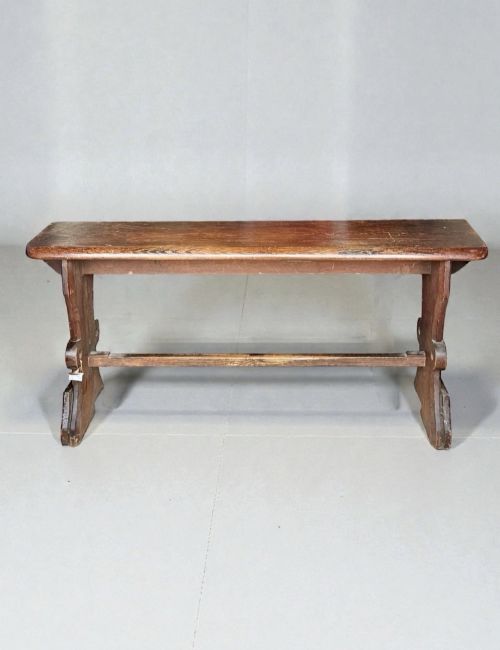
A victorian pine hallway bench comprises various seating forms originating from the nineteenth century, including church pews, box settles, and chapel seats made from sturdy coniferous woods. These pieces serve practical seating and storage roles in entranceways, hallways, and reception areas, drawing on utilitarian and ecclesiastical designs.
Makers and builders utilised accessible domestic and imported softwoods, frequently pairing the primary pine timber with elm, pitch pine, walnut, or iron hardware. Many examples retain their original painted surfaces in blue, grey, cream, or black, while others display traditional waxed finishes.
Materials and Construction
Makers built these benches using solid pine, pitch pine, and country elm, joining structural timbers with traditional joinery methods suited to heavy daily use in chapels, pubs, and halls. Box settles and pews often integrate panelled backs, hinged storage compartments, and iron brackets for added rigidity.
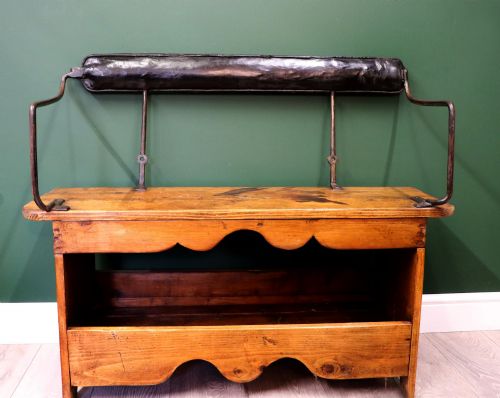
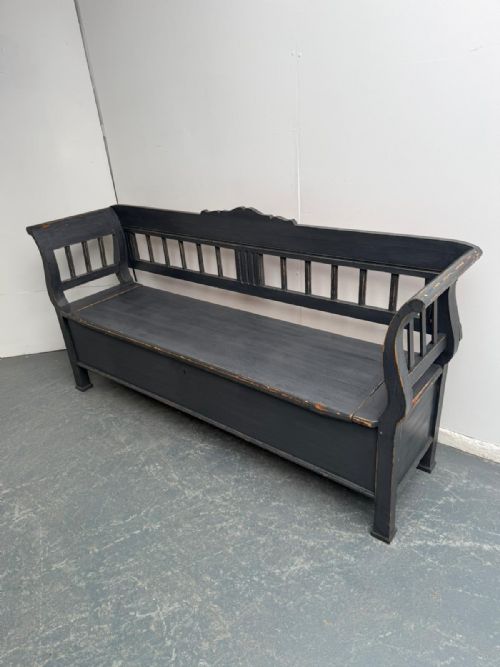
Surfaces were finished with protective wax to highlight the grain of the softwood or coated in layers of paint, which frequently survive in original blue, grey, cream, or black pigments. Secondary elements incorporate iron fittings, fabric upholstery, and leather details on specific ecclesiastical or domestic forms.
A chapel pew marked for Llanfair brings a direct touch of Welsh ecclesiastical history straight into your boot room.
Quality and Distinction
The distinction between standard utility seating and finer examples lies in the integrity of the original construction and the survival of untouched painted or waxed surfaces. Pieces retaining original ecclesiastical markings, robust box settle compartments, or unusual mechanisms like flip-over seats demonstrate superior historical interest.
Proportions and timber selection also divide the range, with slim, longer hallway formats and dense pitch pine or figured elm additions commanding greater utility in modern domestic spaces. The presence of regional attributes, such as spindled galleries on Hungarian imports or Gothic architectural details, separates ordinary workshop output from more distinctive regional pieces.
The Victorian Pine Hallway Bench Glossary
- Box settle
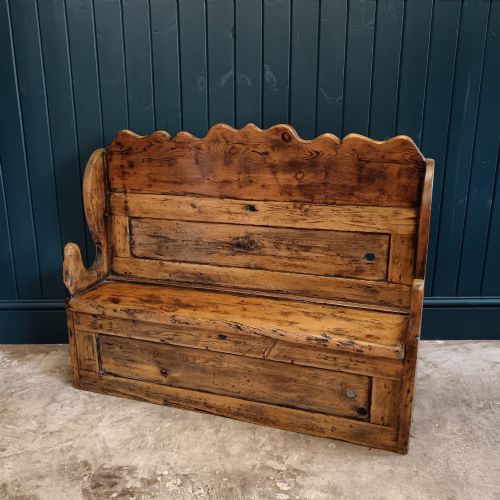
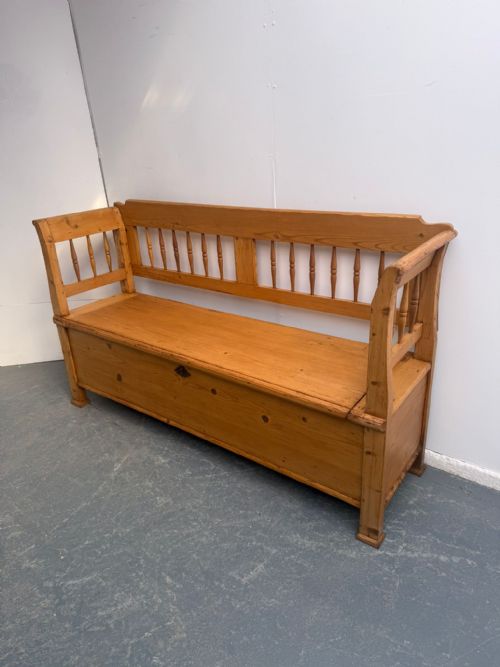
- A high-backed wooden bench featuring a concealed storage compartment beneath the seat. This form protected occupants from draughts in hallways and firesides.
- Pitch pine
- A dense, resinous softwood derived from North American pine species. It provides exceptional durability and a pronounced grain pattern compared to standard domestic pine.
- Church pew
- An elongated wooden bench designed for ecclesiastical seating. These often include book ledges or enclosed ends and appear frequently in domestic hallways.
- Glossary item four
- Settle. A traditional wooden bench with high backs and arms designed to block cold air. They frequently served in country pubs and large domestic halls.
Victorian Pine Hallway Bench: Frequently Asked Questions
How do I use a hallway bench?
These benches fit neatly into entrance spaces to provide both seating and storage when fitted with box compartments. They offer a practical spot for putting on shoes while introducing period character to the threshold.
Taller versions with high backs also function effectively in larger reception rooms or alongside dining tables. Their narrow profiles allow them to line hallways without obstructing movement.
What is a box settle?
A box settle is a wooden bench with a hinged seat lifting to reveal a storage compartment underneath. Originating as draught-excluding seating for vernacular interiors, they combine resting space with concealed utility.
Victorian examples frequently utilise pine construction and appear with painted or waxed finishes. Their enclosed bases make them suitable for storing boots and household items.
Are church pews comfortable?
Church and chapel pews are built primarily for upright utilitarian seating rather than lounging. Their solid timber construction and high vertical backs encourage an upright posture.
Many owners soften the seat using loose cushions or textiles. Their shallow depths make them well-suited to narrow hallways where deep seating would block passage.
How do I care for waxed pine?
Waxed pine surfaces require periodic maintenance using traditional beeswax to nourish the timber. Avoid placing these pieces in direct sunlight or near heat sources to prevent the wood from drying out.
Regular dusting with a soft cloth preserves the finish. Spills should be wiped away promptly to protect the underlying softwood and wax coating.