

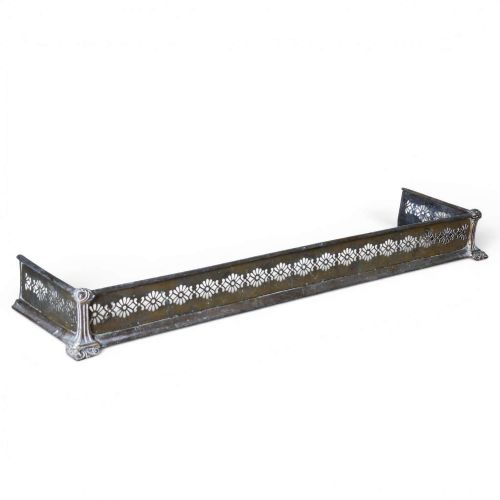
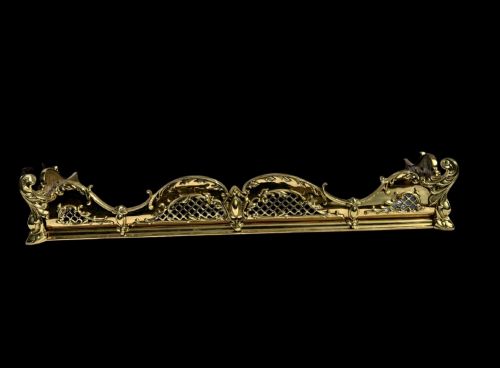
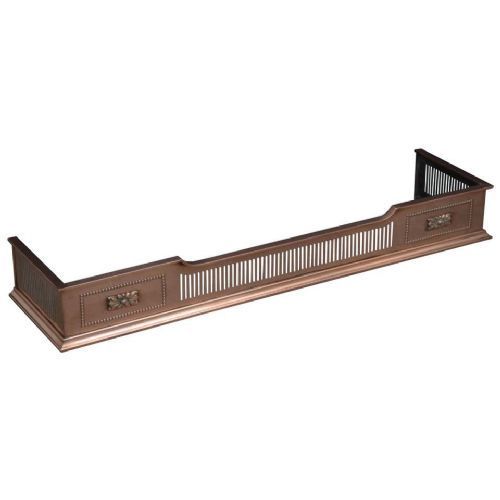
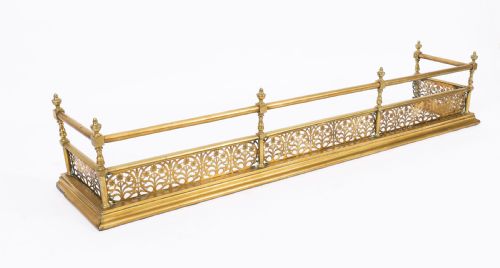


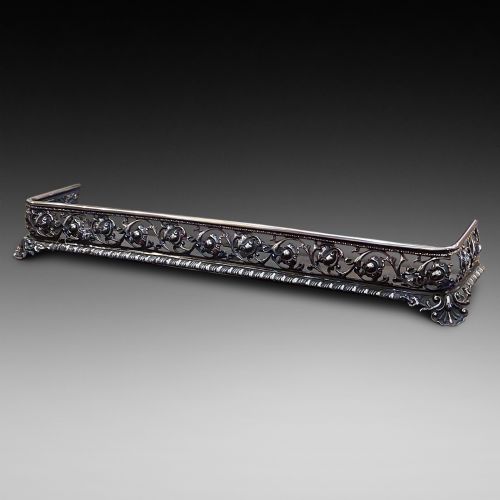


Victorian Pierced Fireplace Fender
A victorian pierced fireplace fender frames a hearth with pierced metalwork, offering both safety and style.
Victorian Pierced Fireplace Fender
A victorian pierced fireplace fender sits at the base of a hearth to contain embers and protect the room, appearing across the nineteenth century in various designs. Buyers search for these pieces to anchor a fireplace with period character.
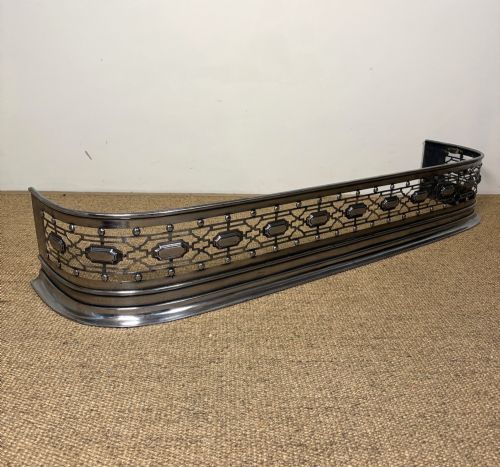
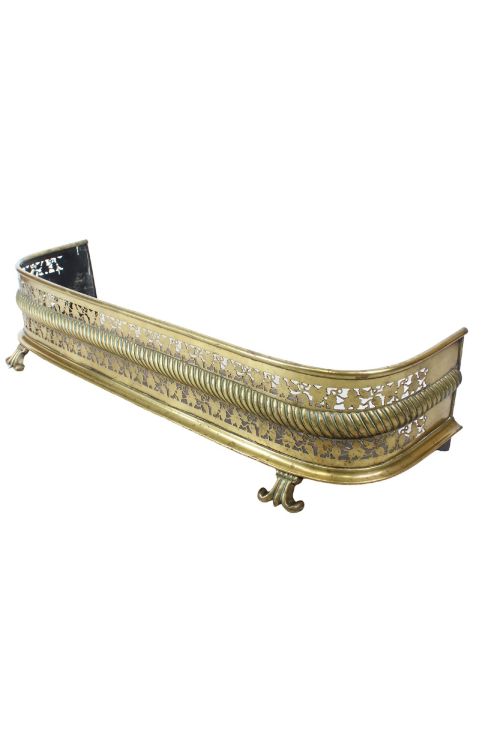
The selection here includes items from the nineteenth century, Victorian, Regency, and William IV eras. Common forms range from simple kerbs to examples with flower patera, beaded decoration, or dragon detail.
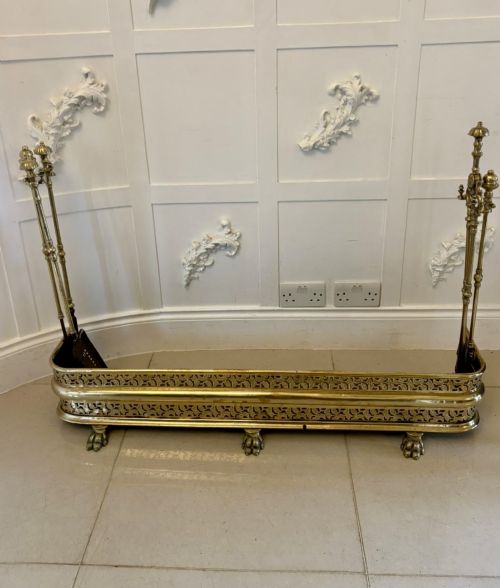
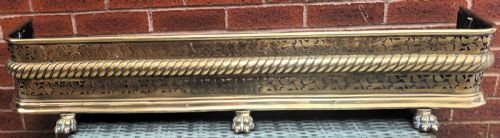
Brass is the dominant material seen across these listings, alongside polished steel, iron, cast iron, and copper. Some examples arrive paired with original fire irons or tools.
How they were made
Maker's workshops utilised brass, cast iron, steel, and copper, often working the metal through piercing and casting techniques. Details such as flower patera and beaded decoration were added to enhance the surface.
Polished steel and brass finishes required skilled smoothing and burnishing by hand. Pierced patterns were meticulously cut into the metal sheet to create intricate ventilation or decorative motifs.
Victorian Pierced Fireplace Fender Retail Price Guide 2026
Typical asking prices for victorian pierced fireplace fender among the pieces listed under this phrase on Sellingantiques today, from the lower quarter to the upper quarter. They describe what is for sale here now, not the wider market.
Listings for a victorian pierced fireplace fender span periods from Regency through to the late Victorian era, predominantly utilising brass, steel, and cast iron.
What varies in quality
The weight of the metal and the crispness of the pierced detailing distinguish one piece from another. Substantial gauge brass or heavy cast iron indicates a more robust construction.
The complexity of the decorative elements, such as integrated flower and dragon detail or original fire irons, elevates the overall execution of the hearth guard.
The Victorian Pierced Fireplace Fender Glossary
- Fender
- A low metal guard placed in front of an open fireplace to contain falling coals and sparks. It defines the hearth boundary.
- Kerb
- An alternative spelling often used for a fireplace fender, denoting the low perimeter frame around the hearth stone.
- Pierced
- Metalwork perforated with decorative patterns or ventilation slots. This technique lightens the visual weight of the heavy metal.
- Patera
- A round decorative motif resembling a classical medallion or flat-relief flower. It frequently punctuates the corners or frieze of the metalwork.
Victorian Pierced Fireplace Fender: Frequently Asked Questions
What is a fender used for?
A fireplace fender sits on the hearth to prevent burning embers from rolling out onto the floorboards or carpet. It also creates a defined boundary around the open fire.
Historically, these guards protected domestic spaces while adding a decorative focal point to the room.
How do I measure for a fender?
Measure the width and depth of your fireplace opening and hearth stone to ensure the guard fits comfortably around the perimeter. Leave adequate clearance for foot traffic and fire tools.
Take measurements at floor level, as hearths and surrounds can sometimes be slightly irregular in older houses.
Are these pieces made of solid brass?
Many examples are constructed from solid brass, cast brass, or heavy iron and steel. The materials vary across individual listings from the nineteenth century.
Heavier pieces often indicate solid cast construction rather than thinner plated metal sheets.
How do I clean a brass fender?
Dust the metal regularly with a soft cloth to prevent surface grime from accumulating. Use appropriate metal cleaners sparingly if you wish to maintain a bright finish.
Many collectors prefer to leave an aged patina intact rather than polishing the brass to a mirror shine.