



Victorian Piano Bench
A victorian piano bench is a sturdy, upholstered seat designed for keyboard players, combining practical seating with period craftsmanship.
Victorian Piano Bench
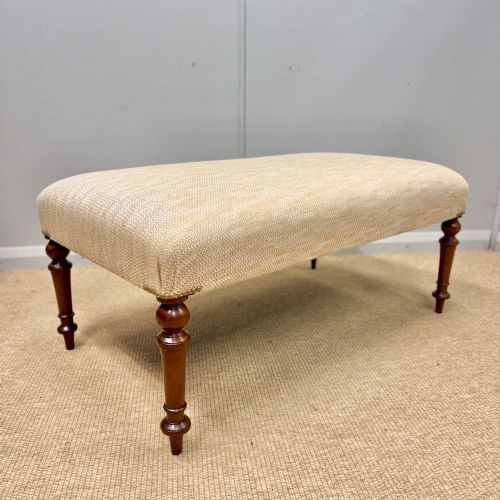
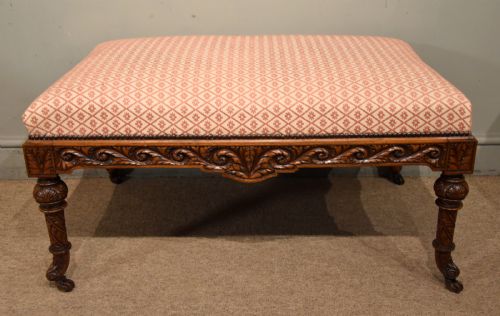
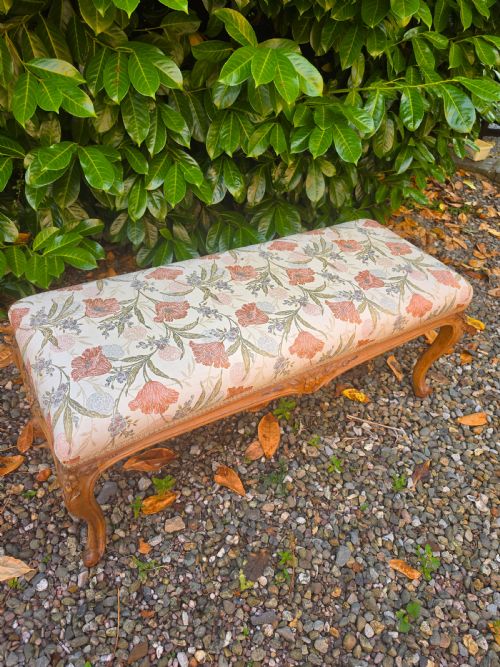
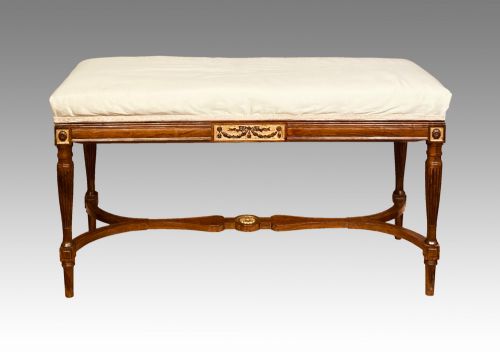
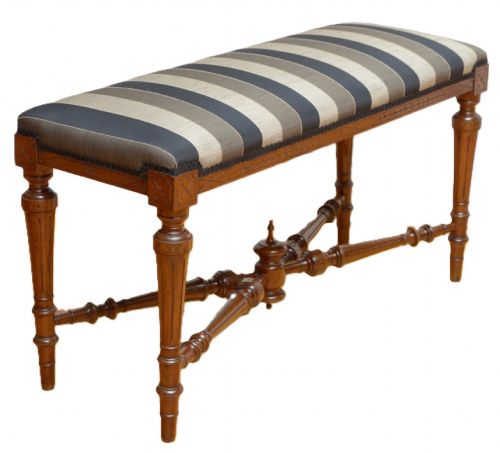
A victorian piano bench encompasses a range of seating forms from the nineteenth century, including single revolving stools, duet benches, and long window seats. These pieces accommodate musicians at the keyboard while serving as decorative furniture in period rooms.
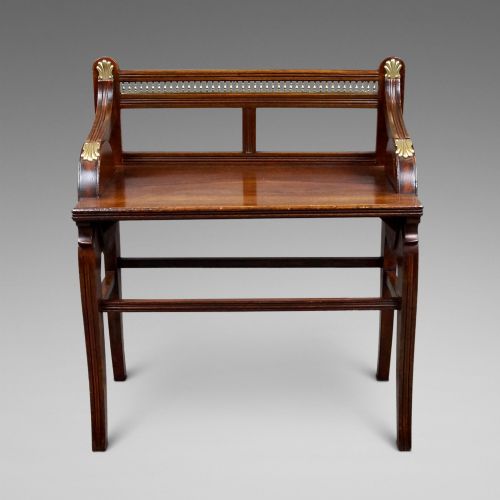
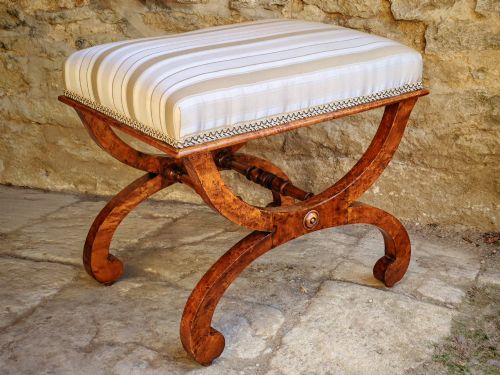
The selections here span various forms such as oblong footstools, music stools, and duet benches with hinged seats or fall-front compartments for sheet music storage. Walnut and mahogany frame many of the pieces, alongside rosewood and ebonised finishes.
Most examples originate from the Victorian era and the broader nineteenth century, with occasional pieces stretching into the Regency period or early twentieth century. Makers such as Charles Nosotti and Jas Shoolbred appear among the records, alongside uncredited cabinetmaker work.
How they were made
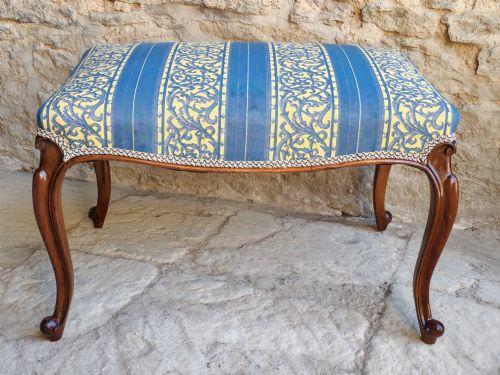
Cabinetmakers utilised solid hardwoods including mahogany, walnut, rosewood, burr maple, and oak to construct the frames, often incorporating carved details, cabriole legs, or X-frames. Brass castors and hardware frequently support the base of these heavy timber structures.
Upholstery forms a central component of the construction, featuring materials like velvet, textile, and fabric stretched over deep buttoned or plain padded seats. Hinged mechanisms and revolving screws allow adjustability in height and access to internal storage compartments.
Listings feature mahogany, walnut, rosewood, and burr maple alongside textiles like velvet and fabric.
What varies in quality
The refinement of the timber carving and the choice of facing woods dictate the visual tier of the piece, with figured walnut, burr maple, and rosewood sitting above plain mahogany or ebonised softwoods. Crisp mouldings and well-proportioned cabriole legs separate standard workshop output from exceptional cabinetmaking.
Engineering mechanisms define the functionality of adjustable and storage variants, where smooth-turning revolving screws and robust hinges outlast stiff or loose moving parts. The integrity of the original frame construction and the fidelity of the upholstery styling influence the overall cohesion of the piece.
Charles Nosotti·Jas Shoolbred
The Victorian Piano Bench Glossary
- Duet stool
- A wider bench designed to seat two musicians simultaneously at a piano. These often feature hinged lift-out seats or fall-front compartments.
- Revolving piano stool
- A single-seat stool equipped with a threaded screw mechanism allowing the user to adjust the seating height by spinning the top. They frequently stand on three or four carved legs.
- Cabriole leg
- A furniture leg that curves out in a convex arc and tapers inward to a concave arc, mimicking an animal leg. This form appears frequently on mid-nineteenth-century walnut stools.
- Ebonised
- Timber treated with a dark stain or finish to imitate ebony. This technique gained popularity during the nineteenth century, particularly in aesthetic movement pieces.
- Fall-front
- A hinged panel that folds downward to reveal interior storage compartments. In piano benches, this feature houses sheet music.
Victorian Piano Bench: Frequently Asked Questions
How do I adjust a revolving piano stool?
You simply rotate the upholstered seat top clockwise or counter-clockwise to raise or lower the height via the internal wooden or metal screw mechanism.
Older mechanisms may require gentle handling and occasional waxing to ensure smooth turning without straining the supporting frame.
Were these benches only used for pianos?
While intended primarily for keyboard practice, many wider examples served as window seats, dressing stools, or general music benches in nineteenth-century homes.
Their sturdy timber frames and upholstered tops made them versatile enough to place in living rooms and bedrooms alike.
What is the difference between a duet stool and a single stool?
A duet stool provides extra width to accommodate two players side by side, frequently incorporating internal storage for shared sheet music collections.
Single stools focus on individual seating, often utilising a central revolving column or four fixed legs rather than a wide bench box.
How do I identify a Victorian piece from a Regency one?
Regency pieces typically display earlier neoclassical lines from the early nineteenth century, whereas Victorian examples often feature heavier proportions, elaborate carving, and balloon or cabriole legs.
Comparing the timber grain, hardware, and upholstery styling helps clarify the period of manufacture.