






Victorian Pharmacy Glass Stopper
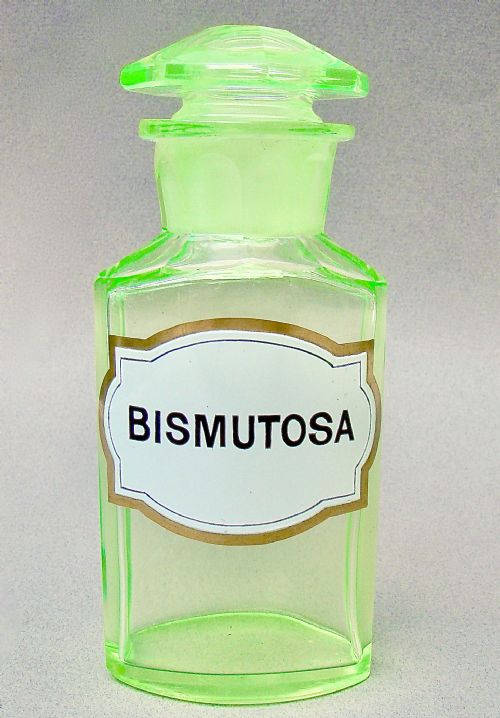
These victorian pharmacy glass stopper pieces are functional vessels of apothecary history, prized by collectors for their rich coloured glass and authentic chemist labels.
Victorian Pharmacy Glass Stopper
When you search for victorian pharmacy glass stopper items, you encounter functional vessels from the nineteenth century and the early twentieth century. These items include chemist bottles, apothecary jars, and carboys designed to hold medicinal drugs and liquids.
The most common examples on this page are glass apothecary bottles featuring matching stoppers, alongside larger carboys and fitted campaign boxes containing multiple miniature bottles. These containers originate from British and French makers, spanning the Victorian and Edwardian eras.
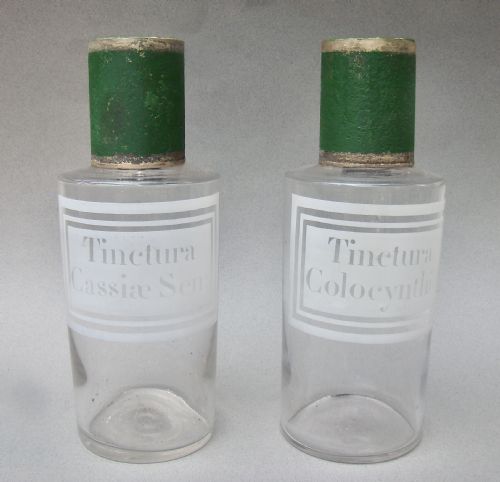
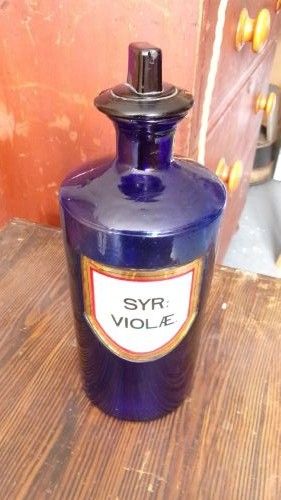
Many of these pieces retain their original paper labels, gold leaf lettering, and hand-painted details, offering a direct link to historical dispensaries and apothecaries. They appear in clear glass, cobalt blue, Bristol blue, and green glass.
How they were made
These items are shaped from hand-blown glass, resulting in the organic bubbles and slight irregularities characteristic of nineteenth-century production. Makers utilised techniques such as etching and surface painting to mark the glass containers for specific drugs.
Containers often feature ground glass stoppers that were individually fitted to each neck to ensure an airtight seal for volatile medical compounds. Selected pieces incorporate timber boxes made from mahogany to house sets of miniature bottles securely.
Victorian Pharmacy Glass Stopper Retail Price Guide 2026
Typical asking prices for victorian pharmacy glass stopper among the pieces listed under this phrase on Sellingantiques today, from the lower quarter to the upper quarter. They describe what is for sale here now, not the wider market.
The inventory spans individual apothecary jars, large carboys, and complete campaign boxes equipped with matching bottles.
What varies in quality
Quality rests upon the clarity and colour saturation of the glass, with deep Bristol blue and cobalt examples holding particular visual weight. The presence and legibility of original paper labels and gold leaf inscriptions elevate a piece above plain utilitarian stock.
Integrity of the matching stopper is paramount, as original ground glass stoppers that belong strictly to their specific bottle affect the overall completeness. Sets that survive intact, whether in matched pairs or larger grouped collections, demonstrate superior provenance.
The Victorian Pharmacy Glass Stopper Glossary
- Carboy
- A large globular glass bottle or jar used historically in laboratories and pharmacies to hold corrosive liquids. These large vessels often sat in shop windows to advertise the apothecary's trade.
- Bristol blue
- A deep cobalt-blue glass traditionally produced in the English city of Bristol during the eighteenth and nineteenth centuries. This striking colour protected light-sensitive contents from degradation.
- Campaign box
- A portable fitted wooden chest designed for travel, containing compartments sized specifically for medicinal bottles and glass stoppers. These sturdy boxes allowed practitioners to transport remedies safely.
- Ground glass stopper
- A glass plug shaped with an abrasive grit to fit precisely into the frosted interior neck of a bottle. This technique created an airtight seal without requiring cork.
- Apothecary jar
- A cylindrical or urn-shaped vessel used by chemists to store dry drugs, herbs, and medicinal preparations. They frequently featured hand-painted labels or etched glass cartouches.
Victorian Pharmacy Glass Stopper: Frequently Asked Questions
What were pharmacy glass stoppers used for?
These stoppers sealed apothecary bottles and jars to protect volatile medical compounds, tinctures, and dry drugs from moisture and air. Their tight fit prevented evaporation and kept active ingredients potent inside the dispensary.
In daily practice, the chemist relied on these ground glass closures for quick access while maintaining strict containment of strong or poisonous substances.
How do I identify a Victorian apothecary bottle?
Victorian examples typically feature hand-blown glass bodies with pontil marks on the base, coupled with individually ground stoppers. They often display paper labels, painted cartouches, or gold leaf lettering denoting specific pharmaceutical preparations.
Colour is another indicator, with distinct shades of cobalt, green, and Bristol blue appearing frequently alongside clear glass across nineteenth-century examples.
Can I use these bottles for liquids today?
While many bottles remain structurally sound, original nineteenth-century glass can be fragile and historical residues may linger inside. It is best to treat them as display objects rather than for modern culinary or practical storage use.
Cleaning should be approached with caution to protect delicate paper labels, painted surfaces, and original gold leaf inscriptions that survive on the exterior.
How should I display apothecary bottles at home?
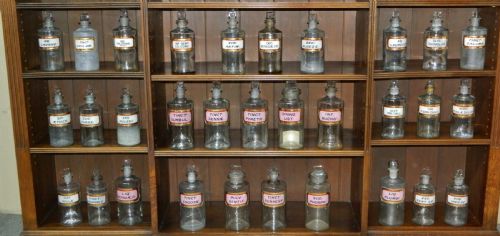
Placing these bottles near a light source allows daylight to pass through the coloured glass, highlighting hues like Bristol blue and deep green. Grouping sets together on shelves or displaying them inside wooden cabinets creates a balanced historical arrangement.
Keeping them away from direct heat sources and abrasive cleaning agents helps preserve the fragile paper labels and painted details intact.