




Victorian Perfume Decanters
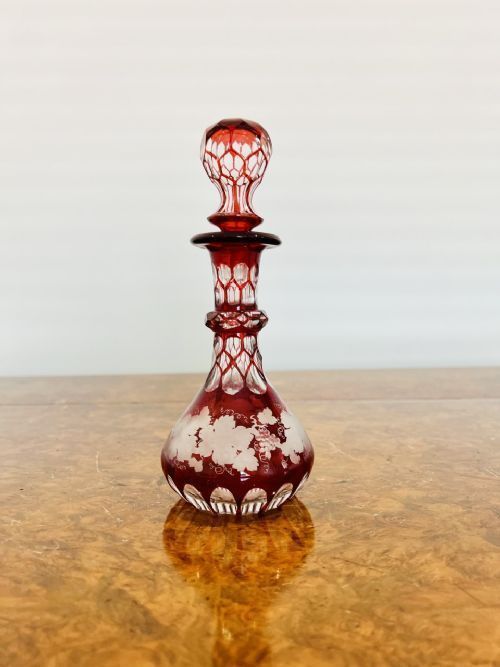
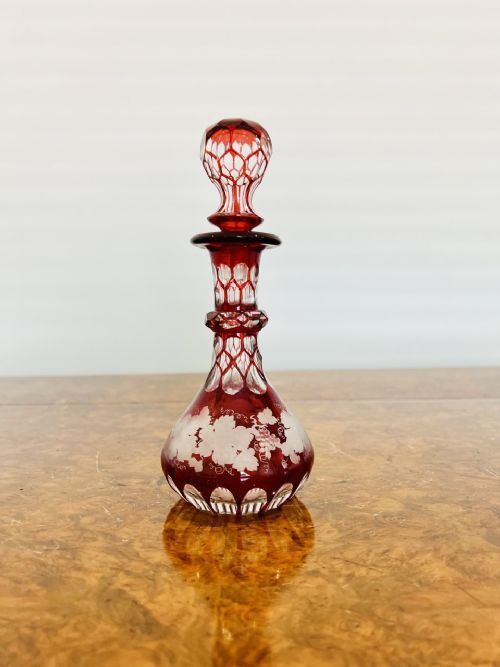
These Victorian perfume decanters are refined glass and silver vessels designed to hold precious scents, offering a touch of period elegance to any dressing table.
Victorian Perfume Decanters
Victorian perfume decanters encompass a diverse range of functional scent containers, spanning individual bottles, matched pairs, and fitted caskets housing multiple vials. These items typically emerge from the nineteenth century, including specific dates across the Victorian era up to the early twentieth century.
Buyers on this page most frequently encounter cut glass and crystal bottles accented with sterling silver collars, stoppers, or mounts. More elaborate examples include coromandel wood caskets and miniature liquor or champagne bottles functioning as scent flasks.
Materials and construction
Maker construction relies heavily on heavy cut glass and cut crystal bodies, shaped into ewers, flasks, and upright bottles, often paired with ruby glass. These glass reservoirs catch the light and provide durability for daily handling.
Metalwork complements the glass through sterling silver collars, silver mountings, and brass fittings, occasionally housed within exotic timber frames such as coromandel caskets.
Materials across these listings span cut glass, sterling silver, ruby glass, cut crystal, brass, and coromandel.
Judging quality
Quality rests upon the crispness of the glass cutting and the weight of the crystal body, alongside the integration of silver collars and original stoppers. Pairs and fitted caskets with multiple matching bottles demand higher regard than single, unpaired examples.
The refinement of housing matters significantly, particularly in combination caskets that incorporate jewellery compartments or tantalus frameworks alongside the scent bottles.
The Victorian Perfume Decanters Glossary
- Cut glass
- Glass decorated by cutting facets or patterns into the surface using a wheel. This technique creates sharp light refraction and tactile depth.
- Sterling silver
- An alloy of silver containing 92.5% mass of silver and 7.5% mass of other metals, typically copper. It provides the durable collars and mounts found on many scent bottles.
- Coromandel
- A dense, dark timber imported from Asia, prized for rich grain patterns. It forms the robust exterior of luxury nineteenth-century caskets.
- Stopper
- The solid glass or metal plug fitted to the neck of a decanter or bottle. Original matching stoppers complete the integrity of the piece.
Victorian Perfume Decanters: Frequently Asked Questions
What are Victorian perfume decanters?
These pieces are nineteenth-century glass and crystal vessels intended for holding liquid fragrance. They range from single pocket flasks to matched pairs and multi-bottle caskets.
Many incorporate sterling silver collars and stoppers, reflecting the functional and decorative standards of the period.
How were scent caskets used?
Scent caskets served to securely house multiple perfume bottles, often alongside jewellery or small valuables in a single portable box. Wealthy Victorians kept them on dressing tables or boudoir surfaces.
They allowed the owner to select different fragrances contained within matching, protected glass vials.
How do I date these bottles?
Dating relies on hallmarks upon the silver mounts, stylistic cues in the glass cutting, and documented manufacturing periods. Nineteenth-century examples often display specific Victorian design traits.
Makers frequently incorporated stylistic shifts from mid-century glass spirit bottles to later silver-topped flasks.
How should I clean glass decanters?
Cleaning requires gentle warm water and mild soap, avoiding harsh abrasives that might scratch the surface or damage silver collars. Care must be taken around delicate cut crystal facets and antique stoppers.
Thorough drying prevents moisture retention inside enclosed glass chambers.