





Victorian Pedestal Sewing Table
A Victorian pedestal sewing table combines practical needlework storage with the elegance of a central pillar stand for the nineteenth-century parlour.
Victorian Pedestal Sewing Table
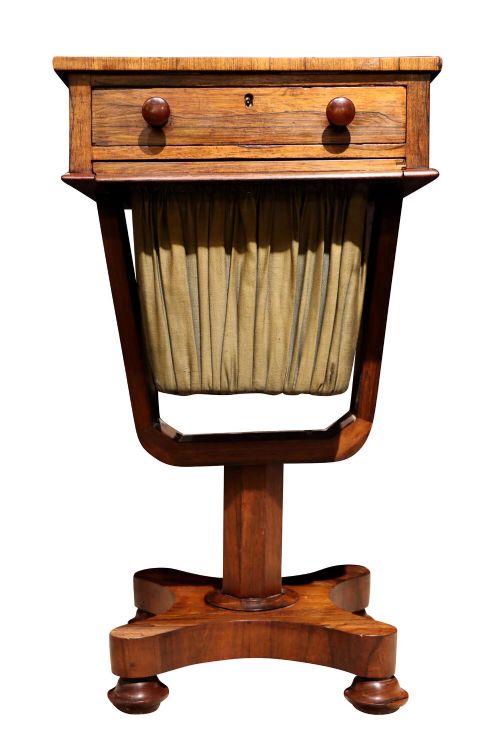
When you search for a Victorian pedestal sewing table, you look for a compact freestanding piece designed to hold threads, needles and crafting materials inside an integrated compartment or under-bag. The examples found here span the nineteenth century, including pieces from the Regency and William IV eras up to the late Victorian period.
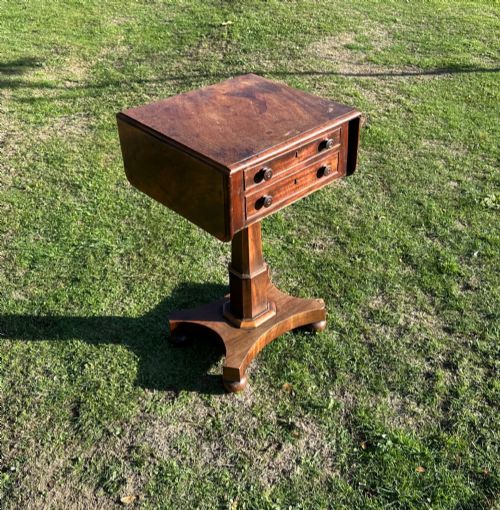
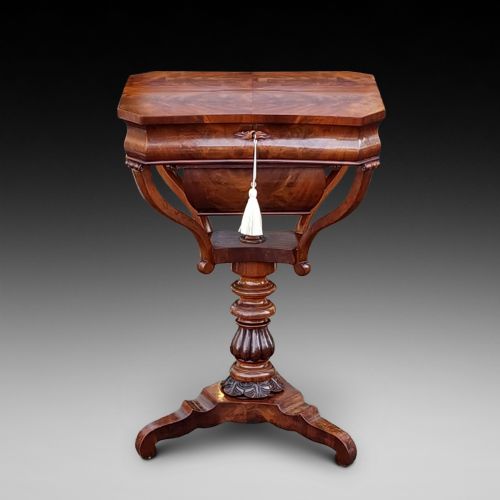
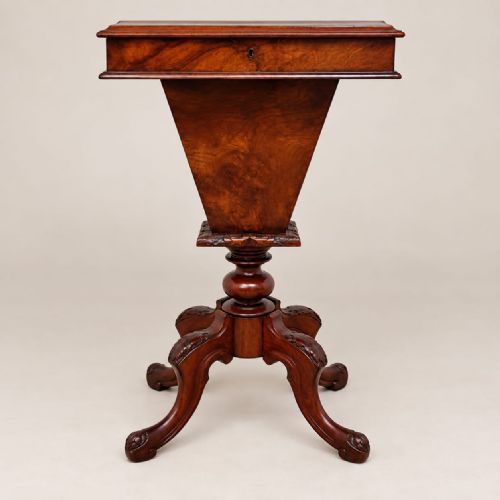
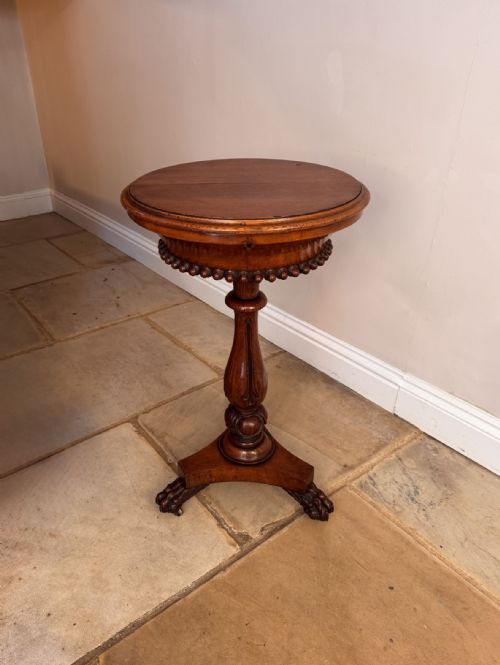
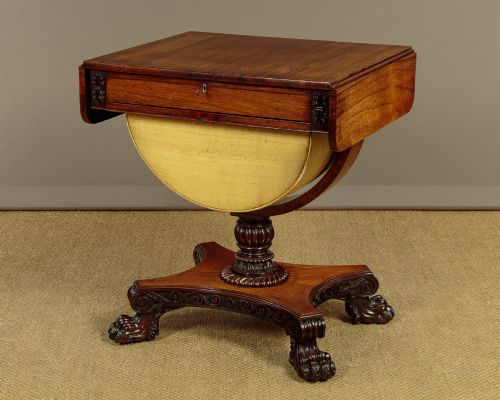
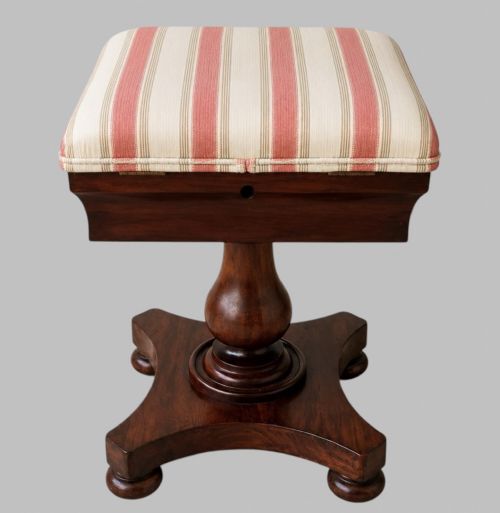
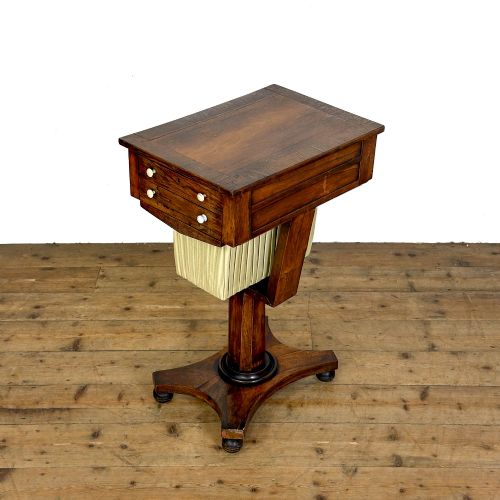
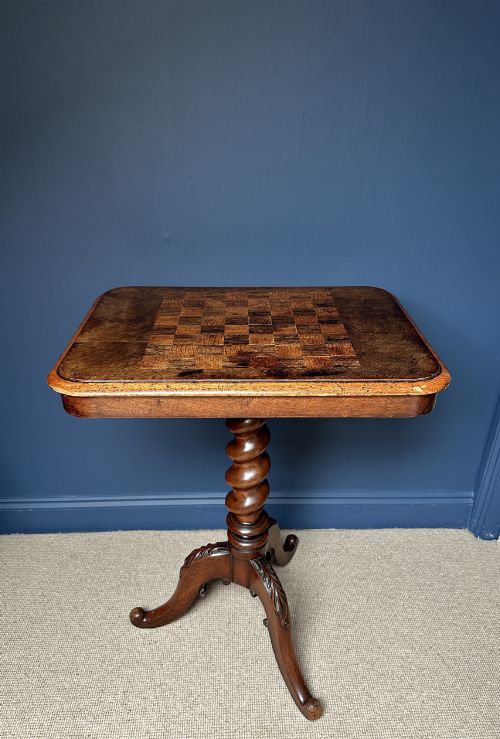
The version you are most likely to meet on this page is constructed from figured timbers like rosewood, walnut or mahogany, supported by a central column resting on a platform or carved feet. Many of these forms double as games tables with inlaid chess boards or include folding drop leaves and fitted interior compartments.
Makers often combined sewing storage with occasional table uses, leading to frequent crossover descriptions involving work tables, lamp tables and games tables. The interiors generally contain small wooden lidded compartments and tiny storage boxes intended for delicate sewing accessories.
Materials and construction methods
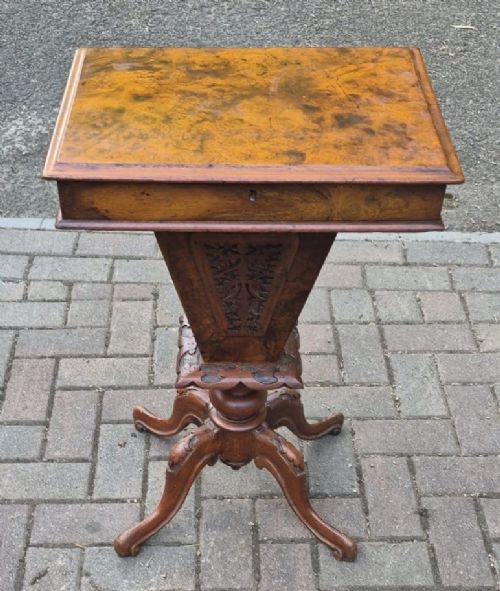
Cabinetmakers utilised dense hardwoods such as mahogany and exotic veneers including rosewood and burr walnut over solid secondary foundations. These timbers were selected for their rich grain patterns, which were frequently enhanced by contrasting wood inlay, marquetry or brass details.
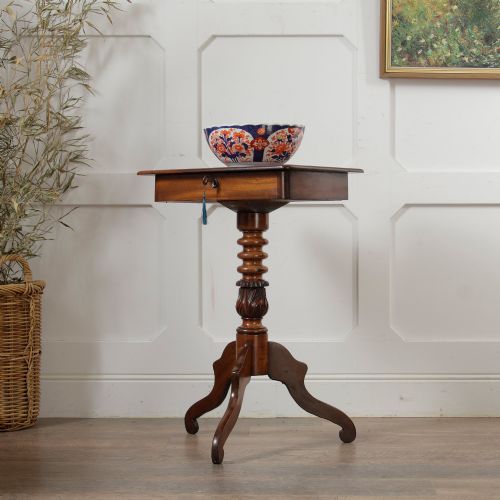
The structural stability of each piece relies on a stout central pedestal column secured to a weighted platform base with scroll or carved feet. Turning techniques, such as bobbin turning, appear on upright supports alongside delicate hand-carved foliate motifs.
Fabric elements like silk and needlepoint tapestry were incorporated into hanging work bags suspended beneath the main compartment. Internal components feature fine dovetail joints and miniature turned pulls for the individual compartments.
Victorian Pedestal Sewing Table Retail Price Guide 2026
Typical asking prices for victorian pedestal sewing table among the pieces listed under this phrase on Sellingantiques today, from the lower quarter to the upper quarter. They describe what is for sale here now, not the wider market.
Materials recorded on this page include Brass, Rosewood, Walnut, Fabric, Mahogany, Burr Walnut, Wood Inlay and Silk.
Distinctions in craftsmanship and design
The hierarchy of quality rests primarily on the choice of timber and the precision of the cabinetwork rather than sheer scale. Pieces featuring highly figured burr walnut or intricate wood inlay sit above plain mahogany examples, showing greater investment of artisanal labour.
Internal complexity dictates distinction within the category, particularly where fitted trays and lidded compartments remain intact and operational. The integrity of the pedestal joint and the crispness of any turned or carved details separate superior workshop output from standard commercial production.
The Victorian Pedestal Sewing Table Glossary
- Work table
- A multi-purpose nineteenth-century small table designed specifically to accommodate sewing, needlework and crafting pursuits. These items typically feature a fitted drawer or hanging fabric bag beneath the top.
- Burr walnut
- A highly decorative wood veneer harvested from the wart-like growths on walnut trees, prized for its swirling, organic grain patterns. Cabinetmakers applied it selectively to the primary display surfaces of high-status tables.
- Drop leaf
- A hinged flap on either side of a table top that can be raised to extend the surface area or lowered when space is restricted. It relies on pivoting wooden brackets or swing legs for support.
- Marquetry
- The art of applying decorative pieces of veneer to a structure to form intricate geometric or floral designs. This technique showcases the skill of the artisan through precise wood-matching and cutting.
- Bobbin turned
- A style of furniture turning where the wooden shaft is shaped into a series of spherical or oval beads resembling a string of bobbins. It is frequently seen on nineteenth-century upright supports and legs.
Victorian Pedestal Sewing Table: Frequently Asked Questions
What is a Victorian pedestal sewing table?
A Victorian pedestal sewing table is a small, freestanding piece of furniture featuring a central column base and an enclosed compartment for needles, threads and fabric. These tables were designed for the nineteenth-century drawing room to keep crafting supplies close at hand while maintaining a decorative appearance.
The top usually lifts or pulls open to reveal small lidded compartments and a shallow storage tray, sometimes accompanied by a fabric work bag suspended underneath. They served as functional companions for ladies undertaking needlework during the afternoon.
How were these tables used originally?
These pieces functioned primarily as mobile workstations for domestic needlework, embroidery and lacemaking. A lady of the house would store her ongoing projects, pins and yarn within easy reach of her armchair.
Because many examples include inlaid chess boards, folding leaves or smooth tops, they also served as occasional tables for holding lamps, displaying decorative objects or playing board games when sewing was put aside.
How do I care for a rosewood or walnut table?
Preserving antique wood requires protection from direct sunlight and extreme changes in relative humidity, which can cause timber to split or veneers to lift. Keep these tables away from active heat sources and radiators.
Apply a gentle application of traditional beeswax rather than modern silicone polishes to nourish the grain. Dust regularly with a soft, dry cloth to prevent microscopic particle accumulation from dulling the historic finish.
How can I tell a William IV table from a later Victorian one?
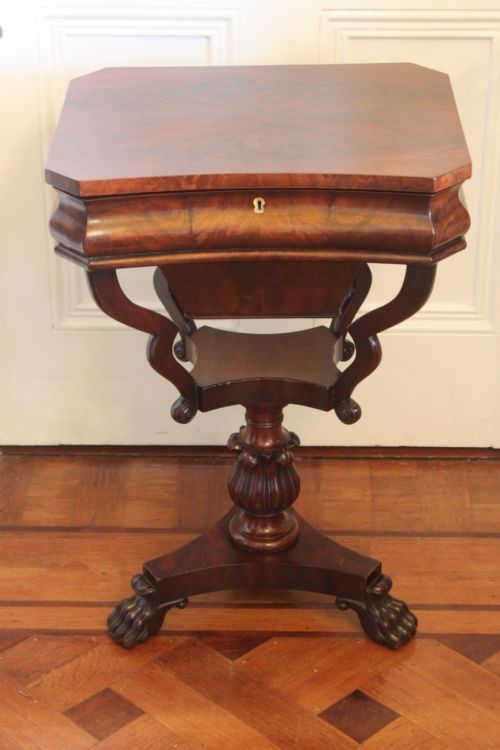
William IV pieces, dating from the 1830s into the early 1840s, often display heavy, robust proportions with bold scrolling pedestal bases and rich mahogany or rosewood timbers. The carving tends to be architectural and substantial.
Later Victorian examples from the 1860s onward frequently showcase lighter forms utilising burr walnut veneers, intricate marquetry, or turned details like bobbin turning. The shift in style reflects changing domestic tastes and industrial timber availability through the century.