
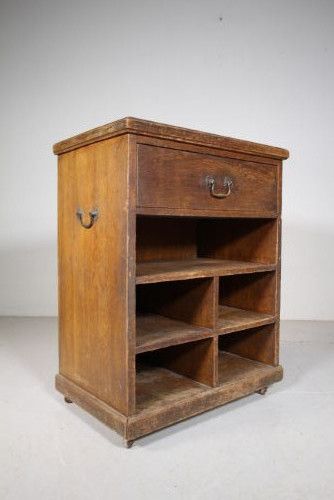
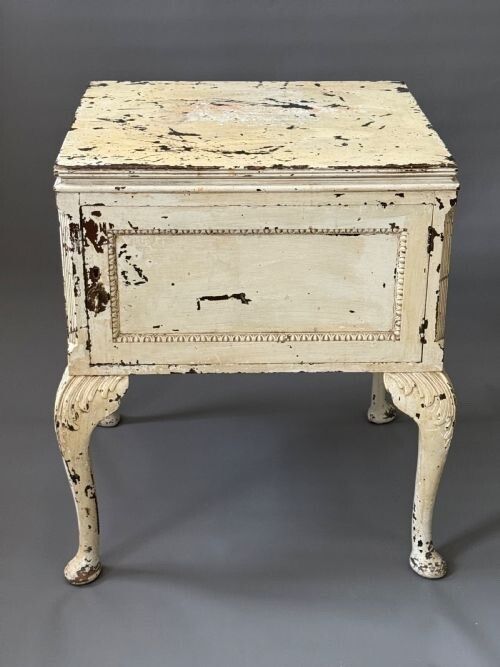
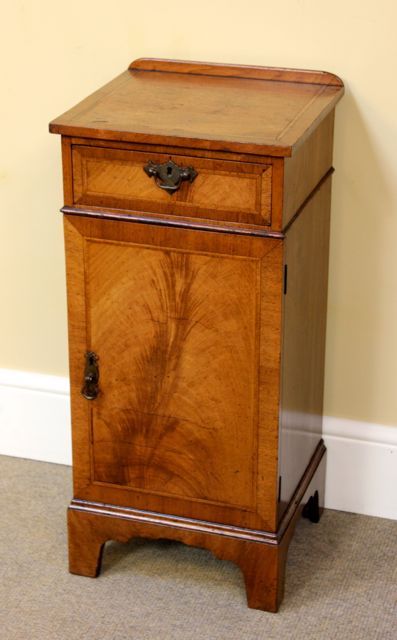
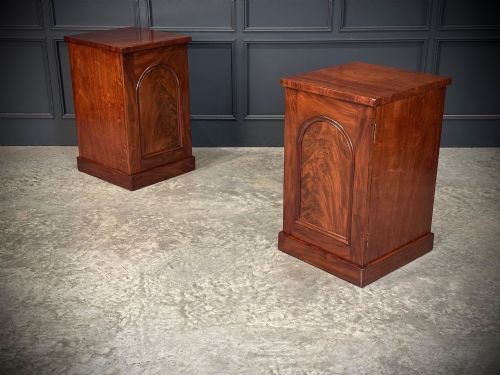
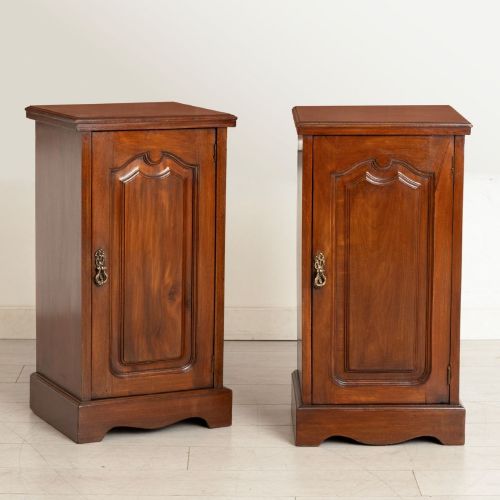
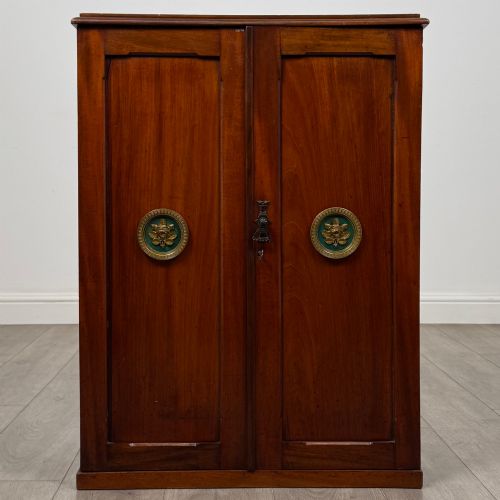
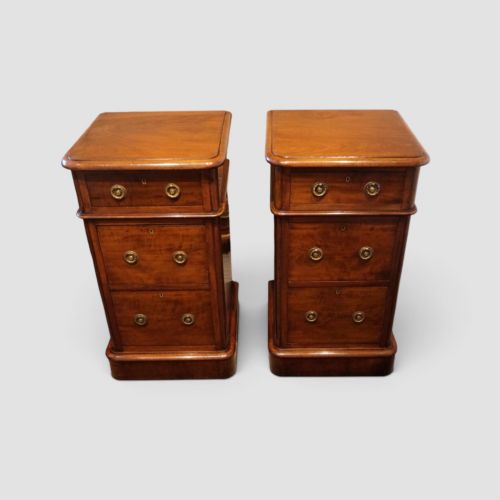
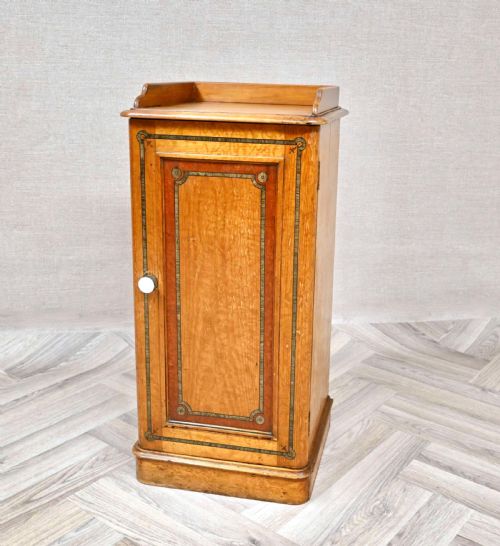
Victorian Pedestal Bedside Cupboard
A victorian pedestal bedside cupboard brings compact nineteenth-century storage to the bedroom, offering timber surfaces and enclosed shelving beside the bed.
Victorian Pedestal Bedside Cupboard
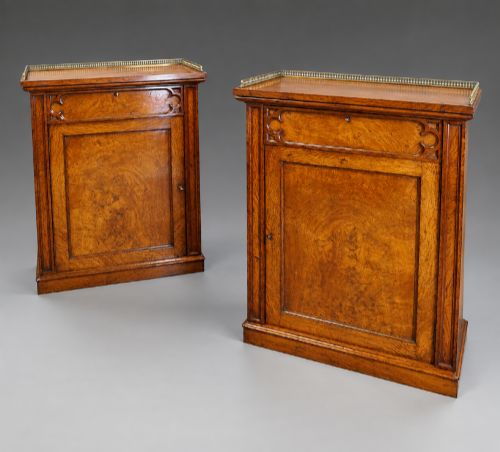
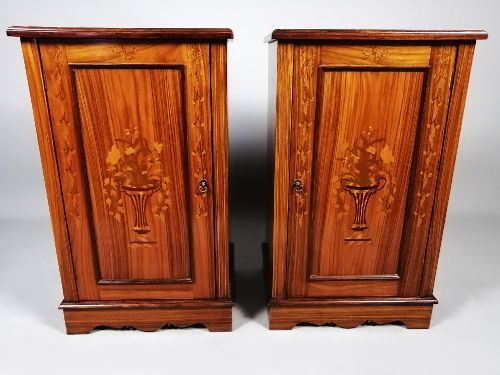
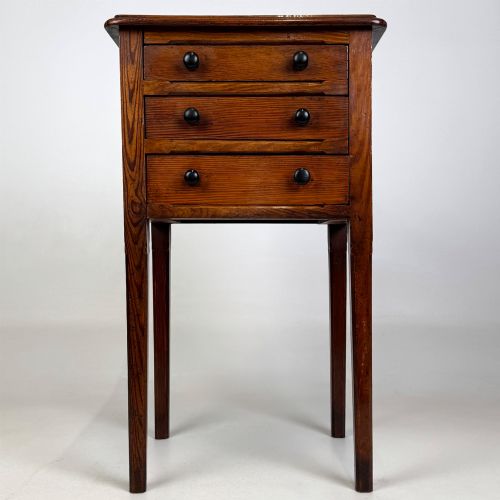
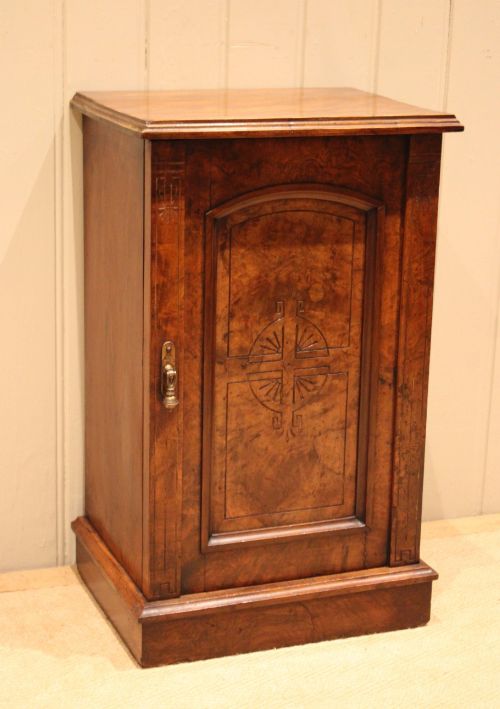
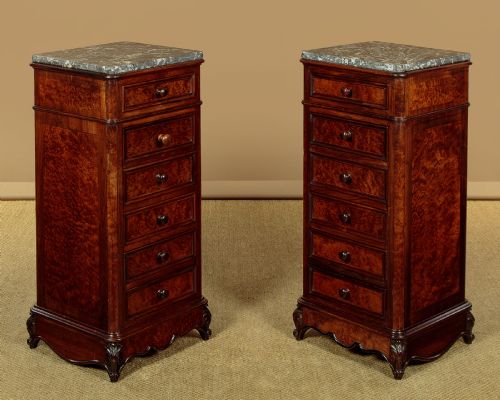
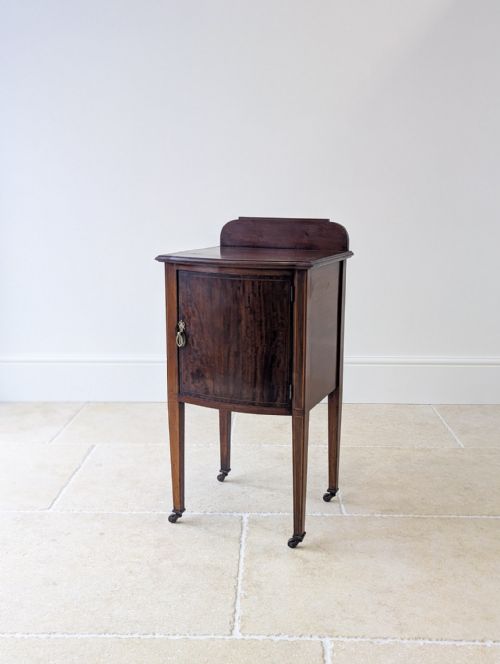
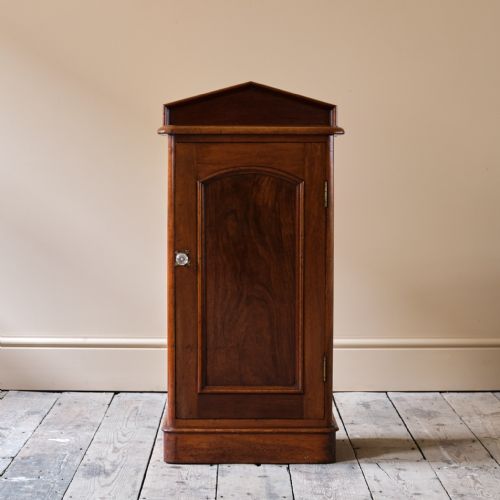
A victorian pedestal bedside cupboard is a compact nineteenth-century item designed to stand beside a bed for enclosed storage, frequently appearing as single units or matching pairs. These pieces emerge in various forms across the Victorian period, functioning as pot cupboards, bedside chests, and cylindrical pedestals.
The versions most commonly met on this page are constructed from mahogany or walnut, featuring a single door opening to reveal interior shelving or a pot space. Many examples date from the middle and late nineteenth century, spanning distinct stylistic revivals such as Gothic and Aesthetic movements alongside plain utility forms.
How they were made
Cabinet makers utilised dense hardwoods like mahogany, walnut, and rosewood, often applying figured veneers such as burr walnut or flame mahogany to curved and flat surfaces. Secondary timbers like pine and oak appear internally, whilst brass handles, hinges, and occasional marble tops complete the construction.
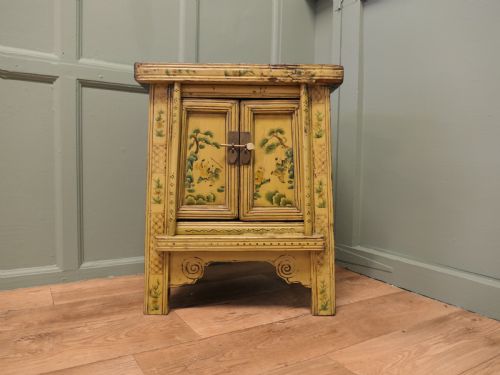
Joinery methods combined traditional dovetailing for drawers with framed panel doors, while specialised pieces employed steam-bending for cylindrical carcases. Decoration ranged from simple carved mouldings and marquetry inlays to hand-painted Chinoiserie finishes.
What varies in quality
Quality separates ordinary utility pieces from exceptional ones through the selection and matching of timber veneers, such as symmetrical flame mahogany or figured burr walnut across the door panels. Superior construction is evident in the weight of the timber, the precision of the joinery, and whether the item forms part of an original matching pair.
The choice of secondary materials and decorative elements further distinguishes the range, with marble tops and intricate marquetry or amboyna banding elevating simple bedside storage into high-status furniture.
Howard And Sons
The Victorian Pedestal Bedside Cupboard Glossary
- Pot cupboard
- A small enclosed bedside cabinet originally designed to house a chamber pot. These practical items often feature a single door and an internal shelf.
- Burr walnut
- A veneer taken from the knotted growth of a walnut tree, prized for its swirling, highly figured grain pattern. Cabinet makers used it on prominent exterior surfaces to create visual richness.
- Gothic Revival
- A nineteenth-century design style drawing inspiration from medieval architecture. Pieces in this aesthetic display pointed arches, heavy mouldings, and carved tracery.
- Cylindrical
- Having a rounded, circular cross-section rather than a square or rectangular shape. Cylindrical pedestal cabinets require specialised curved doors and matching top surfaces.
Victorian Pedestal Bedside Cupboard: Frequently Asked Questions
What is a pot cupboard?
A pot cupboard is a nineteenth-century enclosed bedside cabinet built to conceal a chamber pot behind a single panel door. They provide compact storage beside the bed.
Today these versatile units serve perfectly as lamp tables or general bedside storage while retaining their traditional internal shelving.
How do I identify a Victorian piece?
Victorian bedside cabinets show characteristic nineteenth-century timber choices such as solid mahogany, walnut, and pine carcase construction. Their proportions reflect the period's bedroom layouts.
Examining the internal drawer construction and fixing methods helps confirm the nineteenth-century date of manufacture alongside stylistic cues like Gothic or Aesthetic details.
Are pairs common for bedside cabinets?
Matching pairs of nineteenth-century bedside cabinets do appear, though single cabinets are frequently encountered. Pairs usually reflect original bedroom suites.
Finding a matched pair in walnut or mahogany provides symmetrical bedside presentation, making them particularly sought after by collectors.
What woods were used?
Cabinet makers relied primarily on mahogany and walnut, frequently selecting figured veneers like burr walnut and flame mahogany for the exterior surfaces. Secondary woods include pine and oak.
Exotic timbers such as rosewood and amboyna also appear on decorative nineteenth-century examples alongside painted pine finishes.