

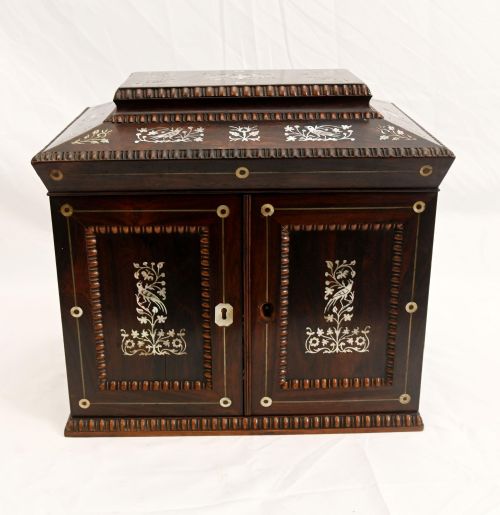


Victorian Pearl Inlay Box
A victorian pearl inlay box brings together rich timber and shimmering iridescence to hold letters, trinkets or tea.
Victorian Pearl Inlay Box
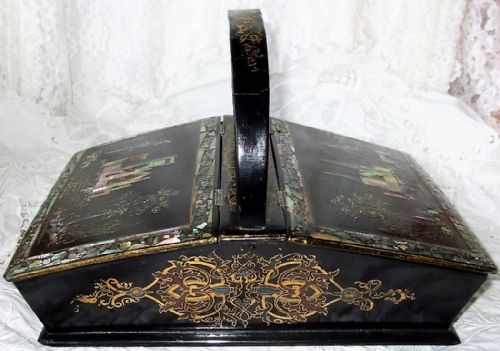
A victorian pearl inlay box spans practical containers designed for daily nineteenth-century use, including writing slopes, tea caddies, sewing boxes and jewellery cabinets. These pieces served domestic life in England, keeping personal valuables secure and writing desks orderly.
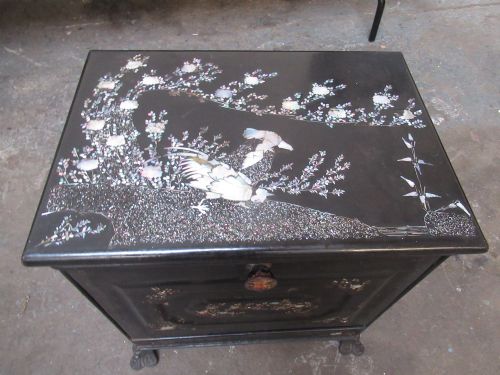
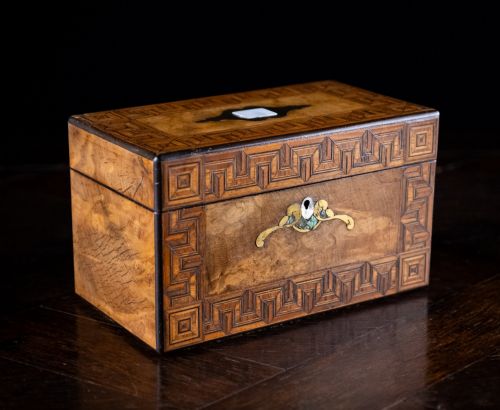
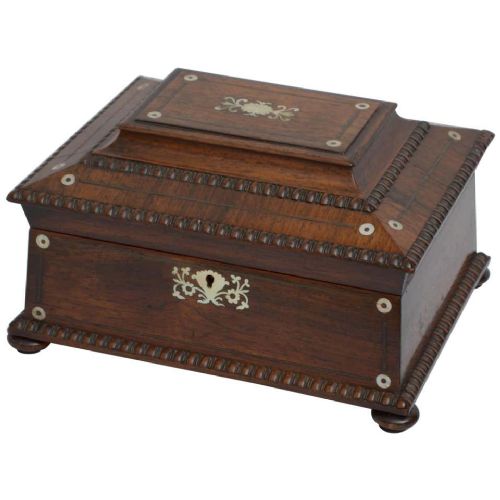
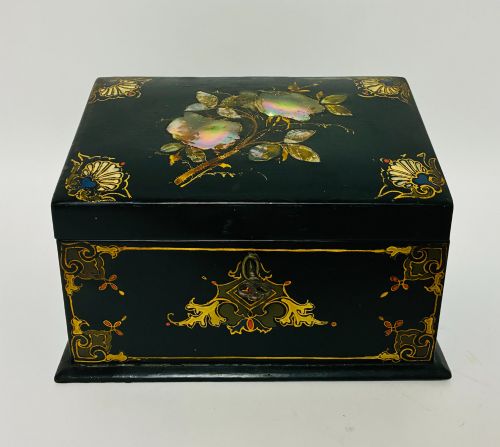
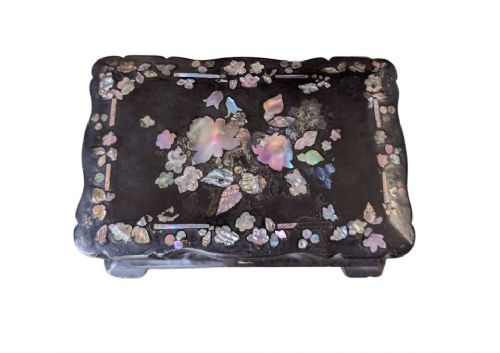
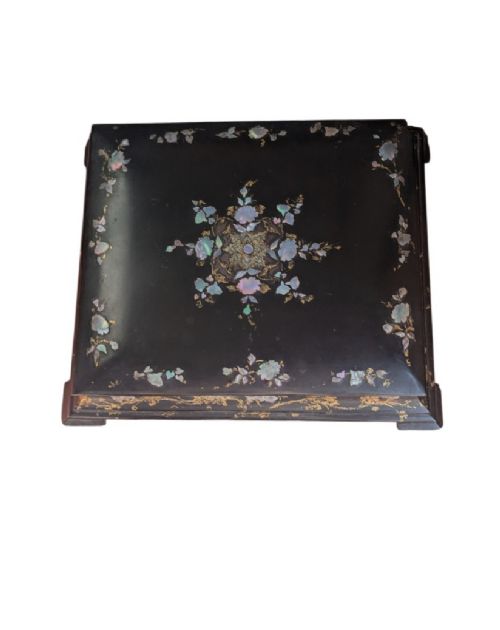
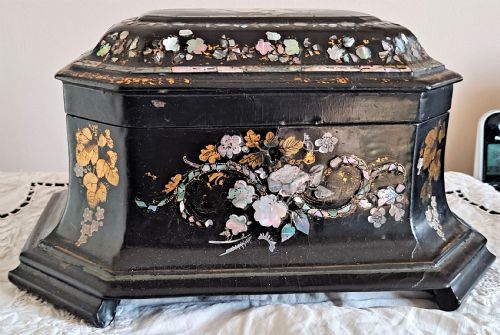
Rosewood and papier-mâché dominate the forms seen here, often dated from the mid to late nineteenth century. Many items combine mother-of-pearl escutcheons and geometric floral motifs with fitted interiors lined in velvet or silk.
Materials and construction
Cabinet makers utilised dense hardwoods such as rosewood, walnut and coromandel as a dark ground for inlaid shell. Papier-mâché formed another primary body, built up in layers, lacquered and polished to a smooth black finish before receiving mother-of-pearl and gold leaf detailing.
Thin sheets of nacre were hand-cut into floral scrolls or geometric lines, then set flush into channels carved within the wood or lacquer. Interior compartments frequently incorporated secret drawers, velvet-topped writing surfaces, glass inkwells and silver-plated fittings.
Listings demonstrate that rosewood serves as the most frequent timber foundation for mother-of-pearl inlay across the nineteenth century.
What separates the examples
Quality rests upon the precision of the inlay work and the integrity of the timber body. Tightly fitted pearl pieces that sit perfectly flush with the surrounding wood indicate superior handcrafting, whereas careless gaps or raised edges suggest hurried production.
Internal complexity further distinguishes the work. Complete fitted interiors with original mirrors, working brass locks, removable trays and intact silk linings elevate an ordinary container into a masterclass of nineteenth-century desk furniture.
George Austin, Dublin
The Victorian Pearl Inlay Box Glossary
- Mother-of-pearl
- The iridescent inner layer of mollusc shell, utilised for decorative inlay. This material catches the light with shifting tones of pink, green and silver.
- Writing slope
- A portable desk featuring a hinged, sloping lid that opens to reveal compartments for paper, pens and inkwells. Many incorporate leather-lined writing surfaces.
- Papier-mâché
- A composite material made from paper pulp or layers of paper bound with glue, then baked and lacquered. It provided a stable surface for painting and shell inlay.
- Sarcophagus shape
- A distinctive box profile with a domed lid and tapering sides, resembling a miniature stone coffin. This form appeared frequently on mid-century tea caddies and jewellery cases.
- Escutcheon
- A small plate surrounding a keyhole, frequently fashioned from brass or mother-of-pearl. It protected the surrounding wood from wear caused by the key.
Victorian Pearl Inlay Box: Frequently Asked Questions
What were victorian pearl inlay boxes used for?
These containers held personal valuables, correspondence, sewing implements or dry tea leaves. Wealthy households kept them on drawing room tables, dressing chests and desks.
They organised small domestic items while displaying the owner's taste through rich materials and decorative shell work.
How do I care for rosewood and mother of pearl?
Keep wooden surfaces away from direct sunlight and steady heat sources to prevent the timber from splitting or warping. Dust gently with a dry cloth and avoid harsh liquid polishes.
Mother-of-pearl is sensitive to moisture and acidic substances, so keep liquids away from the interior linings and decorative plaques.
Are the interior fittings usually original?
Many surviving examples retain their original velvet, satin or leather linings alongside fitted compartments, trays and glass inkwells. Some pieces show later replacement textiles where the historic fabric wore away through daily use.
Examining the glue marks and wear patterns helps determine whether an interior layout dates from the nineteenth century.
How do I tell papier-mâché from wood boxes?
Papier-mâché boxes feel surprisingly light yet rigid, featuring a deep black lacquered finish that often includes painted gold accents. Wooden boxes display natural grain patterns from rosewood, walnut or coromandel.
Both mediums served as a dark background for inlaid mother-of-pearl, but their structural weight and surface texture differ entirely.