
Victorian Pastoral Landscape
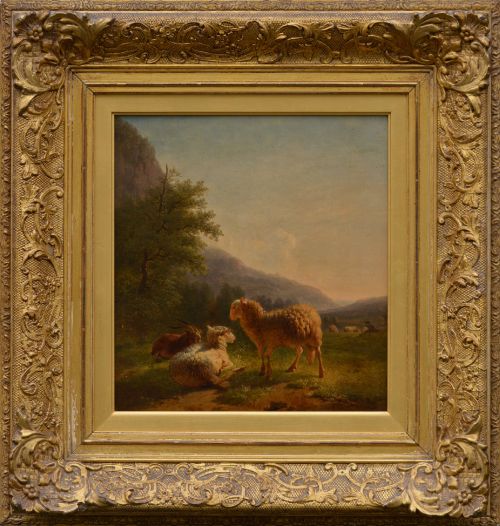
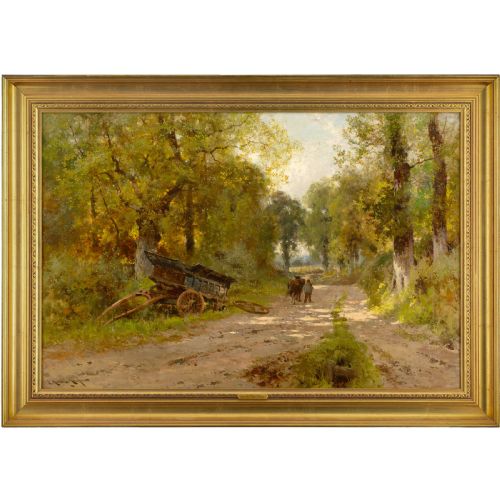
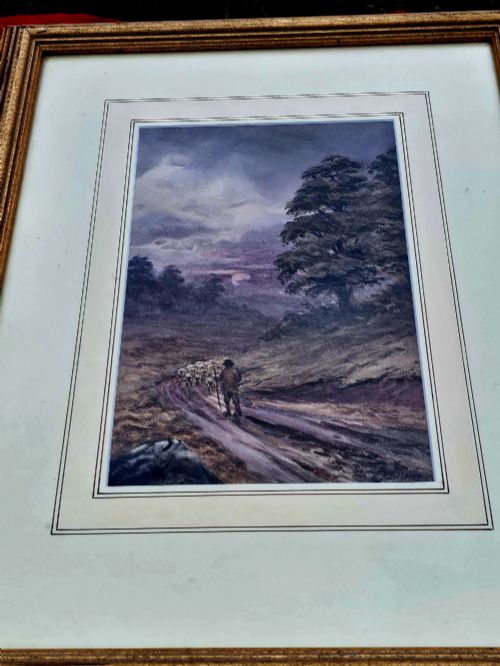
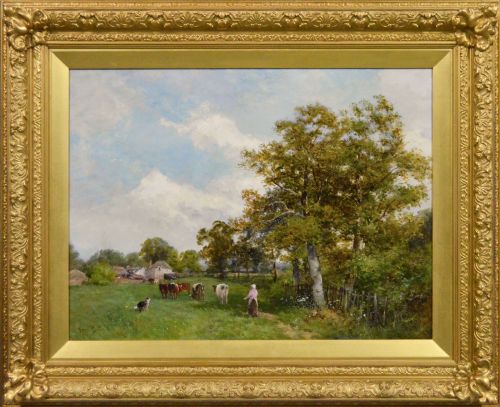
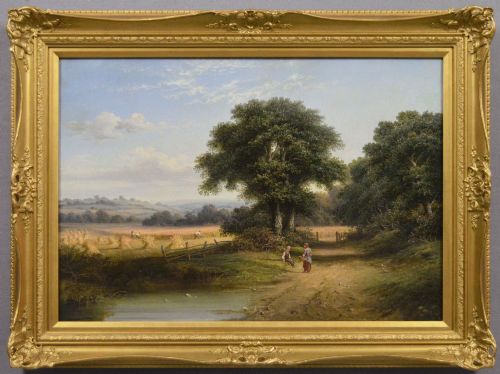
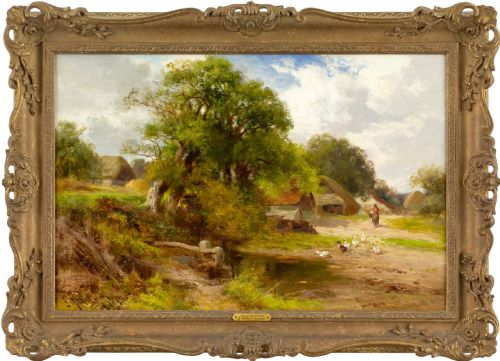
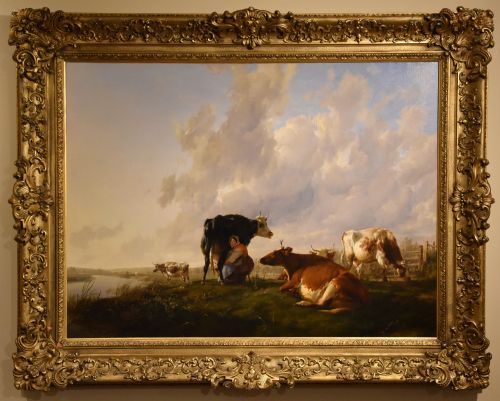
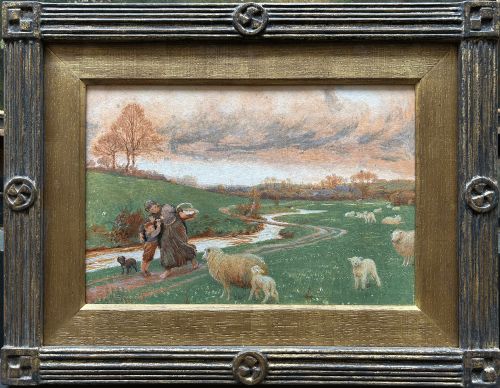
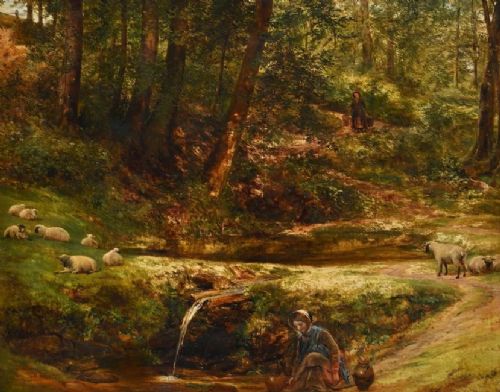
These pieces capture a Victorian pastoral landscape, offering quiet countryside scenes of shepherds, cattle and harvest fields that bring timeless calm into a room.
Victorian Pastoral Landscape
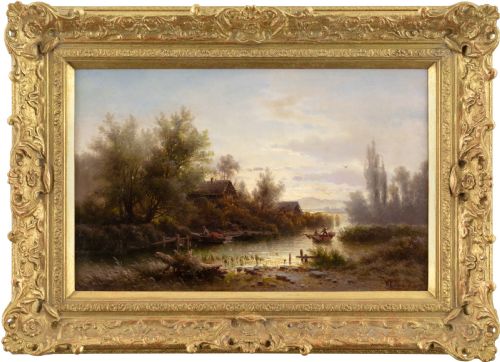
A victorian pastoral landscape depicts rural countryside scenes, frequently featuring figures tending livestock, herding sheep, or gathering harvests by rivers and valleys. These works reflect a nineteenth-century fascination with agrarian life, quiet domesticity, and the British or European countryside.
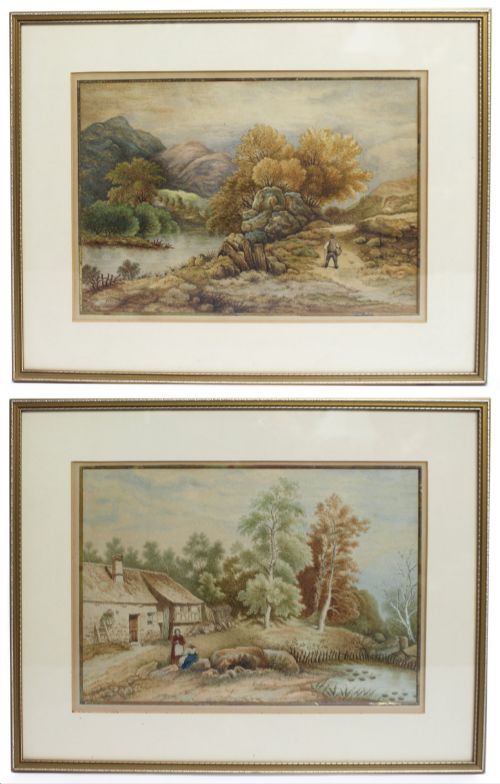
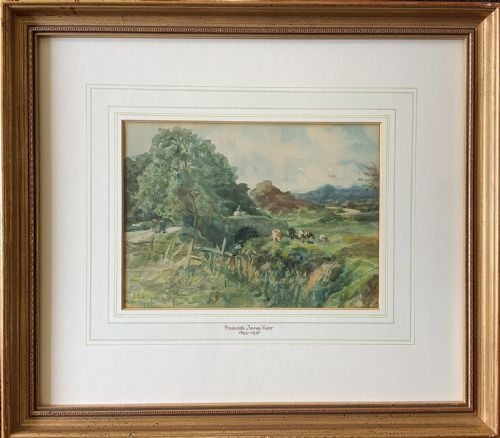
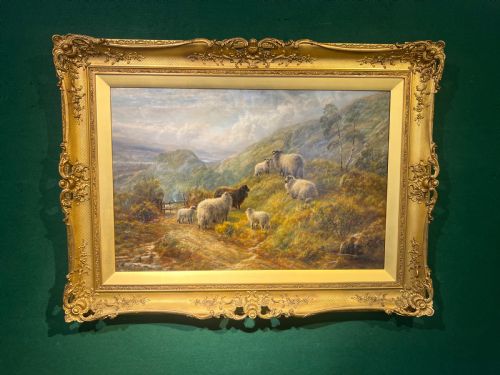
Most items encountered here are oil paintings on canvas or board, alongside watercolours and framed paper works spanning the mid-nineteenth century to the early twentieth century. Common subjects range from Highland cattle and sheep resting to milkmaids and shepherds at work.
The selection includes British School compositions alongside continental European works, capturing specific localities from Sussex and Berkshire to Scottish lochs and Welsh estuaries. Buyers find both intimate watercolours and grander oils suited to traditional room settings.
How they were made
Artists built these scenes using oil paint or watercolour applied to canvas, paper, wood, or milk glass, relying on traditional brushes to capture natural light and texture. Oil on canvas pieces often display textured impasto, particularly in depictions of animals and foliage.
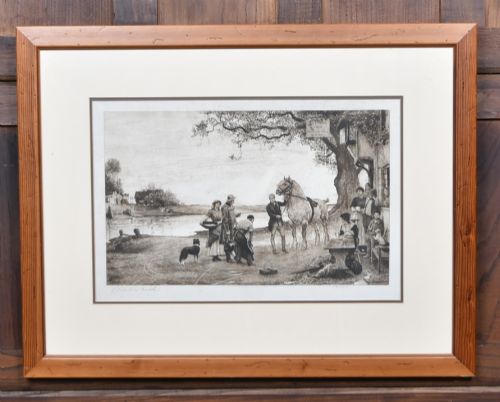
Many works are housed in their original giltwood and gesso frames, showing moulded ornamentation that complements the warm tones of the painted landscape. Paper works such as watercolours, etchings, and lithographs utilise delicate washes and fine lines to render atmospheric skies and pastoral depth.
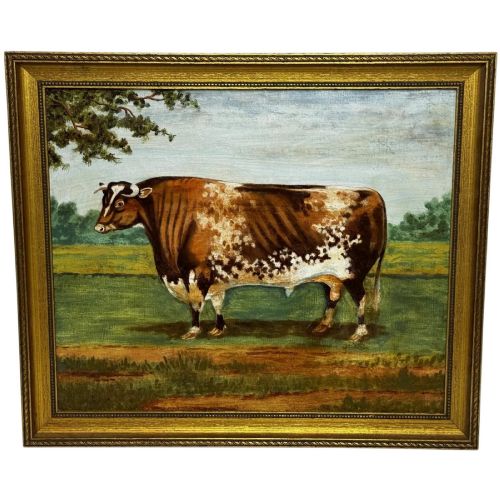
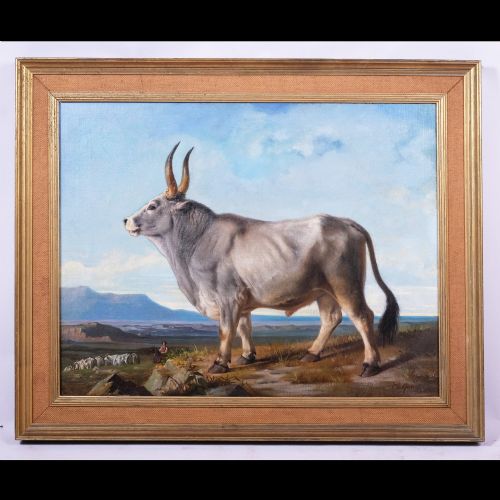
Prized shorthorn bulls appear just as frequently as serene sheep flocks, proving Victorian artists loved a hefty farm beast.
What varies in quality
The finesse of animal anatomy and human figure work distinguishes superior examples, where artists render cattle, sheep, and figures with anatomical precision and expressive poses. Stronger compositions balance the interplay between light, shadow, and atmospheric distance rather than relying on formulaic background foliage.
The preservation of the paint surface and the originality of the framing matter greatly, as untouched oil surfaces retain richer pigment depth. Finer pieces demonstrate confident brushwork and subtle tonal gradations that impart genuine movement and stillness to the rural scene.
Eugène Verboeckhoven·John Horace Hooper·Thomas Sidney Cooper·Franz van Severdonck·William Henry Mander
The Victorian Pastoral Landscape Glossary
- Giltwood
- Wood carved and coated with gold leaf or gilt paint, commonly used for nineteenth-century picture frames. This finish adds reflective warmth around the artwork.
- Gesso
- A plaster-like mixture applied to wood frames to create a smooth surface for gilding and moulding. It allows intricate decorative relief work.
- Impasto
- Paint applied thickly to a canvas so that it stands out from the surface. This technique gives texture to woolly coats of sheep or cattle.
- Wash
- A thin, transparent layer of watercolour pigment applied to paper. It creates luminous skies and soft atmospheric backgrounds in landscape works.
Victorian Pastoral Landscape: Frequently Asked Questions
What defines a victorian pastoral landscape?
These works depict idealized rural scenes from the nineteenth century, focusing on agriculture, livestock, and country life.
They capture a nostalgic view of nature with shepherds, cattle, and harvest workers inhabiting calm valleys and riverbanks.
How should I care for an antique oil painting?
Keep oil paintings away from direct sunlight and sudden temperature changes to protect the canvas and paint layers.
Dust the surface gently with a soft, dry brush and avoid using water or chemical cleaners on the paint.
Are watercolours framed differently from oils?
Watercolours on paper require glass protection and mounts to prevent the paper from touching the surface.
Oils on canvas remain unglazed to let the textured paint surface breathe and catch the light directly.
How can I tell the period of a landscape?
Painting styles, canvas preparation, and framing techniques help determine the era, alongside artist signatures and dates.
Nineteenth-century works often feature distinct realism or romanticism combined with period-specific giltwood frames.