



Antique Cattle Landscape Picture
An antique cattle landscape picture captures pastoral life through nineteenth and early twentieth century oils and watercolours.
Antique Cattle Landscape Picture
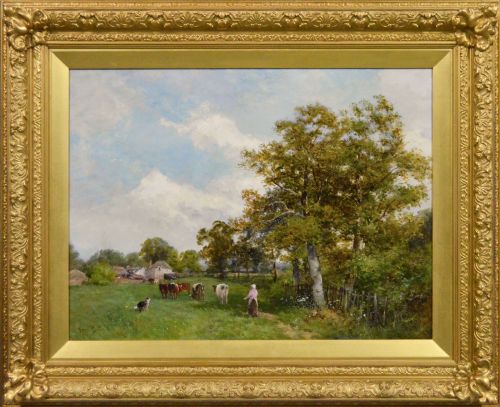
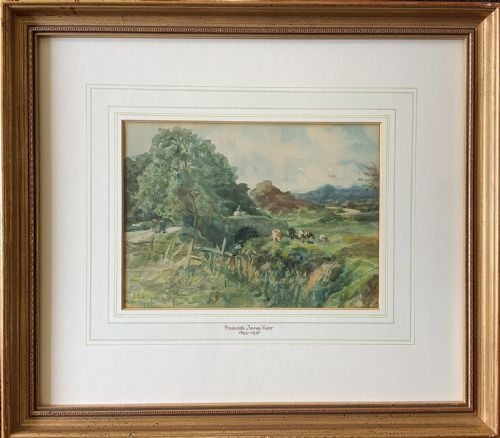
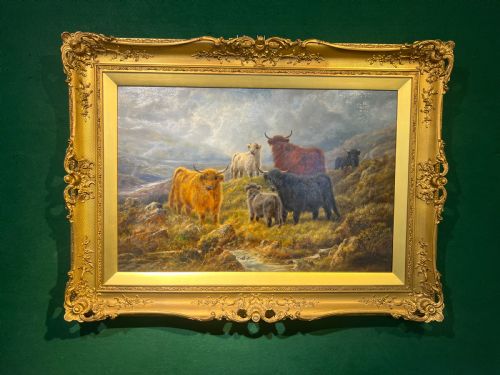
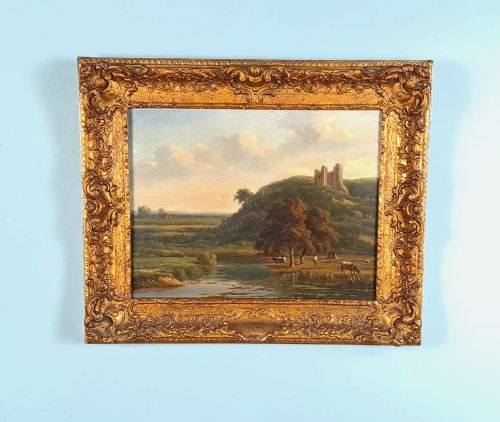
An antique cattle landscape picture portrays rural scenes with cows, bulls or calves integrated into British country, river or highland views. These works capture agricultural life and pastoral scenery across the nineteenth century and into the early twentieth century.
The most common form on this page is an oil on canvas or watercolour painting, housed in a giltwood and gesso frame. Pieces range from intimate riverbank watercolours to large oil paintings depicting Scottish Highland cattle near lochs.
Makers and artists working in the Victorian pastoral and realist traditions dominate the selection. Subjects span from English pastoral river scenes to rugged Scottish mountain landscapes populated by longhorn or short horn cattle.
Materials and techniques
Artists painted primarily with oil on canvas or applied watercolour to paper, often mounting works on board. Canvases received layers of pigment to build depth in skies and pastures, while watercolours utilised fluid washes for atmospheric mist and water.
Frames are constructed from wood and finished with moulded gesso and gilt leaf. These ornate surrounds complete the presentation of the artwork, protecting the edges of the canvas or paper from damage.
What varies in quality
Quality rests in the handling of light, brushwork precision and anatomical accuracy in rendering the animals. Superior works convey natural movement in the cattle and believable depth in the surrounding landscape, rather than stiffly posed figures.
The sophistication of the original giltwood frame and the preservation of the pigment surface also differentiate works. Pieces that retain their original unlined canvas and untouched paint layers command greater regard among collectors.
William H Myers·David Bates·Frederick James Kerr·T C Hofland·A M Gauci·Henry Robinson Hall·Thomas Sidney Cooper·Frederick Septimus Lewis·Robert Watson·George Vicat Cole·Andre de Moller·Robert Thorne Waite·Harold Lawes·Thomas Baker·Sidney Yates Johnson·Basil Bradley·John Inigo Richards·Arthur Charles Dodd·Claude Cardon·George Turner·Gustave De Brianski·Henry Cheadle·John Percy Cooke·Henry Birtles·Henry John Kinnaird
The Antique Cattle Landscape Picture Glossary
- Oil on canvas
- Pigments bound in drying oil applied to a woven fabric stretched across a wooden frame. This medium allowed artists to achieve rich textures and deep colour saturation.
- Watercolour painting
- Pigments ground in a water-soluble binder applied to paper. It produces translucent washes prized for capturing light and atmospheric weather conditions.
- Giltwood
- Wood carved and coated with gold leaf or metallic powder. It provides the decorative metallic finish seen on traditional picture frames.
- Gesso
- A paint mixture consisting of a binder mixed with chalk, gypsum or pigment. Applied to wood frames before gilding to create a smooth, sculptural surface.
- Highland cattle
- A Scottish breed characterised by long horns and shaggy hair, frequently featured in nineteenth century landscape paintings. Their dramatic appearance made them a favourite subject for pastoral artists.
Antique Cattle Landscape Picture: Frequently Asked Questions
What periods do these paintings come from?
The selections span the nineteenth century and the early twentieth century, encompassing Victorian and Edwardian aesthetics. Painters recorded agricultural life and wilderness before modern industrialisation altered the countryside.
Dates on these works frequently range from the early eighteen hundreds up to the nineteen thirties. This broad span covers the height of British pastoral realism and romantic landscape art.
How should I hang an oil painting?
Select a wall away from direct sunlight and steady heat sources to protect the canvas and pigments. Proper picture hooks screwed into wall studs provide secure support for heavy giltwood frames.
Maintain stable room humidity to prevent the wood and canvas from warping over time. Ensure the hanging height places the centre of the composition at eye level.
How do I distinguish watercolours from oils?
Watercolours are painted on paper and require glass protection within the frame to shield the delicate pigments from moisture. They present a translucent, luminous quality where the white of the paper shines through.
Oils are painted on canvas or board and do not require glass covers. The paint surface exhibits visible brushstrokes, texture and a heavier pigment build-up.
What subjects appear alongside cattle?
Herdsmen, milkmaids and farmers frequently share the pasture with the livestock, often tending to daily agricultural tasks. Rivers, barns, ruined castles and distant mountains complete the rural setting.
Other farm animals such as sheep, horses and ducks also populate the landscapes. These elements ground the cattle in a working rural environment rather than an empty wilderness.