


Victorian Partners Table
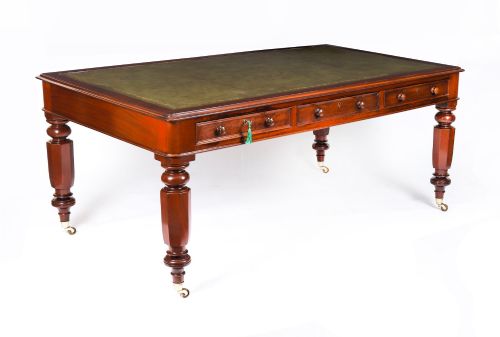
When you search for a victorian partners table, you enter a world of grand double-sided workspaces designed for two people to work face-to-face in a shared study or library.
Victorian Partners Table
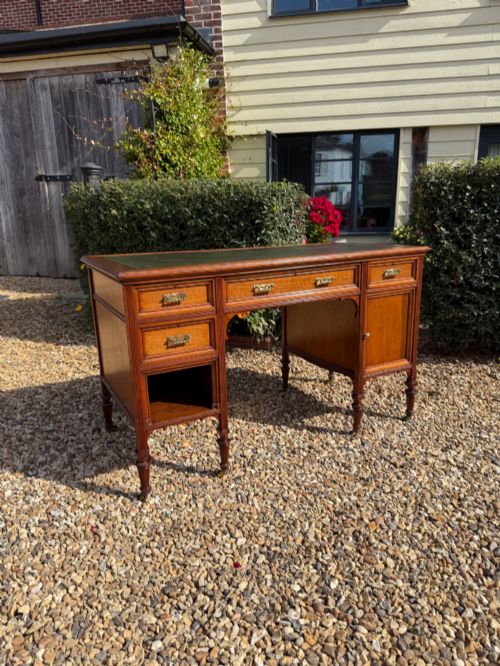
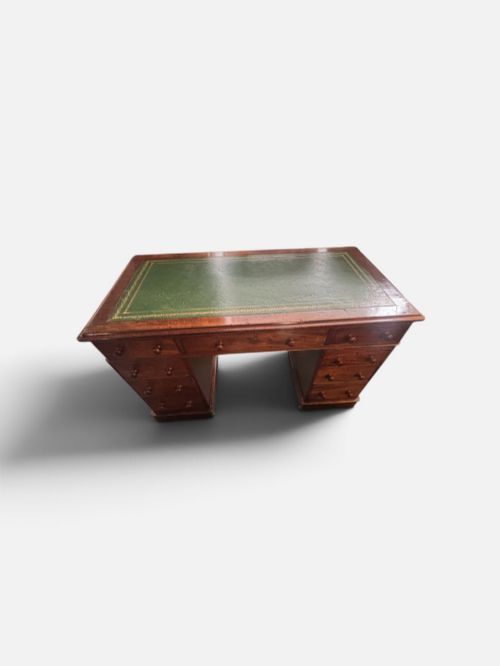
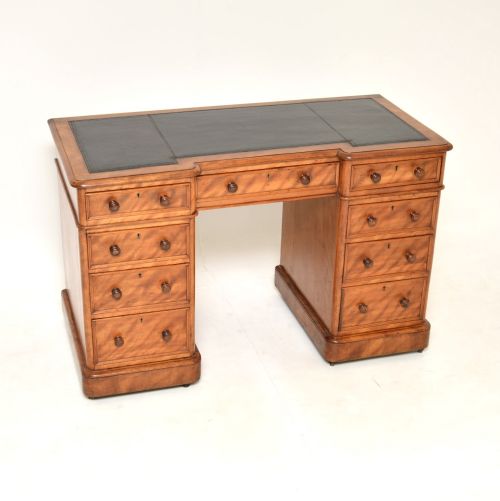
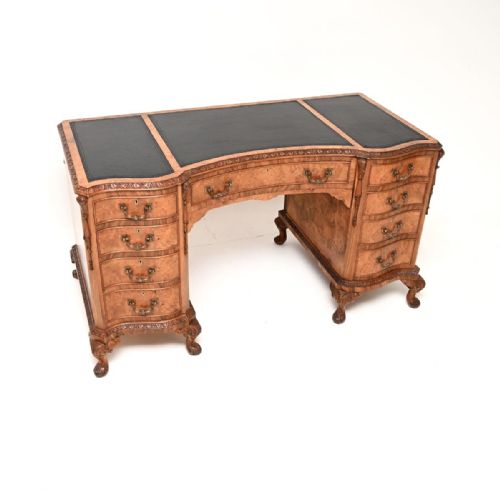
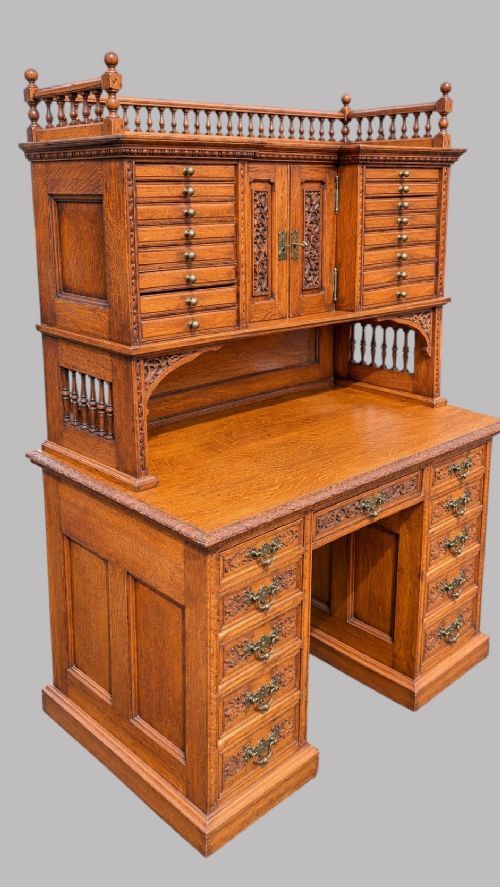
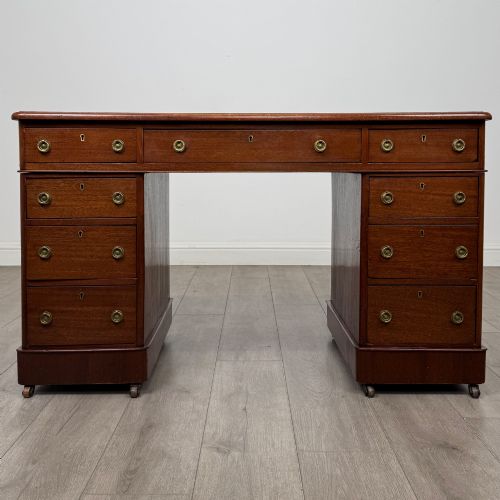
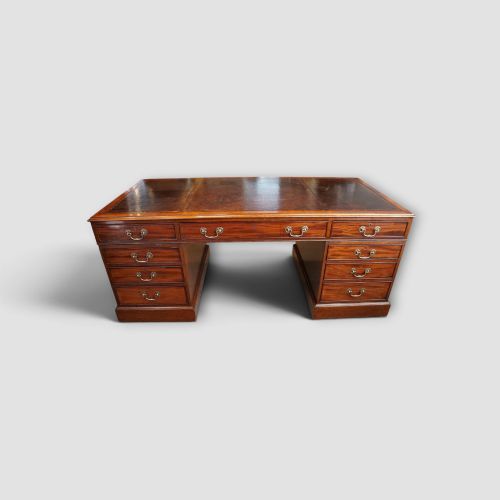
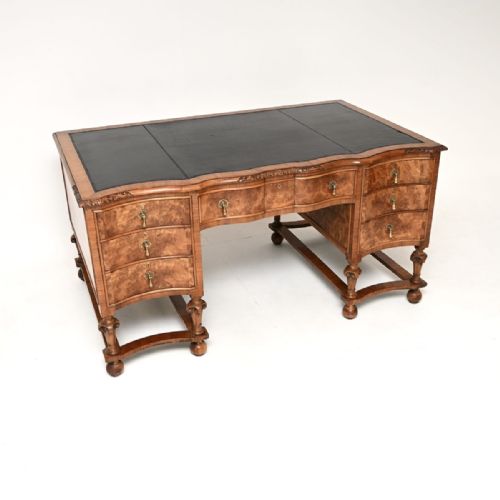
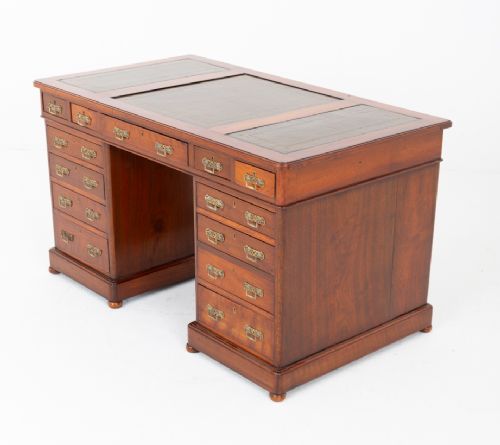
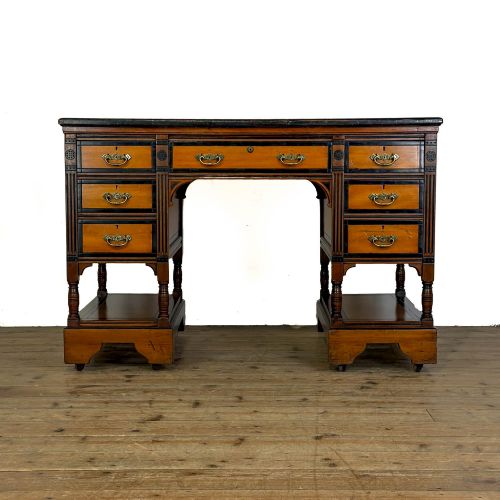
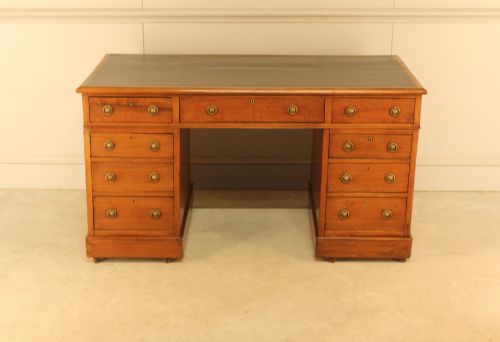
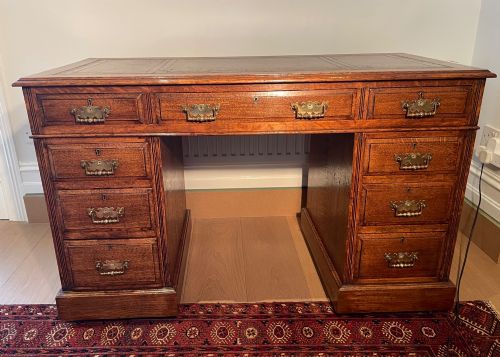
A victorian partners table typically presents a spacious writing surface inset with leather, supported by twin pedestals containing banks of drawers or cupboards on both sides. These substantial pieces were originally commissioned for lawyers, bankers, and stately homes where two individuals needed equal workspace and storage facing one another.
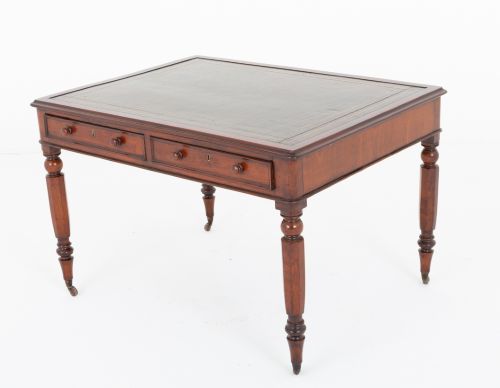
The selections available include variations such as freestanding library tables without pedestal cupboards, alongside pedestal desks configured with opposing drawers. Mahogany is the predominant wood encountered, supplemented by oak, walnut, and burr walnut examples reflecting mid-to-late nineteenth-century tastes.
Design influences range from straightforward mahogany constructions to revival styles incorporating Georgian, Gothic, and Louis XIV elements. Certain pieces feature aesthetic movement details or specialised inlays like ivory and thuya wood, showing the stylistic breadth of the period.
Materials and Construction
Cabinet makers utilised dense hardwoods like solid and veneered mahogany, oak, and rich burr walnut to build these large frames. These timbers were selected for their stability and grain pattern, providing a durable foundation capable of withstanding heavy daily use.
Writing surfaces were traditionally finished with tooled leather inserts, often edged in gilt tooling, while drawers incorporated precise dovetail joinery. Brass handles, escutcheons, and occasional ceramic or Wedgwood plaque inlays completed the hardware and decorative schemes.
Listings feature oak, mahogany, walnut, and burr walnut tables spanning the Victorian period from 1850 to 1900.
Evaluating the Build and Finish
Quality rests upon the selection of timbers, particularly the choice of figured mahogany or matched burr walnut veneers across both working faces. Superior examples demonstrate continuous grain matching and meticulous carving that extends equally to all four visible sides of the frame.
The execution of interior elements, such as solid mahogany drawer linings with hand-cut dovetails, distinguishes high-workshop production from utilitarian office furniture. Furthermore, maker attribution through branded stamps or paper labels elevates the provenance of specific pieces.
Trollope and Sons·Maple and Co·Jackson and Graham·Edwards and Roberts·Charles Andrea Nosotti·J Yabsley·Lamb of Manchester
The Victorian Partners Table Glossary
- Partners desk
- A large double-sided desk featuring opposing drawers and cupboards designed to accommodate two users simultaneously. This form sits centrally in a room rather than against a wall.
- Pedestal desk
- A heavy desk supported by two vertical columns of drawers flanking a central kneehole space. They often feature inset leather writing surfaces on top.
- Library table
- A large freestanding table utilised for reading and writing, generally featuring frieze drawers beneath the top. Unlike pedestal desks, these rely on four legs rather than drawer columns for support.
- Burr walnut
- A highly prized timber veneer derived from the knotted growths of walnut trees. It yields intricate, swirling grain patterns favored for decorative furniture fronts.
- Dovetail
- A traditional interlocking joint used in drawer construction. Hand-cut variations indicate older, higher-quality cabinet making.
Victorian Partners Table: Frequently Asked Questions
Where should I place a partners table?
These tables are designed to be freestanding in the centre of a room rather than pushed against a wall, as drawers and panels are finished on all sides.
Ensure you leave adequate clearance space around the entire perimeter so chairs can be pulled out comfortably from both opposing sides.
How do I care for the leather top?
The leather writing surface benefits from occasional treatment with specialised leather balms or neutral waxes to prevent drying and cracking over time.
Avoid placing hot cups or liquids directly onto the leather, and use blotting paper for writing to protect the delicate gilt tooling.
Can I dismantle a partners table for moving?
Many nineteenth-century pedestal desks and tables are constructed in modular sections, separating into a top board and two distinct drawer pedestals.
Lifting the heavy top off requires at least two people to safely disengage the components without straining the underlying framework.