

Victorian Parlor Cabinet
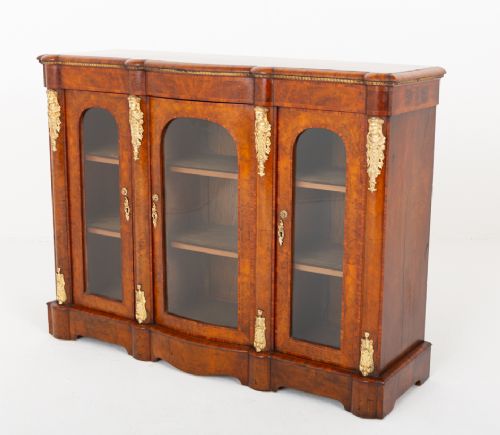
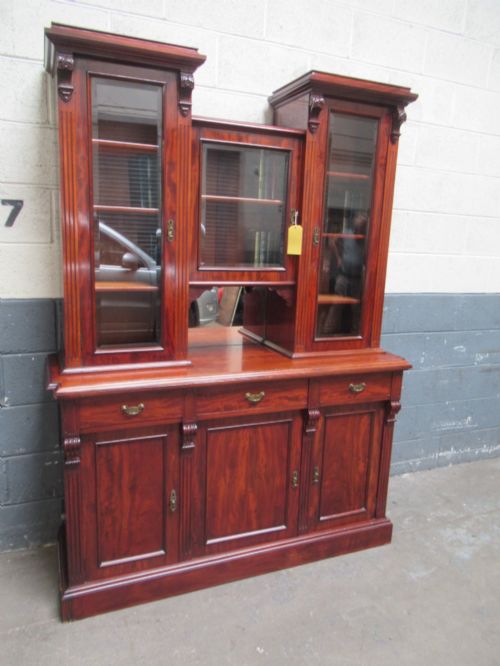
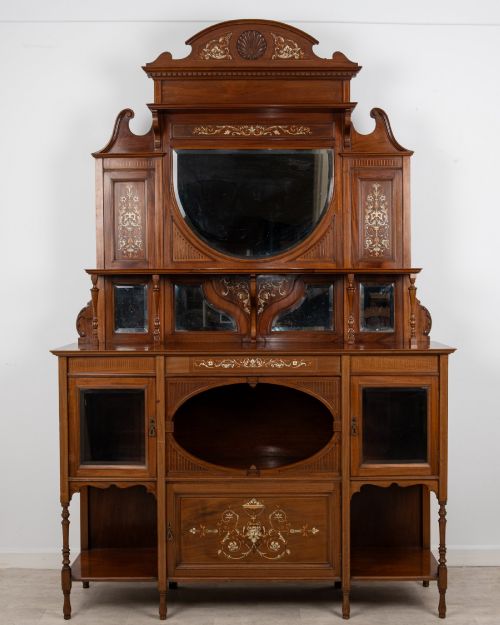
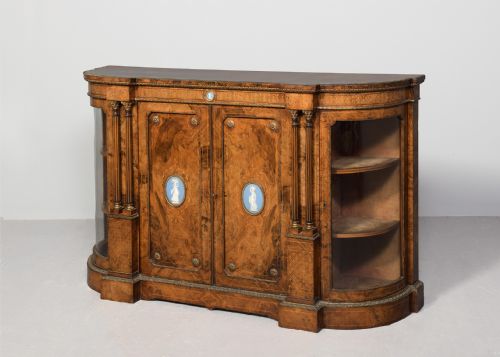
A victorian parlor cabinet brings formal nineteenth-century reception rooms into focus with rich timber surfaces and delicate brass and boxwood details.
Victorian Parlor Cabinet
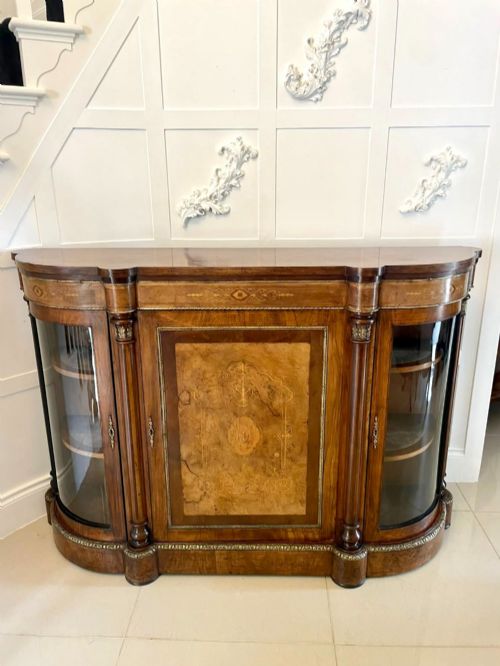
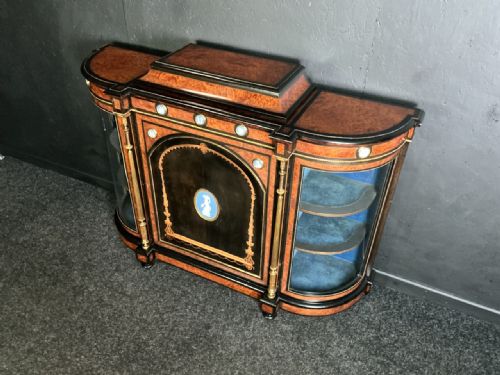
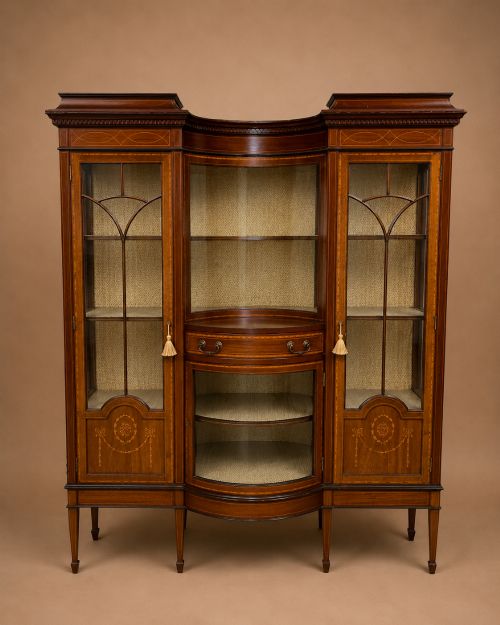
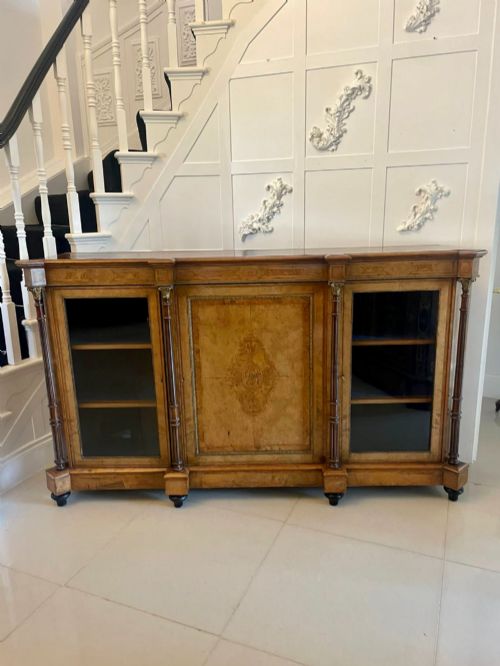
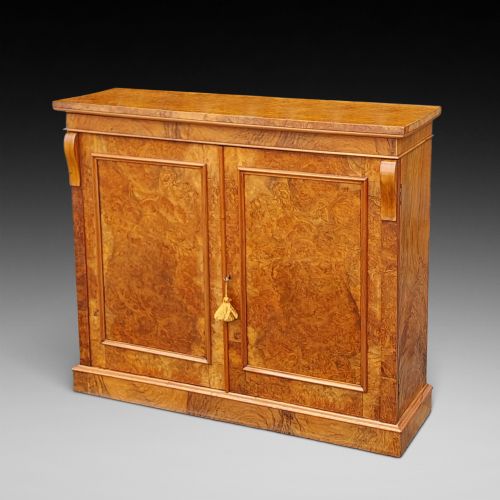
A victorian parlor cabinet serves as a sophisticated display and storage piece designed for the principal entertaining spaces of nineteenth-century homes. The selection spans credenzas, side cabinets, display cabinets, and chiffoniers originating across the Victorian era from the eighteen-fifties onward. These forms reflect the changing domestic habits of the period, moving from closed storage toward glazed display.
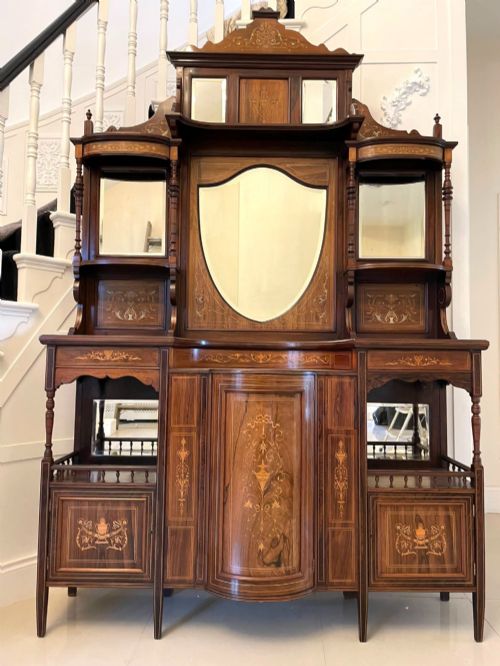
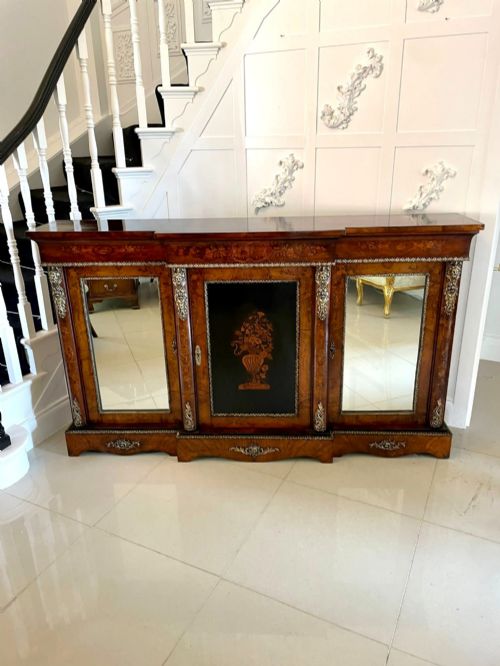
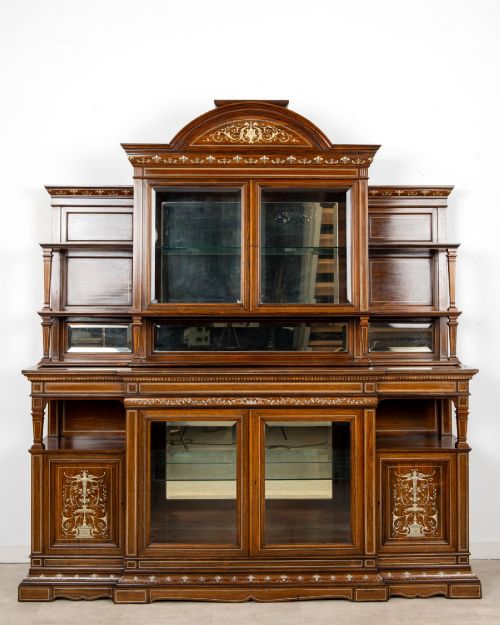
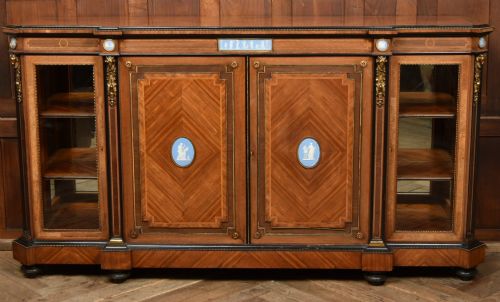
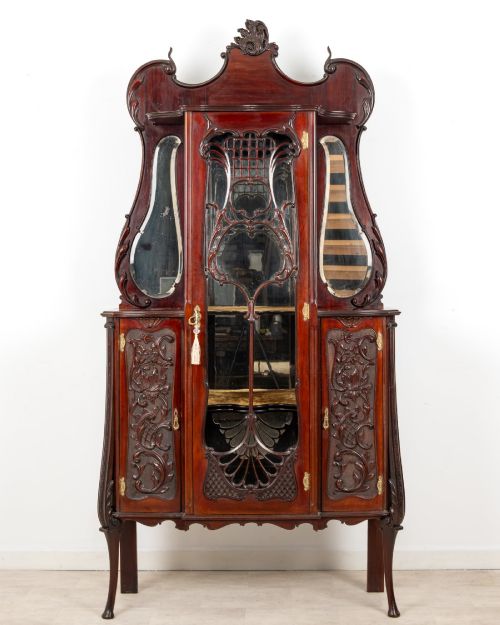
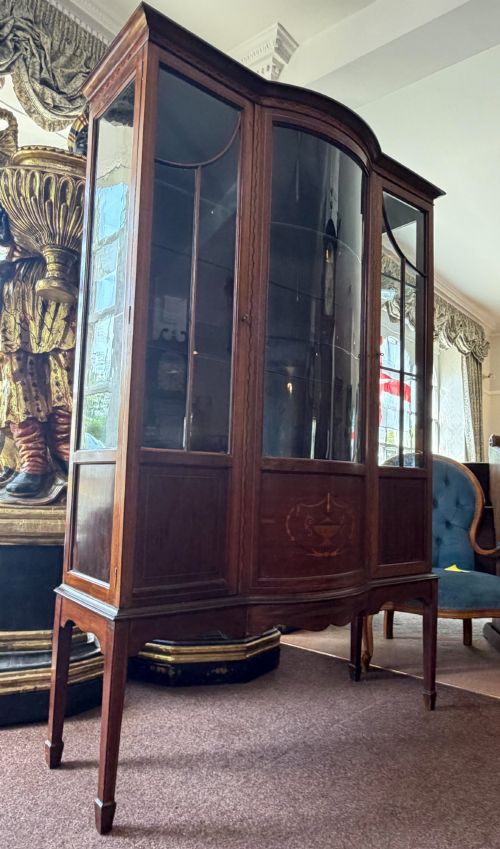
Burr walnut and rosewood dominate the material record, accompanied by mahogany and ebonised timber. Cabinetmakers utilised figured veneers and contrasting boxwood inlay to create visual depth on flat door panels and curved friezes. Pieces frequently incorporate mirror glass within panelled backs or doors, augmenting the sense of space within formal rooms.
Stylistic influences range from classic Victorian interpretations to Sheraton Revival, French Revival, and the distinctive geometry of the Aesthetic Movement. Certain examples show specific affinities with the output of notable firms such as Collinson and Lock or Garnett and Sons. The variety encompasses everything from compact bow-fronted side cabinets to large four-door serpentine credenzas.
Materials and construction methods
Makers constructed these cabinets using dense native and imported timbers, applying burr walnut and rosewood veneers over stable secondary woods to achieve striking figure patterns. Boxwood and brass stringing provide linear contrast, framing door panels and outlining curved profiles. Ormolu mounts appear on select walnut pieces, adding cast gilt-bronze enrichment to corners and pilasters.
Surface ornamentation relies heavily on marquetry, employing varied wood types to form floral and geometric motifs across doors and friezes. Glass panels, curved door fronts, and mirror plates require precise joinery to maintain structural integrity within housing frames. Carved mahogany components demonstrate traditional hand-tool techniques on mouldings, feet, and mirror surrounds.
Certain walnut credenzas conceal secret writing drawers inside, proving Victorians loved hiding their inkwells in unexpected places.
Distinctions in manufacture and design
Quality reveals itself in the selection and matching of timber veneers, where superior pieces exhibit continuous burr patterns across multiple doors and drawers. The finesse of the boxwood inlay and the intricacy of the marquetry distinguish standard production from exhibition-grade examples. Heavier brass mounts and crisper cast ormolu indicate greater workshop investment.
Structural complexity, such as serpentine fronts, integrated secretaire drawers, and glazed curved doors, separates ambitious cabinetwork from simpler sideboards. The inclusion of mirrored backings with bevelled edges and refined carved mahogany framing points to higher-tier commissions originating from prominent urban workshops.
Collinson and Lock·Garnett and Sons·Edwards and Roberts
The Victorian Parlor Cabinet Glossary
- Credenza
- A low cabinet or sideboard designed for display and storage, often featuring glass-fronted side cupboards flanking a central door. This form sits centrally within Victorian reception rooms.
- Marquetry
- The art of forming decorative patterns using thin veneers of various wood types fitted together. It creates pictorial or geometric designs on cabinet doors.
- Ormolu
- Gilt-bronze mounts applied to furniture for decorative enrichment. These metallic elements highlight corners and borders on walnut pieces.
- Chiffonier
- A low sideboard or cabinet equipped with enclosed shelving and frequently surmounted by a mirror or small superstructure. It provides practical storage alongside display space.
- Burr walnut
- Timber taken from the abnormal growth of a walnut tree, yielding highly figured and swirling grain patterns. Cabinetmakers prize this material for principal veneer surfaces.
Victorian Parlor Cabinet: Frequently Asked Questions
What is a credenza?
A credenza is a low cabinet featuring cupboards, frequently with glazed central sections intended for displaying ceramics and glassware.
These pieces anchored the walls of nineteenth-century reception rooms and provided surface area for lamps and decorative objects.
How do I identify burr walnut?
Burr walnut displays swirling, knotty grain patterns created by irregular tree growths, offering rich visual texture.
Cabinetmakers sliced this timber into thin veneers to cover large flat surfaces on high-status cabinets.
Where were these cabinets placed?
These cabinets occupied formal parlors and drawing rooms where families entertained guests and displayed household status.
Their reflective glass and polished timber surfaces enhanced the candlelight and gas lighting of period interiors.
What distinguishes Aesthetic Movement pieces?
Aesthetic Movement cabinets favor ebonised finishes, simplified structural lines, and Japanese-inspired decorative motifs.
These designs depart from traditional revival styles by emphasising flattened planes and contrasting gilt or brass details.
How do I care for rosewood?
Rosewood surfaces require stable humidity and protection from direct sunlight to prevent timber drying and fading.
Routine dusting with a dry cloth preserves the polished finish without risking moisture damage to ancient veneer.