


Victorian Park Bench
These Victorian park bench examples bring solid ironwork and timber to the garden, offering enduring utility for outdoor seating.
Victorian Park Bench
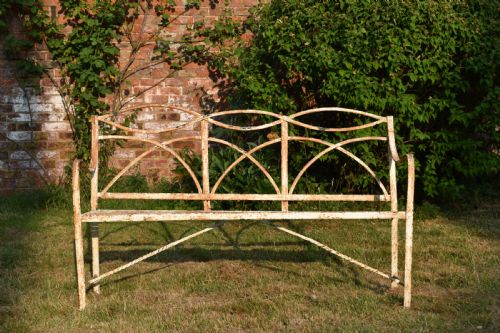
When you search for a Victorian park bench, you encounter robust outdoor seating designed to withstand the elements while providing decorative garden structure. These pieces primarily date from the nineteenth century and the Victorian period, though adjacent pieces span from Regency designs through to the 1930s.
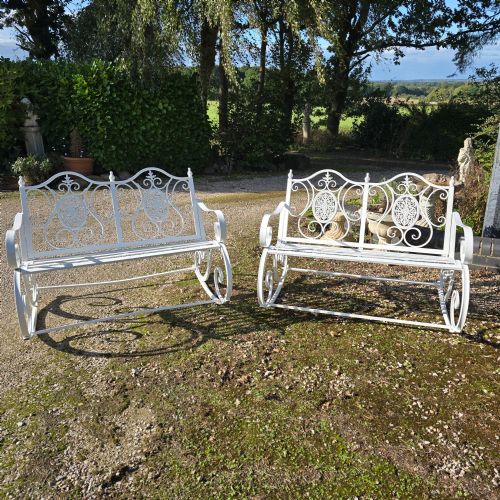
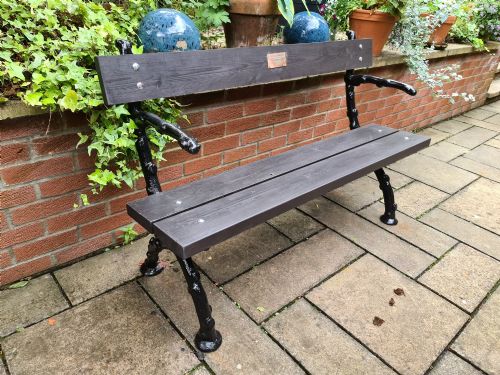
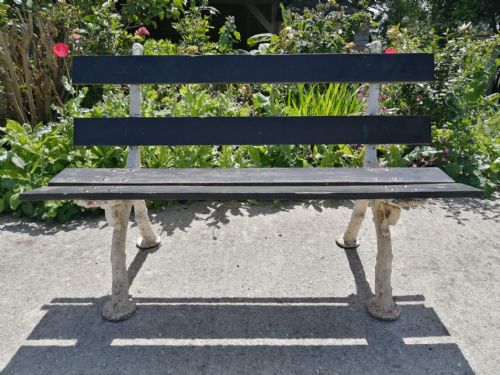
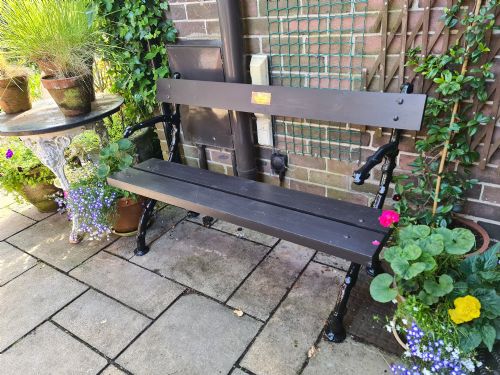
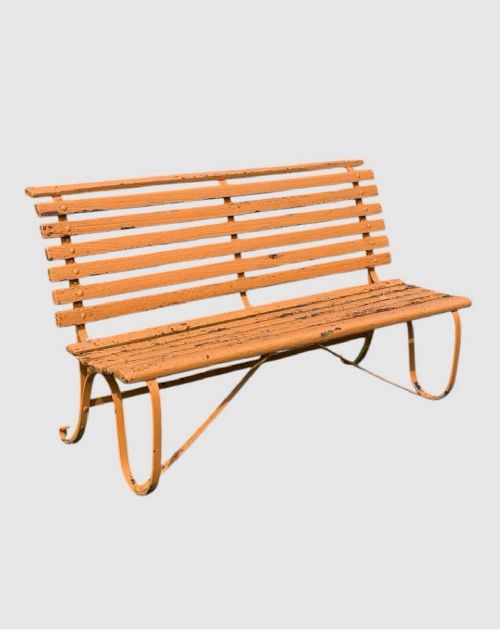
The most common version met on this page combines heavy metal supports with timber slats, often taking the form of a two-seater or four-seater garden seat. Object types range from complete garden benches and chairs to individual bench ends and matching garden furniture sets.
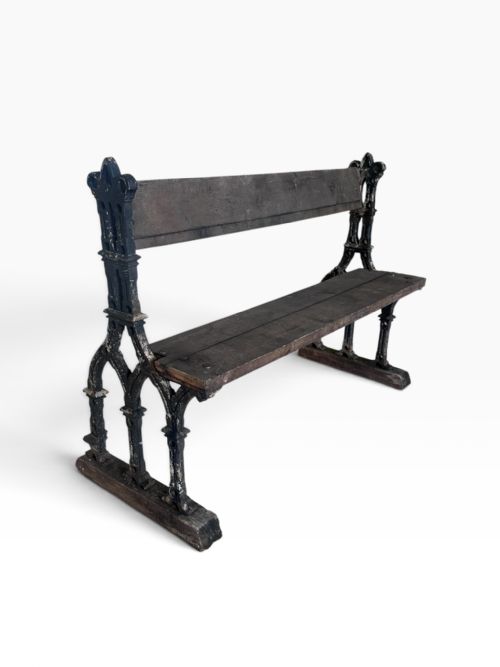
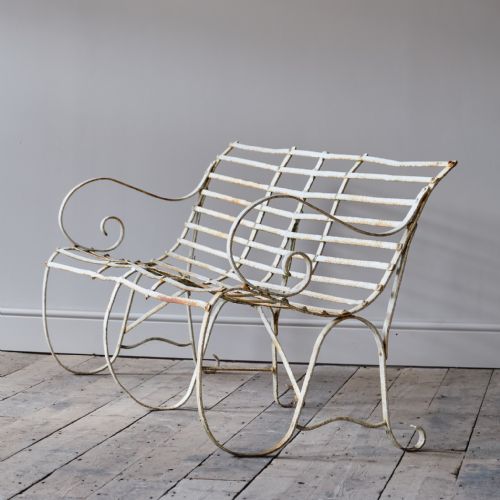
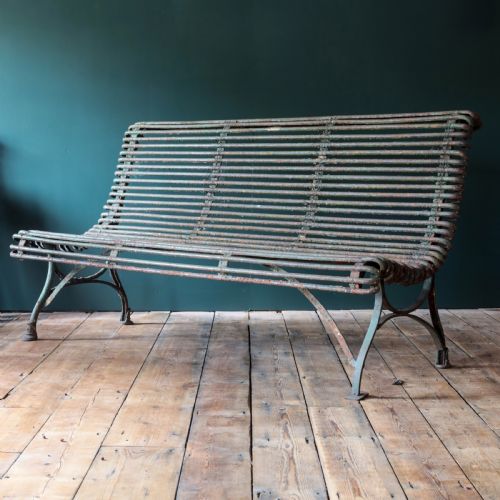
Stylistic variations include Victorian Gothic, rustic patterns, strapwork, and scroll designs, alongside French nineteenth-century and Arras influences. Buyers select these benches to anchor outdoor spaces with authentic period craft and durable materials.
Materials and construction methods
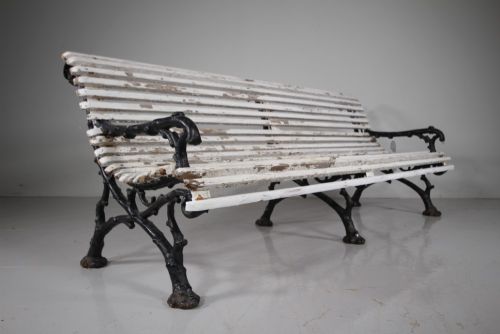
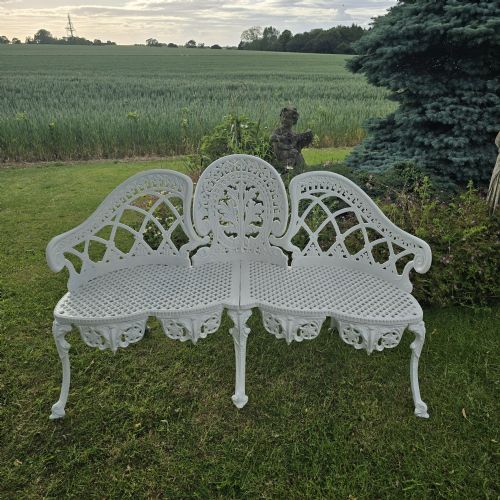
Construction relies heavily on cast iron, wrought iron, and cast metal for the structural ends and frames, frequently paired with wood or timber slats for the seat and backrest. Metal elements are shaped through casting or forging, yielding intricate details such as gothic tracery, strapwork, and faux bois branch motifs.
Surface finishes play an essential role in survival, with many examples retaining layers of original paint applied over decades of use. Timber components such as teak or alternative hardwoods are bolted or fitted directly into the metal frameworks to distribute weight and ensure stability.
Listings feature periods spanning the Regency era, the 19th Century, and the 1920s to 1930s.
Distinctions in quality
Quality in a Victorian park bench rests on the crispness of the metal casting and the complexity of the design, such as intricate Coalbrookdale or Val D'osne patterns versus plain utility frames. Finer examples display sharp relief in motifs like foliage, branches, or geometric strapwork.
The integrity of the structural metalwork and the preservation of original surfaces also separate superior pieces from standard iterations. Benches retaining their matching timber slats, authentic patinated paint layers, and intact foundry work command greater attention from collectors.
Coalbrookdale·Val D'osne
The Victorian Park Bench Glossary
- Cast Iron
- An iron-carbon alloy poured into moulds to create rigid, highly detailed structural components. This material forms the ornate bench ends and frames characteristic of nineteenth-century garden seats.
- Wrought Iron
- Iron heated and worked by hand with tools to produce sturdy, malleable scrollwork and strapwork. It offers high tensile strength and a distinct fibrous texture compared to cast iron.
- Strapwork
- A decorative motif resembling interlaced bands or leather straps applied to metalwork. It provides a geometric pattern across the backrests of various period benches.
- Faux Bois
- An artistic imitation of wood grain or tree branches rendered in cast iron. This technique mimics natural timber forms to suit nineteenth-century rustic garden aesthetics.
- Bench Ends
- The heavy cast or wrought metal side supports that hold the seat and back slats together. Surviving pairs often indicate the original scale and design of a larger garden seat.
Victorian Park Bench: Frequently Asked Questions
Can these benches stay outside all year?
Cast iron and treated timber are built to endure external weather conditions, making these benches suitable for permanent garden placement.
However, historic timber slats benefit from protective winter covers or sheltered storage during severe frost to preserve the original wood.
How do I identify a Coalbrookdale bench?
Makers such as Coalbrookdale often incorporated specific fern, gothic, or faux bois motifs alongside foundry marks into the cast iron frame.
Comparing the crispness of the casting against documented nineteenth-century pattern books helps confirm the workshop origin.
Are the wooden slats original?
Original timber slats on nineteenth-century pieces are uncommon due to natural weathering and decay over decades of outdoor exposure.
Many surviving frames have been refitted with replacement timber to restore structural safety while retaining the antique metal ends.
What is the difference between cast iron and wrought iron?
Cast iron is poured into moulds to achieve rigid, ornate sculptural details but can be brittle under sharp impacts.
Wrought iron is hammered into shape, producing flexible scrollwork and strapwork that bends rather than snaps under stress.