




Victorian Parian Porcelain Sculpture
Victorian parian porcelain sculpture brings classical figures, literary heroines, and prominent busts into the home through unglazed ceramic.
Victorian Parian Porcelain Sculpture
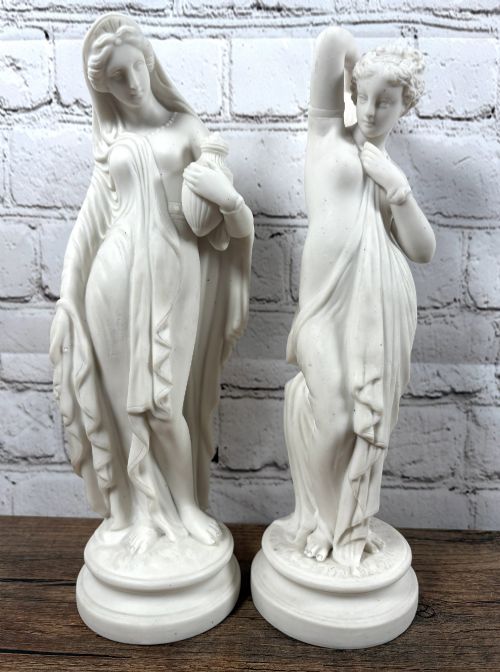
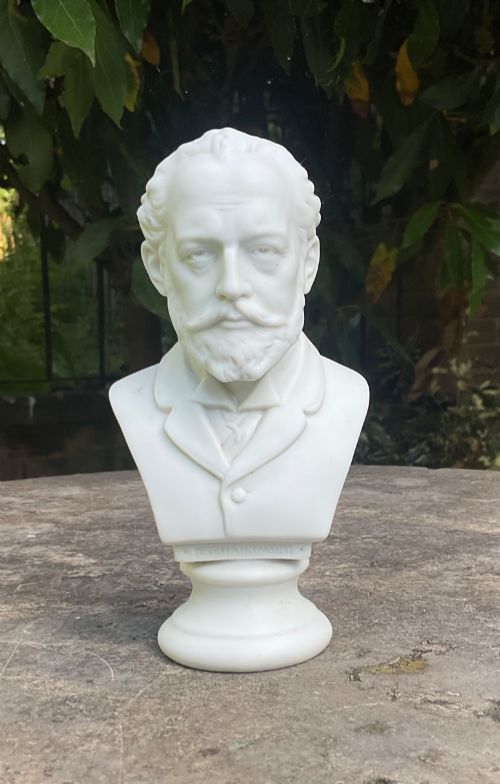
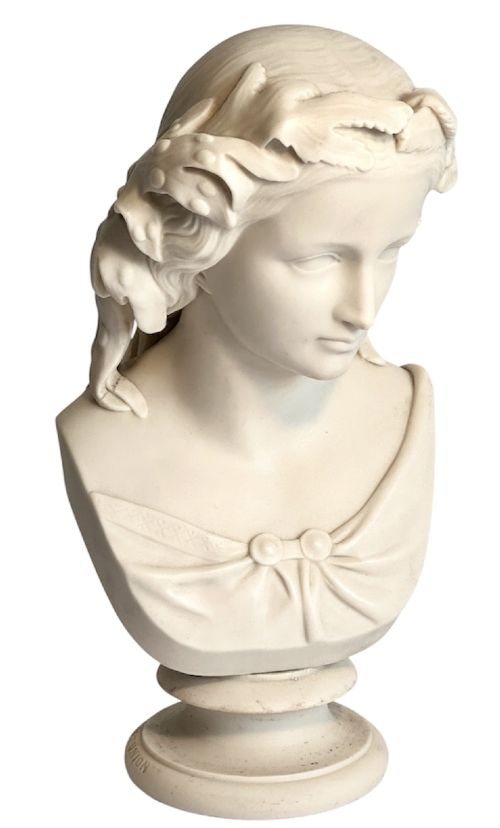
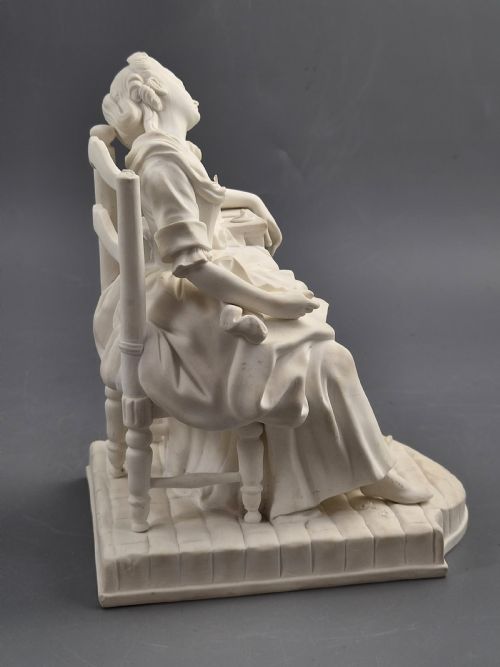
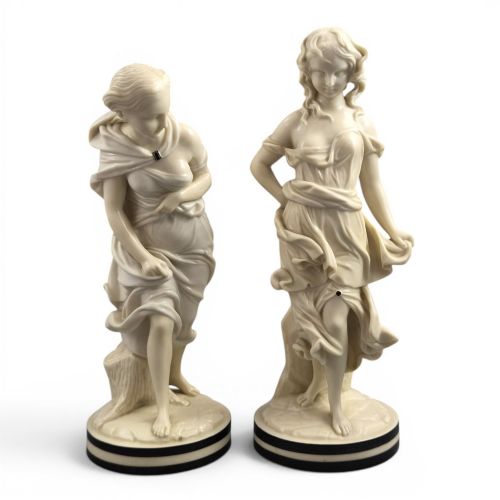
Victorian parian porcelain sculpture comprises figures, statuettes, and busts produced during the nineteenth century, often capturing classical subjects and literary characters.
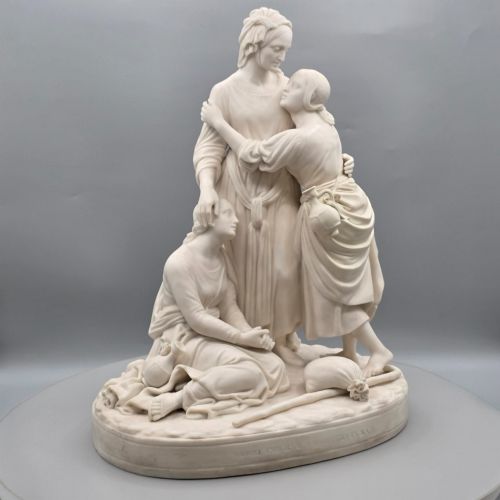
The objects take the form of single figures, pairs such as Fast Sleep Wide Awake, and complex groups depicting figures like Naomi and her daughters-in-law.
Makers drew inspiration from classical mythology, historical personalities like William Ewart Gladstone and Princess Alexandra, and domestic subjects.
Materials and Techniques
Parian ware and biscuit porcelain are fired without a shiny glaze, yielding a matte surface that imitates carved marble.
Manufacturers poured liquid slip into multi-part moulds, allowing intricate details on robes, hair, and animal subjects to emerge sharply from the clay.
Victorian Parian Porcelain Sculpture Retail Price Guide 2026
Typical asking prices for victorian parian porcelain sculpture among the pieces listed under this phrase on Sellingantiques today, from the lower quarter to the upper quarter. They describe what is for sale here now, not the wider market.
Listings feature works from the mid-nineteenth century through 1900, spanning neoclassical subjects, historical portraits, and animal studies in parian and bisque porcelain.
Quality Variations
Quality rests on the crispness of the moulding and the sensitivity of the finishing hand, which determine whether a piece retains the sharp detail of the original model.
Larger scale studies and works signed by named sculptors or major factories demonstrate superior ambition and technical execution.
Minton·Copeland·Royal Worcester·Triebner Ens And Co
The Victorian Parian Porcelain Sculpture Glossary
- Parian ware
- A type of fine unglazed porcelain developed in England to resemble marble. It matures at a lower temperature than hard-paste porcelain.
- Biscuit porcelain
- Unglazed ceramic fired once before decoration, also known as bisque. This surface absorbs no light, creating a soft, matte finish.
- Neoclassical
- A style reviving the classical aesthetic of ancient Greece and Rome. It dominates the design of many nineteenth-century figures.
- Slip
- Liquid clay poured into plaster moulds to form intricate shapes. It ensures that complex forms like draped garments reproduce accurately.
Victorian Parian Porcelain Sculpture: Frequently Asked Questions
What is parian porcelain?
Parian porcelain is a dense, unglazed ceramic developed in the nineteenth century to imitate carved white marble.
Its matte surface makes it ideal for capturing fine details on portrait busts and classical statuettes.
How do I clean parian figures?
Unglazed ceramic absorbs dust easily due to its porous, matte nature.
Use a soft, dry brush to gently clear away dirt without dampening the fragile surface.
Who sculpted these pieces?
Major factories employed prominent artists to model subjects for parian production.
Copeland and Minton frequently issued figures based on works by sculptors such as John Durham and Owen Hale.
Are these pieces marked?
Many nineteenth-century examples carry factory impressed stamps or registry marks on the base or reverse.
These marks often include model titles and dates alongside the maker's name.