




Victorian Papier Mache Tray
A victorian papier mache tray brings tactile nineteenth-century craftsmanship and durable black lacquer into modern rooms as a striking standalone server or occasional table top.
What Victorian Papier Mache Trays Are
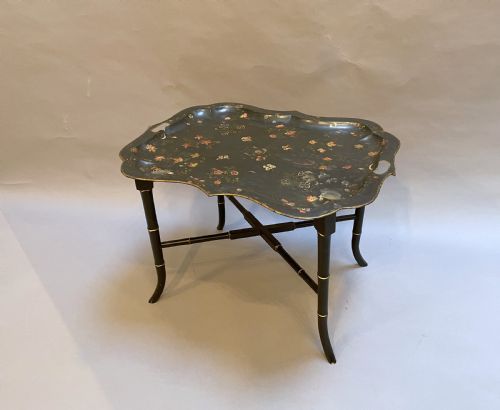
When searching for a victorian papier mache tray, buyers encounter robust domestic objects made during the nineteenth century. These pieces span standard serving trays, card baskets, and desk sets, often mounted on later stands to function as side tables.
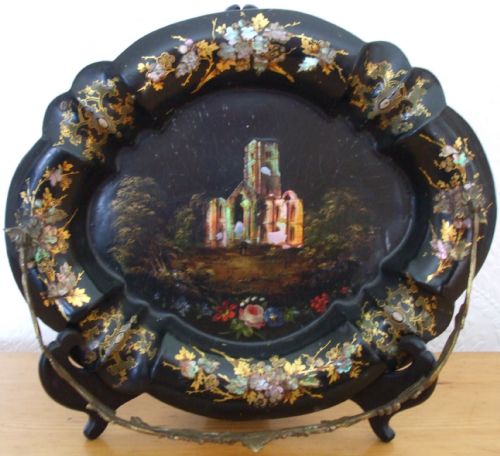
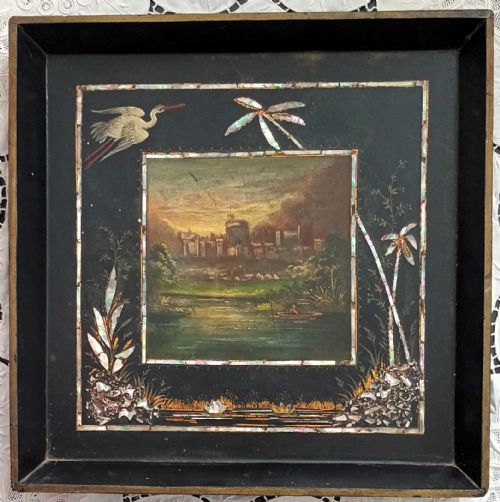
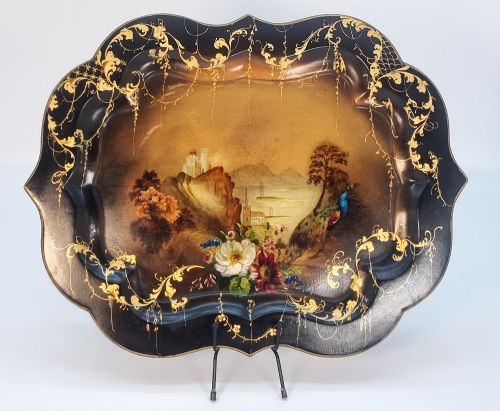
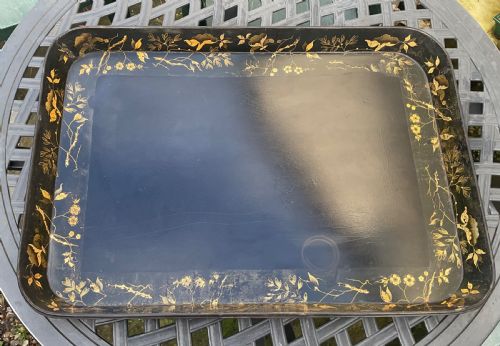
The most common version met on this page is the oval or rectangular black lacquer tray, frequently decorated with hand-painted landscapes, floral motifs, or inlaid mother-of-pearl. Many survive in large proportions, demonstrating the sturdy construction required for daily service.
How They Were Made
Craftsmen built these items using layers of paper pulp mixed with glue and resin, pressed into heavy iron moulds before drying. This multi-layered process yielded a remarkably resilient core that resisted warping far better than solid timber.
Makers finished the hardened blanks with deep black lacquer, then applied hand-painted pigments, gold leaf, and shimmering mother-of-pearl inlay. Final protective varnish coats sealed the detailed ornamentation against moisture and wear.
Retail Price Guide 2026
Typical UK retail prices for victorian papier mache tray, calculated from the Sellingantiques database of over a million retail prices indexed since 2003. This retail price guide relies exclusively on Sellingantiques data; no external sources or auction records are used, so the figures do not describe the wider market.
Materials recorded across the inventory include lacquer, papier-mache, mother-of-pearl, gold leaf, brass, and toleware.
What Varies in Quality
Quality rests in the depth of the lacquer finish and the precision of the hand-painted decoration. Superior examples display intricate brushwork, well-defined landscape or hunting scenes, and firmly secured mother-of-pearl inlay rather than flat stencil work.
Proportion and structural integrity also separate standard production from exceptional pieces. Trays bearing maker signatures, double rims, or large proportions command attention for their superior craftsmanship and survival in sound condition.
Jennens and Bettridge
The Victorian Papier Mache Tray Glossary
- Papier-mâché
- A composite material made from paper pulp or layered sheets mixed with binding agents, compressed and dried to form a rigid shape. It served as a smooth, stable base for fine lacquer work.
- Mother-of-Pearl
- The iridescent inner layer of mollusc shells, cut into thin pieces and embedded directly into the lacquer surface. This technique added shimmering contrast to dark backgrounds.
- Lacquer
- A durable resin-based finish applied in multiple coats and polished to a smooth, glossy sheen. It provided a waterproof and hardwearing surface for domestic servingware.
- Gold Leaf
- Hammered sheets of gold applied to decorate borders and focal points on the tray surface. It highlighted the painted motifs and added reflective warmth.
- Chinoiserie
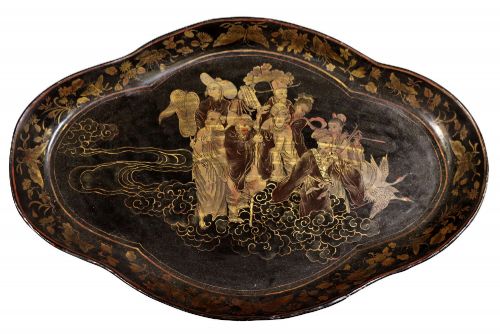
- European decorative style reflecting Chinese artistic traditions, often featuring figures, pagodas, and landscapes. This aesthetic appeared frequently on nineteenth-century japanned wares.
Frequently Asked Questions
How do I use a tray table safely?
Many trays sit securely upon custom wooden or bamboo stands to function as occasional or side tables in sitting rooms.
Keep them away from direct heat sources and excessive moisture to protect the original nineteenth-century lacquer finish.
Are these trays suitable for serving drinks?
Original nineteenth-century pieces were designed for domestic serving, though modern use requires careful handling to preserve delicate hand-painted surfaces.
Use coasters and wipe surfaces gently with a soft, dry cloth rather than immersing them in water.
How can I tell a genuine nineteenth-century piece?
Examine the weight, the rigidity of the pressed paper core, and the depth of the hand-applied black lacquer.
Authentic examples often show subtle signs of age in the surface crazing and hand-painted details rather than uniform modern printing.
What is the difference between flat trays and tray tables?
Flat trays were originally stored upright or carried by servants during the Victorian period for serving tea or holding visiting cards.
Tray tables combine these antique surfaces with matching stands, creating functional furniture pieces for contemporary interiors.