


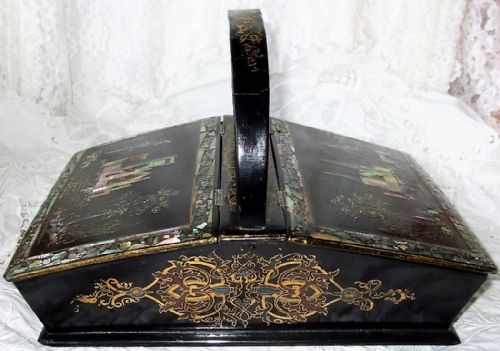
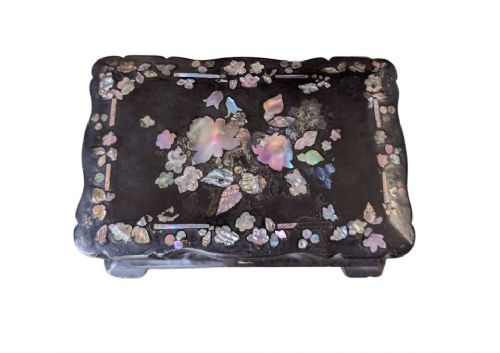
Victorian Mother of Pearl
Victorian mother of pearl pieces combine iridescent shell with sterling silver, papier mâché, and exotic woods to bring tactile warmth to any room.
Victorian Mother of Pearl
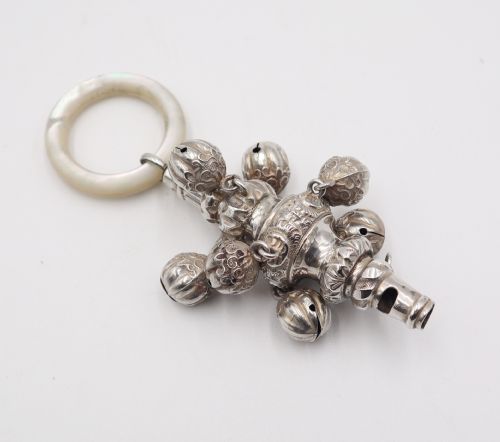
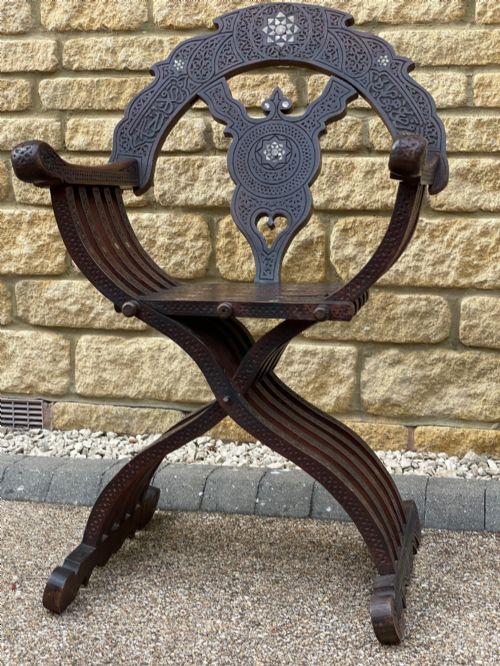
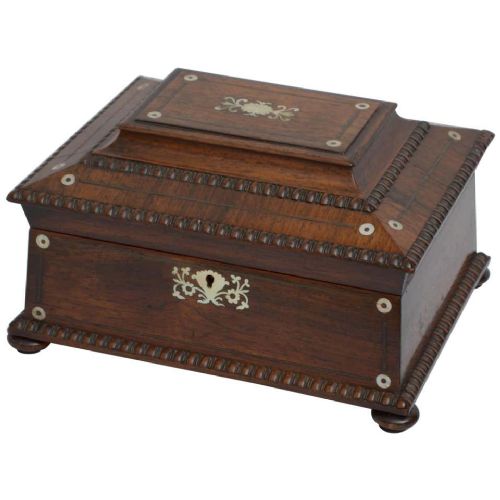
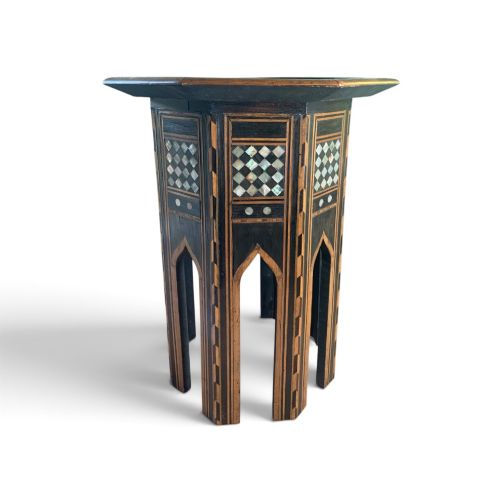
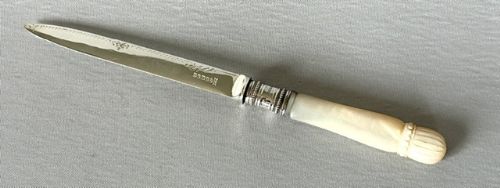
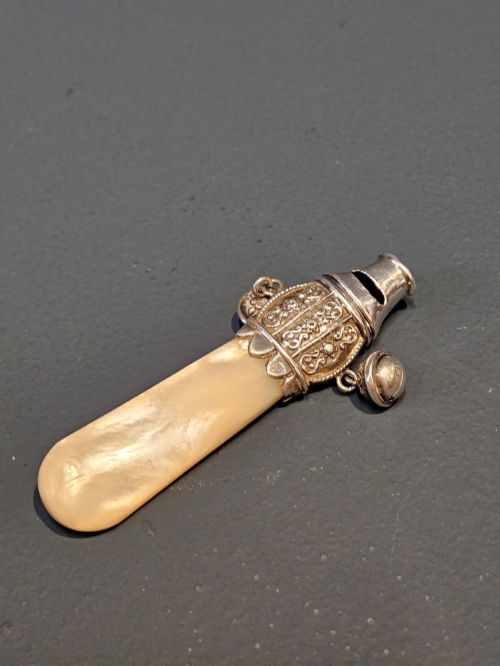
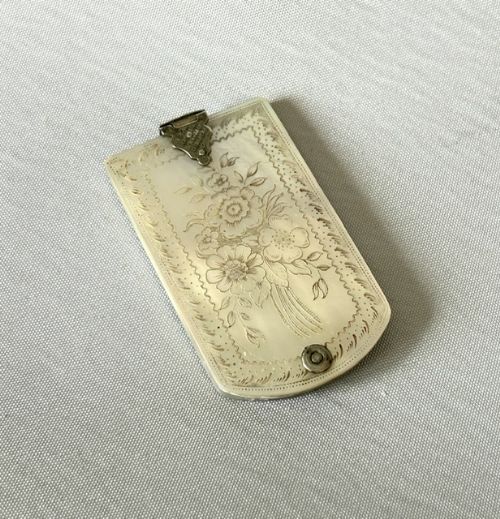
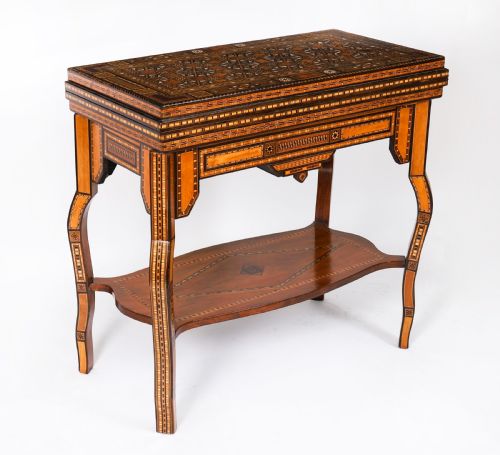
Victorian mother of pearl items range from practical desk accessories and pocket cutlery to grand pieces of furniture and drinks chests. When you search for victorian mother of pearl, you encounter smaller personal items like coin purses, fruit knives, and thimble boxes alongside larger occasional chairs and toleware trays.
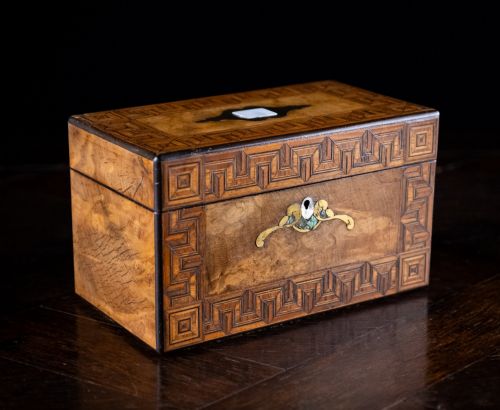
The archive shows that flatware, cutlery sets, and writing equipment form the bulk of surviving examples. Smaller items often pair the iridescent shell directly with sterling silver blades or mounts, while seating and tea caddies use the material as intricate inlay.
On this page, you are most likely to meet smaller accessories alongside toleware pieces from the nineteenth century. These objects demonstrate the Victorians' fondness for combining shimmering marine materials with traditional craftsmanship.
What Varies in Quality
Material pairing also dictates the tier of the object, as seen when solid silver, coromandel, or rosewood provide the foundation rather than simpler timbers or base metals. The uniformity of the shell's iridescence and the integrity of the surviving components further separate standard utility pieces from exhibition-grade works.
The archive records nineteen-century items utilising mother of pearl alongside toleware, lacquer, gold leaf, leather, and coromandel.
Levi & Salaman·Walker & Hall·Hilliard & Thomason·Adie & Lovekin
The Victorian Mother of Pearl Glossary
- Mother of Pearl
- The strong, iridescent inner layer of mollusc shells, valued for its shimmering play of colours. Craftsmen used thin sheets of this material for decorative inlay and practical handles throughout the nineteenth century.
- Papier Mâché
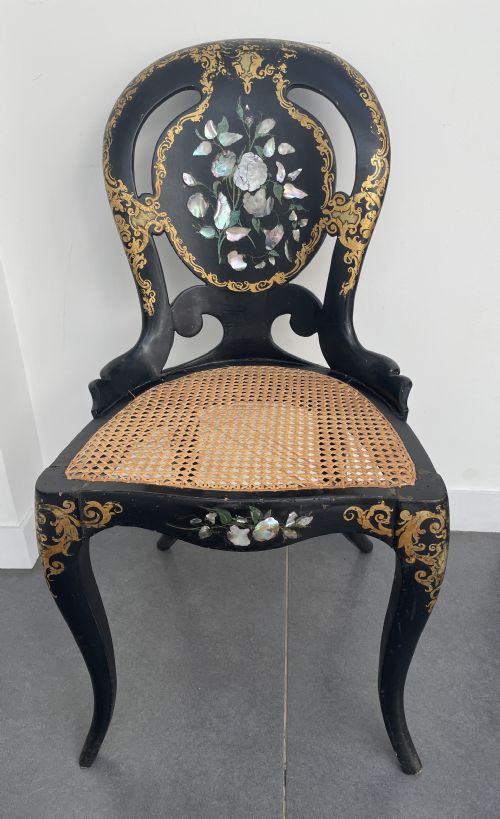
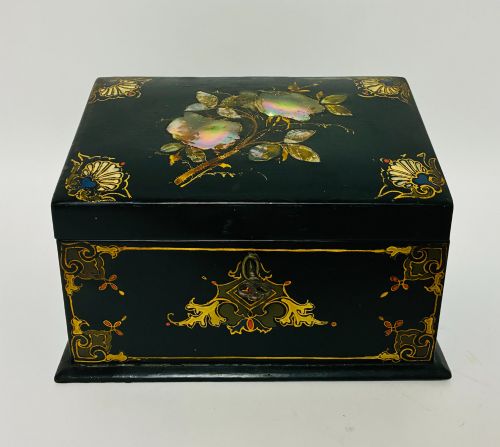
- A composite material made from paper pulp or layers of paper bound with glue, then moulded and lacquered. It provided a dark, smooth background that made mother of pearl inlay stand out.
- Coromandel
- A dense, heavy exotic hardwood with dark brown and black grain patterns. Cabinet makers frequently used it as a luxurious foundation for inlaid boxes and drinks chests.
- Toleware
- Metalware coated with enamel or lacquer and often painted or gilded. Trays and vessels in this medium frequently accompanied domestic settings of the period.
- Nacre
- The scientific term for mother of pearl, secreted by oysters and other molluscs as a defence against foreign particles. This organic substance forms the physical medium for all carved handles and inlaid plaques.
Frequently Asked Questions
What are victorian mother of pearl items?
These pieces are nineteenth-century objects featuring iridescent shell used either as structural handles or as decorative inlay. They encompass small personal accessories, desk tools, and tableware alongside larger furniture.
Makers combined the marine material with silver, coromandel, and papier mâché to create items for daily domestic use and display.
How should I clean mother of pearl?
Clean the surface gently with a soft, damp cloth and dry it immediately with a lint-free towel. Avoid soaking the object or using harsh chemical cleaners, as moisture can damage the underlying wood, leather, or adhesive.
Silver components can be polished separately with a specialist cloth, taking care not to let polish stain the delicate shell.
Were these items used every day?
Many objects, such as fruit knives, button hooks, and card cases, served practical daily functions in the Victorian household. Others, like tea caddies and dressing boxes, remained stationary on side tables or desks.
Personal accessories were carried in pockets or reticules, while larger decorative pieces adorned the drawing room.
How do I identify a nineteenth century piece?
Examine the construction methods, hallmarks on accompanying silver, and the types of wood used in the carcass. Nineteenth-century items often display hand-cut shell sections and traditional joinery specific to that era.
Comparing the object to authenticated archive examples helps confirm its period of origin.