

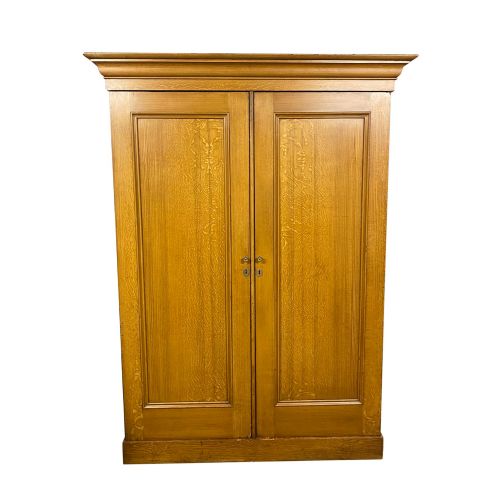
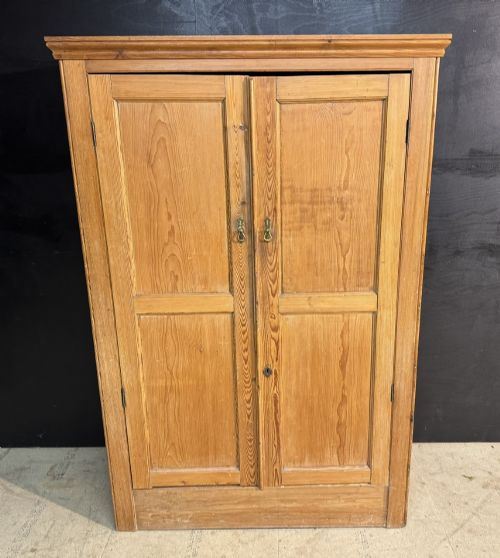
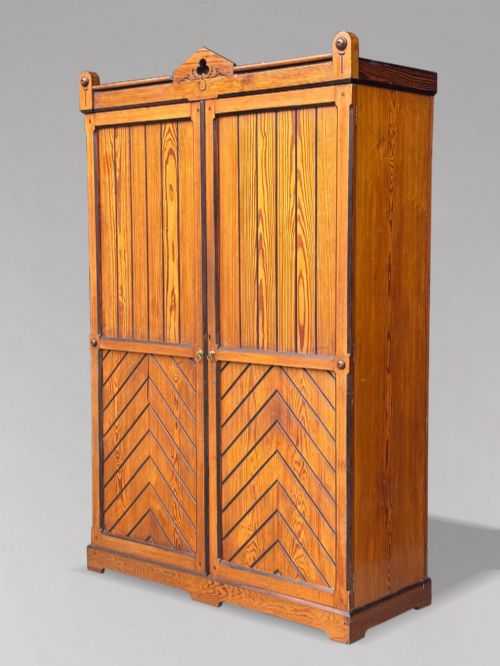
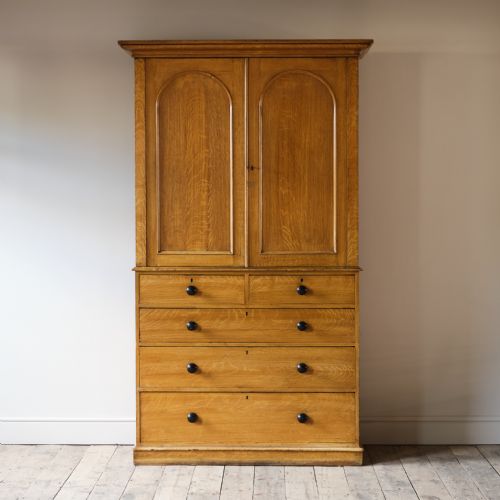
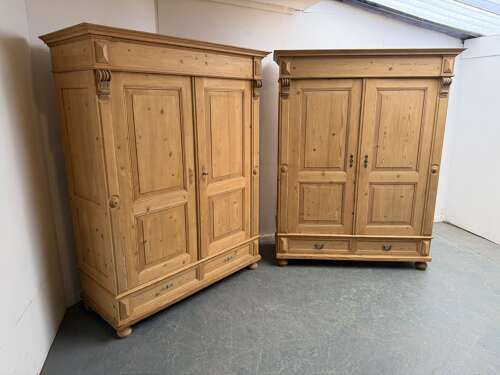
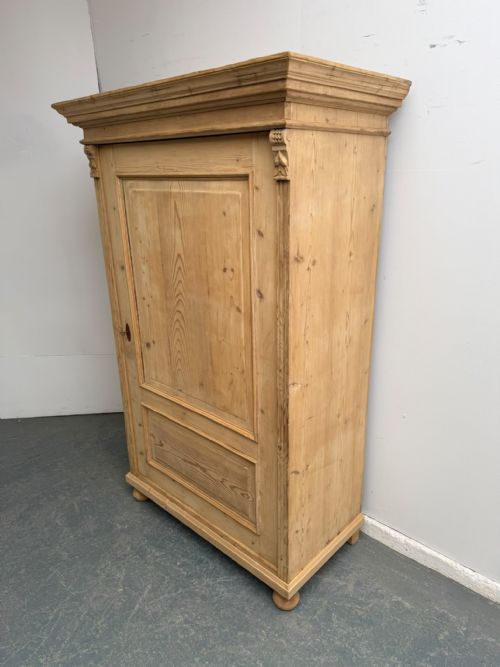
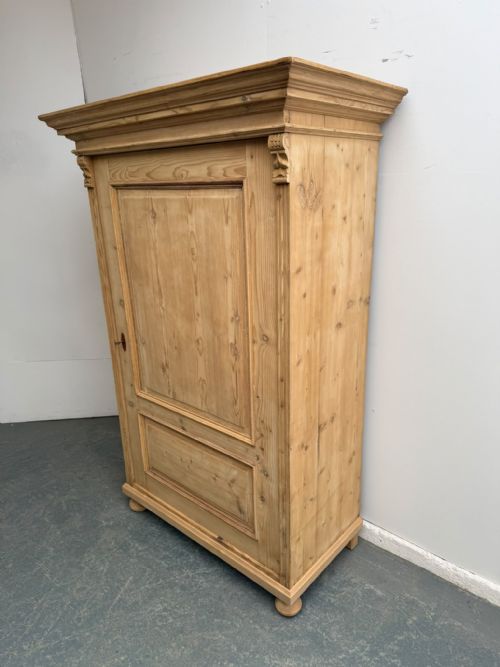


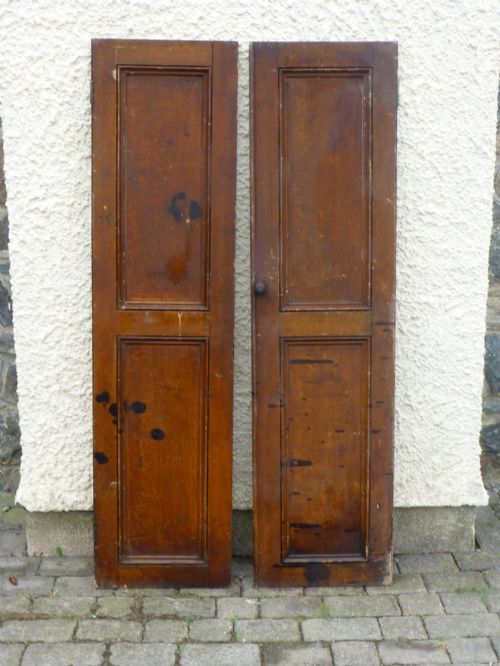
Victorian Panelled Pine Wardrobe
These robust victorian panelled pine wardrobe examples offer honest, timber storage built to last, bringing character and practical scale to modern bedrooms.
Victorian Panelled Pine Wardrobe
When you search for a victorian panelled pine wardrobe, you encounter sturdy nineteenth-century construction designed for everyday domestic use. These pieces often appear as substantial knockdown wardrobes or tall linen presses featuring framed panels.
The selection frequently includes pieces intended to be waxed or painted, alongside examples retaining original paintwork or scumble finishes. Forms range from single-door cupboards to multi-piece knockdown wardrobes built for ease of movement.
Originating in the nineteenth century and the Victorian era, these items embody traditional British utilitarian cabinet making. They serve households requiring deep hanging space and flexible internal shelving.
Materials and Construction
Joiners built these wardrobes primarily from solid pine and pitch pine, utilising sturdy timber frames to support large panelled doors. Iron and brass hardware, including hinges and handles, secured the heavy doors and knockdown sections.
Surfaces were frequently finished with wax, left ready for paint, or treated with scumble paint to imitate richer timbers like oak. The knockdown construction method allowed large wardrobes to be dismantled for transport between rooms.
Victorian Panelled Pine Wardrobe Retail Price Guide 2026
Typical asking prices for victorian panelled pine wardrobe among the pieces listed under this phrase on Sellingantiques today, from the lower quarter to the upper quarter. They describe what is for sale here now, not the wider market.
Some nineteenth-century wardrobes were built as knockdown units specifically to fit up tight cottage staircases.
Assessing Quality and Build
The distinction between standard examples and finer pieces lies in the crispness of the panel mouldings and the integrity of the original timber. Knockdown mechanisms that align smoothly without sagging indicate superior nineteenth-century cabinet making.
The survival of original surface treatments, such as scumble paint or early finish layers, elevates a piece above standard stripped pine. Sound structural joinery in the internal shelving and door frames ensures lasting utility.
The Victorian Panelled Pine Wardrobe Glossary
- Knockdown wardrobe
- A large piece of furniture constructed so that the main sections disassemble for transport and reassembly. This design allowed bulky storage to move easily up narrow stairs.
- Scumble paint
- A translucent decorative paint technique used to imitate the grain of more expensive hardwoods like oak. It appears on several nineteenth-century pieces.
- Linen press
- A tall cupboard featuring upper sliding trays or shelves and lower drawers for storing textiles. These combine hanging space with traditional linen storage.
- Fielded panel
- A wooden panel with bevelled edges that fits into a grooved frame, allowing the wood to expand and contract safely with humidity changes.
- Pitch pine
- A durable, resinous variety of pine known for its prominent grain pattern and strength. Cabinet makers utilised it for robust structural elements.
Victorian Panelled Pine Wardrobe: Frequently Asked Questions
How do I assemble a knockdown wardrobe?
Knockdown wardrobes use pegged joints, screws, or sliding brackets that allow the main panels to lock together securely without permanent glue.
Working with a helper ensures each heavy pine section remains stable while you align the panels and tighten the internal fittings.
Should I wax or paint my pine wardrobe?
Choosing between wax and paint depends on whether the wood has an existing historic finish or has already been stripped back to bare timber.
Waxing nourishes dry pine and deepens the natural colour, whereas traditional paint finishes protect the wood and match contemporary interiors.
What is scumble paintwork?
Scumble paint is a decorative surface treatment where a translucent glaze is dragged or brushed over a lighter base coat to mimic oak grain.
Victorian decorators used this technique on pine to achieve the appearance of expensive timber at a lower cost.