
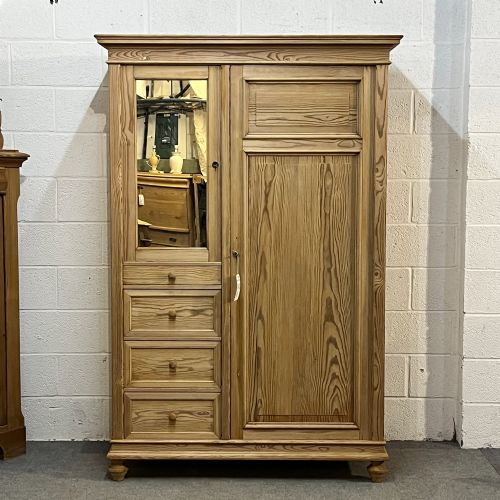
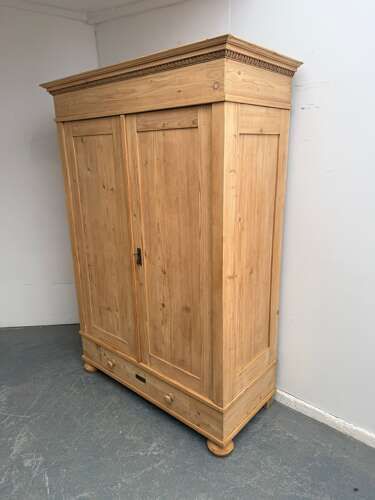
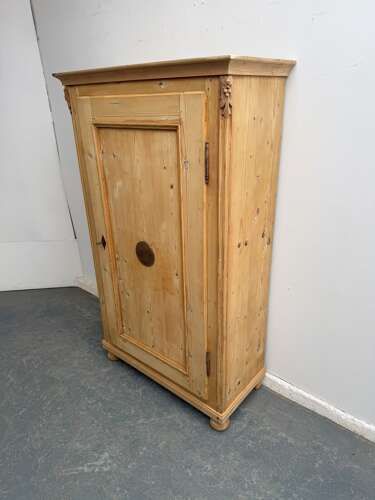
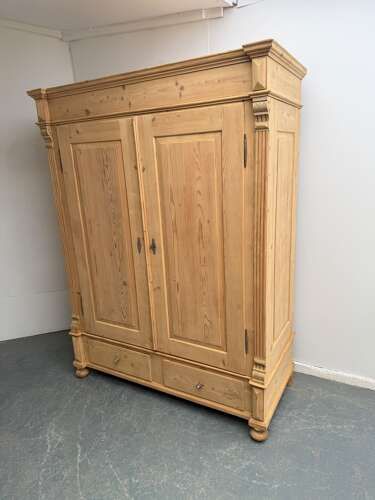


Pine Armoire with Drawer
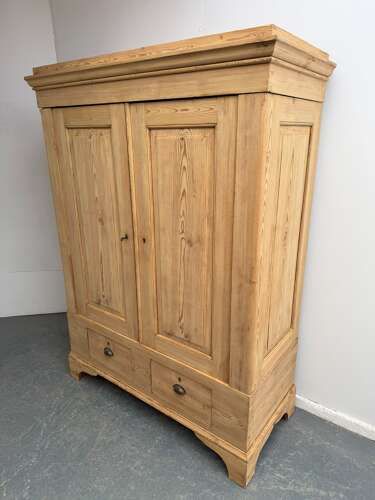
A pine armoire with drawer provides essential bedroom storage, combining deep hanging space with a practical lower compartment for folded clothes.
Pine Armoire with Drawer
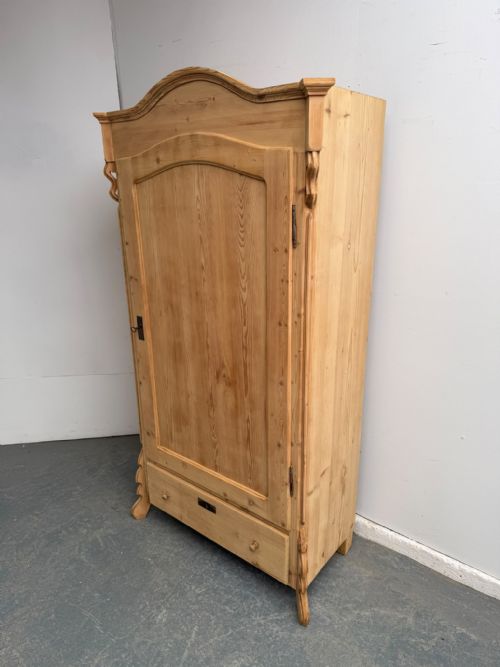
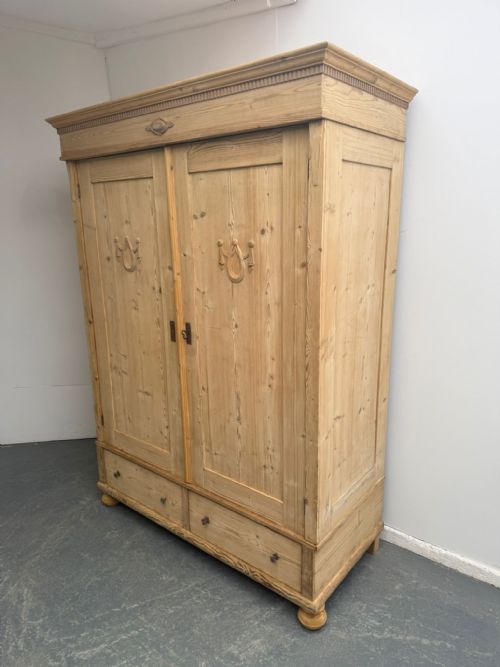
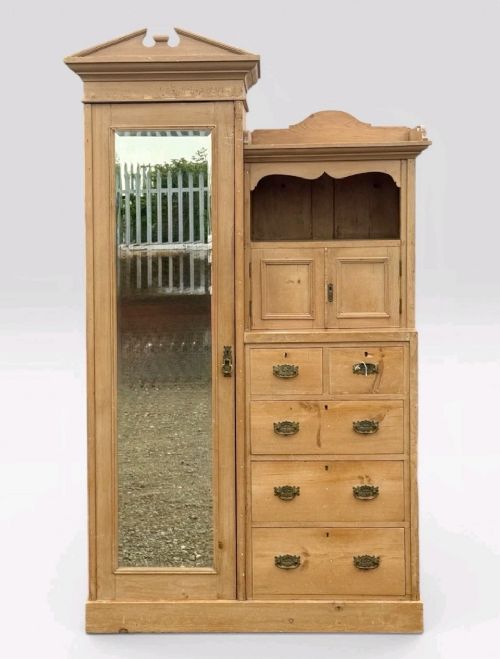
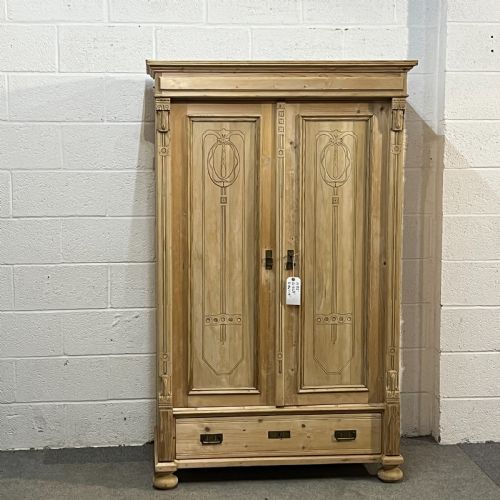
A pine armoire with drawer is a functional storage piece commonly encountered in Victorian, Edwardian, and Georgian country styles. These wardrobes range from small single-door child or hall units to large multi-piece bedroom cupboards fitted with bottom drawers.
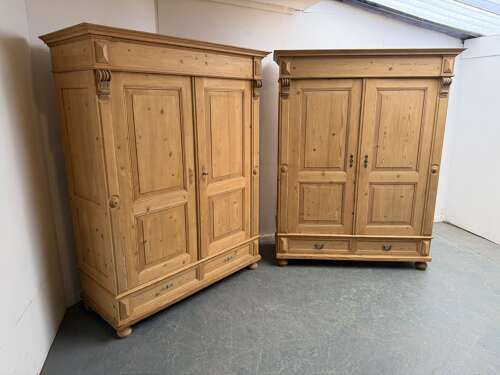
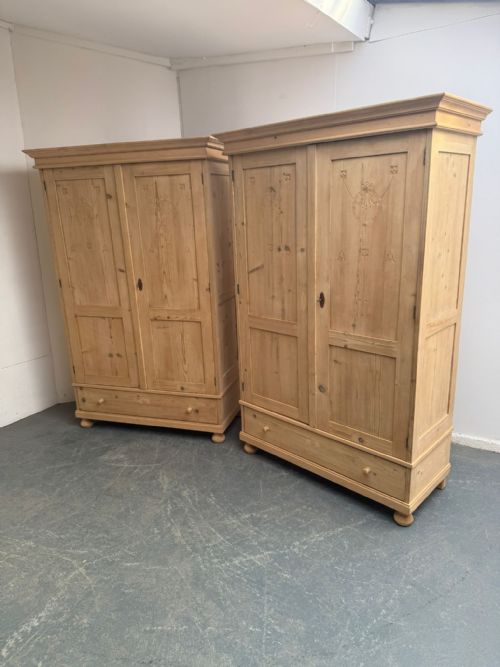
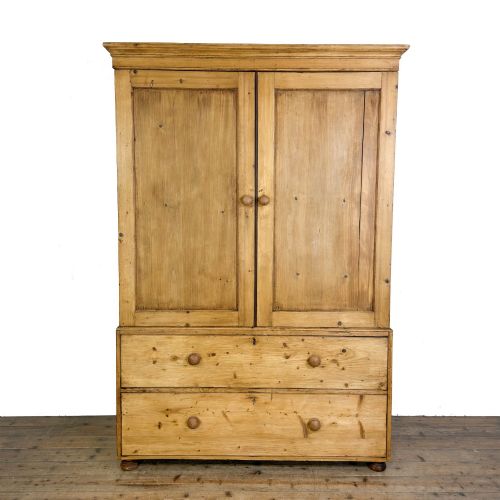
Buyers frequently find knockdown versions that dismantle for transport, alongside single-piece cupboards and linen presses. Many examples feature practical internal shelving or hanging space paired with lower drawer storage.
Materials and construction methods
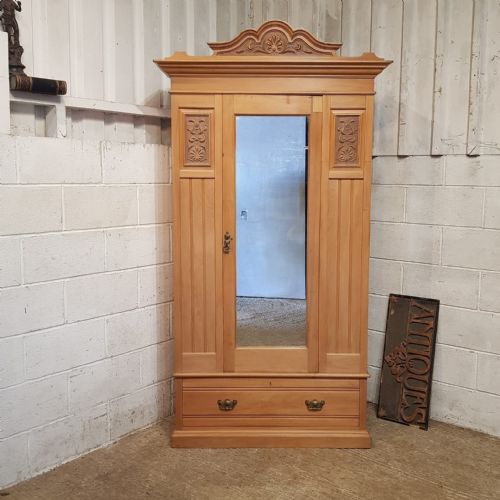
Construction relies heavily on solid pine and pitch pine, often paired with brass or iron hardware and structural metal components. Glass and mirror panels appear on doors for light and reflection, particularly in later Edwardian and 1930s examples.
Many larger pieces utilise knockdown construction methods, allowing the frame to separate into distinct sections for easier movement and assembly. Surfaces are frequently finished with wax or left prepared for paint.
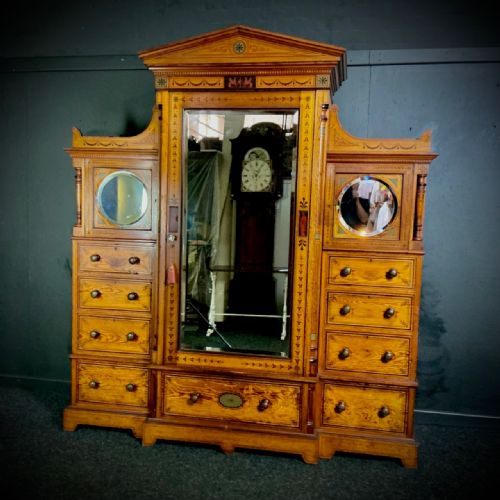
One gentleman's wardrobe arrives complete with lead light panels signed by Maple and Co.
Assessing quality in pine armoires
Quality depends on the integrity of the timber framing and the precision of the knockdown joints, which determine how securely the wardrobe assembles. Finer pieces display careful proportions, such as narrow profiles, columned details, or lead light panels.
The presence of original hardware, mirrors, and well-fitted internal drawers separates standard utility cupboards from more decorative examples produced by established makers.
Maple and Co
The Pine Armoire with Drawer Glossary
- Knockdown wardrobe
- A large piece of furniture designed to dismantle into several sections for transport and installation. This construction method was especially common for heavy Victorian bedroom units.
- Linen press
- A tall cupboard traditionally used for storing textiles and sheets, typically featuring interior shelves above one or more lower drawers.
- Compactum
- A multi-functional wardrobe combining hanging space, shelves, and drawers within a single unified cabinet. These units maximise storage efficiency in smaller bedrooms.
- Pitch pine
- A dense, durable resinous softwood noted for its prominent grain pattern. It provides robust construction for heavy wardrobes and mirrored doors.
Pine Armoire with Drawer: Frequently Asked Questions
How do I assemble a knockdown pine wardrobe?
Knockdown wardrobes dismantle into flat panels, cornices, and base units that fit together using pegs, screws, or slot-in joints. You will need a helper to support the sides while securing the top and bottom sections.
Ensure the unit is built on a level surface so the doors hang straight and the lower drawers slide smoothly within their frames.
Can I paint a waxed pine armoire?
Many pine armoires are sold with wax finishes or prepared for painting, allowing you to adapt the exterior to your interior decor. You must remove existing wax layers with a suitable solvent and apply an appropriate primer before painting.
Applying a primer prevents the natural pine resins from bleeding through the new paint surface over time.
What is the difference between an armoire and a linen press?
An armoire is primarily designed for hanging garments, though variants may include internal shelves or a bottom drawer. A linen press focuses on shelved storage for folded clothing and textiles above a drawer base.
Both forms utilise the substantial vertical space typical of nineteenth-century bedroom furniture.
How do I date an antique pine wardrobe?
Dating relies on stylistic clues such as architectural cornices, panel styles, and hardware choices spanning the Georgian, Victorian, and Edwardian periods. Plain structural lines often point to earlier country pieces, while glass panels and leaded details suggest twentieth-century work.
Construction marks and drawer dovetails also offer clear indicators of the era of manufacture.