
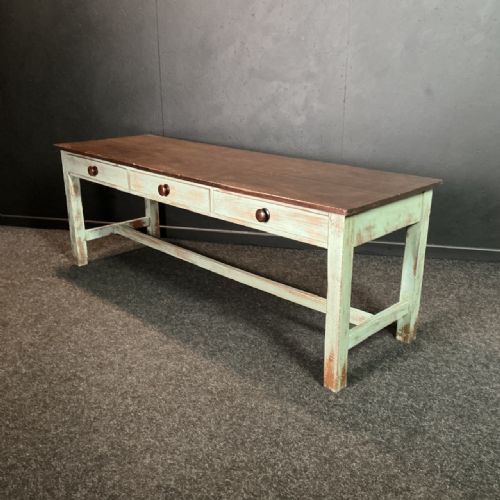
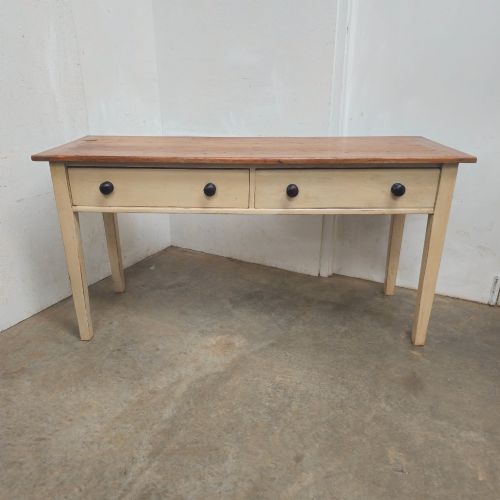
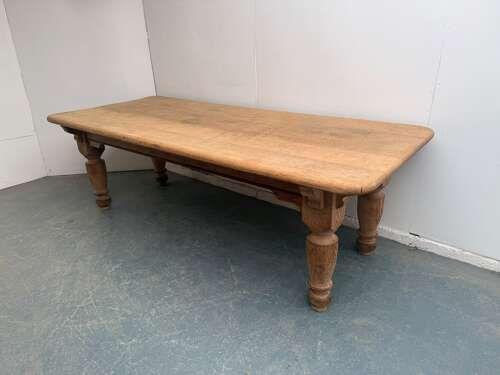
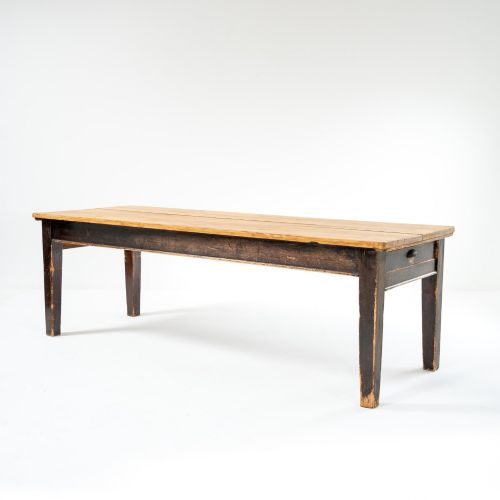
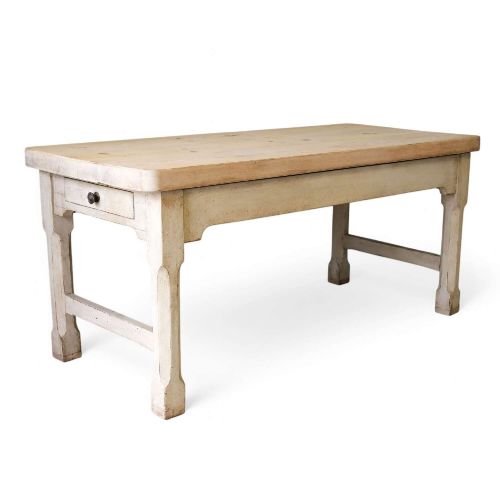
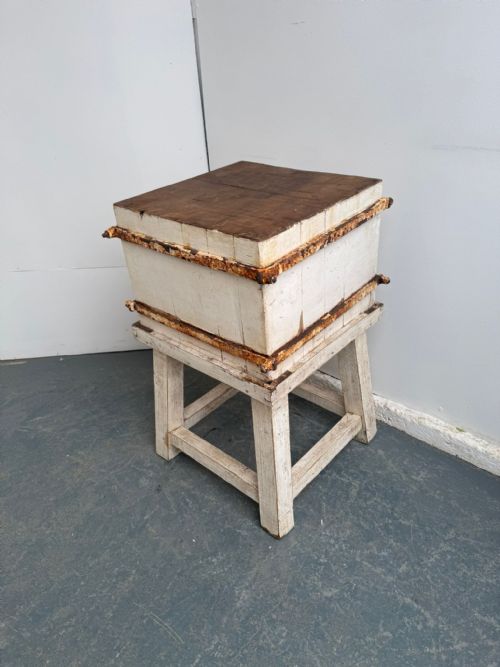
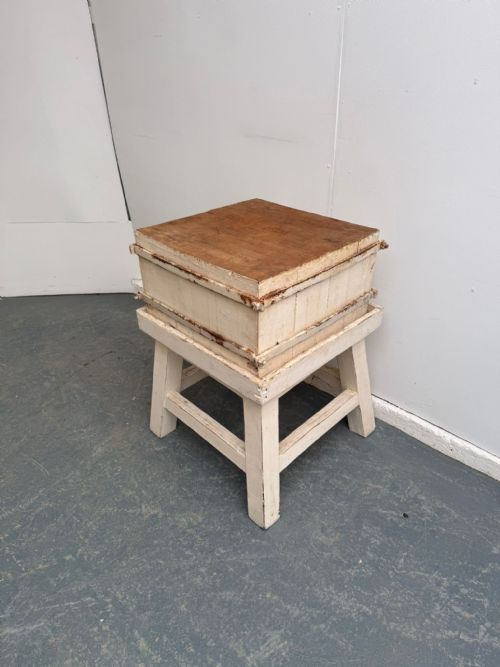
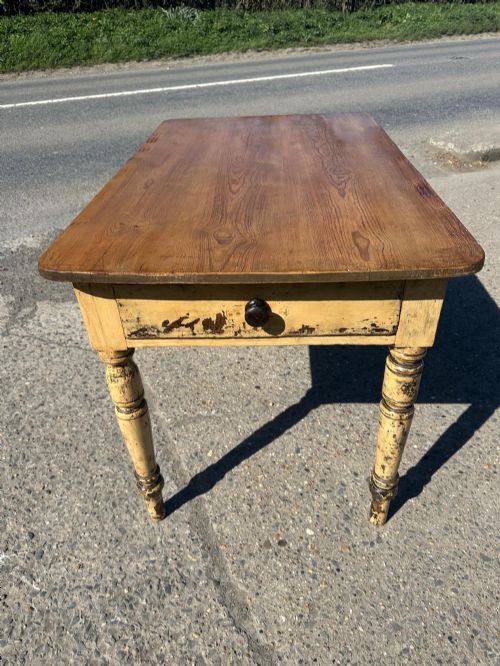


Victorian Painted Kitchen Table
A victorian painted kitchen table brings honest utility to a room, offering sturdy pine surfaces and time-worn colour built for daily domestic work.
Victorian Painted Kitchen Table
When you search for a victorian painted kitchen table, you encounter robust domestic furniture designed primarily for food preparation and communal meals. These pieces span the nineteenth century, with many examples originating from Victorian workshops and country houses.
The version you are most likely to meet on this page is the scrubbed-top pine table resting on a base retaining layers of old paint. Dimensions vary greatly, from compact drop-leaf formats suitable for small spaces to long harvest tables measuring eight feet or more.
Materials and Construction
Makers relied heavily on solid pine for both tops and structural frames, selecting softwood for its availability and ease of working. Iron and brass fixings appear occasionally in the form of drawer pulls, hinges, and structural brackets.
Surfaces were frequently finished with lead-based or oil paints applied over bare wood, sometimes accumulating multiple layers through successive generations of domestic use. Scrubbed tops were left plain to endure daily scouring with sand and water, while legs and aprons kept their painted coats.
Several tables show centuries of flour dust still hiding firmly inside deep drawer corners.
Markers of Distinction
The integrity of the painted surface largely dictates desirability, with original untouched finishes commanding greater interest than later or completely renewed coats. Tables that retain their structural rigidity without excessive timber shrinkage or replaced aprons represent superior preservation.
Proportion and scale also separate standard utility items from exceptional country house examples, particularly where longer boards are fashioned from single planks of pine without unnecessary joins.
The Victorian Painted Kitchen Table Glossary
- Scrub top
- A plain unpainted wooden tabletop designed to be vigorously cleaned with water and abrasive materials. This surface treatment contrasts with painted aprons and legs.
- Harvest table
- An elongated dining table traditionally used for large seasonal gatherings of farm labourers. These tables offer substantial length to seat many diners.
- Prep table
- A heavy-duty work surface utilised in large kitchens for food preparation before cooking. They often feature drawers for utensils or lower shelves for storage.
- Drop leaf
- A table design featuring hinged flaps on one or both sides that fold down to save space. Brackets swing out to support the leaves when raised.
- Vernacular
- Architecture and furniture built by local craftsmen using regional traditions and readily available materials rather than high-style academic designs.
Victorian Painted Kitchen Table: Frequently Asked Questions
How do I clean a painted table?
Dust gently with a dry cloth and avoid harsh chemical cleaners that strip historic paint layers. Wax can be applied sparingly to seal exposed timber surfaces.
Keep these tables away from direct heat sources and excessive moisture to prevent wood movement and flaking paint.
Were these tables only used in kitchens?
While primarily built for food preparation, they also served in sculleries, dairies, and estate workrooms. Their robust construction suited any heavy domestic task.
Today they function readily as kitchen islands, dining tables, or large desks in domestic settings.
How can I tell original paint from later coats?
Original paint typically exhibits natural craquelure, soft wear around edges, and accumulated patination from decades of handling. Under magnification, older pigment layers reveal distinct binding media.
Later or repainted surfaces often appear uniform, lacking the subtle tonal variations accumulated through long service.
Why do some tops lack paint?
Makers and users deliberately left tabletops bare so cooks could scrub the pine clean with brushes and water after preparing food. Paint on a work surface would contaminate food and flake away under daily washing.
Legs and frames stayed painted because they did not undergo the same abrasive daily scrubbing.