
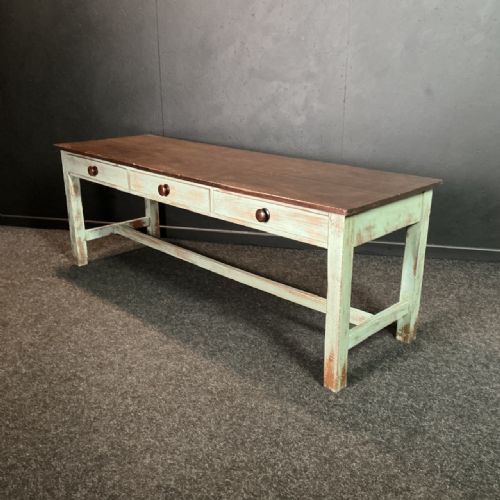
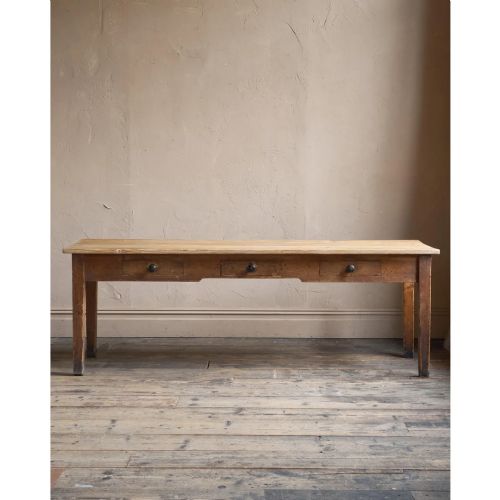
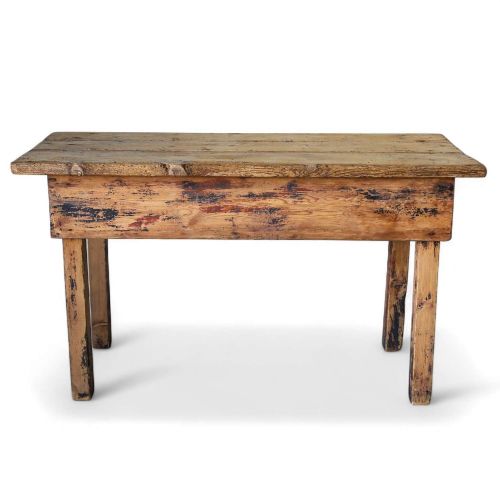
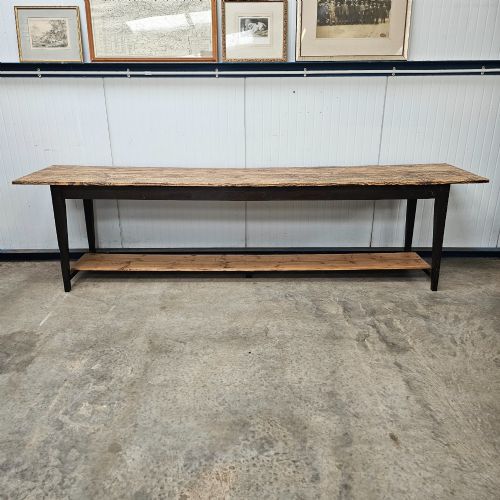
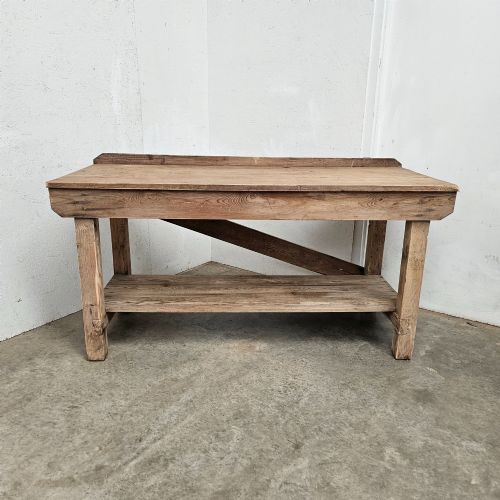
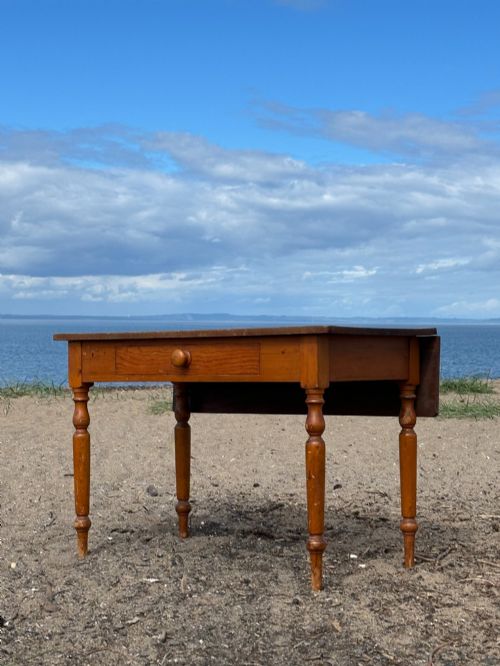
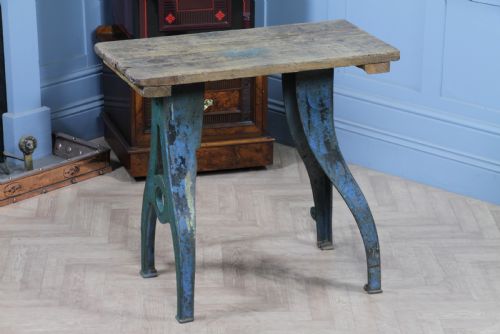


Pine Workbench Table
These pine workbench table pieces bring honest utility and robust timber character straight from historic workshops and sculleries into modern dining spaces.
Pine Workbench Table
A pine workbench table serves as a sturdy focal point, combining practical surface space with honest historic character. When exploring a pine workbench table, you encounter robust forms originating largely from the nineteenth and early twentieth centuries.
The selection encompasses diverse utilitarian types including kitchen preparation tables, scullery tables, industrial work tables, and potting benches. These pieces often arrive from British, French, and Scandinavian contexts, reflecting regional trades and domestic tasks.
Makers utilised resilient softwoods alongside secondary timbers such as oak, elm, and poplar, frequently mounting heavy tops onto trestle frames, cast-iron machine bases, or painted timber legs. Surviving examples display the functional modifications and wear accumulated through generations of hard labour.
How they were made
Constructed primarily from solid pine and reclaimed timber, these tables rely on thick planks joined to endure heavy daily use. Workshops frequently combined pine tops with cast iron or sturdy wooden underframes to guarantee stability during manual tasks.
Surface finishes range from scrubbed natural wood to original painted coats, showing the practical choices made by past owners and tradespeople. Joinery techniques prioritise strength and straightforward utility over ornamental flourish.
Listings feature pine and reclaimed timber forms spanning the nineteenth century through the 1930s.
What varies in quality
Quality rests in the integrity of the timber, the heft of the construction, and the preservation of original working surfaces. Tables retaining genuine patination and uncompromised structural frames stand apart from later assemblies.
Proportion and scale dictate the visual weight of each piece, with longer harvest lengths and two-tier configurations offering distinct architectural presence. The presence of original drawers, manufacturers' bases, or untouched painted finishes elevates the standing of individual examples.
The Pine Workbench Table Glossary
- Scullery table
- A heavy utilitarian table used in domestic back rooms for food preparation and washing tasks. These pieces typically feature thick scrubbed pine tops designed to withstand constant scrubbing.
- Trestle table
- A table structure composed of horizontal beams supported by pair-matched upright feet or trestles. This design allows maximum legroom and exceptional stability under heavy loads.
- Scrubbed top
- A wooden surface repeatedly scoured with water and abrasive brushes to maintain hygiene. This process creates a pale, smooth grain texture distinctive of antique workspace furniture.
- Drapers table
- A long counter or table historically utilised in textile shops for measuring and folding cloth. They often incorporate multiple drawers or lower shelves for storage.
- Cast iron base
- A heavy industrial metal support derived from nineteenth-century machinery or factory fittings. These bases provide industrial strength and architectural contrast to soft pine tops.
Pine Workbench Table: Frequently Asked Questions
How do I clean a pine workbench table?
Maintain the surface using a damp cloth and mild soap, avoiding harsh chemical sprays that strip historic patination. Regular dry dusting preserves the dry timber character.
For scrubbed wooden tops, traditional soft soap and warm water applied with a brush keep the grain clean without introducing artificial shine.
Can I use a work table for dining?
These tables adapt readily to daily dining rooms because their original proportions accommodate seating comfortably. The sturdy construction handles family meals and gatherings with ease.
Consider the height of drawers beneath the apron to ensure adequate clearance for legs when seated around the table.
What is a cobblers bench?
A cobblers bench is a specialised low workbench fitted with small compartments and ledges for tools and leatherwork materials. They originate from shoemaking trades where artisans sat directly upon or beside the surface.
Today these functional forms serve as distinctive console tables or low display pieces in living spaces.
How do I date a pine table?
Dating relies on examining construction marks, nail types, timber seasoning, and overall wear patterns characteristic of nineteenth or early twentieth-century workshops. Hand-sawn boards and pegged joinery point towards earlier periods.
Industrial cast-iron bases often incorporate factory markings or design registrations that help narrow down the manufacturing era.