


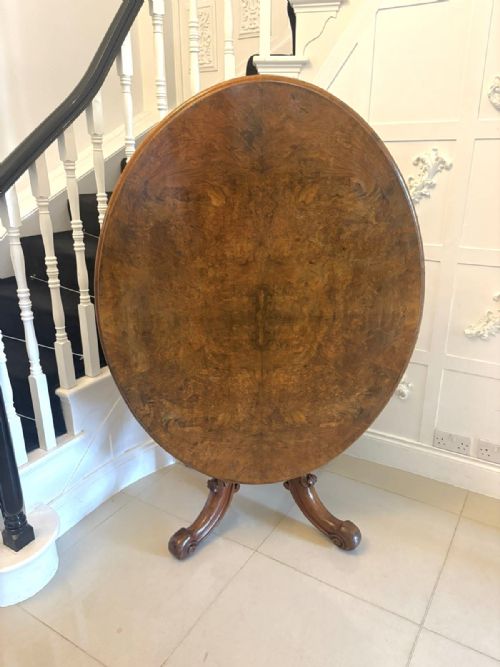
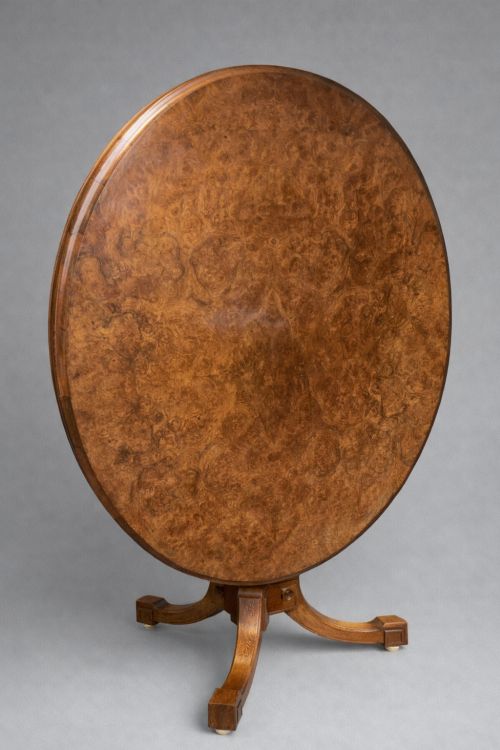
Victorian Oval Tilt Top Table
A victorian oval tilt top table offers clever engineering and striking timber, serving historic dining rooms and modern interiors alike with equal grace.
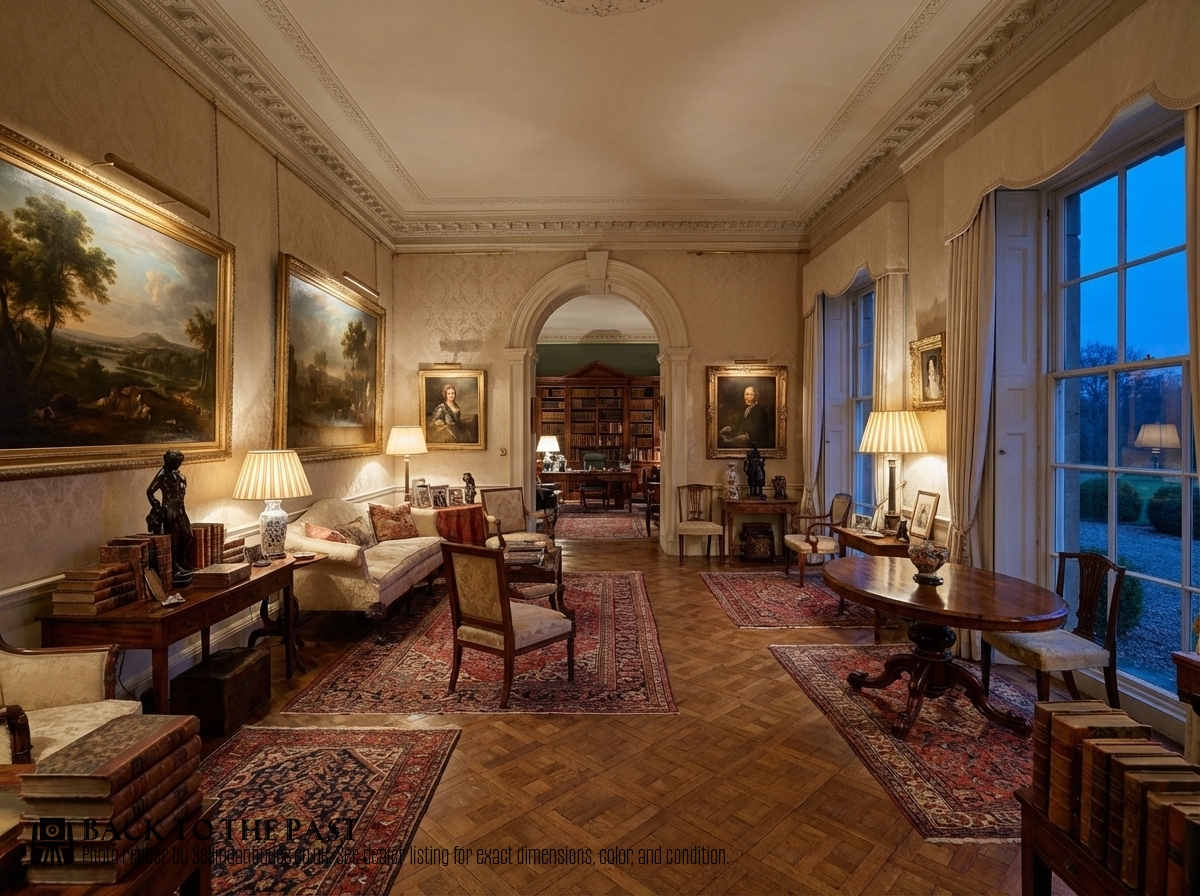
Victorian Oval Tilt Top Table
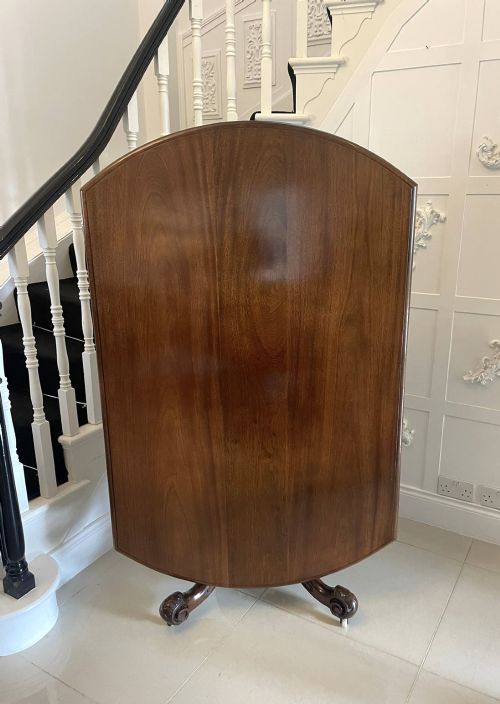
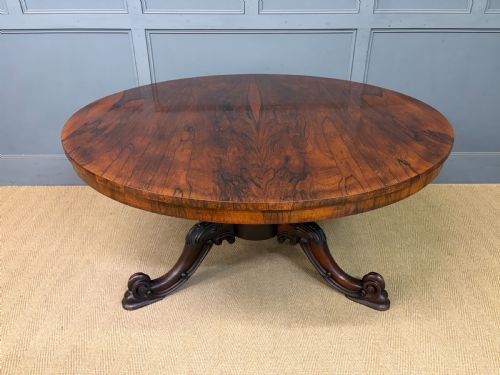
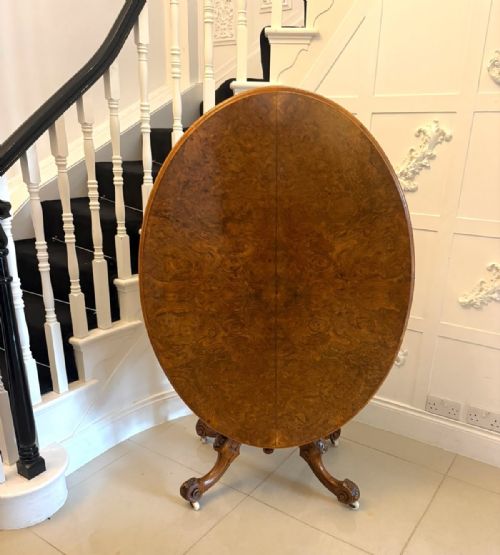
A victorian oval tilt top table is a versatile nineteenth century furniture form designed to pivot flat for dining or serving and tilt vertically for compact storage against a wall.
The selection ranges from intimate occasional pieces to large six seater dining tables spanning the mid to late nineteenth century.
Materials and construction
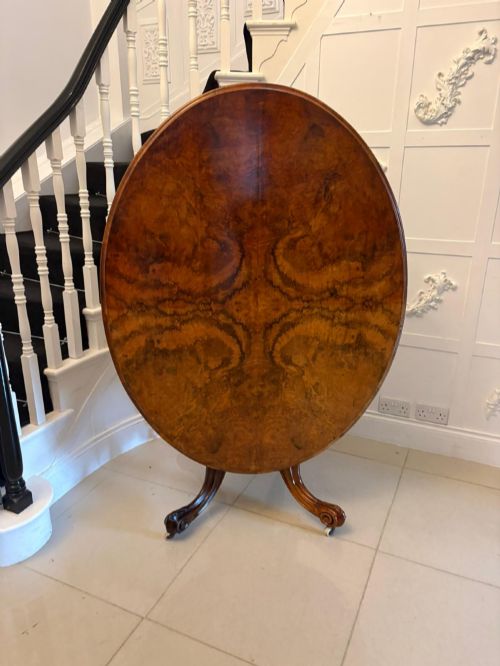
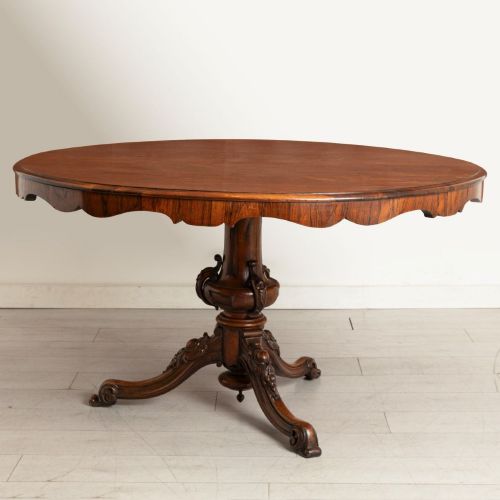
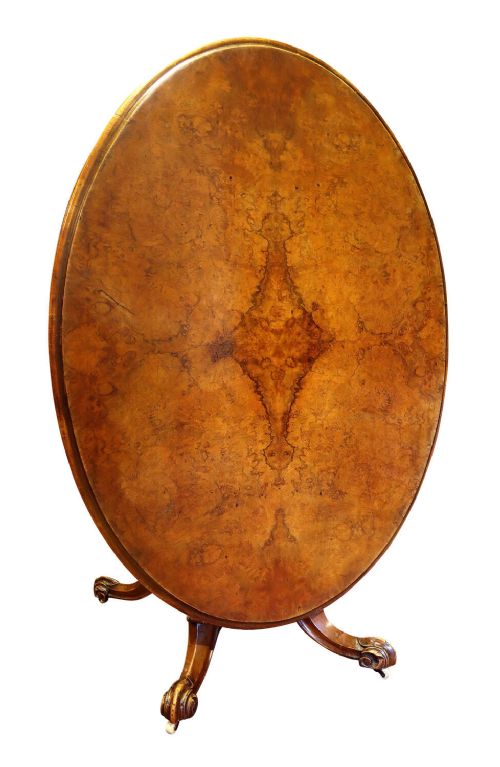
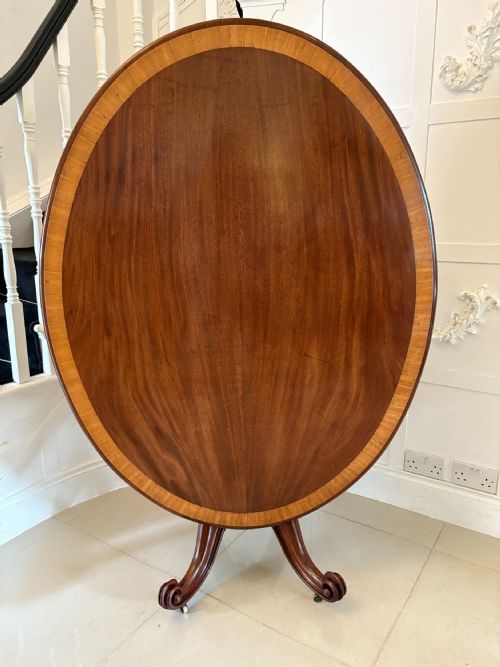
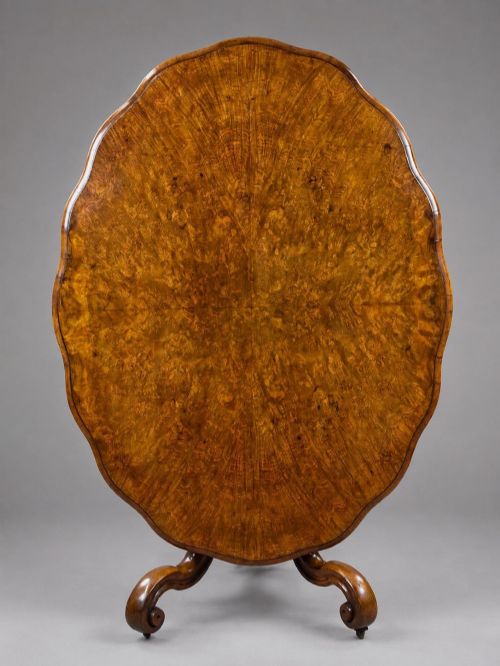
Cabinet makers utilised dense native hardwoods such as mahogany and rosewood alongside exotic burr walnut veneers applied to stable secondary timbers to create richly patterned table tops.
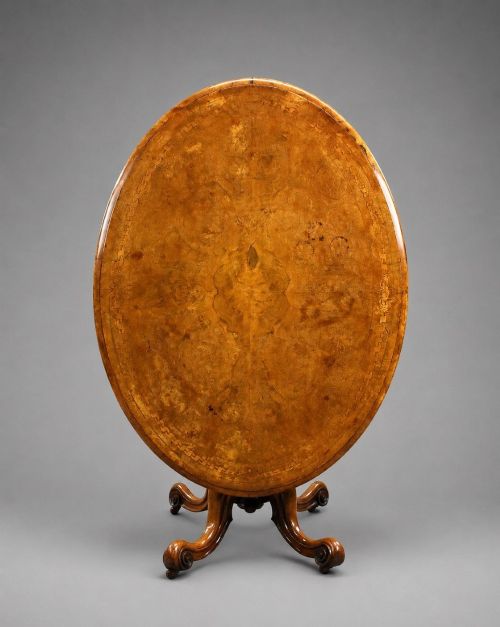
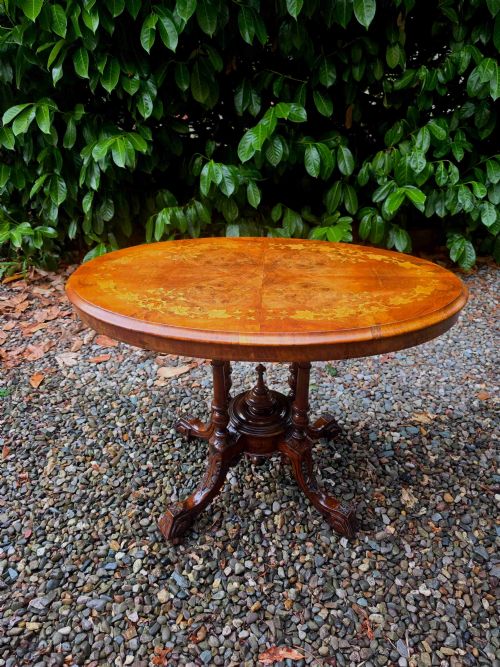
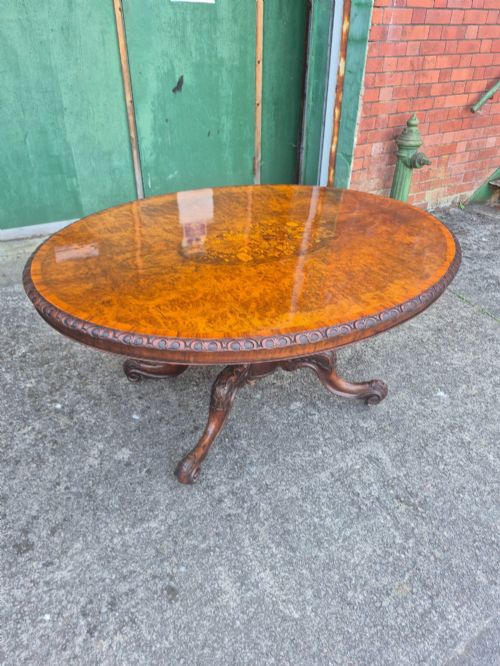
Inlay work incorporated boxwood and marquetry motifs, while pedestals often featured hand carved solid timber components joined to heavy cast iron or wooden mechanisms for the pivoting action.
Victorian card players needed sturdy tables because losing at loo often involved enthusiastic table thumping when someone missed a trick.
Quality differences
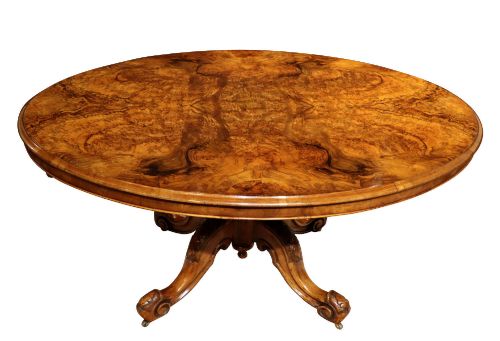
The distinction between standard examples and the finest work lies in the selection of timber figure, where dense burr walnut and balanced flame mahogany command greater appreciation.
Mastery of construction appears in the crispness of hand carving on the base, the precision of boxwood inlay, and the smooth operation of the tilt and lock mechanism.
Edwards and Roberts·Gillows
The Victorian Oval Tilt Top Table Glossary
- Tilt top
- A mechanism allowing the table top to pivot ninety degrees into a vertical position. This clever design enabled furniture to be stored against room perimeters when not in use.
- Loo table
- A large Victorian centre table originally intended for the popular card game loo. These tables frequently feature elaborate burr walnut veneers and heavy pedestal bases.
- Burr walnut
- A prized timber harvested from walnut tree growths, yielding highly swirled and mottled grain patterns. Cabinet makers prized this wood for high status table tops.
- Quadrapod base
- A heavy central pillar supported by four radiating carved feet. This sturdy configuration was essential for balancing large oval table tops.
- Marquetry
- The art of applying decorative veneer pieces to form geometric or floral pictures. Skilled artisans used contrasting woods like boxwood to achieve detailed patterns.
Victorian Oval Tilt Top Table: Frequently Asked Questions
Can these tables fit in modern dining rooms?
The oval shape and central pedestal design provide considerable flexibility for seating arrangements without corner legs obstructing chairs. Their narrow profile when tilted also allows them to function as side consoles.
Consider the diameter of the pedestal base relative to your chair clearance to ensure comfortable seating when the table is fully lowered for use.
How do I care for burr walnut veneer?
Protect the sensitive wood surface from direct sunlight and excessive heat sources that can dry out the historic glues beneath the veneer. Dust regularly with a soft dry cloth and avoid silicone based polishes.
Apply a traditional beeswax sparingly to nourish the timber grain and maintain the natural lustre without building up heavy residue over time.
Were these tables used exclusively for breakfast?
Despite historical names referencing breakfast or loo, nineteenth century households used these versatile tables for sewing, reading, writing, and informal evening dining.
The tilting function made them particularly practical for multi purpose rooms where floor space was at a premium during daylight hours.