


Victorian Ornate Brass Fender
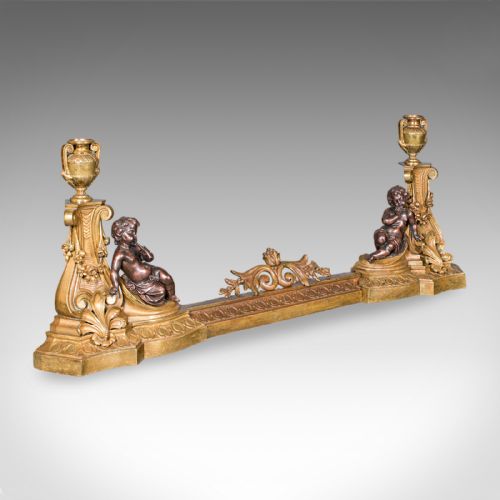
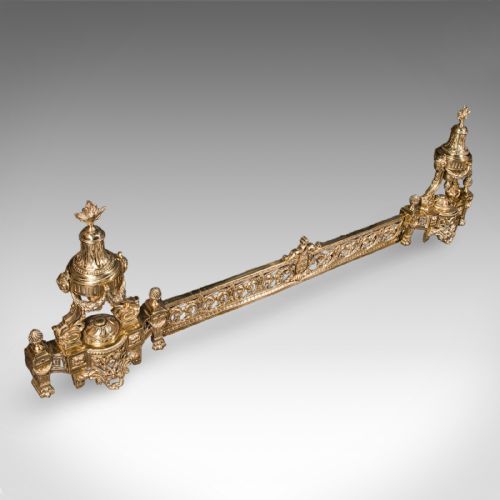
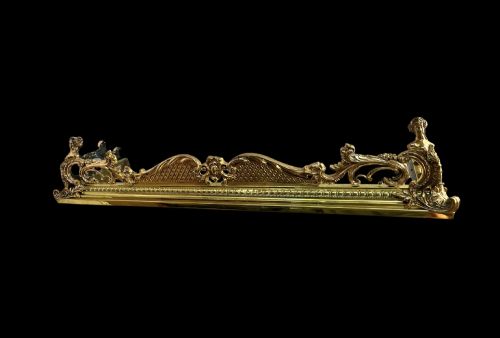
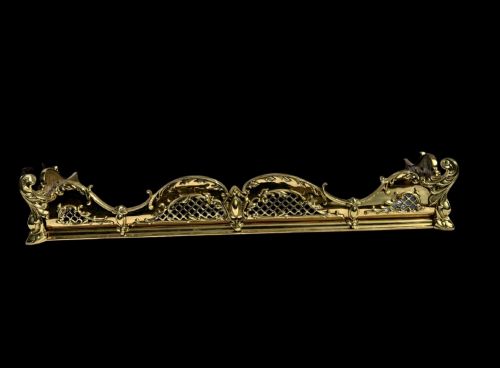
A victorian ornate brass fender anchors a fireplace with weight and polish, offering hearth protection through 19th-century metalwork.
Victorian Ornate Brass Fender
A victorian ornate brass fender sits on the hearth to contain ash and protect the room from stray embers, functioning as both a safety barrier and a decorative frame for the fireplace. These hearth accessories appear in forms ranging from heavy adjustable lengths to extendable kerbs designed for coal-burning grates.
The pieces on this page span the 19th century, drawing on Victorian manufacture alongside continental design influences. Domestic English workshops share space with French Louis XV styles and Grand Regency revivals.
Buyers encounter fireplace accessories executed primarily in brass, alongside bronze, ormolu, and cast iron. Many incorporate adjustable mechanisms to fit varying hearth dimensions.
How they were made
The primary construction relies on cast and sheet brass, often combined with bronze or steel components for structural rigidity. Workshops utilised heavy-gauge metal to withstand daily fireside heat and foot traffic.
Decorative surface work involves chasing, piercing, and applying cast brass garlands or chenets. Certain examples incorporate polychrome or gesso detailing to heighten the visual contrast against polished metal surfaces.
Listings on this site span the Victorian period, featuring materials such as brass, bronze, ormolu, and cast iron.
What varies in quality
Metal thickness and gauge dictate the overall substance of the piece, separating substantial hearth furnishings from lighter alternatives. Heavier castings hold crisper ornamental detail in the foliate scrolling and floral garlands.
The precision of the extending mechanism marks a difference in workshop capability. Superior examples operate smoothly across adjustable lengths without compromising the alignment of the decorative frieze.
The Victorian Ornate Brass Fender Glossary
- Fender
- A low metal barrier placed around the hearth to keep burning coals and ash from spilling onto the floor. These items define the boundary of the fireplace opening.
- Chenet
- An ornamental firedog or andiron placed at the hearth, frequently matched stylistically with adjacent fenders. They often feature cast rococo scrolls.
- Ormolu
- Finely ground high-carat gold applied to a bronze base through mercury amalgamation. This technique produces a durable golden finish seen on French-influenced pieces.
- Kerb
- The structural frame of the fender that rests directly on the floor. Adjustable versions allow this frame to expand or contract.
- Gesso
- A plaster-like mixture applied as a base for paint or gilding on decorative elements. It permits intricate relief work on mixed-media hearth accessories.
Victorian Ornate Brass Fender: Frequently Asked Questions
What is a victorian ornate brass fender?
A victorian ornate brass fender is a metal hearth guard produced during the 19th century. It sits on the floor in front of an open fireplace.
Its primary role is containing sparks and hot ash while framing the hearth with decorative metalwork such as cast garlands or rococo scrolls.
How do adjustable fenders work?
Adjustable fenders feature telescoping or sliding sections that allow the overall length to expand or contract. This mechanism lets the piece fit different hearth dimensions.
Many 19th-century examples utilised this design to accommodate various fireplace widths without requiring custom manufacture.
Where were these fenders placed?
These pieces sit directly on the floor or hearthstone immediately in front of the fireplace opening. They form a physical boundary between the fire and the room.
In period settings, they frequently coordinate with companion fire irons, coal buckets, and chenets.
How do I care for brass hearth accessories?
Brass furnishings require gentle dusting and occasional cleaning to maintain their metal finish. Avoid harsh abrasive compounds that can strip historical patination.
Keeping the metal dry prevents oxidation and preserves the chased and polished surface details.