



Ornate Brass Hearth Curb
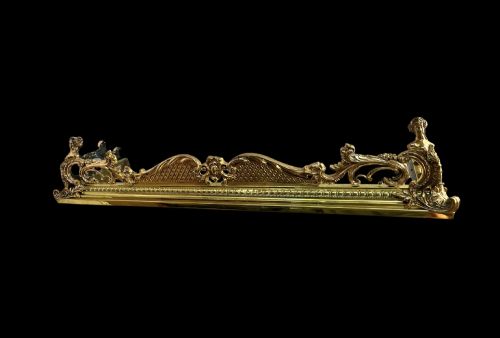
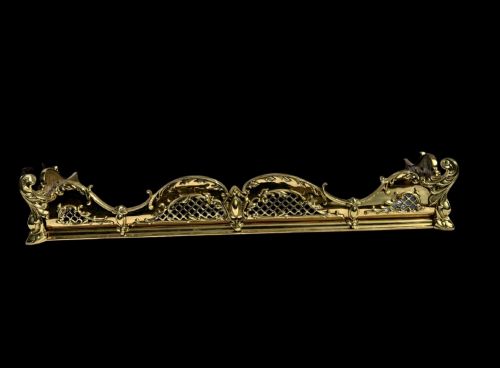
An ornate brass hearth curb guards the hearth in style, bringing period metalwork and hearth furniture into the room.
Ornate Brass Hearth Curb
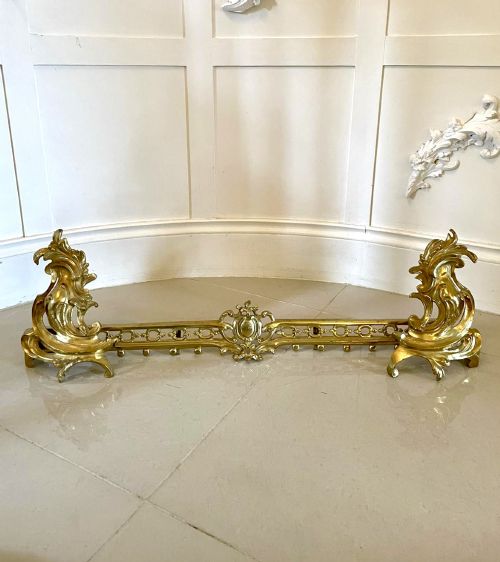
An ornate brass hearth curb, also catalogued as a fireplace fender, hearth fender, or fire kerb, frames the fireplace opening to stop embers from rolling onto the floor. The pieces gathered here span the Victorian era, the nineteenth century, and the early twentieth century, alongside specific dates such as 1860, 1890, 1900, and 1920.
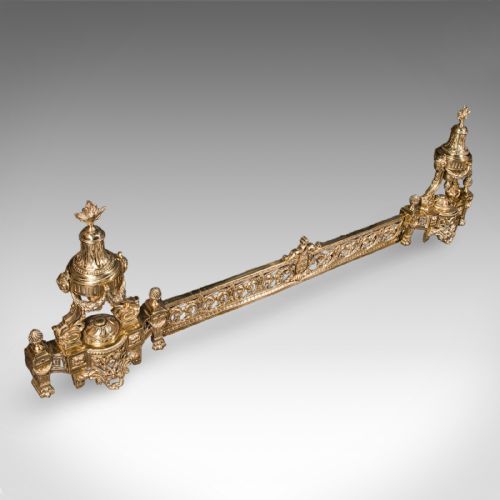
Most examples found on this page adopt revival aesthetics, drawing heavily on French Rococo, Louis XV, Louis XVI Neoclassical, and Victorian and Gothic styles. These low metal barriers sit directly on the floor around the hearth, often incorporating adjustable frames to fit varying fireplace widths.
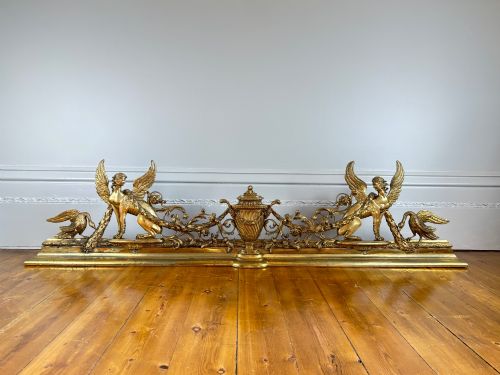
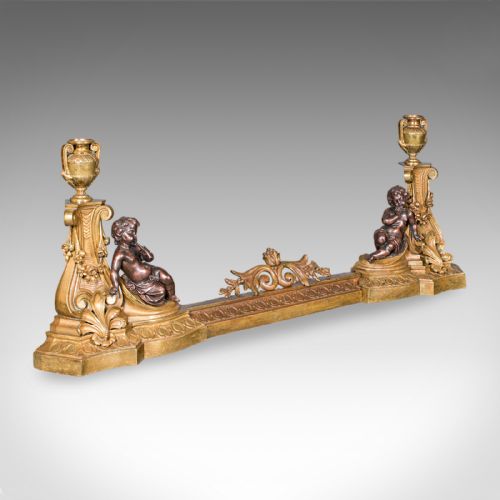
Originating from English and French workshops, these fireplace accessories combine practical hearth containment with decorative metalwork. They range from simple brass rails to heavy extending curbs adorned with garlands, polychrome highlights, and cast motifs.
How they were made
The construction of these hearth curbs relies heavily on cast brass, gilded brass, ormolu, and dore bronze, sometimes supported by cast iron frames or wooden bases. Metalworkers utilised casting techniques to produce intricate decorative scrolls, foliage, and garlands characteristic of the period.
Many examples incorporate adjustable sliding mechanisms made from brass and steel, allowing the fender length to alter. Surface finishes vary from bright gilding and polychrome paint to patinated bronze and polished brass.
These guards faithfully caught stray coal sparks while letting nineteenth-century toes toast comfortably close to the grate.
What varies in quality
Quality in an ornate brass hearth curb rests upon the crispness of the casting and the weight of the metal. Heavier specimens utilise substantial brass and bronze components that hold their shape and resist distortion under heat and use.
The refinement of the decorative detailing separates standard production from exceptional work. Finer pieces display sharply chased ornamentation, delicate garlands, and robust extending mechanisms that operate smoothly.
E F Caldwell New York
The Ornate Brass Hearth Curb Glossary
- Fender
- A low metal guard placed in front of an open fireplace to contain falling coals and sparks. These objects are also known as hearth curbs or fire kerbs.
- Ormolu
- Gilded bronze applied to decorative objects and furniture mounts. This technique creates a rich, gold-coloured metallic finish popular in French revival pieces.
- Neoclassical Revival
- A design style drawing inspiration from classical Greek and Roman art. It appears on fenders through symmetrical motifs, urns, and strict geometric proportions.
- Dore bronze
- Bronze objects finished with mercury gilding to impart a bright gold sheen. This finish is frequently associated with high-end nineteenth-century French and American metalwork.
Ornate Brass Hearth Curb: Frequently Asked Questions
How do I measure for a hearth curb?
Measure the width of your fireplace opening and the hearth stone space available to ensure the curb fits comfortably around the perimeter. Many period examples feature adjustable mechanisms that let you slide the frame to suit the exact dimensions of your fireplace.
Take note of the depth as well as the length so that the fender sits squarely on the floor without obstructing hearth tools or ash trays.
Are these fenders adjustable?
Several pieces in this selection include extending or adjustable designs intended to accommodate different fireplace widths. These sliding mechanisms use interlocking metal sections secured by screws or pins.
Check the listing details to confirm whether a specific curb has an extending frame or a fixed, rigid construction.
What materials are used in these curbs?
The primary materials recorded across these listings include brass, cast brass, gilt brass, ormolu, bronze, and dore bronze, occasionally paired with cast iron, steel, or wood. Some examples also incorporate polychrome painted highlights or copper details.
Each material combination reflects the prevailing tastes of English and French manufacturers during the nineteenth and early twentieth centuries.
How do I clean and polish brass fenders?
Gentle dusting with a soft cloth helps maintain polished brass surfaces without stripping away the historical patina built up over decades. Avoid harsh chemical abrasive cleaners that can damage fine gilding, ormolu, or polychrome painted details.
If the metal requires deeper cleaning, use a mild brass cleaner applied sparingly with a cloth, taking care to keep substances away from painted or patinated areas.