




Victorian Ornamental Pitchers
Victorian ornamental pitchers are decorative ewers and jugs cast in bronze, porcelain, and earthenware that bring undeniable presence to any room.
Victorian Ornamental Pitchers
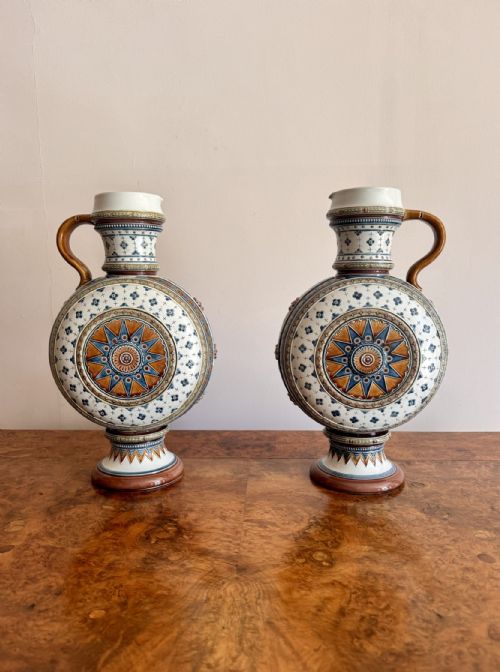
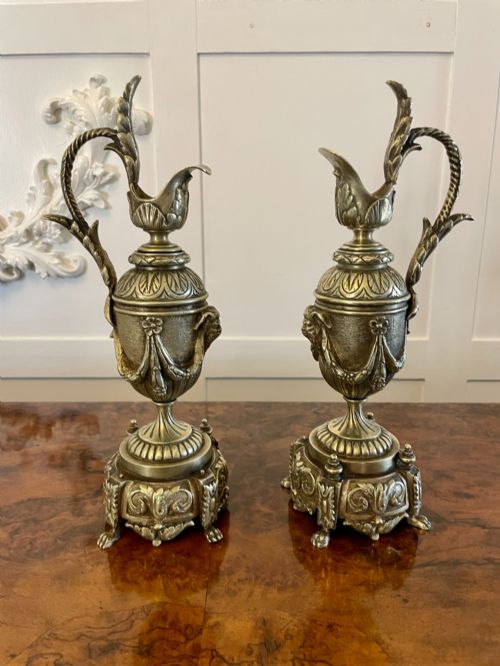
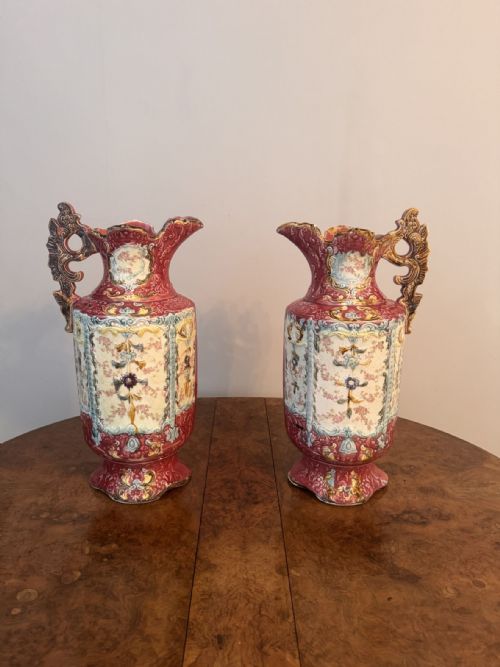
Victorian ornamental pitchers encompass decorative ewers, jugs, and vases designed primarily for display rather than utility. These pieces take the form of classical ewers and dramatic vessels, often appearing as matched pairs suited for mantels and sideboards.
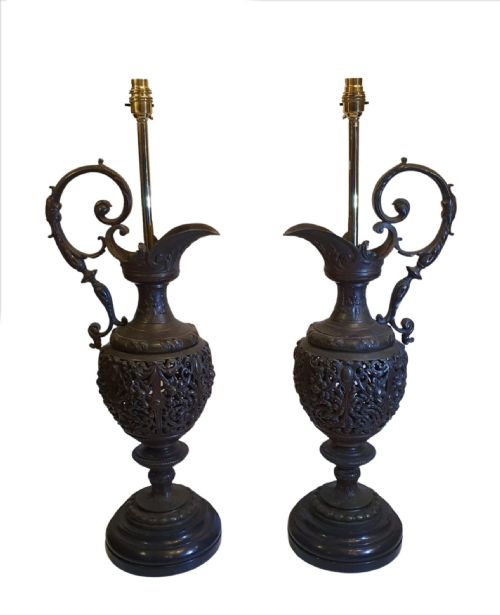
The selection on this page centres on Victorian examples alongside nineteenth-century works. Forms range from grand pedestals to pieces later converted into table lamps.
How they were made
Maker workshops utilised porcelain, earthenware, and cast metal such as bronze to construct these substantial vessels. Artisans applied intricate surface decoration including raised gold gilding, enamel work, and coloured glazes.
Stylistic influences span Victorian Rococo Revival, Aesthetic Movement, and Neoclassical Revival. Manufacturers employed skilled techniques to achieve both ornate relief work and smooth glazed finishes.
Victorian Ornamental Pitchers Retail Price Guide 2026
Typical asking prices for victorian ornamental pitchers among the pieces listed under this phrase on Sellingantiques today, from the lower quarter to the upper quarter. They describe what is for sale here now, not the wider market.
Several grand ewers abandoned their pouring duties entirely to live bright new lives as table lamps.
What varies in quality
Quality rests in the crispness of the cast metal or the fineness of the porcelain body. Superior pieces display meticulous hand-painted details and precise gilding that remain sharp across the entire surface.
The balance of the form and the ambition of the Revival or Aesthetic design separate standard production vessels from exceptional works. Pairs that retain their original matched state command greater visual authority.
Royal Crown Derby·Coalport·Royal Worcester
The Victorian Ornamental Pitchers Glossary
- Ewer
- A large jug with a wide spout and handle, traditionally used for water but adopted in the Victorian era as a purely decorative display piece. These vessels often feature classical silhouettes.
- Gilding
- The application of gold leaf or powdered gold to the surface of porcelain or metal. Raised gold decoration adds tactile depth to the design.
- Aesthetic Movement
- A late nineteenth-century design style focusing on visual beauty rather than narrative or moral function. Pieces from this movement often incorporate refined floral and gilt motifs.
- Grand Tour
- A term describing souvenir items or classical reproductions acquired by wealthy travellers in Europe during the nineteenth century. These objects frequently take the form of bronze or marble-mounted vessels.
Victorian Ornamental Pitchers: Frequently Asked Questions
Were these ewers used for water?
Most pieces listed as ornamental ewers or pitchers were created solely for visual display. Their delicate gilt surfaces and narrow spouts make them impractical for daily service.
Many examples take inspiration from ancient metalwork rather than domestic washstand sets.
How do I identify a Victorian ewer?
Victorian ewers are identified through characteristic period styles such as Rococo Revival, Gothic, or Aesthetic Movement decoration. Materials typically include porcelain, earthenware, and cast bronze.
Maker marks on the base often help confirm the period of manufacture.
Can converted lamp ewers be restored?
Some buyers choose to reverse lamp conversions to return the ewer to its original sculptural form. This process requires specialist care to ensure the historic body remains undamaged.
Many collectors prefer to keep them as functional table lamps.