
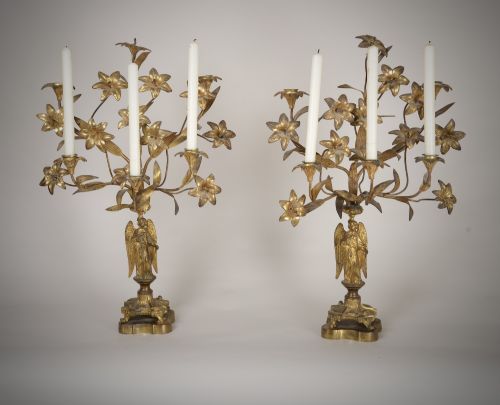


Victorian Ormolu Light Base
These victorian ormolu light base pieces are heavy, gilded decorative foundations designed to transform antique lighting and candelabra work into statement interiors.
Victorian Ormolu Light Base
When you search for a victorian ormolu light base, you encounter a selection of heavy metallic supports, transformed candelabra, and figural mounts from the nineteenth century. These objects bridge the gap between functional illumination and sculptural display, often incorporating figures, columns, and tazze.
The pieces listed on this page span the Victorian era, the William IV period, and the nineteenth century more broadly. You will find matched pairs of candlesticks alongside single conversion lamps that integrate glass, marble, and gilt metal.
Stylistically, the selection ranges from ornate Rococo Revival and French Second Empire designs to Gothic Revival and Neoclassical forms. Each object demonstrates the period penchant for marrying classical mythology or architectural motifs with domestic lighting.
Materials and construction methods
The manufacture of these bases relies heavily on cast ormolu, gilt bronze, and brass, often paired with contrasting materials such as marble, onyx, and cut glass. Metal components are cast, chased, and gilded to achieve a rich, enduring metallic lustre.
Many items incorporate structural elements like Corinthian columns, rock crystal columns, or figural supports representing cherubs, mermaids, and young figures. These elements are secured to heavy stone or metal plinths to provide stability for lamps and candelabra.
The object forms include table lamps, candelabra, candlesticks, lustres, tazze, and oil lamps spanning various revival styles.
Quality factors in gilded lighting
The integration of secondary materials also dictates the calibre of the piece. Solid marble and onyx bases, coupled with heavy-gauge ormolu mounts and authentic period glass components, represent the higher tier of nineteenth-century workshop production.
The Victorian Ormolu Light Base Glossary
- Ormolu
- A gilded bronze or brass finish produced by applying a mercury-gilding process or electrogilding to base metals. This technique imparts a rich golden sheen that resists tarnishing over decades.
- Lustre
- A glass candlestick or candelabrum decorated with hanging glass prisms or pendants. These pendants catch and refract candlelight.
- Tazza
- A shallow saucer-like dish mounted on a stem and foot, frequently utilised in ormolu and bronze as a decorative centrepiece or lamp component.
- Gilt Bronze
- An alloy of copper and tin treated with a gold leaf or gold wash finish. It forms the structural core for many nineteenth-century decorative items.
Victorian Ormolu Light Base: Frequently Asked Questions
How do I wire an antique lamp base?
Wiring typically requires threading a cord through the central column or utilising a discreet channel without compromising the original metalwork.
Many collectors prefer professional rewiring to ensure modern electrical safety standards while preserving the antique ormolu components.
Are these pieces strictly French or English?
The selection includes both English and French manufacture, reflecting the shared design influences of the nineteenth century.
French workshops frequently produced figural and Rococo revival pieces, whilst English makers often favoured architectural columns and Neoclassical forms.
Can candelabra be converted into lamps?
Many candelabra and candlesticks from this era were adapted for electricity during the twentieth century to suit modern domestic lighting needs.
This conversion process often involves adding a central lamp fitting while retaining the original ormolu branches and figural bases.
How do I clean ormolu and gilt bronze?
Maintenance requires only gentle dusting with a soft brush, avoiding chemical cleaners that strip the historic gold wash.
Water and harsh solvents can damage the delicate surfaces of both the metal gilding and the underlying marble or onyx.