


Victorian Oriental Accent Table
A victorian oriental accent table brings dense carving, lacquer or inlay from distant workshops directly into nineteenth-century British interiors.
Victorian Oriental Accent Table
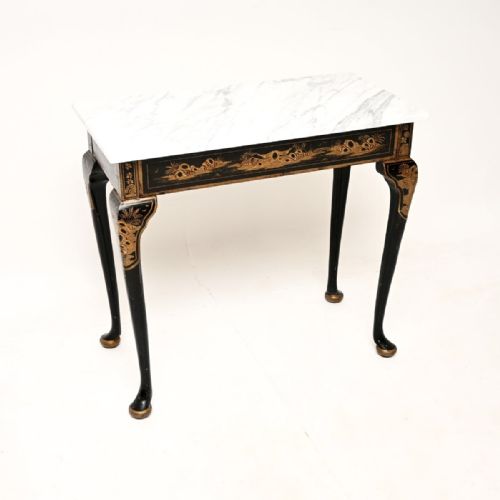
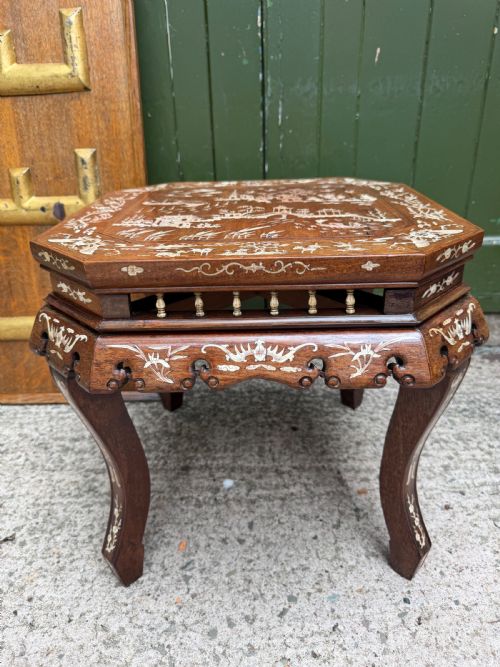
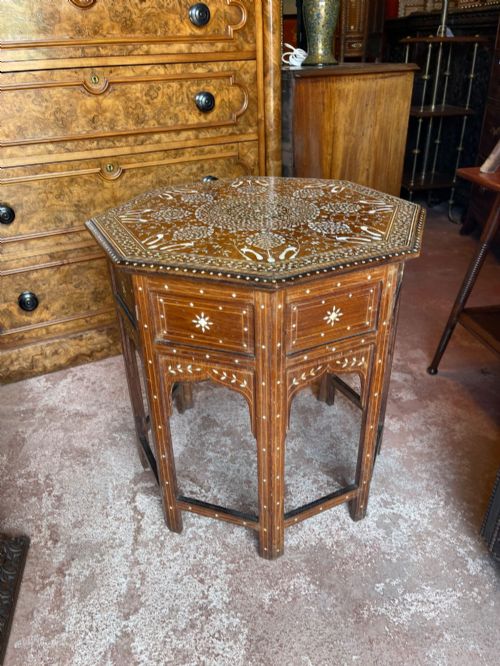
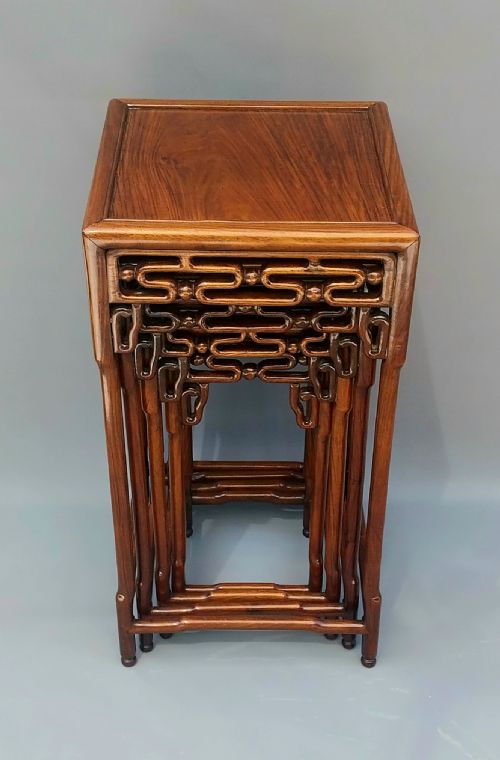
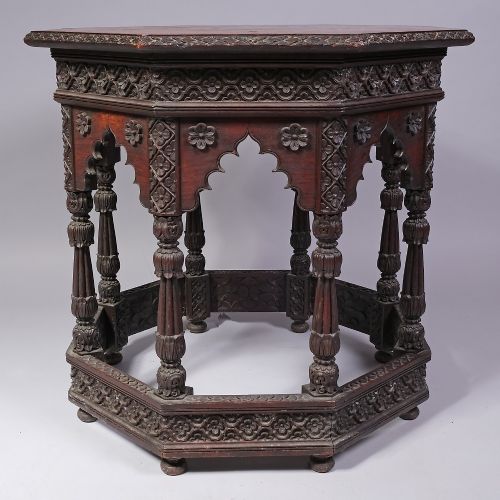
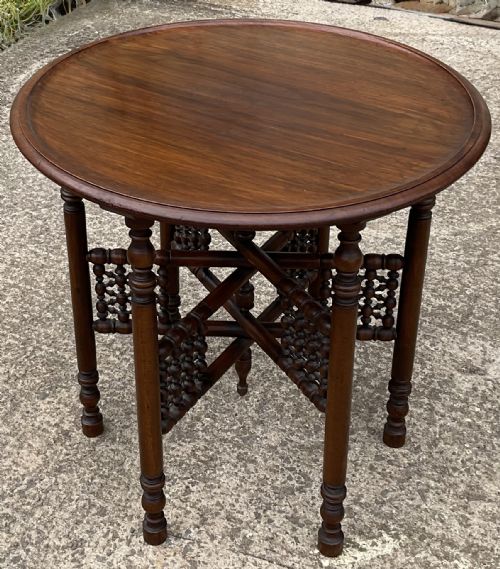
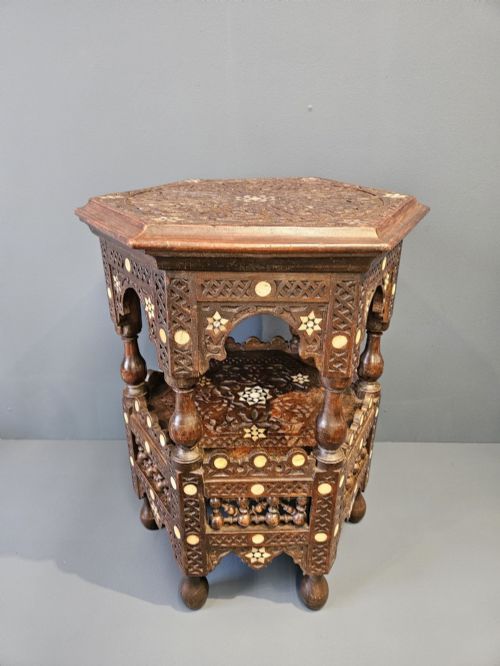
A buyer seeking a victorian oriental accent table encounters low coffee tables, folding occasional stands, and multi-tiered side tables created across the nineteenth and early twentieth centuries. These pieces reflect British fascination with Eastern design through styles ranging from Anglo-Indian and Anglo-Burmese to Japanese Meiji and Chinese Qing Dynasty.
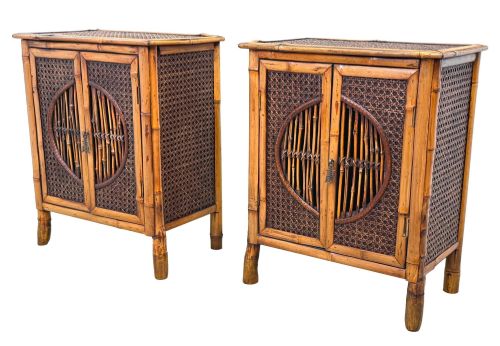
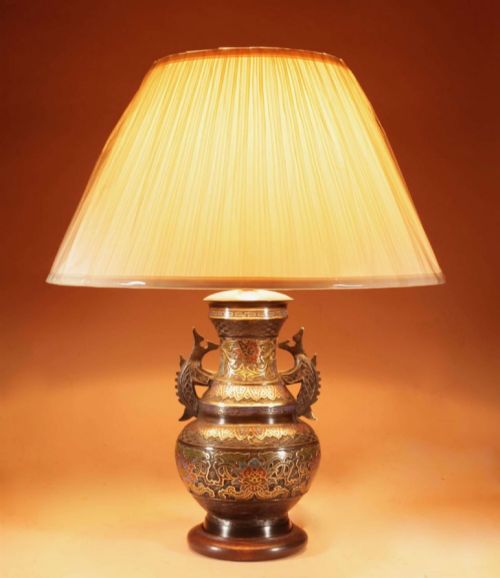
The selection on this page centres primarily on side tables, occasional tables, and nest of tables constructed in forms suited to holding lamps, wine, or small decorative objects. Materials span from teak and rosewood to bamboo and ebonised elm, often integrating marble tops or folding frames.
Materials and Technique
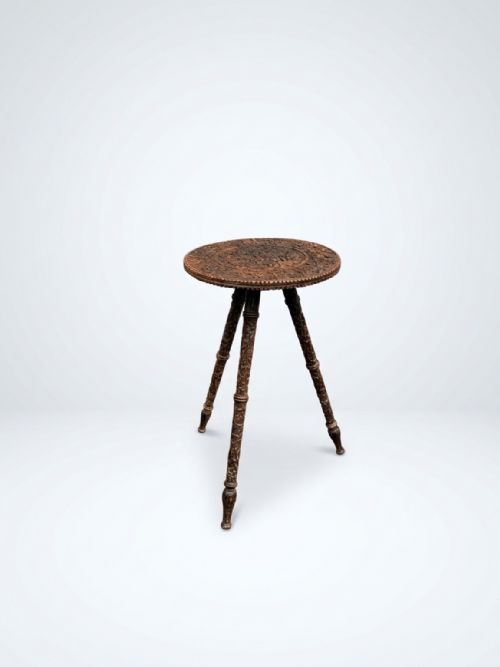
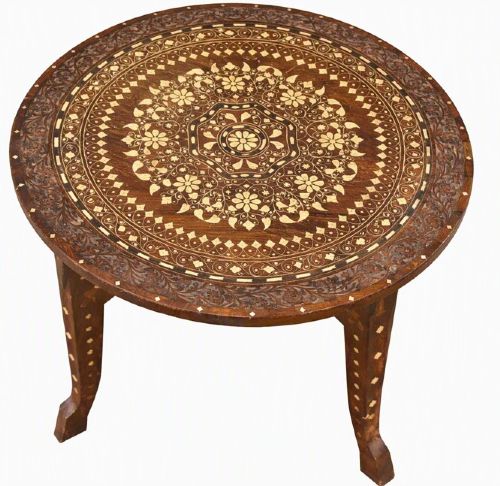
Construction relies on dense hardwoods such as teak, rosewood, Hongmu, and padauk, selected for their stability and capacity for intricate relief work. Artisans carved deep floral, dragon, and geometric motifs directly into the timber or assembled folding panels using traditional joinery.
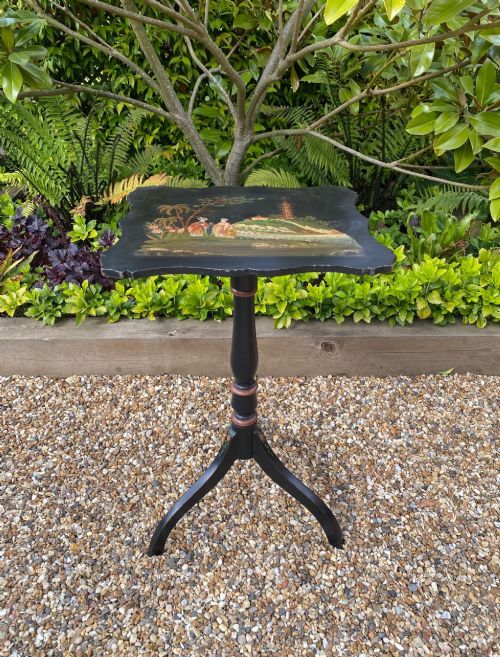
Surface ornamentation defines many examples, employing black or polychrome lacquer, gold leaf, and detailed paintwork. Inlayers integrated bone, brass wire, and mother-of-pearl into wood surfaces, while other pieces combined inset marble tops with turned wooden frames.
Listings feature woods including teak, rosewood, hardwood, lacquer, and marble across periods spanning from the mid-nineteenth to the early twentieth century.
Standards of Craftsmanship
Quality rests on the depth and crispness of the hand-carved relief and the precision of inlaid bone, brass, or wood. Superior examples display tight joinery that remains stable without modern reinforcement, alongside unblemished lacquer and finely detailed painted panels.
Material selection marks the distinction between standard production and exceptional pieces, with dense rosewood and Hongmu commanding greater attention than simpler softwoods. The complexity of the structural form, such as multi-tiered designs or folding mechanisms, further separates standard domestic items from ambitious workshop commissions.
Liberty & Co·Gabriel Viardot
The Victorian Oriental Accent Table Glossary
- Chinoiserie
- European interpretation and imitation of Chinese artistic traditions and motifs. It appears frequently on lacquered tables decorated with landscapes and figures.
- Anglo-Indian
- Furniture made in India during the British period, combining traditional local carving techniques with European furniture forms. These pieces often feature dense foliate patterns.
- Boulle-work
- The practice of ornamenting furniture surfaces with inlaid brass and tortoiseshell or similar contrasting materials. It surfaces on select lacquered occasional tables.
- Hongmu
- A traditional Chinese term for dense hardwoods, including various species of rosewood and padauk. It provides a heavy, durable structure for carved tables.
- Meiji Period
- The era in Japanese history spanning from 1868 to 1912, corresponding to significant export of decorative arts to Britain. Works from this time often utilise elm or lacquer.
Victorian Oriental Accent Table: Frequently Asked Questions
What is a victorian oriental accent table?
These tables are small occasional, side, or coffee pieces produced during the nineteenth century that incorporate Asian decorative styles, carving, or materials into British home furnishing.
They encompass diverse regional traditions, including Anglo-Indian carved tables, Chinese lacquered stands, and Japanese Meiji tea tables.
How were these tables used originally?
Victorian households utilised these accent tables as movable stands for lamps, tea sets, or decorative ornaments in drawing rooms and parlours.
Folding versions allowed owners to store the furniture away easily when not required for entertaining guests.
How do I care for lacquered wood?
Maintain lacquered surfaces by dusting them gently with a soft, dry cloth and avoiding exposure to direct sunlight or excessive moisture.
Keep polished hardwood and bone inlay stable by maintaining consistent room humidity to prevent timber splitting.
How can I tell different styles apart?
Indian examples typically display deep, continuous floral carving and bone inlay in hardwoods like teak or sheesham, while Chinese pieces often feature lacquer, gilt, or marble inserts.
Japanese items frequently employ elm or ebonised wood with clean structural lines and subtle natural motifs.