
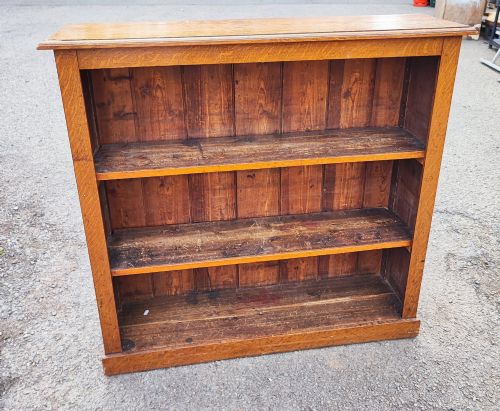
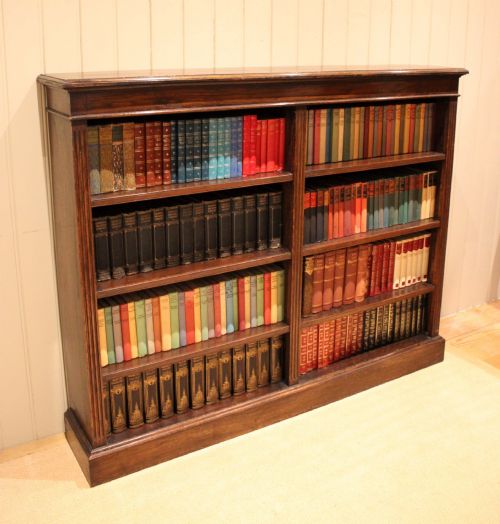
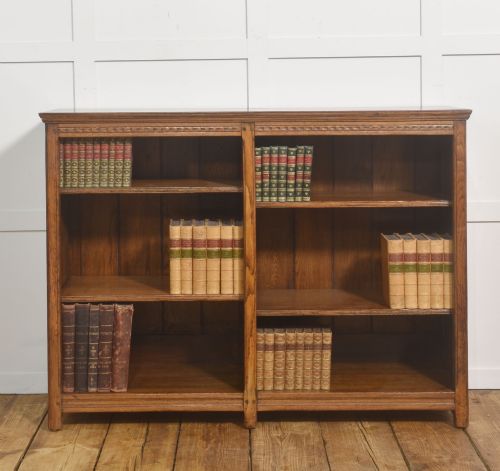
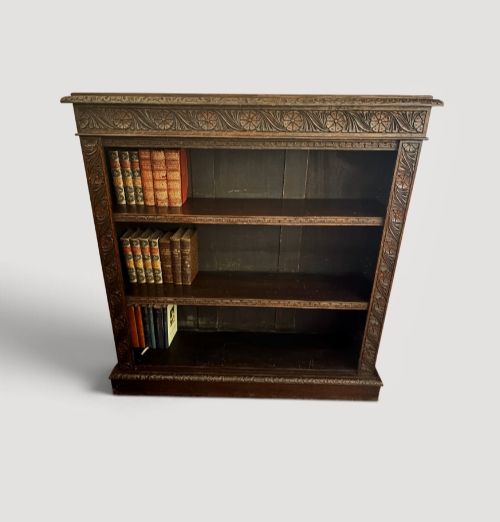
Victorian Open Oak Bookcase
These pieces combine sturdy timber with practical shelving, offering a reliable home for a growing library.
Victorian Open Oak Bookcase
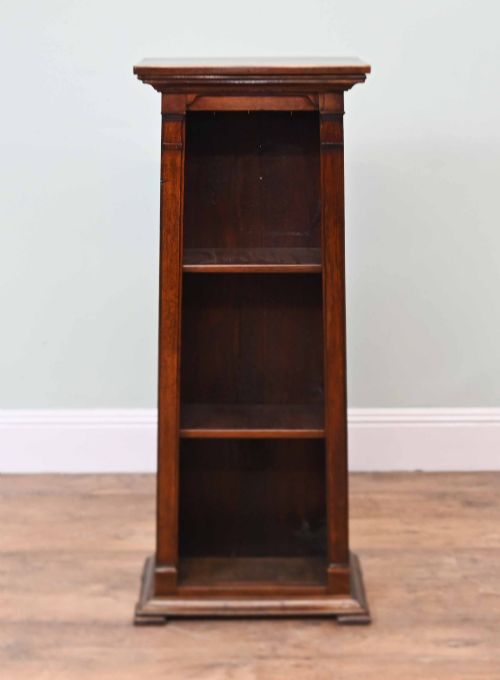
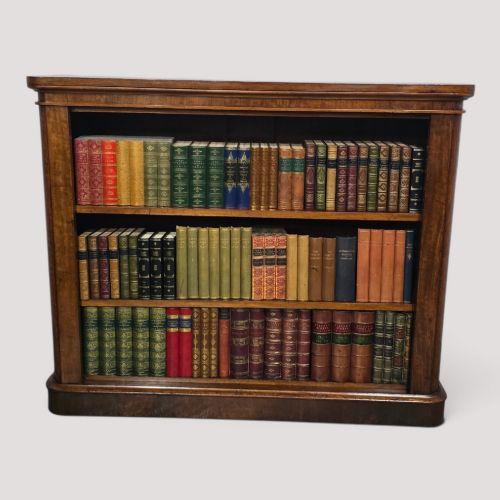
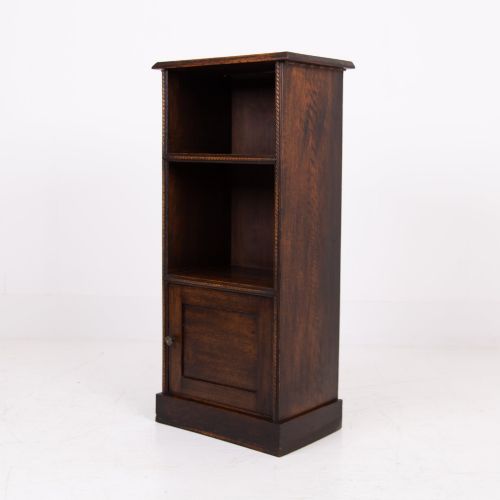
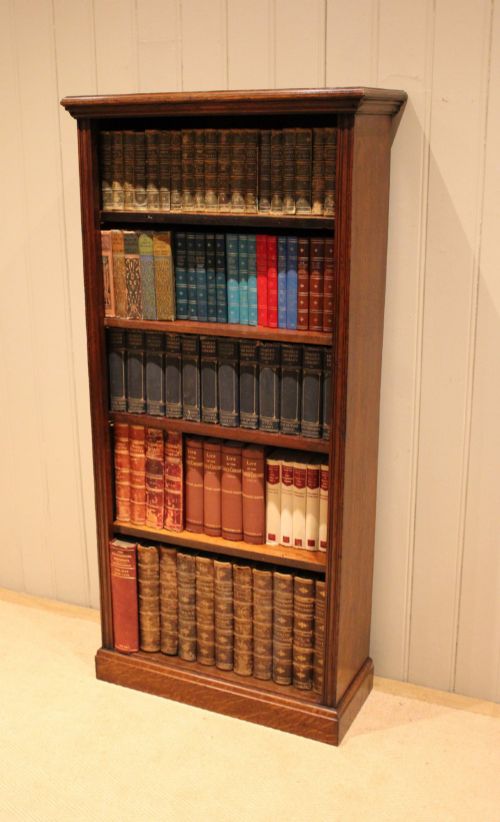
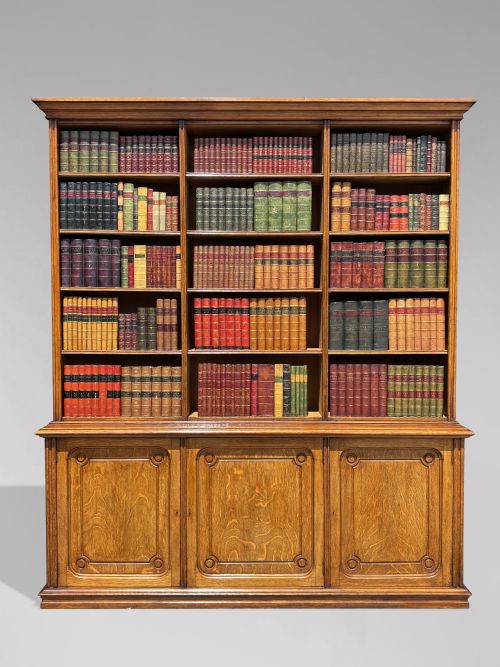
A victorian open oak bookcase provides accessible storage for volumes while displaying the natural grain of the timber within a room. You will regularly encounter straightforward low models alongside taller library editions intended for heavy collections.
Many examples emerge from the Victorian period itself, while others date from subsequent decades maintaining traditional forms. Buyers often select these furnishings to anchor a study or parlour with functional period character.
Materials and Construction
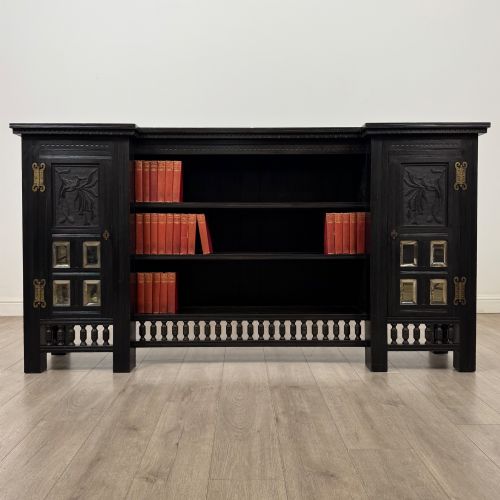
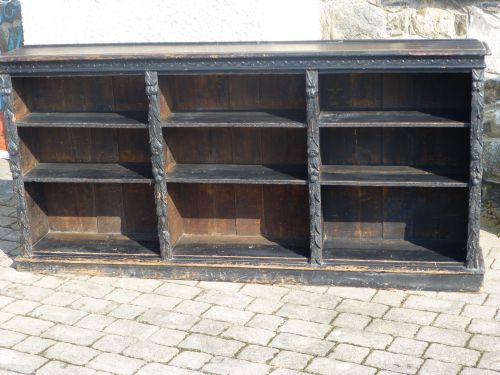
Makers utilised solid oak, pollard oak, and ebonised variations to build these sturdy carcasses, frequently pairing the dense timber with brass fittings. Structural elements often relied on thick planks designed to support substantial weight without sagging.
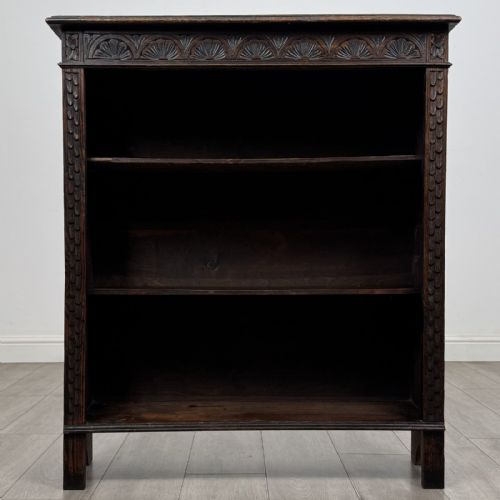
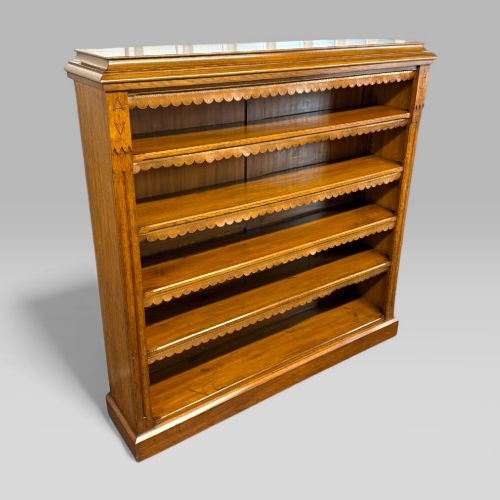
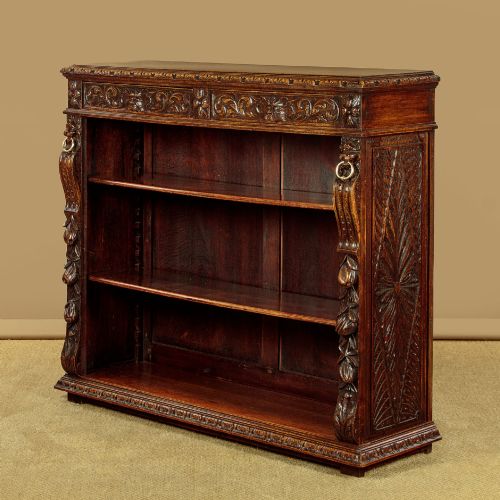
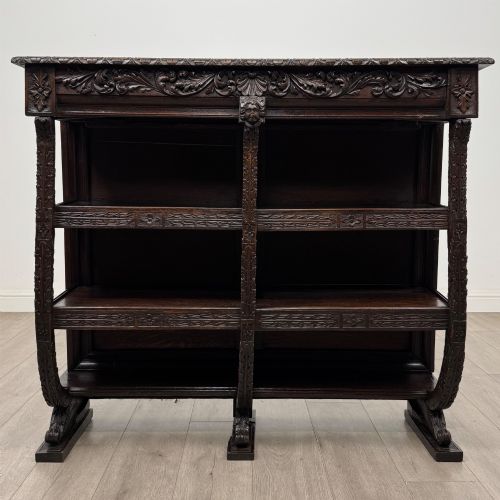
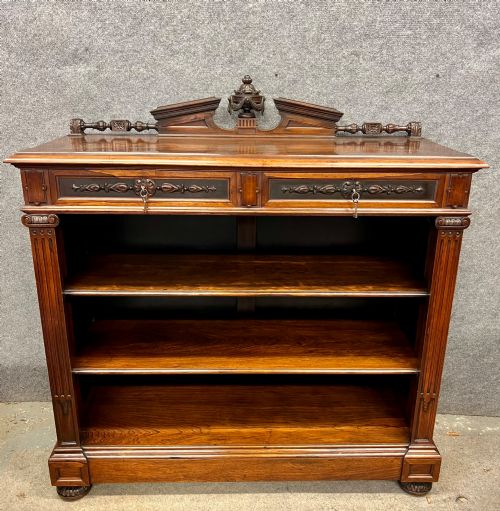
Carving and surface decoration required skilled hand work, yielding foliate patterns, green man masks, and Gothic revival motifs. Fret-cut panels and wood inlay also appeared on select pieces to enhance the visual depth of the timber.
Several bookcases hide watchful green man masks within their foliage carvings, ready to supervise your reading habits from the shadows of the shelf.
Assessing Quality
The standard of carving distinguishes standard utility shelving from finer library furniture, with crisp details on green man masks and foliage indicating superior workshop output. Timber selection plays an equal role, where pollard oak or carefully matched golden grain elevates the overall visual impact.
Adjustability mechanisms also reflect the tier of manufacture, noting that well-engineered brass supports outlast simpler fixed arrangements. Robust structural joinery in breakfront or multi-section carcasses ensures longevity under heavy loads.
The Victorian Open Oak Bookcase Glossary
- Breakfront
- A cabinet design where the central section projects forward from the flanking wings. This layout creates depth and presence in larger library bookcases.
- Green Man
- A decorative architectural motif depicting a face carved from or entwined with leaves and vines. It frequently appears on Victorian carved oak furniture.
- Pollard Oak
- Timber taken from trees that were pruned above the height of browsing animals, producing a dense, highly figured grain. Cabinet makers prized this for its mottled appearance.
- Gothic Revival
- An architectural and decorative style drawing on medieval forms, featuring pointed arches and trefoils. It heavily influenced nineteenth-century case furniture.
- Ebonised
- Wood treated with a chemical stain or finish to imitate ebony. This dark surface treatment appeared frequently on nineteenth-century statement pieces.
Victorian Open Oak Bookcase: Frequently Asked Questions
How do I adjust the shelves?
Many period bookcases feature slotted wooden uprights or metal ratchets that allow shelves to be moved easily to accommodate different book heights.
Carefully lift each shelf to clear the supporting pins or brackets before sliding them into the desired new position.
Are these bookcases suitable for heavy books?
Solid oak construction provides the natural strength required to support rows of heavy volumes without warping the timber over time.
Thick shelves paired with sturdy upright frames ensure the piece remains stable under a full library load.
How do I tell different periods apart?
Earlier nineteenth-century examples often display deep golden tones and heavier Gothic or Renaissance revival carvings, while later pieces lean towards lighter finishes.
Examining the backboards, fixings, and shelf support mechanisms also helps narrow down the exact decade of manufacture.
Can I place one on an uneven floor?
Period furniture often settles over time, meaning older floors can cause slight rocking or door alignment issues in breakfront variants.
Using discreet packing beneath the base plinth helps level the heavy timber carcass safely without straining the joints.