


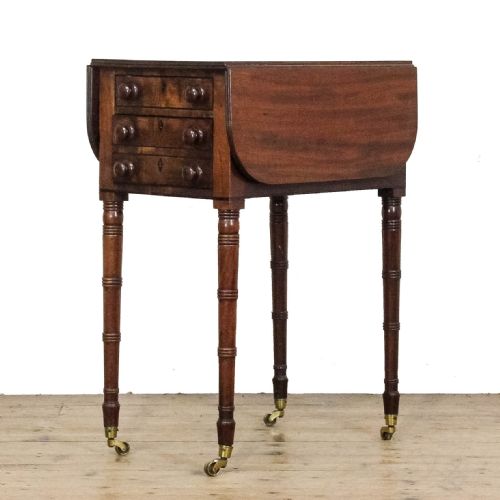


Victorian Occasional Table Castors
These Victorian occasional table castors support nimble movement across nineteenth century drawing rooms.
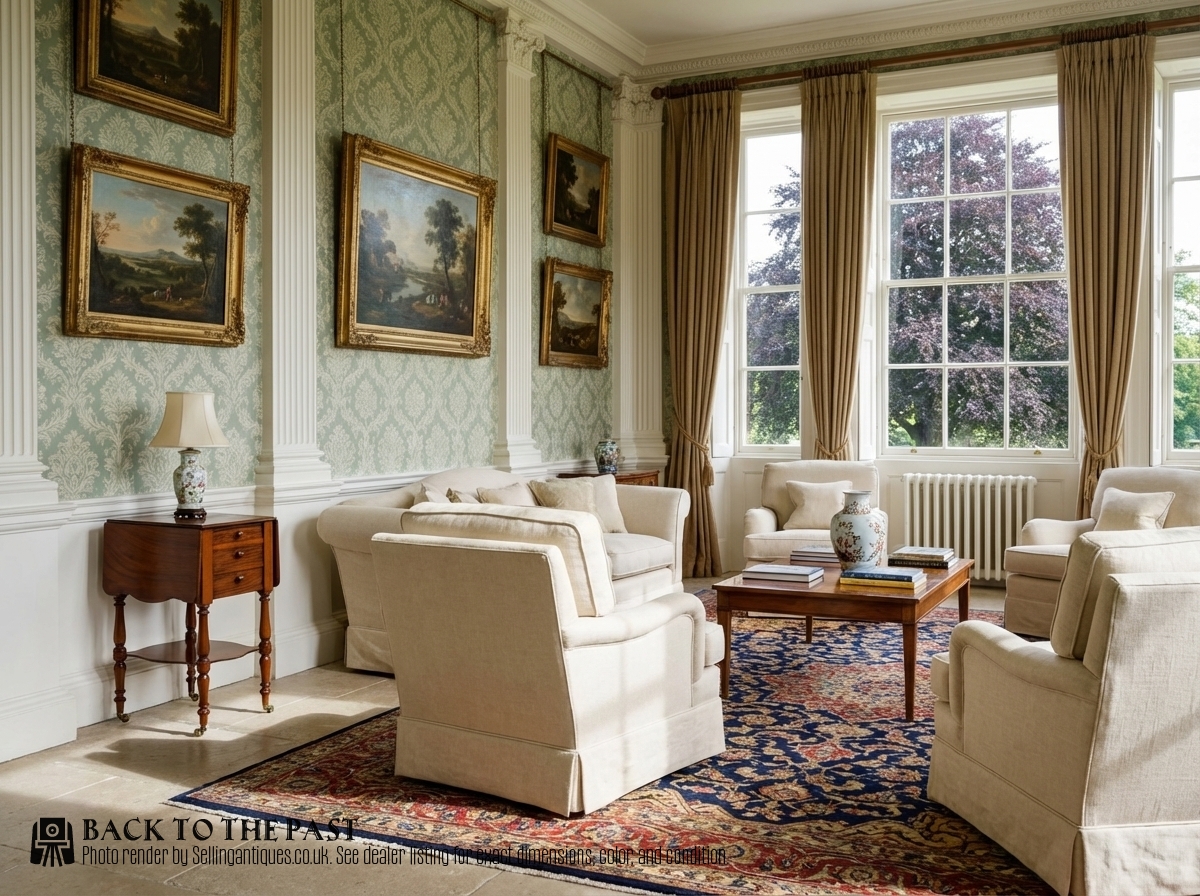
Victorian Occasional Table Castors
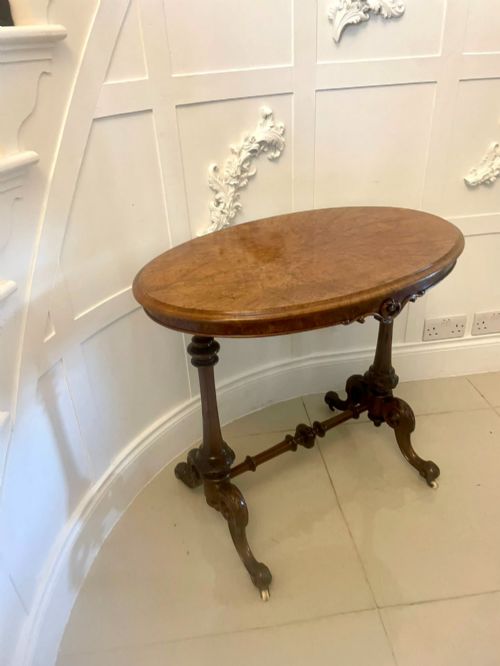
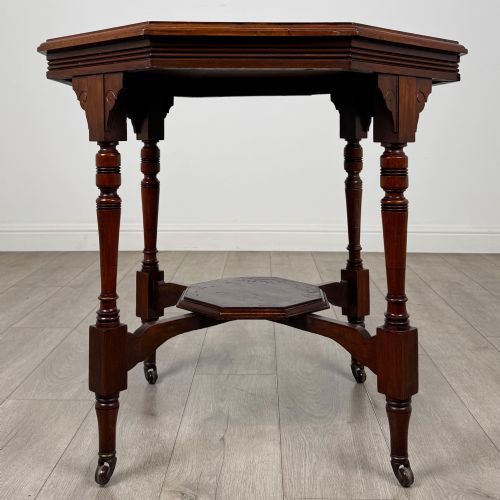
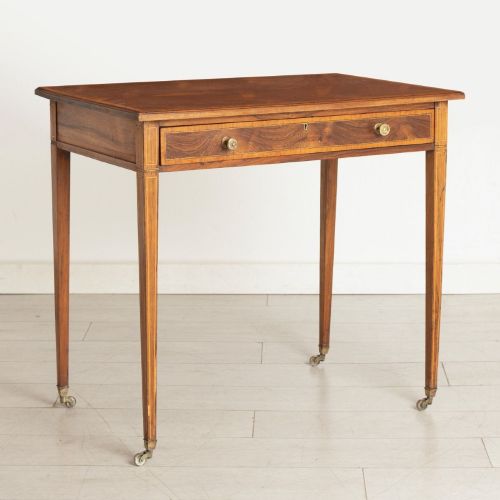
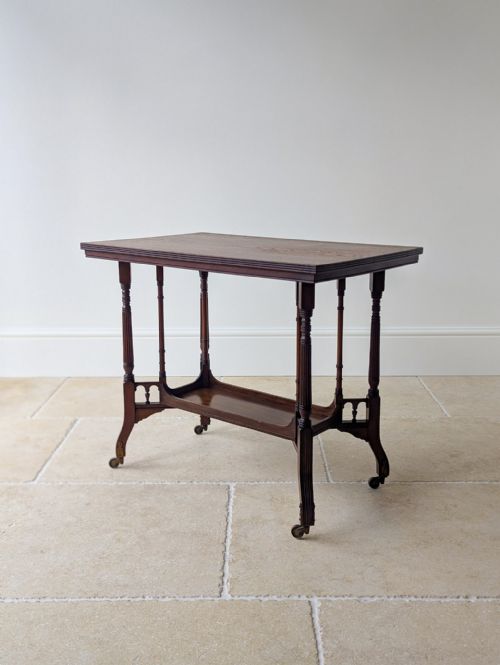
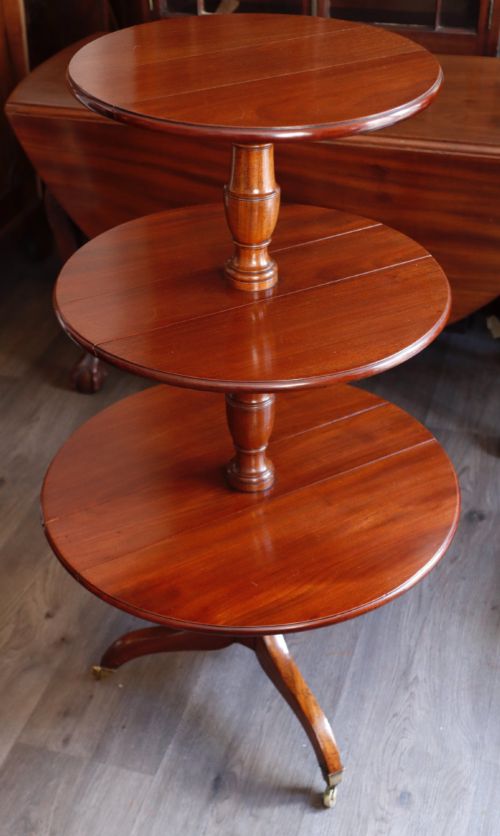
When you search for Victorian occasional table castors, you encounter functional nineteenth century furniture designed to move easily across carpets and floors. The pieces span centuries from Georgian precursors to Edwardian examples, appearing as side tables, work tables, and occasional forms.
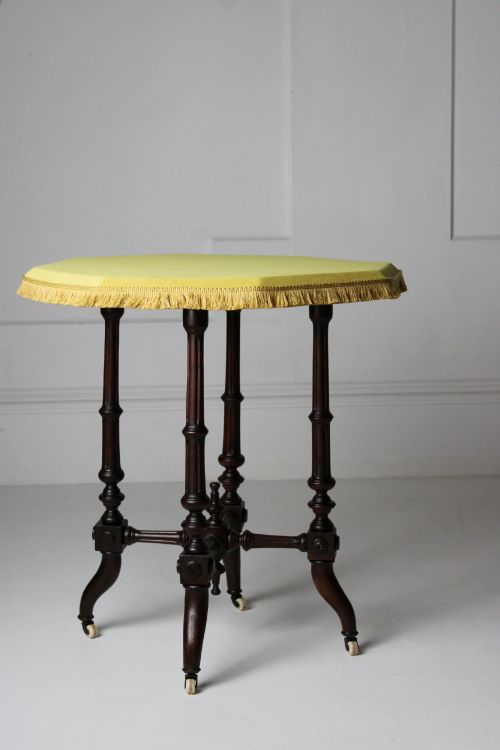
Mahogany and walnut predominate among these listings, alongside burr walnut, rosewood, and satin birch. Most examples stem from the Victorian period, frequently showing drop-leaf designs, Sutherland tables, or octagonal tops intended for flexible domestic use.
Materials and construction methods
Cabinet makers utilised dense hardwoods including mahogany, walnut, and rosewood for structural integrity. Selected examples incorporate intricate wood inlay, ebonised finishes, and satinwood veneers to create decorative surface patterns.
Drop-leaf mechanisms and folding actions require precise joinery to ensure stability when extended. Tables integrate ceramic, brass, or fabric components alongside the foundational timber frames.
Evaluating quality and execution
Superior examples demonstrate refined timber selection, such as figured burr walnut or carefully matched mahogany veneers. Master workshops applied meticulous attention to decorative inlay and structural proportions.
Simpler iterations rely on plain mahogany planks with minimal ornamentation. The integration of maker attributions or documented provenance elevates specific tables above standard production pieces.
Gregory & Co·Johnstone and Jeanes·Jenks & Woods·Gillows·Waring & Gillow·Holland & Sons
The Victorian Occasional Table Castors Glossary
- Castor
- A small wheel mounted on a swivel assembly attached to the legs of furniture to facilitate movement. These metal or ceramic fittings allow heavy timber tables to glide across carpets.
- Sutherland table
- A narrow drop-leaf table with exceptionally wide leaves and a slender fixed central section. When folded down, the table occupies minimal floor space.
- Pembroke table
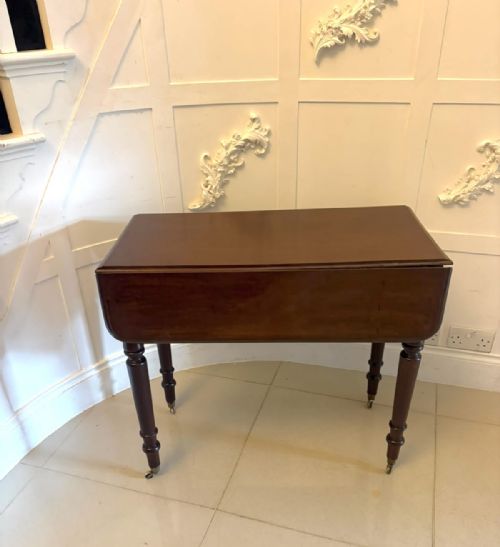
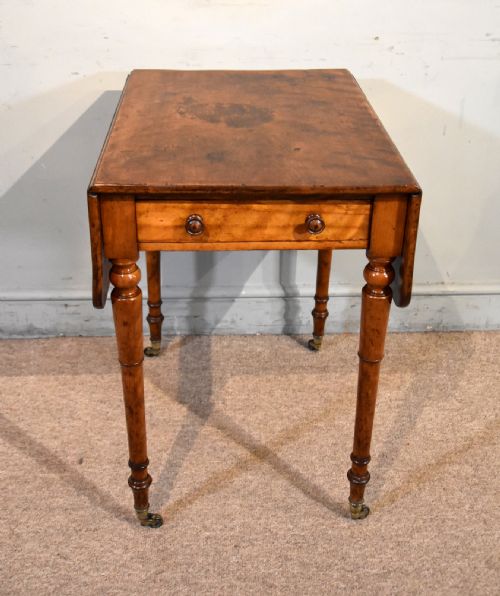
- A rectangular drop-leaf table featuring hinged flaps on two opposite sides. These versatile tables often incorporate one or two end drawers.
- Burr walnut
- A prized timber harvested from the gnarled growths of walnut trees, displaying swirling, highly decorative grain patterns. Cabinet makers utilised veneers of this wood on tabletops.
- Ebonised
- Timber treated with chemical stains or black finishes to imitate expensive ebony. This technique gained prominence during the Aesthetic Movement.
Victorian Occasional Table Castors: Frequently Asked Questions
What is a Sutherland table?
A Sutherland table is a narrow drop-leaf table with large folding flaps supported by swinging gate legs. This clever design allows the piece to be stored flat against a wall when not in use.
Victorian households valued these items for their versatility in parlours and drawing rooms where floor space changed depending on the occasion.
What woods were used in these tables?
Cabinet makers predominantly relied on mahogany and walnut for structural stability and rich natural colour. More decorative surfaces frequently displayed burr walnut veneers, rosewood, satin birch, or intricate wood inlay.
Ebonised finishes also appear, reflecting late nineteenth century aesthetic preferences.
How were occasional tables used?
Victorian occasional tables served multiple domestic functions including holding lamps, displaying decorative objects, or supporting sewing and writing materials. Their mobility enabled servants or family members to reposition them easily around a room.
Tables with castors were particularly useful for shifting furniture toward the hearth during colder months.