


Victorian Oak Tallboy Chest
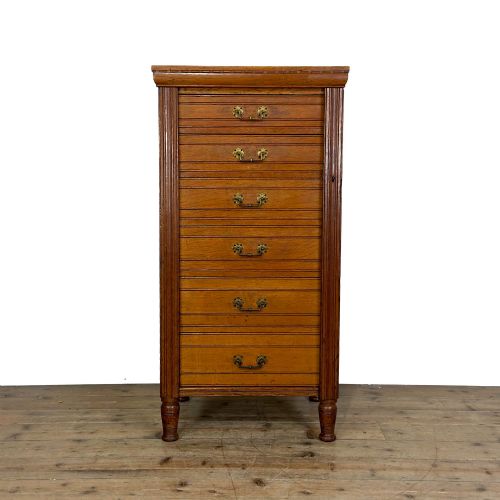
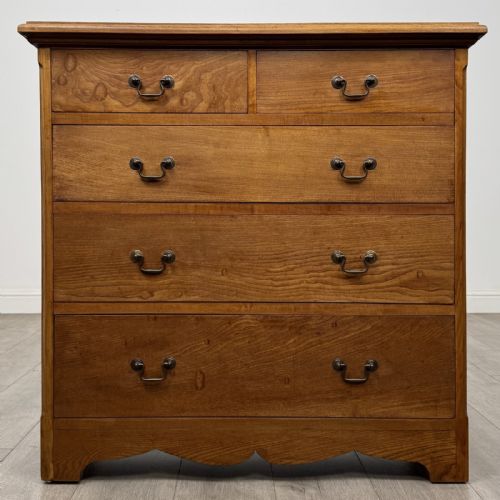
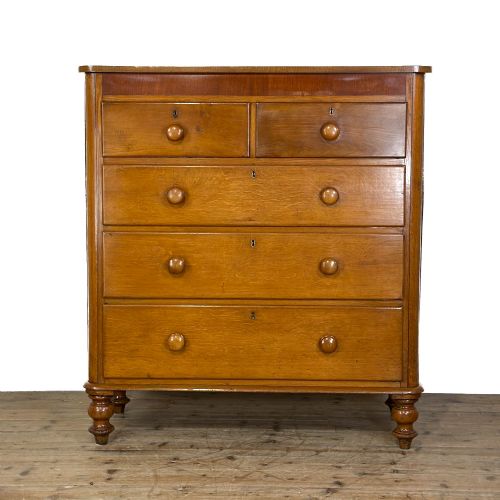
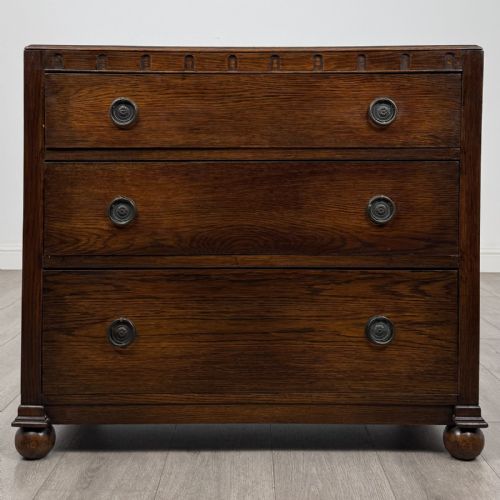
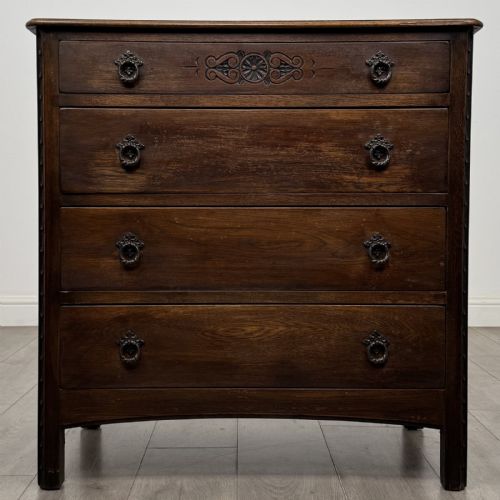
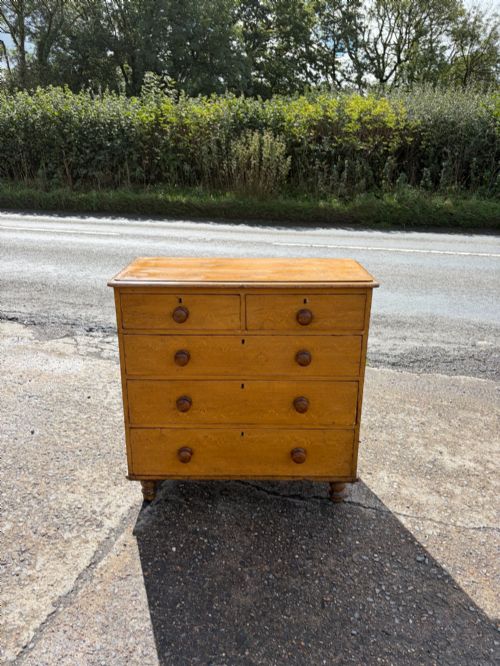
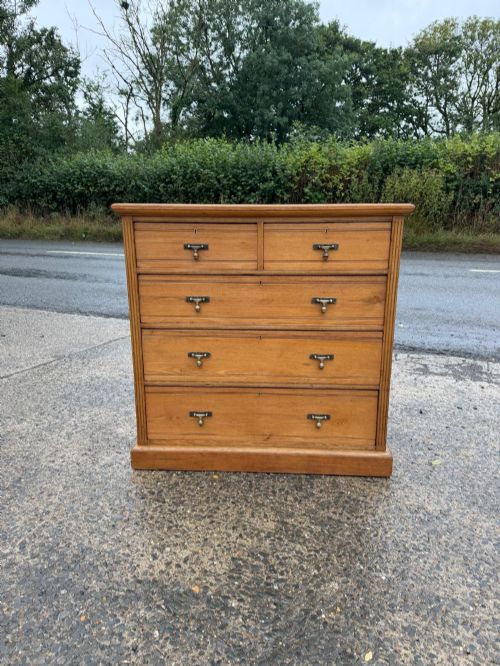
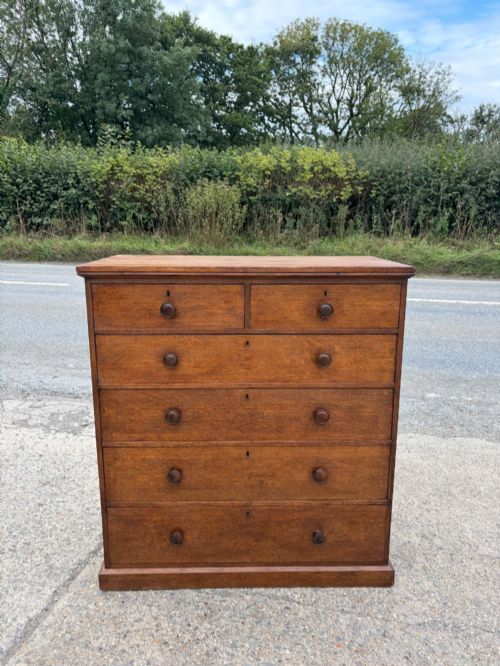
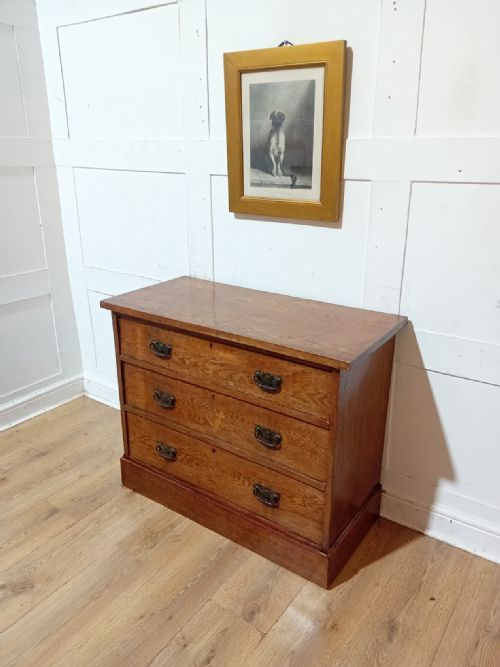
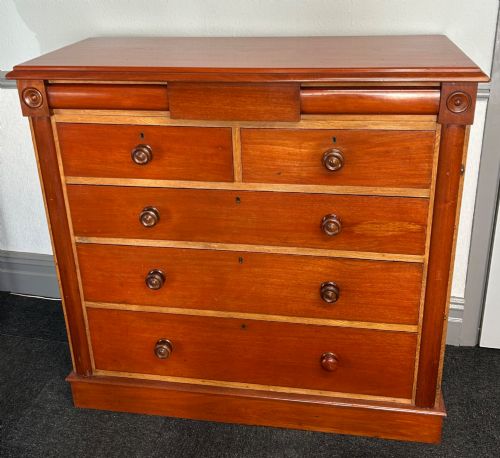
These pieces are a victorian oak tallboy chest, substantial storage furniture built from timber to hold clothes and valuables.
Victorian Oak Tallboy Chest
A victorian oak tallboy chest combines sturdy storage capacity with the distinct grain and figure of oak timber. Buyers search for these pieces to bring period character and deep drawer space into a bedroom or study.
The selections span the Victorian era, Edwardian period, and early twentieth century. Common formats include traditional two-over-three drawer layouts, Wellington chests, and campaign or military configurations.
Alongside standard drawer chests, the listings include dressing table variants, safe cabinets, and banker's chests. These diverse forms reflect the wide utility demanded of domestic storage furniture across the nineteenth and early twentieth centuries.
Materials and construction
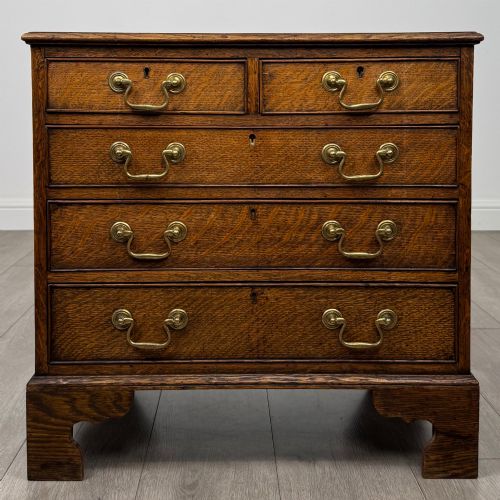
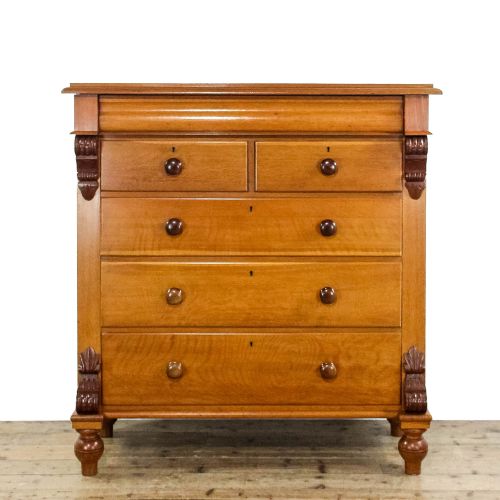
Makers utilised solid oak, often complemented by secondary woods like pine, alongside pollard oak for decorative veneer effects. Metal and brass feature heavily in hardware such as swing handles, drop handles, acorn handles, and locking mechanisms.
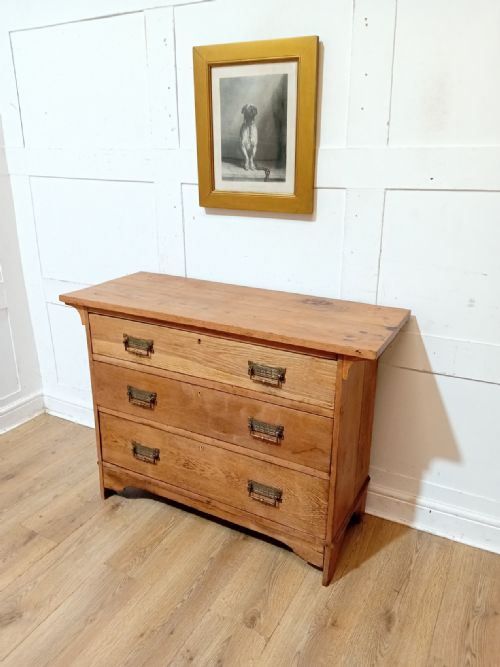
Construction methods rely on traditional joinery to build stable frames and durable drawer boxes. Surface treatments range from original graining on pine elements to polished and carved oak finishes.
Some chests hide secret locking pilasters and sporran compartments designed to keep midnight snacks safe from household staff.
Judging the standard
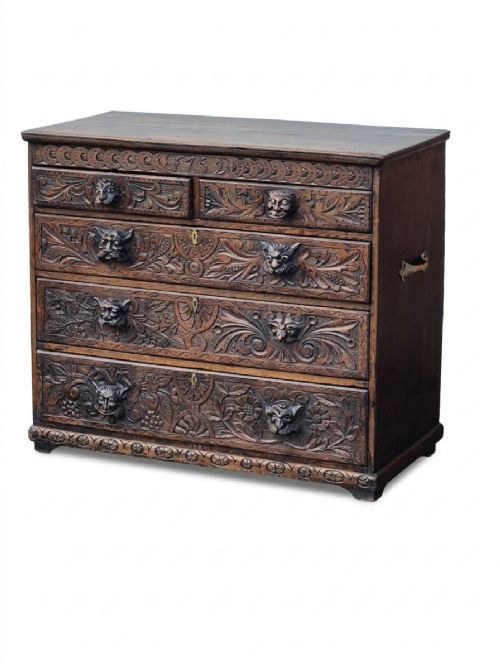
Quality separates through the crispness of carved details, such as Green Man grotesques or Gothic motifs, compared to simpler plain fronts. The choice of timber grain, particularly figured pollard oak or select light oak, elevates the visual presence of a piece.
The integrity of original hardware, including brass acorn handles and locking mechanisms on Wellington chests, marks the difference between an intact survivor and a heavily altered example.
Maple and Co
The Victorian Oak Tallboy Chest Glossary
- Tallboy
- A tall chest of drawers, often built as a single tall unit or in stacked sections to maximise vertical storage.
- Wellington chest
- A tall, slender chest featuring a locking side pilaster that secures all the drawers simultaneously.
- Campaign chest
- A modular chest designed for military transport, typically fitted with flush brass handles and corner brackets.
- Pollard oak
- Timber taken from pollarded trees, exhibiting a dense, highly figured knotty pattern used for decorative veneer.
- Bun feet
- Rounded, spherical feet that elevate the base of the chest off the floor.
Victorian Oak Tallboy Chest: Frequently Asked Questions
What is a victorian oak tallboy chest?
A victorian oak tallboy chest is a tall storage unit made primarily from oak timber during the nineteenth century. These pieces provide deep vertical drawer space for clothing and personal items.
They appear in various formats, including standard multi-drawer arrangements and side-locking Wellington designs. Each piece reflects the robust domestic joinery of the period.
How do I date a tallboy chest?
Dating relies on observing construction methods, timber choices, and stylistic cues such as Arts and Crafts carving or Victorian Gothic details. Reference points include stamped maker marks or associated hardware styles.
Hardware like brass acorn handles or campaign brasses helps narrow down the manufacturing decade. Comparing drawer linings and backboards offers further clues to the age.
Where should I place this chest?
These chests suit bedrooms, studies, or hallways where tall vertical storage is required without occupying excessive floor space. Their solid oak construction makes them durable enough for daily use.
Ensure placement avoids direct sunlight and severe temperature fluctuations to protect the timber and polish. Wellington chests require side clearance to operate the locking pilaster mechanism.
How do I maintain oak furniture?
Maintenance involves dusting with a dry, soft cloth and occasionally applying a suitable beeswax polish to nourish the timber. Avoid using synthetic sprays or placing the piece near heat sources.
Checking drawer runners periodically ensures smooth operation. Proper care preserves the original finish and grain pattern for years to come.