


Traditional Oak Clothes Chest
These traditional oak clothes chest examples offer robust storage and timeless grain, built from solid timber to last generations.
Traditional Oak Clothes Chest
A traditional oak clothes chest encompasses robust storage forms designed to hold garments and household textiles securely. These items emerge primarily from the Georgian, Victorian, and 19th Century periods, reflecting centuries of domestic utility.
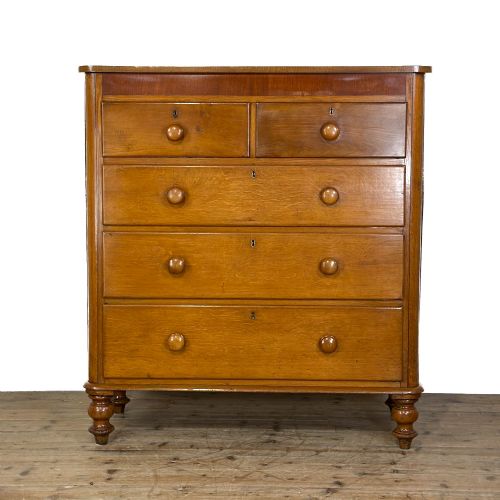
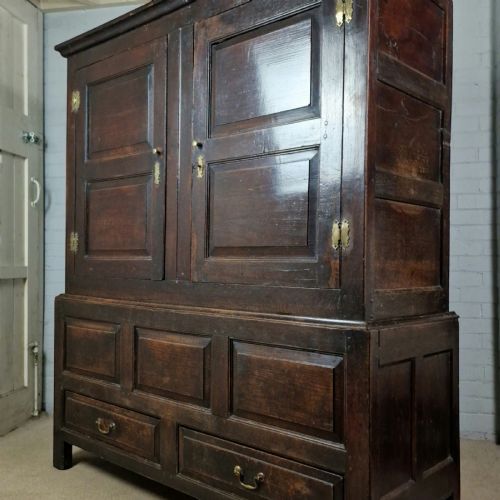
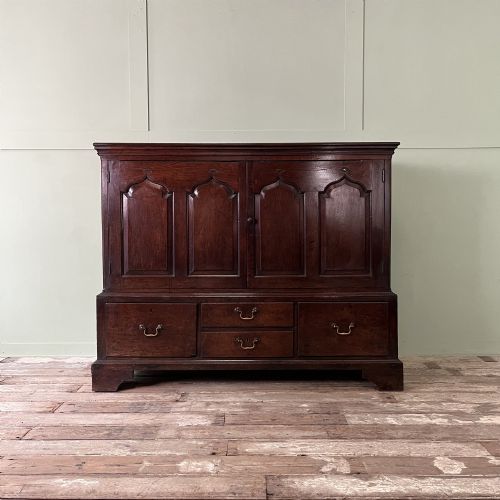
The inventory on this page consists heavily of linen presses, chest of drawers, livery cupboards, and press cupboards in various regional English and Welsh country styles. Buyers most frequently encounter sturdy 19th century oak linen press cupboards and early Georgian country examples.
Makers constructed these pieces using heavy timbers to withstand daily use in domestic settings. Each form presents a distinct profile, ranging from low linen press cupboards to tall hanging wardrobes and armoires.
How traditional oak clothes chest items were made
Cabinet makers relied on solid oak as the primary structural material, utilising its natural strength and distinct figuring. Iron and brass hardware, including hinges and handles, secured the heavy doors and drawers.
Craftsmen shaped these storage pieces using traditional joinery techniques suitable for dense hardwoods. Certain regional pieces incorporate porcelain elements for detailing, adding subtle contrast to the dark timber surfaces.
Early press cupboards were built so heavily that moving them required an entire village and a very patient horse.
What varies in quality across traditional oak clothes chest pieces
Quality separates through the selection of timber grain and the precision of the underlying joinery. Superior examples display carefully matched oak panels and well-balanced proportions that respect the natural heft of the material.
The sophistication of regional carving and the originality of brass or iron hardware influence the standing of each piece. Finer items retain consistent colour across the timber surfaces without disruptive repairs to the primary structure.
The Traditional Oak Clothes Chest Glossary
- Linen Press
- A large storage cabinet typically featuring upper doors enclosing sliding trays for textiles and lower drawers for bulkier garments. This form dominated domestic storage before fitted wardrobes became standard.
- Livery Cupboard
- An antique storage cabinet historically used for food or clothing provisions, characterised by sturdy wooden construction and panelled doors. These pieces often exhibit vernacular country detailing.
- Press Cupboard
- A deep wooden storage unit designed to compress and store linens or clothing items flat. They combine enclosed upper shelving or hanging space with lower drawer sections.
- Georgian Style
- Design characteristics spanning the reigns of the four Georges, noted for proportion, classical restraint, and robust timber construction. Country interpretations utilise local oak with simpler vernacular carving.
Traditional Oak Clothes Chest: Frequently Asked Questions
How do I date an oak linen press?
Dating an oak linen press involves examining the construction techniques, hardware, and stylistic details present in the piece. Early Georgian examples often feature hand-planed panels and simpler interior layouts.
Later Victorian versions may display machine-sawn elements and different brass or iron fittings. Comparing the wood patina and joinery helps determine the approximate period of manufacture.
Where were these oak cupboards made?
These storage pieces originate from various English and Welsh workshops, reflecting local cabinet-making traditions. Regional variations appear in the specific proportion, moulding profiles, and regional timber selection.
English country and Welsh country styles demonstrate distinct vernacular approaches to working with heavy oak. Such provenance influences the visual character of each individual cupboard.
How should I care for antique oak?
Caring for antique oak involves maintaining stable humidity levels and avoiding direct sunlight to protect the timber. Regular dusting with a soft, dry cloth preserves the natural finish without introducing harsh chemicals.
Applying traditional beeswax occasionally helps nourish the dry oak surfaces. This maintenance routine keeps the wood grain rich and prevents the timber from splitting.