




Victorian Oak Storage Seat
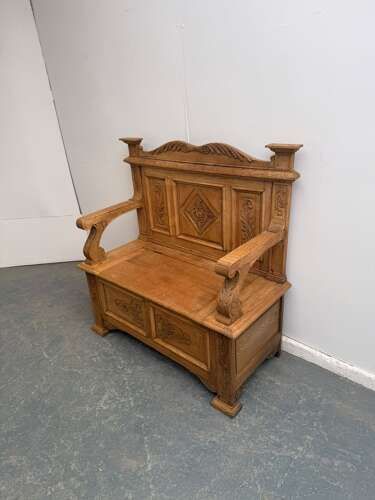
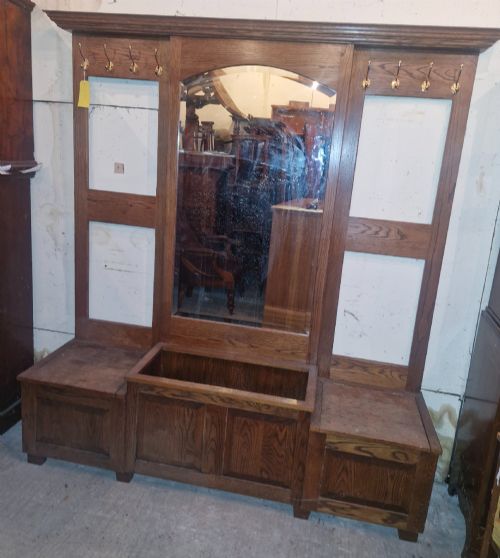
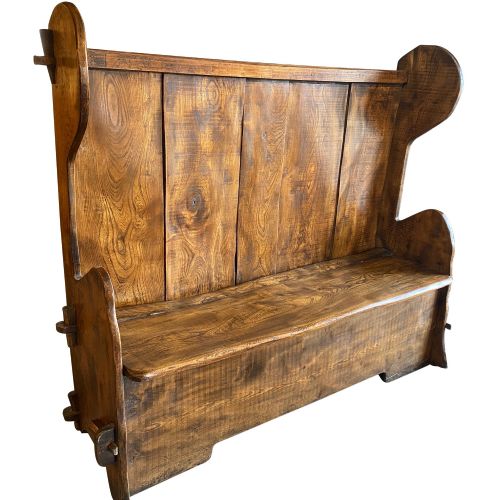
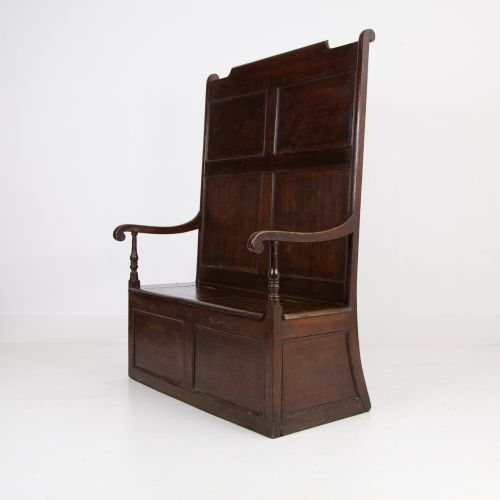
These Victorian oak storage seats bring solid timber, deep carving and practical compartment space straight into a hallway or reception room.
Victorian Oak Storage Seat
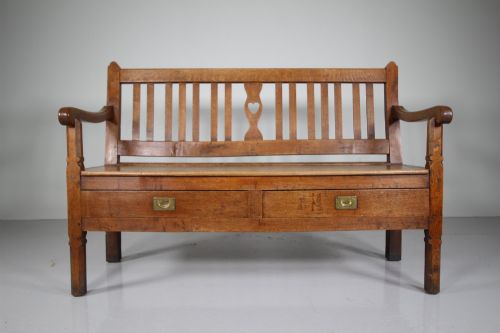
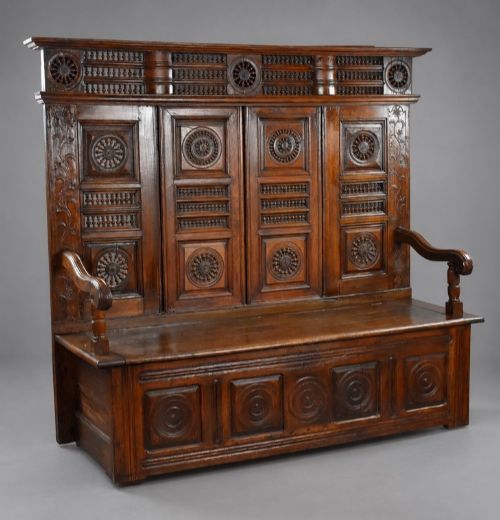
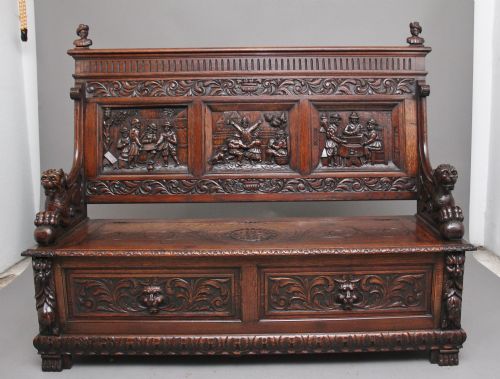
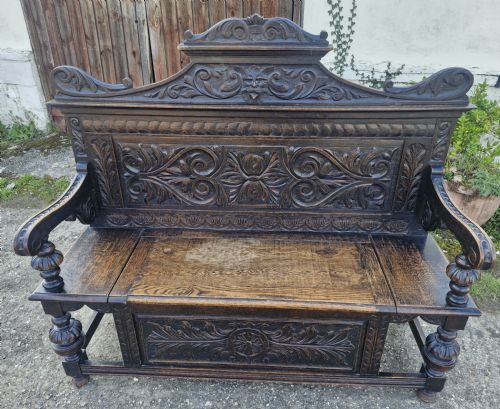
A victorian oak storage seat combines a heavy timber bench with a concealed box compartment beneath the lid, serving multiple domestic functions in one piece of furniture. These items appear as hall benches, settles, monk's benches and box settles spanning the nineteenth century.
Makers shaped these forms for the entrance hall, where they provided seating alongside storage for boots, coats and blankets. Regional interpretations range from plain rustic farmhouse styles to heavily carved revival designs.
The evidence records examples built across the nineteenth century, utilising solid oak timbers alongside variations in walnut, elm and iron hardware. Most feature lift-up seats or hinged lids accessing the storage well below.
Materials and construction
Cabinet makers relied primarily on solid oak, selected for durability and finished with wax or polish to highlight the natural grain. Secondary timbers such as elm appear in regional box settles, while brass and iron provide structural hinges and storage fittings.
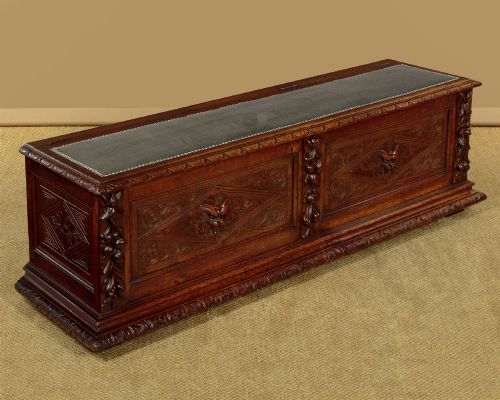
Carving defines the decorative surface of these pieces, utilising techniques of relief work to render panels, high backs and armrests. Stylistic influences include Gothic Revival, Renaissance Revival and Jacobean motifs executed directly into the timber.
Listings combine oak with walnut, elm, brass and iron across periods spanning the nineteenth and early twentieth centuries.
Design and execution
Quality rests upon the depth and crispness of the hand carving across the panels, backrests and arm supports. Pieces featuring figural elements such as Green Man masks display more ambitious workshop execution than plain or lightly moulded equivalents.
Proportion and scale separate standard hall seating from grander architectural pieces designed for large reception spaces. The weight of the timber and the integration of the lift-up mechanism indicate the original ambition of the maker.
Hampton & Son's
The Victorian Oak Storage Seat Glossary
- Settle
- A wooden bench with a high back, solid arms and a box base designed for storage. It typically stood near a doorway to block draughts.
- Monk's bench
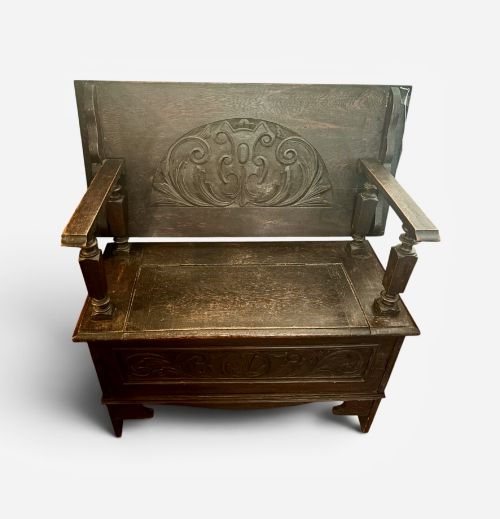
- A convertible seat featuring a hinged back that folds down to form a table top over the storage base. This form saw wide production during the Victorian period.
- Green Man
- A sculptural motif depicting a human face carved with leaves, vines or branches sprouting from the mouth. It appears frequently on Victorian carved oak furniture.
- Panelled
- Construction method utilising fitted wooden frames and recessed floating panels to accommodate seasonal wood movement. This technique prevents the timber from splitting.
- Revival
- A nineteenth-century design movement drawing inspiration from earlier historical periods such as the Gothic and Renaissance eras. Makers adapted these older motifs for Victorian domestic interiors.
Victorian Oak Storage Seat: Frequently Asked Questions
Where did people place these seats?
These pieces traditionally occupied entrance halls and reception areas where guests arrived. They served as a practical spot to sit while removing outerwear.
The enclosed compartment underneath held boots, umbrellas and household textiles out of sight. Their sturdy build suited heavy daily traffic near the front door.
What is a monk's bench?
A monk's bench is a dual-purpose item featuring a hinged backrest that rotates or folds forward. This mechanism transforms the tall seat into a flat table surface.
The box base beneath remains stationary to provide concealed storage regardless of the back position. Victorian makers produced these pieces in various sizes for smaller rooms.
How can I date a piece?
Dating relies upon stylistic markers, construction methods and timber characteristics recorded across the nineteenth century. Pieces often incorporate revival motifs from Gothic, Jacobean or Renaissance traditions.
Hinges, fixings and the type of wax or polish applied to the oak also offer clues to the era of production. Many items carry specific decade attributions based on these design details.
Are all these seats made of oak?
Oak forms the primary material across the vast majority of listings, valued for its strength and rich grain. Selected examples utilise alternative timbers such as walnut or elm.
Hardware components introduce brass and iron for structural hinges and lifting mechanisms. Fabric elements occasionally appear on specialised stool variants.