
Antique Oak Monk Seat
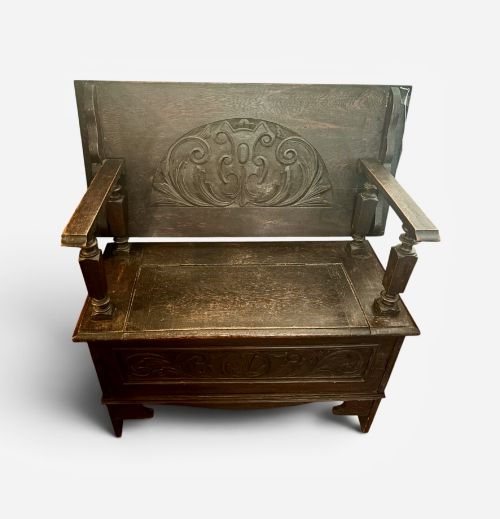
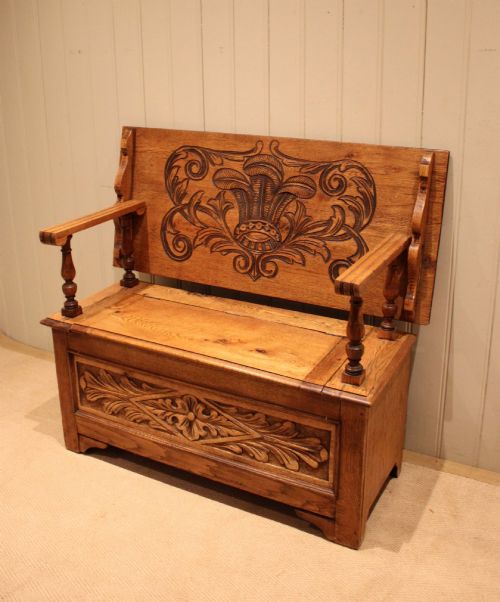
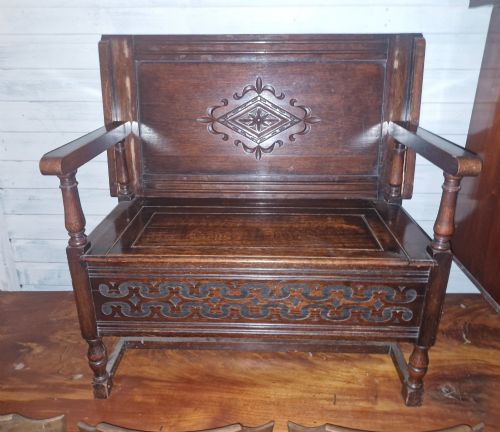
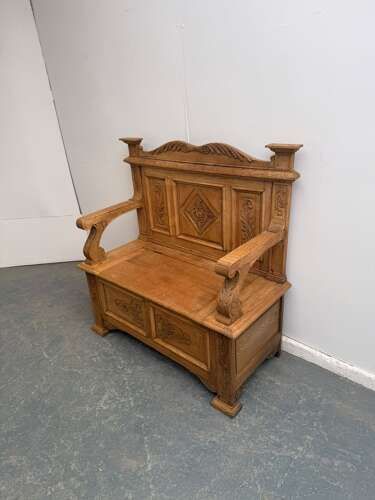
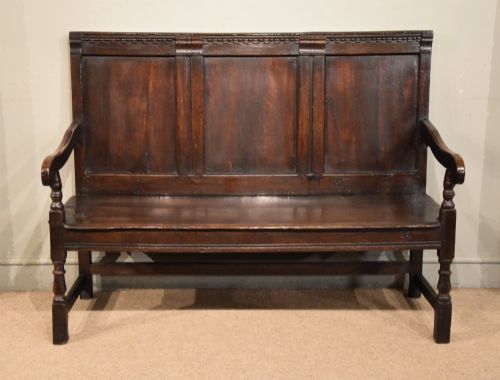
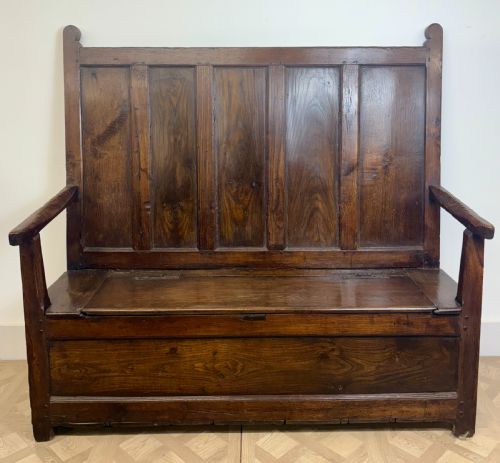
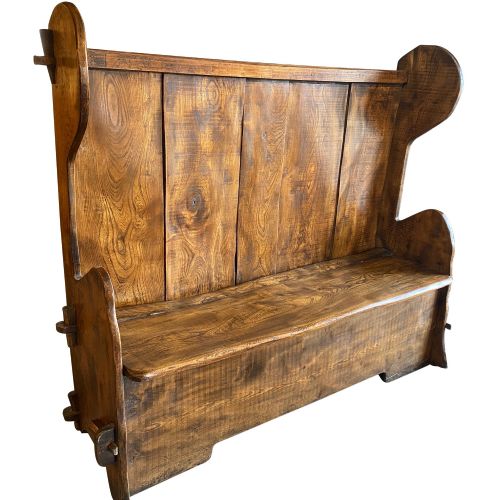
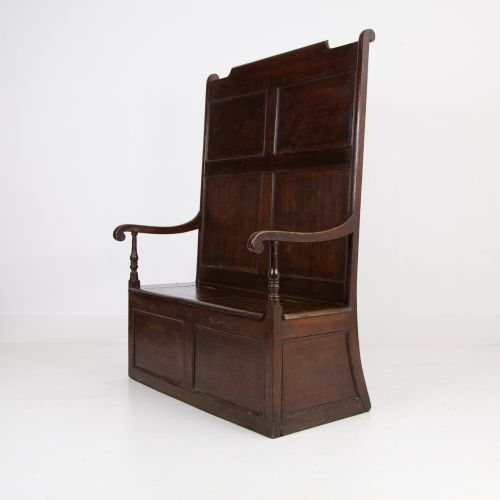
An antique oak monk seat offers clever multi-functional design with a folding top that transforms a hallway bench into a table.
Antique Oak Monk Seat
The search for an antique oak monk seat leads buyers to versatile multi-functional furniture designed to serve as both a seating bench and a table. These pieces frequently overlap with hall seats, settles, and box settles spanning from the seventeenth century through the twentieth century.
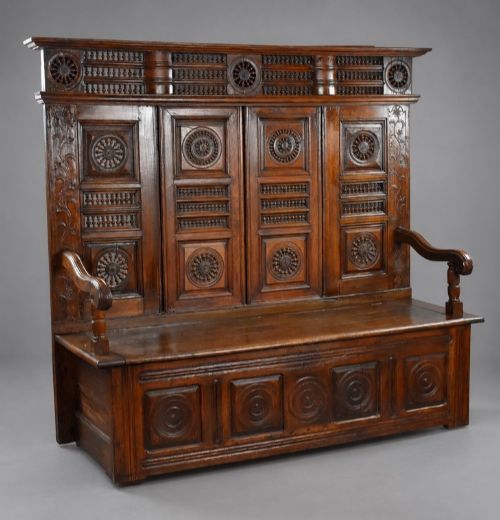
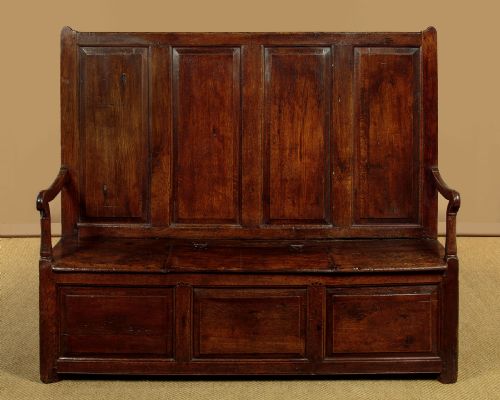
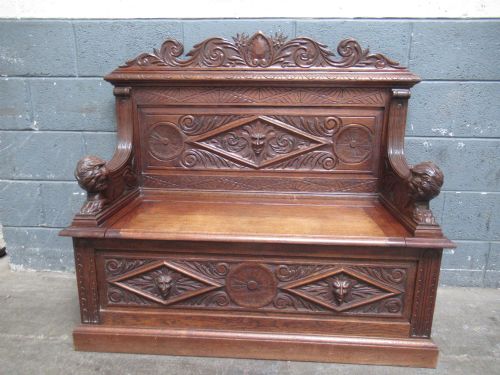
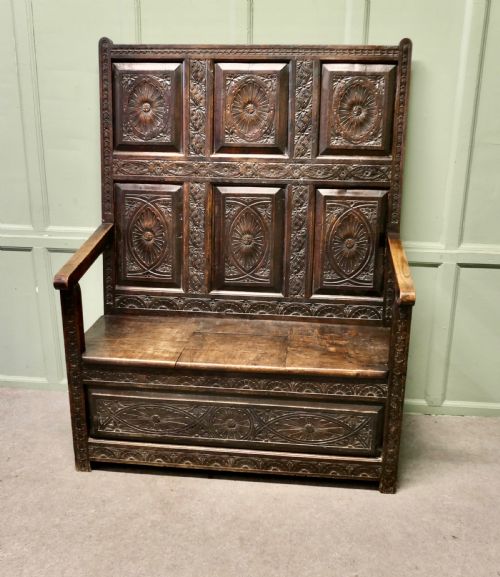
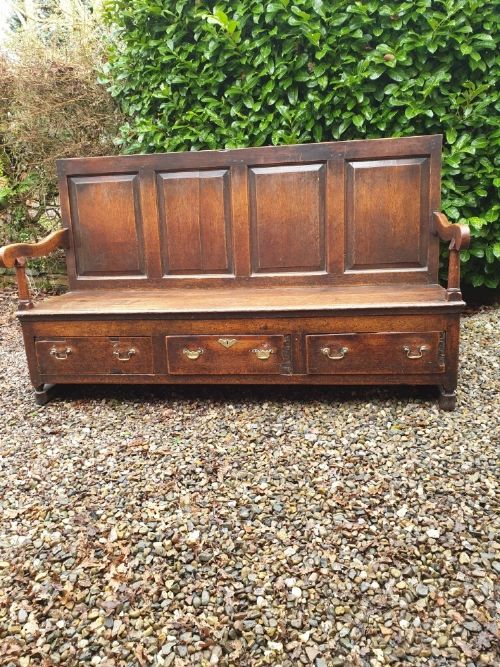
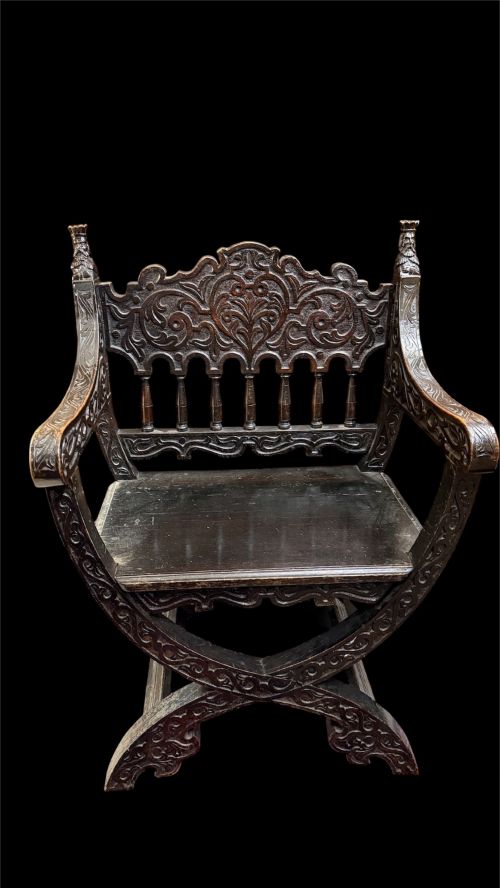
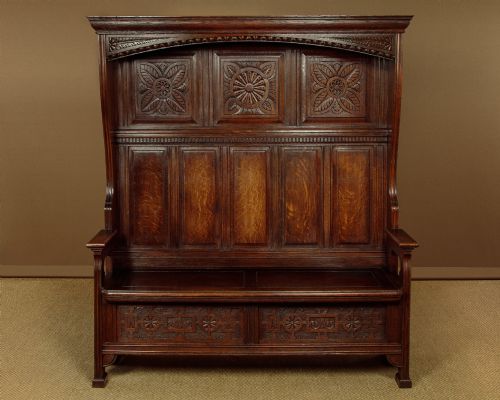
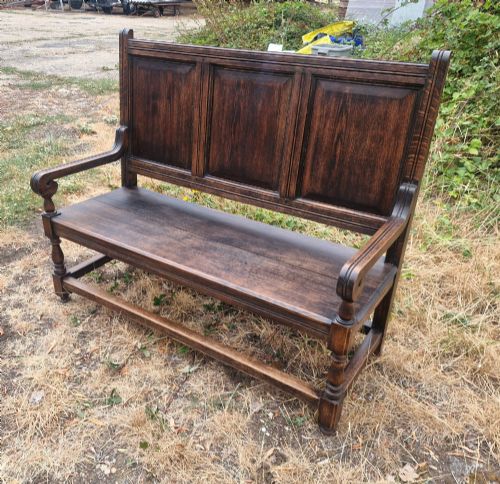
Early country pieces often feature plain panelled backs and storage boxes beneath the seat, whilst Victorian and later revival examples display heavy carving, Green Man motifs, and folding backrests that convert the item into a table top.
Buyers encounter regional variations ranging from Welsh and Scottish country house designs to English Gothic and Renaissance revival forms, all constructed primarily from sturdy native timbers.
Materials and construction methods
Makers relied primarily on solid oak supplemented by secondary timbers such as ash, elm, and deal for internal box structures. Panels were traditionally joined using pegged mortise and tenon construction to accommodate natural wood movement over centuries.
Surface decoration involved hand carving, linenfold panelling, and panel moulding, finished with traditional waxes rather than modern synthetic varnishes. Iron and brass hinges, brackets, and catches reinforced the pivoting mechanisms of the folding tabletops and lift-up seat compartments.
Listings feature oak alongside elm and ash, spanning seventeenth-century country pieces to twentieth-century Arts and Crafts revival examples.
Assessing quality and craftsmanship
Quality rests upon the integrity of the timber selection and the original state of the pivoting mechanism used for the convertible top. Pieces retaining their original hinges, uncompromised storage boxes, and genuine period patination command greater appreciation than later adaptations.
The depth and crispness of the hand carving distinguish finer workshop output from more utilitarian country furniture. Proportions also matter, as smaller or more balanced pieces demonstrate greater design success than awkward, heavy-handed proportions.
Liberty·Shapland and Petter
The Antique Oak Monk Seat Glossary
- Box settle
- A high-backed wooden bench featuring a compartment with a lift-up seat used for storage. This form kept draughts away from the sitter in older homes.
- Green Man
- A sculptural architectural ornament depicting a human face emerging from or entwined with foliage. It symbolises rebirth and appears frequently on carved Victorian revival examples.
- Jacobean Revival
- A nineteenth-century style mimicking seventeenth-century English design. It uses dark oak, geometric moulding, and strapwork carving.
- Panel back
- A wooden bench back constructed from inset timber panels held within a frame. This technique provided strength and allowed for decorative carving.
- Settle
- A wooden bench with a high back, solid arms, and enclosed base designed to block cold air. It serves as a precursor to modern sofas.
Antique Oak Monk Seat: Frequently Asked Questions
How do monk seats turn into tables?
The upper backrest pivots on wooden pegs or iron hinges, swinging forward and downward to rest across the arms.
This clever mechanical action transforms the upright seat into a flat surface suitable for dining or writing.
Where were monk seats used originally?
These pieces sat primarily in entrance halls, farmhouses, and reception rooms where space-saving furniture proved essential.
The enclosed base also provided secure storage for household blankets, boots, or dry goods.
How do I date an oak monk seat?
Dating relies on examining the construction marks, timber shrinkage, hinge types, and stylistic carving details. Seventeenth and eighteenth-century examples display hand-cut joinery and pegged frames, whilst Victorian pieces often show heavier machine assistance and revival ornamentation.
Comparing the patination and wear patterns across the seat and arms further helps confirm the true age of the timber.
Are all monk seats genuinely old?
Many nineteenth-century revival pieces mimic earlier seventeenth or eighteenth-century styles quite closely. Makers during the Victorian era and Arts and Crafts movement enthusiastically reproduced these designs using antique panels or entirely new timber.
Careful inspection of tool marks and joint construction helps determine whether a piece dates to the period it imitates.