


Carved Monks Bench Table
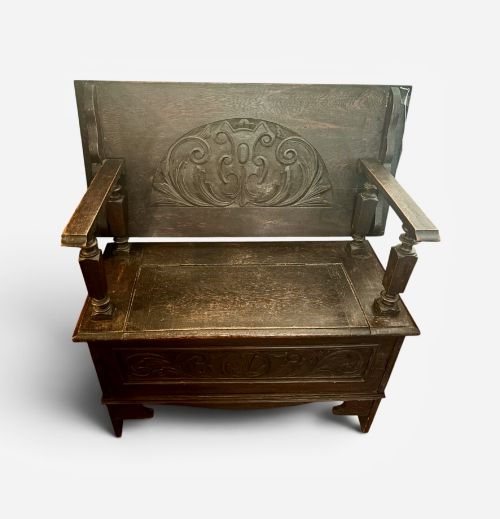
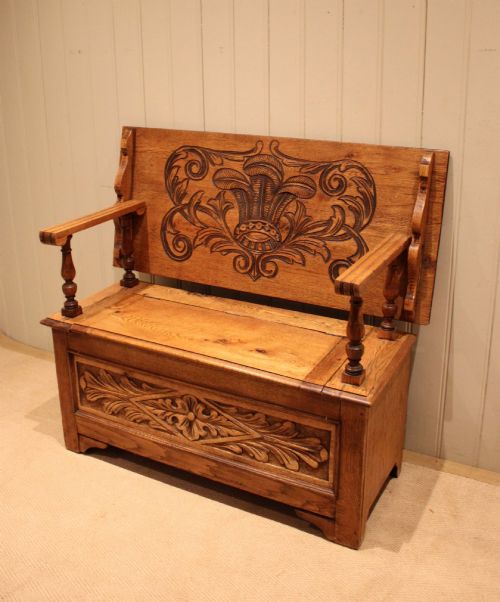
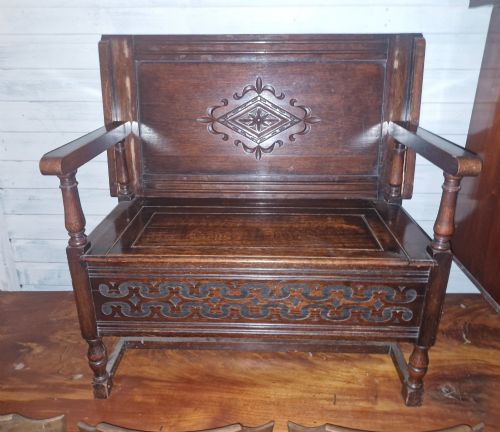
A carved monks bench table combines a sturdy seat with a pivoting back that folds down into a table.
Carved Monks Bench Table
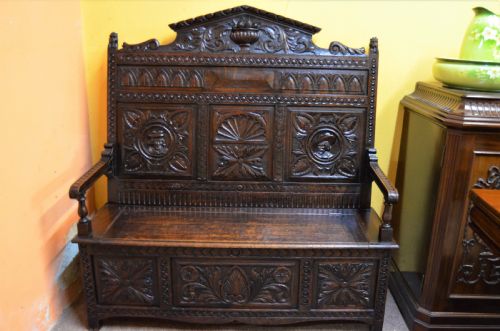
A carved monks bench table is a multifunctional seating item that transforms into a flat surface when the backrest is pivoted forward. You will encounter various forms on this page, including hall seats, settles, and armchairs.
The pieces span several periods ranging from the seventeenth century through to the Art Deco and Art Nouveau eras, though Victorian and early twentieth-century revival examples are most common. These items serve as practical hall furniture that saves space in domestic interiors.
Materials and construction
Solid oak provides the primary structural material across nearly all examples, frequently finished in dark or golden tones. Joinery relies on traditional wooden framing and panelled construction to support the heavy dual-purpose top.
Oak is the dominant material across all listings, spanning centuries of revival styles from Jacobean through to Art Deco.
Assessing craftsmanship and depth
The standard of carving distinguishes standard production from finer work, with crisp, deep relief panels indicating superior hand execution. Proportion and timber selection also play a role, as dense golden or dark oak with consistent grain creates a more unified appearance.
The integrity of the pivoting mechanism dictates mechanical success, ensuring the top rests flat and stable when converted. Drawer integration and clever storage compartments beneath the lift-up seat add further complexity.
The Carved Monks Bench Table Glossary
- Monks bench
- A dual-purpose wooden seat with a backrest that folds flat to form a table top. This historic form provides practical versatility for smaller rooms.
- Settle
- A wooden bench with high backs, solid arms, and often an enclosed base. They offer shelter from draughts in entrance halls.
- Hall seat
- A compact piece of furniture positioned in an entryway for resting while removing footwear. They frequently incorporate lift-up lids revealing storage space.
- Art Nouveau
- A design movement characterised by flowing, organic lines and stylised natural motifs. Pieces from this era soften traditional straight-lined furniture forms.
Carved Monks Bench Table: Frequently Asked Questions
How does a monks bench turn into a table?
The upper backrest pivots forward on wooden pegs or iron pins set into the arms. When rotated completely, the flat rear surface rests horizontally across the armrests.
This clever dual-purpose design allows the seat to transform into a functional table top within seconds.
Where should I place a monks bench?
These pieces traditionally sit in hallways or entrance passages where space remains at a premium. The built-in storage beneath the seat provides a convenient spot for everyday items.
They also function well in living spaces as occasional coffee tables with integrated seating.
How do I identify seventeenth-century pieces?
True seventeenth-century examples display distinct hand-cut joinery marks, peg construction, and heavy patination developed over centuries. They typically feature simple panelled oak without the machine-tooled crispness found in later revivals.
Most items you encounter date from the Victorian era onward, constructed in a deliberate historical style.
Are these benches comfortable for sitting?
The rigid wooden seats and upright backs are designed for brief periods of rest in a hallway. Some variants include upholstered pads or fabric elements to soften the seat.
Their primary appeal lies in sculptural presence and multifunctionality rather than deep lounging comfort.