
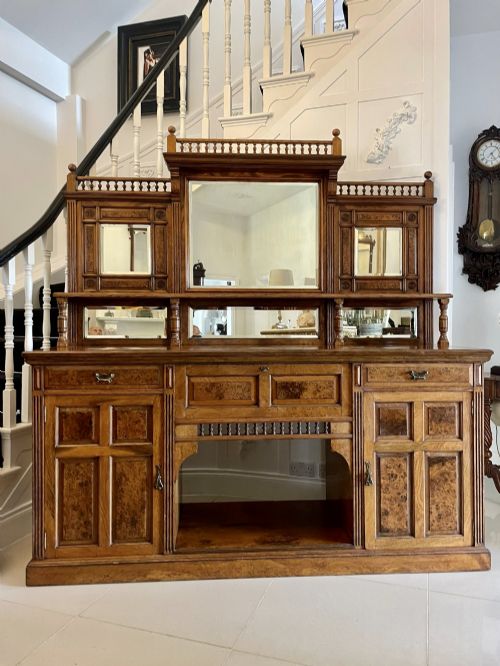
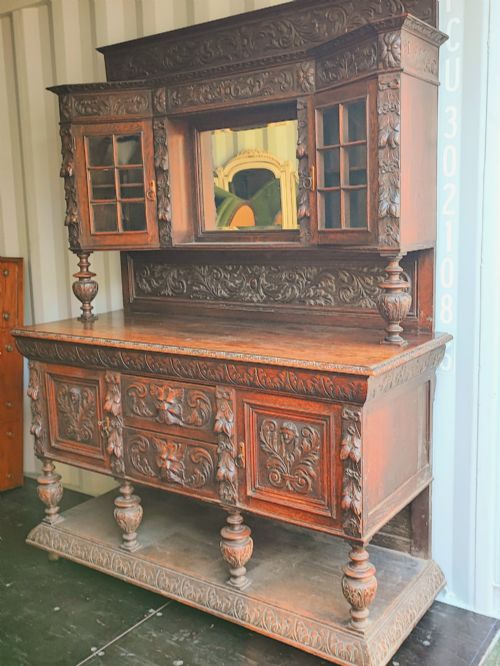

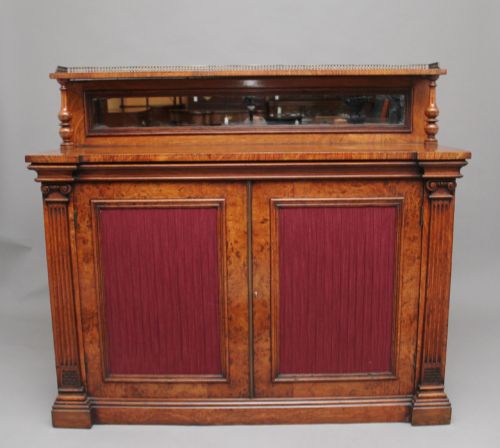


Victorian Oak Sideboard Mirror
A victorian oak sideboard mirror brings heavy timber, fitted glass, and formal presence straight into a dining room or hall.
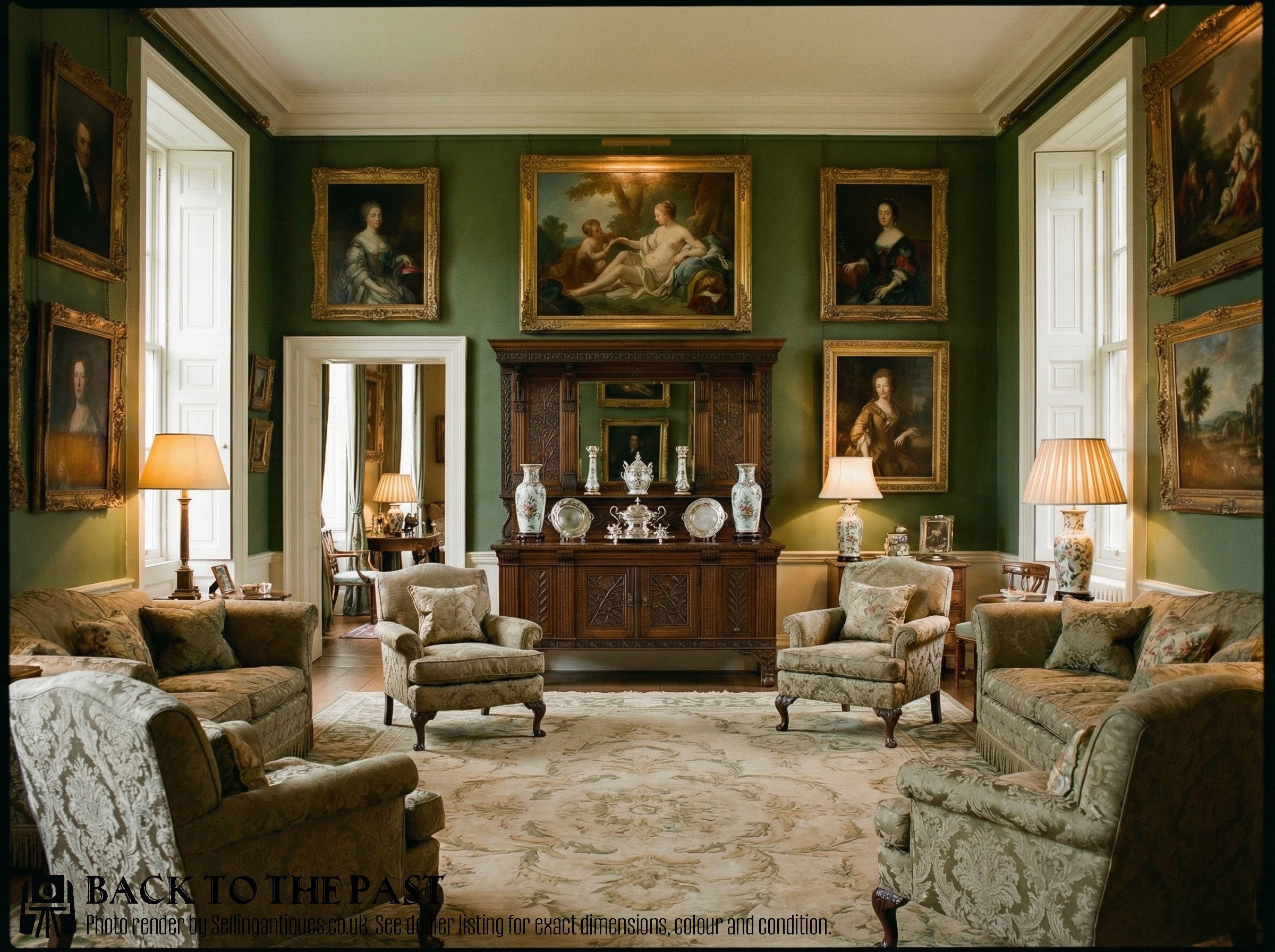
Victorian Oak Sideboard Mirror
A victorian oak sideboard mirror combines a substantial wooden base cabinet with an upright superstructure holding an integrated looking glass. These items emerge predominantly from the nineteenth century, often appearing in forms styled along Gothic Revival, Renaissance Revival, Arts and Crafts, and Aesthetic Movement lines.
The most common format met here is the mirror-backed sideboard, where carved timber supports an architectural glass frame above a series of cupboards and drawers. Pieces range from grand pedestals down to compact side cabinets, utilising pollard oak and standard oak timber throughout the construction.
Materials and Construction
Makers construct these carcases primarily from solid oak and figured pollard oak, sometimes incorporating pine for secondary framing and brass for handle hardware. Glass panels form the tall mirror backs, while occasional examples integrate fabric details or inlaid specimen woods into the panels.
Joinery relies on heavy carved ornamentation, geometric panels, and figural motifs such as the Green Man. Carvers cut deep relief into the timber doors and cornices, securing the upper mirror frame to the lower sideboard base with structural backing supports.
Several heavy oak sideboards still hide stray nineteenth-century breadcrumbs deep within their cutlery drawers.
Determining Quality
The distinction between standard items and top-tier examples lies in the selection of timber and the depth of the carving. Pollard oak surfaces with intense natural figuring command higher regard than plain timber, as do pieces carrying documented maker attributions.
Construction heft and proportion also set pieces apart, with grander proportions, integrated brass hardware, and intricate Gothic or Renaissance detailing separating exceptional items from basic utility cabinets.
Garnett and Sons·T Simpson and Son
The Victorian Oak Sideboard Mirror Glossary
- Pollard Oak
- Timber taken from trees that have been pollarded, producing tightly clustered, decorative grain patterns. This figured wood appears on high-status Victorian cabinet doors and drawer fronts.
- Mirror Back
- An upright wooden frame containing a large glass plate attached to the rear of a sideboard. This component reflects light and tableware into the room.
- Gothic Revival
- A design style drawing on medieval architectural motifs such as pointed arches, tracery, and heavy mouldings. These elements frequently decorate nineteenth-century oak furniture.
- Sideboard
- A large dining room cabinet designed for storing cutlery, linen, and serving dishes. The Victorian variant combines this storage function with display shelving and a mirror.
Victorian Oak Sideboard Mirror: Frequently Asked Questions
How are these sideboards cleaned safely?
Maintenance requires dry dusting the carved oak surfaces and applying traditional beeswax to nourish the timber grain.
Glass cleaner applied to a cloth rather than sprayed directly avoids damaging the surrounding wooden frame.
Can the mirror back be detached?
Most mirror backs bolt securely into the lower sideboard carcase from the rear to support the heavy glass plate safely.
Unscrewing these fixings allows easier transport, though the mirror glass itself remains fixed inside its wooden frame.
What rooms suit these large cabinets?
Dining rooms and wide entrance halls provide the correct proportions and wall clearance for these tall timber pieces.
The deep footprint requires a solid floor surface and adequate ceiling height to accommodate the mirror superstructure.
How do I spot an Arts and Crafts influence?
Arts and Crafts pieces show restrained carved decoration, strap hinges, and exposed tenon joints rather than heavy Victorian revival styling.
The timber often appears plainer, relying on the natural grain of the oak rather than elaborate mouldings.