
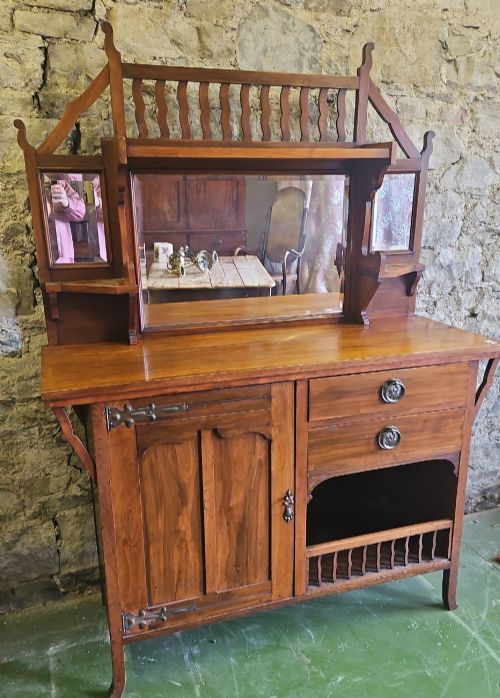
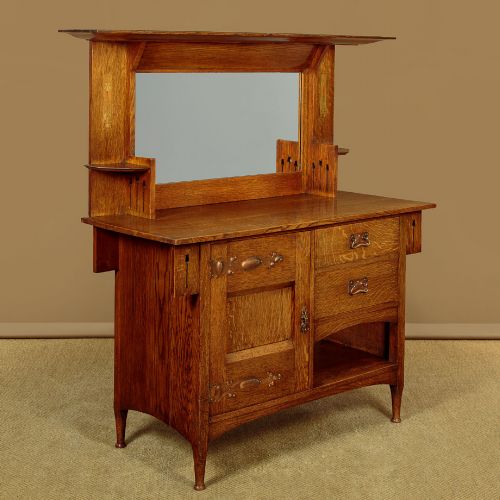


Oak Arts Crafts Buffet
An oak arts crafts buffet brings honest timber and utility together, offering serious storage built to last generations.
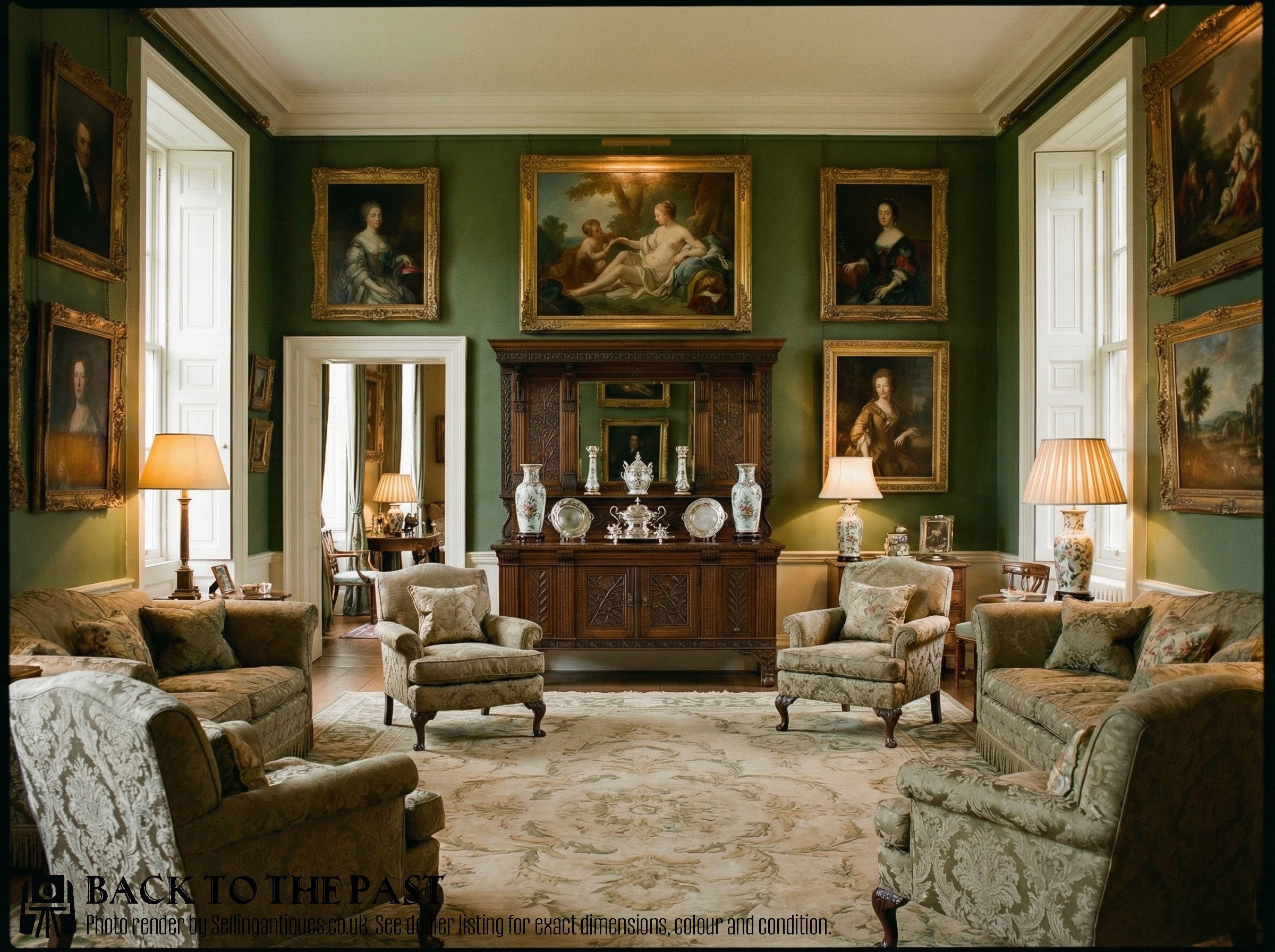
Oak Arts Crafts Buffet
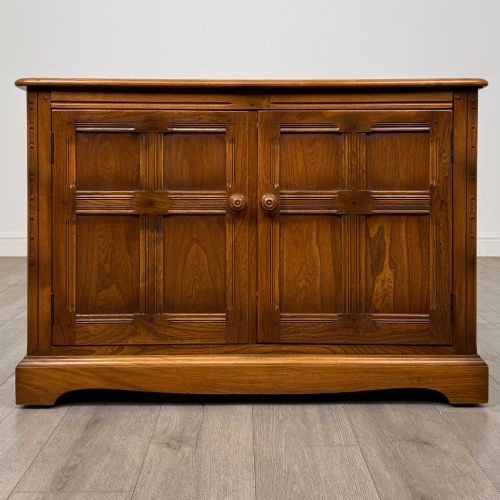
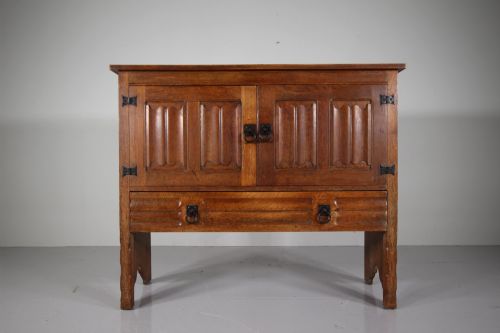
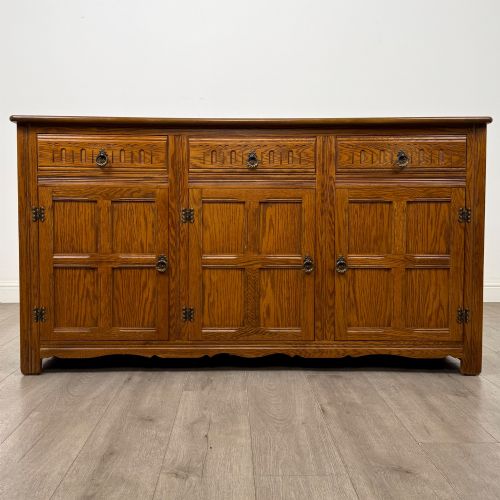
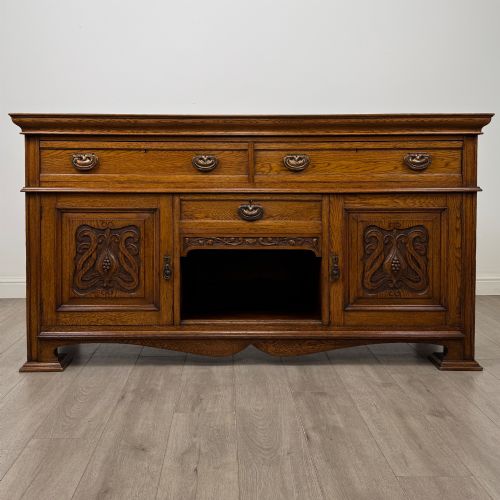
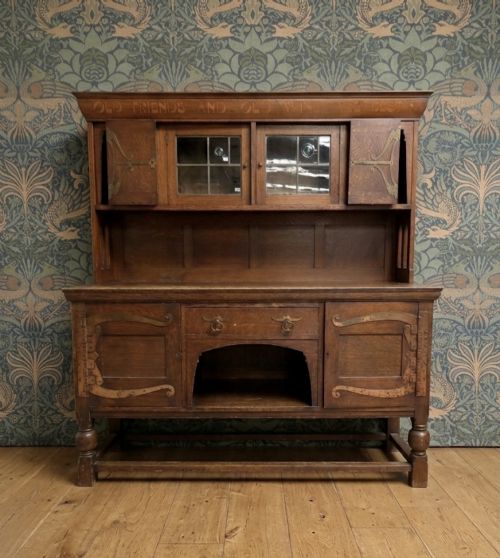
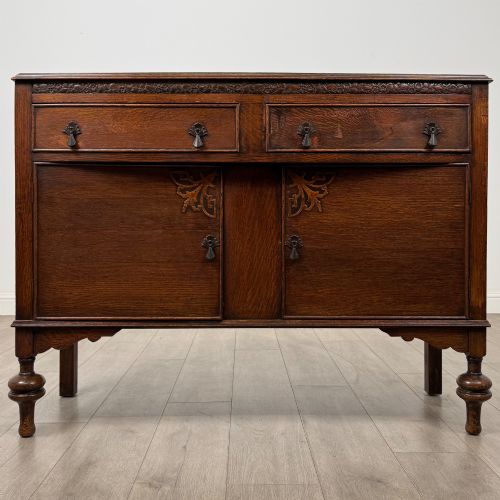
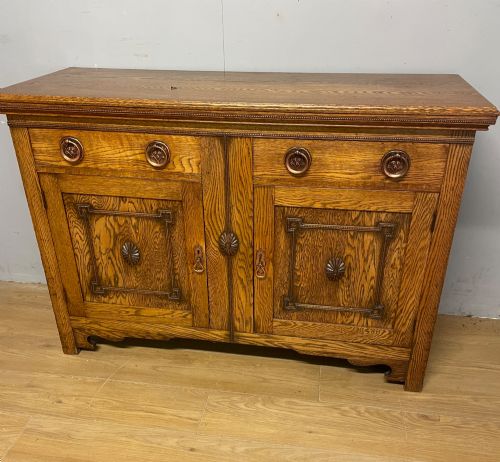
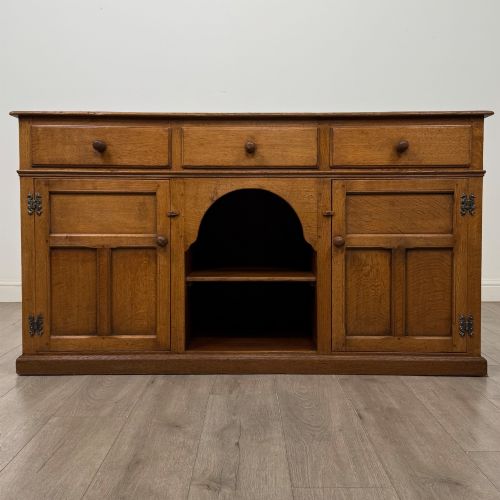
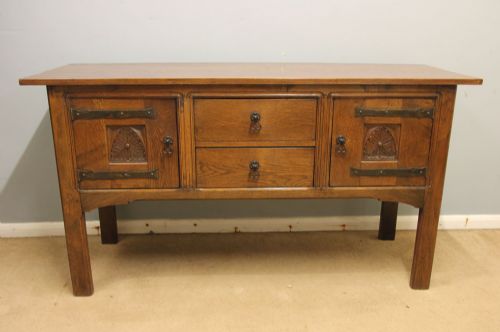
When you search for an oak arts crafts buffet, you encounter sturdy storage furniture built across the late nineteenth and early twentieth centuries, spanning periods from the Victorian era through the Edwardian years and into the 1920s and 1930s. These pieces include sideboards, dresser bases, cabinets, and tiered buffets designed for dining rooms and living spaces.
The most common examples on this page date from the Edwardian period and around 1900, showing strong influences from the Arts and Crafts movement alongside occasional Jacobean Revival, Gothic Revival, and Art Nouveau decorative details.
How they were made
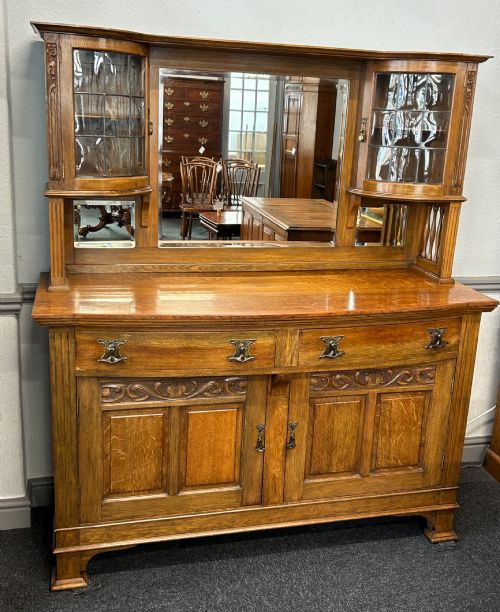
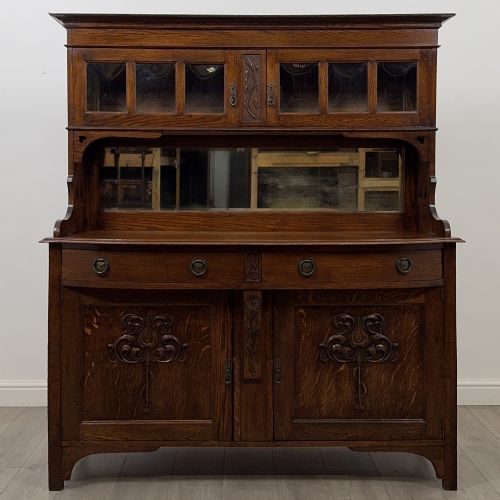
Constructed primarily from solid oak and golden oak, these buffets and sideboards utilise sturdy timber framing often accented with natural grain patterns. Workshops employed traditional joinery methods to build heavy cabinet bases, high mirrorbacks, and multi-tiered serving surfaces.
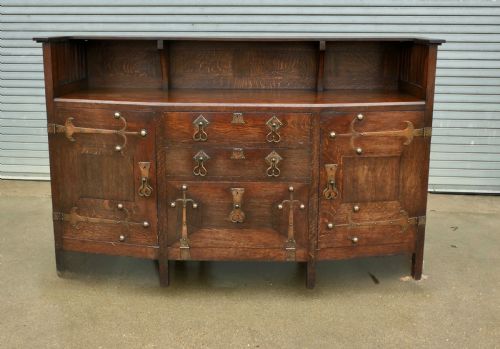
Metal components such as brass, copper, and iron hardware provide functional handles, hinges, and decorative strapwork. Glass elements appear as plain panes or leaded glass doors, adding transparency to cabinet sections.
Listings feature oak alongside materials like leaded glass, copper, brass, and iron across Edwardian and Victorian periods.
What varies in quality
The distinction between standard utility furniture and top-tier examples lies in the selection of timber and the ambition of the design. Superior pieces showcase carefully chosen golden oak with expressive grain, balanced proportions, and thoughtful integration of hardware rather than purely mass-produced assembly.
Maker attribution also shifts perception, as pieces bearing the mark of prominent London firms or noted designers elevate an item from a regional workshop piece to a recognised design of the movement.
Ambrose Heal for Heal and Son·Leonard Wyburd·Shapland and Petter·Liberty and Company·T Simpson and Son·Gillow and Co
The Oak Arts Crafts Buffet Glossary
- Buffet
- A sideboard or low piece of furniture used for serving food and storing tableware. In the Arts and Crafts context, these often feature multiple tiers or open serving surfaces.
- Leaded glass
- Glass panes held together by narrow strips of lead, commonly found in cabinet doors of this period. This technique creates geometric or floral patterns typical of Arts and Crafts design.
- Mirrorback
- A sideboard featuring an upright wooden frame holding a mirror above the main surface. These reflect light and display decorative items placed on the counter.
- Dresser base
- The lower cabinet portion of a dresser, frequently utilised as a standalone sideboard or buffet in dining spaces. They provide heavy cupboard storage and surface utility.
Oak Arts Crafts Buffet: Frequently Asked Questions
How do I date an oak arts crafts buffet?
Dating relies on stylistic clues, construction methods, and period characteristics seen across Victorian, Edwardian, and early twentieth-century examples. Records often place specific designs between 1880 and 1930.
Hardware choices, timber finishes like golden oak, and maker signatures or stamps further help narrow down the decade of production.
Where should I place a buffet in my home?
These robust oak pieces suit dining rooms, hallways, and large living spaces where surface area and enclosed storage are useful. Their substantial timber presence anchors a room effectively.
Ensure the dimensions of mirrorbacks or taller cabinets clear your ceiling height and doorframes before positioning.
Are these buffets practical for daily storage?
Cupboards, drawers, and tiered shelves offer generous capacity for tableware, linens, and dining accessories. Solid oak construction ensures they withstand regular daily use.
Internal shelving varies by piece, so verifying the depth and height of compartments helps determine storage suitability for larger items.
What is the difference between a sideboard and a buffet?
While both terms describe dining room storage furniture, buffets historically include tiered serving surfaces or open shelves designed for presenting food. Sideboards often emphasise enclosed cupboards and drawers.
Many pieces from this era combine these functions, appearing in listings under both category names.