



Victorian Oak Console Desk
A victorian oak console desk brings solid nineteenth-century character and practical writing space into a hallway or study.
Victorian Oak Console Desk
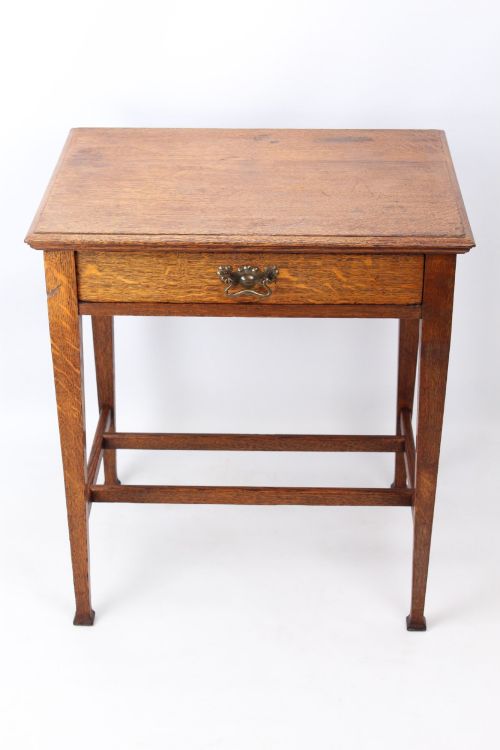
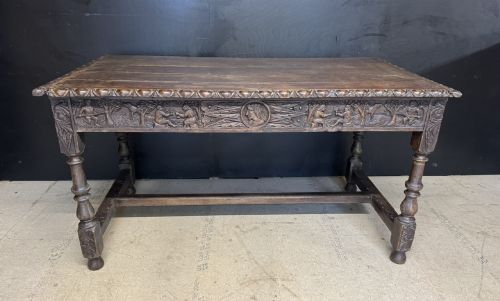
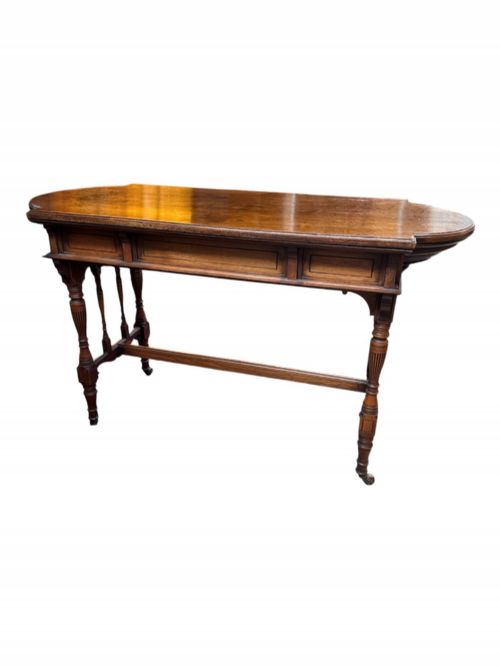
A victorian oak console desk combines the narrow footprint of a hallway table with the writing surface of a compact bureau. Pieces meeting this description emerge mainly from the nineteenth century, spanning decades from eighteen-fifty to nineteen-ten.
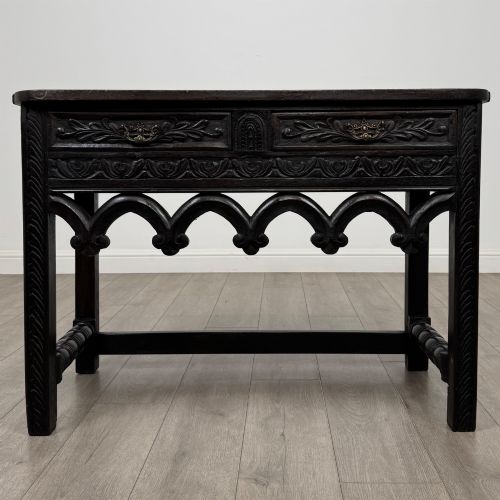
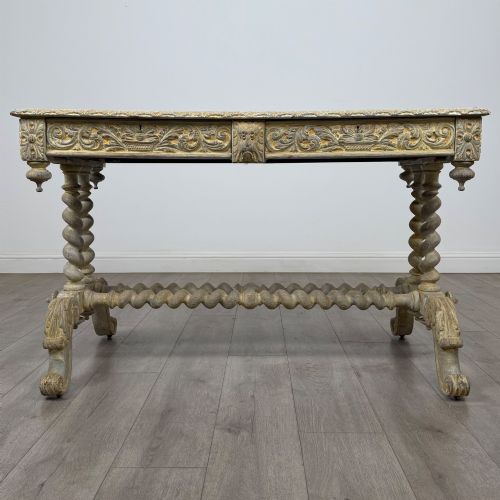
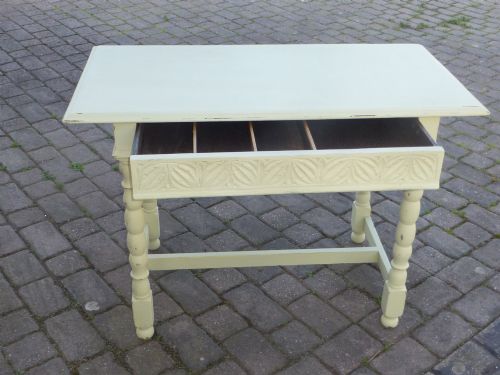
The form appears in various guises across the inventory, including side tables, writing tables, and hall tables equipped with drawers. Many examples lean into Gothic Revival, Arts and Crafts, or Jacobean Revival aesthetics, showing heavy carving and architectural lines.
Materials and Construction
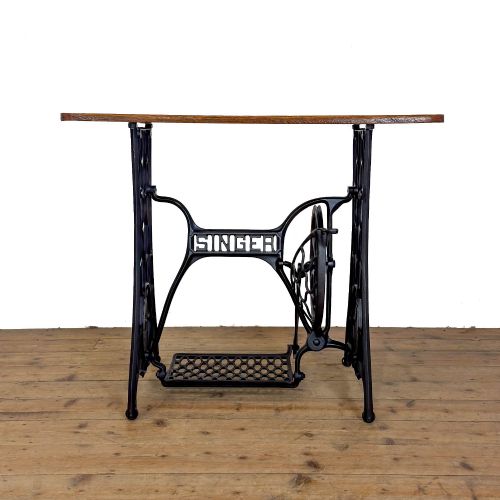
Cabinet makers relied primarily on solid oak, frequently selecting burr oak or pollard oak for decorative grain patterns on tabletops and drawer fronts. Additional elements like mahogany, elm, brass handles, leather inserts, and cast iron provide structural contrast and functional detail.
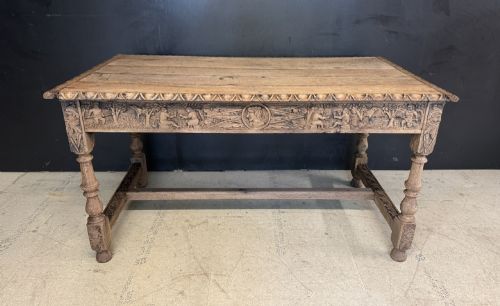
Joinery techniques ranged from standard mortise and tenon frames to elaborate relief carving depicting foliage and mythical motifs such as Greenman masks. Tables often incorporate single, twin, or triple drawer configurations supported by stretchers or sturdy legs.
The listings feature nineteenth-century oak furniture incorporating brass, leather, and cast iron across various revival styles.
Standards of Execution
Quality separates ordinary utility pieces from exceptional commissions through the depth and crispness of the hand carving. Pieces attributed to notable workshops display superior timber selection, particularly in burr oak veneers and secondary woods.
Structural integrity and original surface patination dictate desirability among collectors. Heavy, well-proportioned framing combined with intact leather tops and matching brass hardware elevates an item above standard vernacular examples.
James Shoolbred·Williams and Gibton·Holland and Sons
The Victorian Oak Console Desk Glossary
- Console table
- A table designed to stand against a wall, frequently used in halls and narrow living spaces. These pieces often feature a shallow depth and finished rear facades.
- Gothic Revival
- A nineteenth-century architectural and decorative style inspired by medieval forms. It is characterised by pointed arches, trefoils, and heavy relief carving on woodwork.
- Burr oak
- A timber harvested from oak tree growths that produce swirling, knotty grain patterns. Makers utilised these sections for dramatic visual effect on tabletops and drawer fronts.
- Stretcher table
- A table featuring horizontal wooden rails connecting the legs near the base. This construction method provides added stability to heavier oak frames.
- Greenman
- A sculptural motif depicting a human face surrounded by or sprouting from foliage. This ancient symbol appears frequently on nineteenth-century carved furniture.
Victorian Oak Console Desk: Frequently Asked Questions
Where should I place a console desk?
These tables suit narrow hallways, entryways, or compact home offices where floor space is limited. Their shallow depth allows them to sit against walls without obstructing pathways.
Positioning them beneath a mirror or artwork creates a practical surface for mail and daily correspondence.
How do I care for nineteenth-century oak?
Maintain the timber by applying natural beeswax periodically to nourish the grain and preserve the surface shine. Avoid placing the furniture near direct heat sources or in strong sunlight.
Dust regularly with a soft, dry cloth to prevent particulate buildup on carved wooden details.
How do I identify a Gothic Revival piece?
Look for architectural elements such as pointed arches, quatrefoils, and heavy linenfold or botanical carving. These items often feature darker oak finishes and sturdy, imposing proportions.
Designers drew direct inspiration from medieval cathedrals and castles during the Victorian era.
What is the difference between a side table and a writing desk?
Side tables offer a flat surface primarily intended for display or general placement against a wall. Writing tables incorporate functional drawers and sometimes leather inserts specifically for correspondence.
Many nineteenth-century examples bridge both categories by providing drawer storage within a console format.